Artwork
Untitled
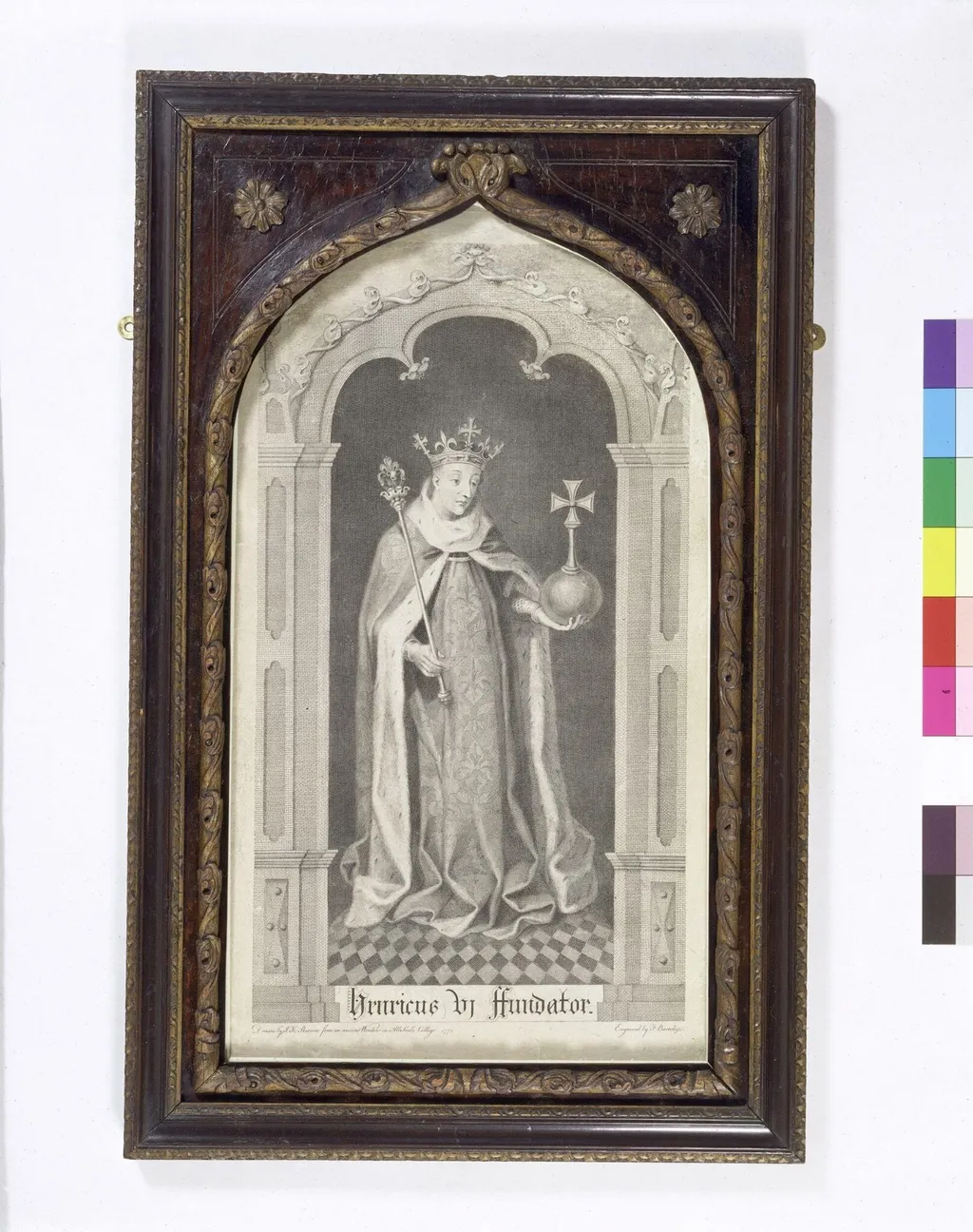
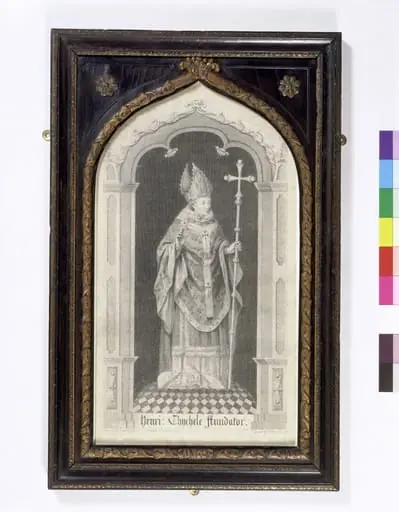
Untitled is a print by the Romanticist artist John Keyse Sherwin. It dates from 1773 and is held in the collection of the Victoria and Albert Museum.
About this work
This 1773 print mixes etching and engraving. Both methods carve ink-holding grooves into metal. The ink gets pressed onto paper to make the final image.
It shows Henry VI, a 15th-century English king tied to All Souls College in Oxford. The design comes from an old stained glass window, copied through several artists before Sherwin.
Check out more prints by John Keyse Sherwin.
Overview
This 1772 print, produced by Francesco Bartolozzi, merges etching and engraving techniques on a metal plate to render a portrait of Henry VI.
This 1772 print, produced by Francesco Bartolozzi, merges etching and engraving techniques on a metal plate to render a portrait of Henry VI. Acid-defined lines and burin-carved details work together to create a finely detailed image, transferred to paper through inked impressions. The frame, added shortly after the print’s creation, reflects the Gothic Revival aesthetic of its early owner’s residence.
Subject & Meaning
The portrait depicts Henry VI, who co-founded All Souls College, Oxford, in 1438. Bartolozzi’s composition derives from an 18th-century drawing that itself was based on a stained glass window within the college. The image serves as a historical commemoration, linking the king’s legacy to institutional memory through visual tradition rather than direct observation.
Technique & Style
Bartolozzi employed both etching—using acid to bite lines into the plate—and engraving, where a burin manually incised finer details. The combination allowed for soft tonal gradations alongside crisp, precise contours. This hybrid method was favored in the 18th century for reproducing delicate compositions, particularly those derived from earlier artworks or architectural decorations.
History & Provenance
The print, along with its companion piece, was likely acquired by Horace Walpole and displayed at Strawberry Hill, his Gothic-inspired home. After Walpole’s death, both prints were sold in the 1842 auction of his collection. They later resided at Brookhill Hall in Nottinghamshire before being rediscovered in an antique shop near the V&A, leading to their eventual museum acquisition.
Context
The print reflects 18th-century antiquarian interests in medieval English history and ecclesiastical art. Reproducing stained glass imagery through print culture allowed wider access to religious and royal iconography. Bartolozzi’s involvement underscores the period’s demand for refined reproductive prints, often commissioned to complement private collections and architectural interiors.
Legacy
As part of Walpole’s collection and later museum holdings, the print exemplifies the transmission of historical imagery across media and centuries. Its survival and documentation illustrate how 18th-century collectors preserved and recontextualized medieval subjects, embedding them within emerging narratives of national heritage and aesthetic revival.
Artist & collection

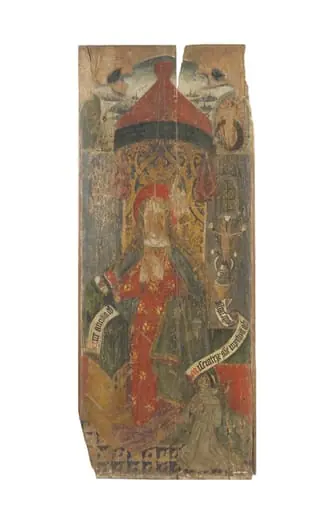
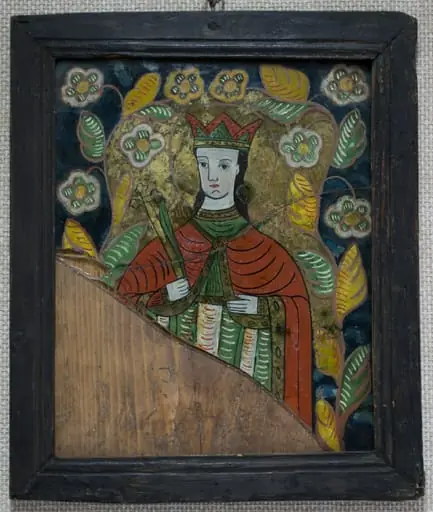 Icoana este pictată "în oglindă", pe un suport de glajă de formă dreptunghiulară în ax vertical.Cuvioasa Parascheva, redată din ușor semiprofil, ține în mâna dreaptă o ramură verde și o cruce. Fața pătrățoasă, expresivă, ochii mari, negri, gura mică, strânsă, părul , lung, negru, lăsat pe spate..Pe cap coroană împărătească. Este înveșmîntată cu o mantie roșie cu galon aurit cu decor geometric. Câmpul este realizat din foiță aurie în interiorul unei arcade formate din două tulpini sinuase de floare. În afara arcadei albastrul oliv creează un contrast surprinzător.Accentul cade pe chipul sfintei, pus în valoare de contrastul alb/negru/auriu. Desenul este simplu, linia fină, precisă, paleta cromatică bogată , culorile vii. Contrastele cromatice creează perspectivă Rama subțire profilată, din lemn de brad, pictată cu cafeniu, Dos din scândură de brad. Aproximativ un sfert din icoană lipsește. Țăranii considerau că sfânta Parascheva păzește de grindină și de dureri de cap.
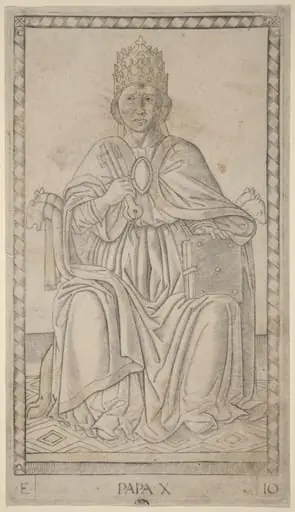
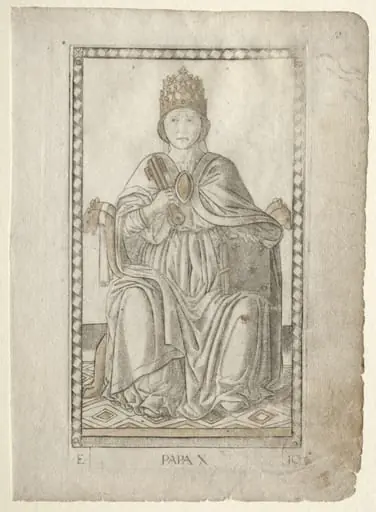 The Pope (from the Tarocchi, series E: Conditions of Man, #10)
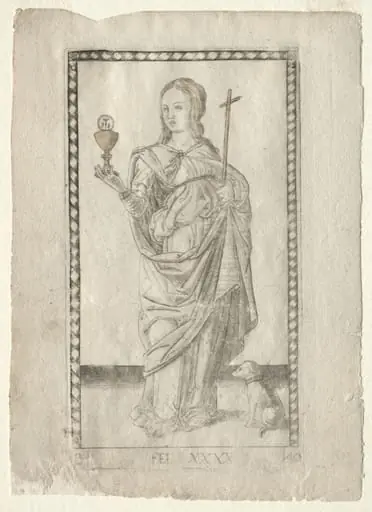 Faith (from the Tarocchi, series B: Cosmic Principles & Virtues, #40)
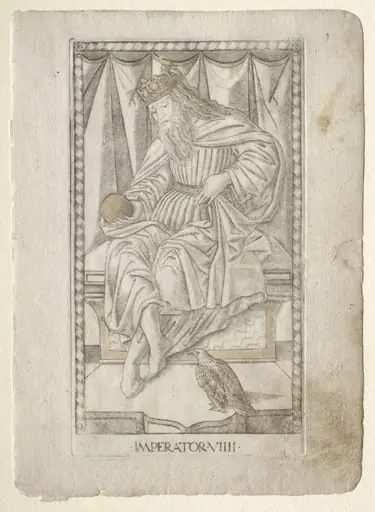 The Emperor (from the Tarocchi, series E: Conditions of Man, #9)
 The Annunciation
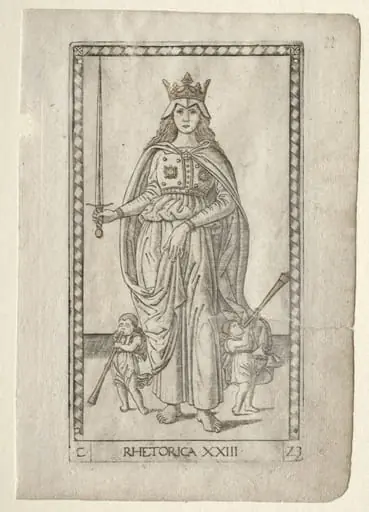 Rhetoric (from the Tarocchi, series C: Liberal Arts, #23)
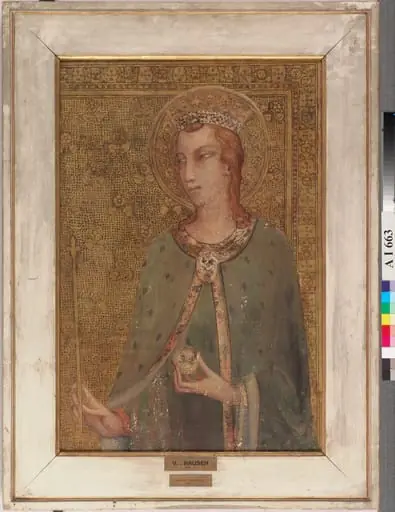 Madonna, kopio Simone Memmin mukaan
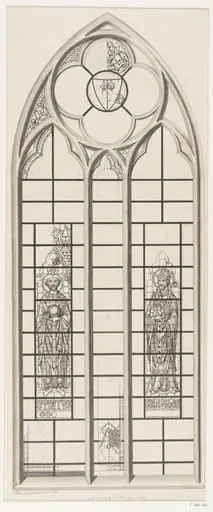 Untitled
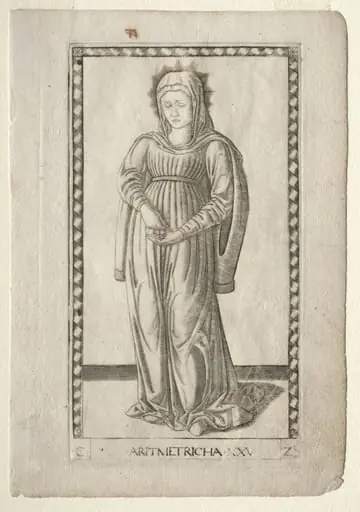 Arithmetic (from the Tarocchi, series C: Liberal Arts, #25)
 The Virgin and Child in a Gothic architectural setting
 Papa (Pope)
 Henry Chichele, founder of All Souls College, Oxford