Artwork
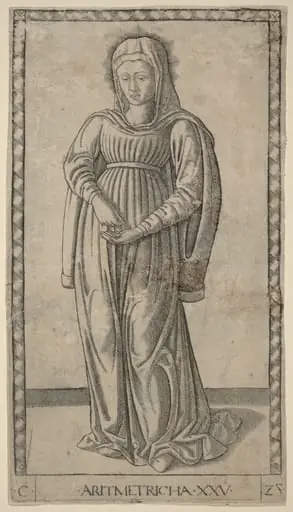
Arithmetic (from the Tarocchi, series C: Liberal Arts, #25)
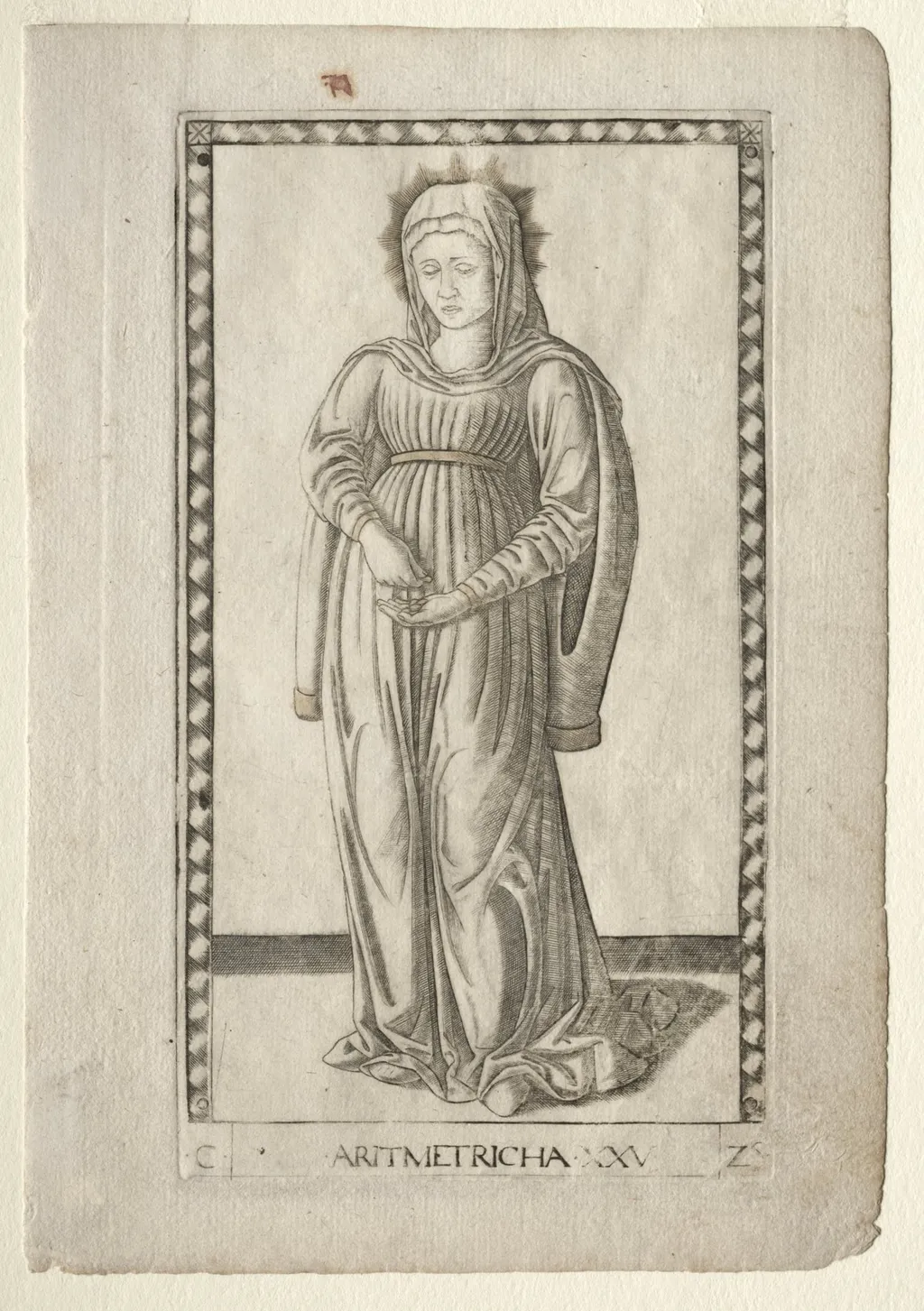
Arithmetic (from the Tarocchi, series C: Liberal Arts, #25) is a print by the Renaissance artist Master of the E-Series Tarocchi. It dates from 1467 and is held in the collection of the Cleveland Museum of Art. Arithmetic is the twenty-fifth print in the Tarocchi series, part of group C dedicated to the Liberal Arts.
About this work
To learn more about this style of art, visit the museum where this painting is kept, The Cleveland Museum of Art.
This painting shows a woman surrounded by symbols of math and learning.
She's sitting at a desk with books and instruments.
The scene is detailed and intricate.
The woman is meant to represent Arithmetic, one of the liberal arts.
This was an important subject in the 15th century, when this painting was made.
To learn more about this style of art, visit the museum where this painting is kept, The Cleveland Museum of Art.
Overview
Arithmetic is the twenty-fifth print in the Tarocchi series, part of group C dedicated to the Liberal Arts. Created in the late 15th century, it belongs to a larger ensemble of engravings that personify intellectual disciplines. Unlike earlier depictions limited to the traditional seven, this set expands the canon to include Poetry, Philosophy, and Theology, reflecting evolving Renaissance ideals of knowledge. The print presents Arithmetic as a central figure within a scholarly environment, rendered with meticulous detail typical of the period’s engraved works.
Subject & Meaning
Arithmetic is embodied as a woman, Aritmetricha, engaged in counting coins—an act symbolizing the practical application of numerical reasoning. Her posture and focus convey diligence, aligning with the medieval view of arithmetic as foundational to commerce, theology, and natural philosophy. The inclusion of coins, rather than abstract symbols, grounds the allegory in daily life, emphasizing the discipline’s role in civic and economic order. This personification reflects the broader humanist belief that learning was essential to a free and rational society.
Technique & Style
The image is executed in fine-line engraving, a technique prized for its precision and capacity for intricate detail. The figure is rendered with delicate hatching to suggest drapery and form, while the desk, books, and mathematical instruments are rendered with careful linear clarity. Background elements are minimized, directing attention to the central figure and her tools. The composition follows the conventions of Northern Renaissance printmaking, where intellectual themes were conveyed through symbolic objects and restrained, dignified figures.
History & Provenance
The Tarocchi series, including Arithmetic, was likely produced in northern Italy around 1470–1480, though the exact artist remains unidentified. The print entered the collection of the Cleveland Museum of Art in the 20th century, where it is preserved as part of a rare surviving ensemble of early printed allegorical cards. Its survival in good condition offers insight into the circulation of humanist imagery among educated elites before the widespread use of movable type for illustrated books.
Context
In the 15th century, the Liberal Arts were central to university curricula and elite education, bridging classical tradition with Christian scholarship. Arithmetic, as part of the Quadrivium, was not merely about calculation but was seen as a path to understanding cosmic order. The visual representation of abstract disciplines as noble women reflected a broader trend in Renaissance art to elevate learning through allegory, making intellectual ideals accessible and morally uplifting to viewers.
Legacy
This engraving contributes to a visual tradition that shaped how knowledge was represented in Western art for centuries. Its synthesis of classical pedagogy, humanist values, and technical precision influenced later emblem books and academic iconography. Though the Tarocchi series was not widely reproduced, its individual prints like Arithmetic remain important artifacts of early print culture, illustrating how abstract concepts were made tangible through image and symbol.
Artist & collection
Artist
Master of the E-Series Tarocchi
Master of the E-Series Tarocchi (b. 1400) was an Italian artist.

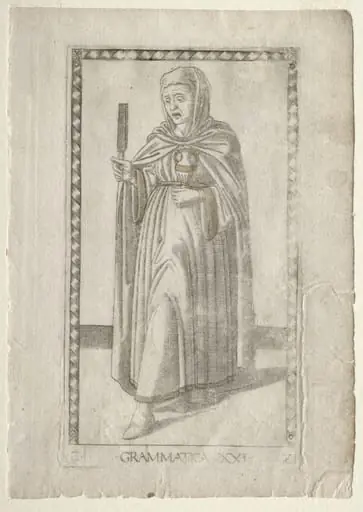 Grammar (from the Tarocchi, series C: Liberal Arts, #21)
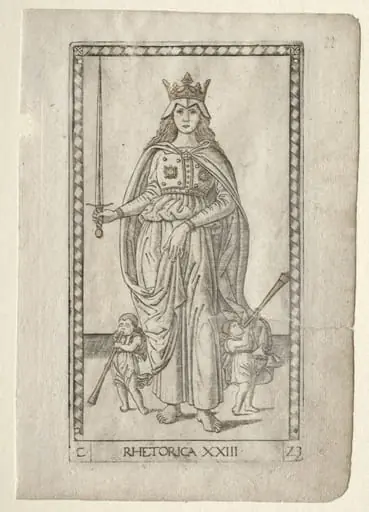 Rhetoric (from the Tarocchi, series C: Liberal Arts, #23)
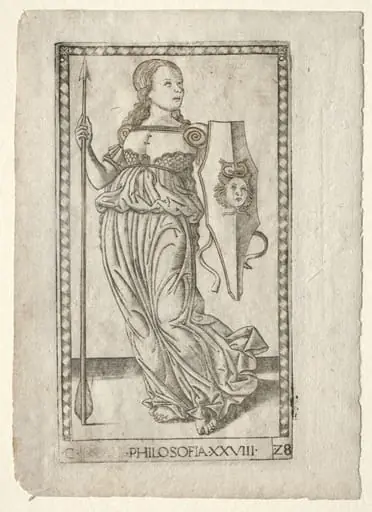 Philosophy (from the Tarocchi, series C: Liberal Arts, #28)
 Aritmetricha (Arithmetic)
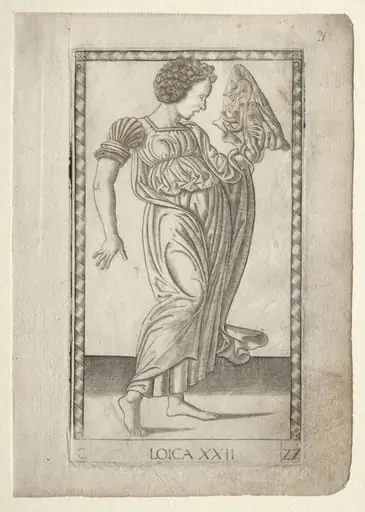 Logic (from the Tarocchi, series C: Liberal Arts, #22)
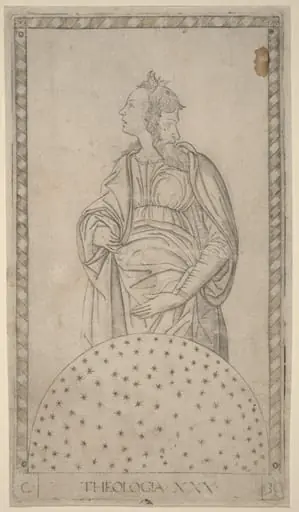
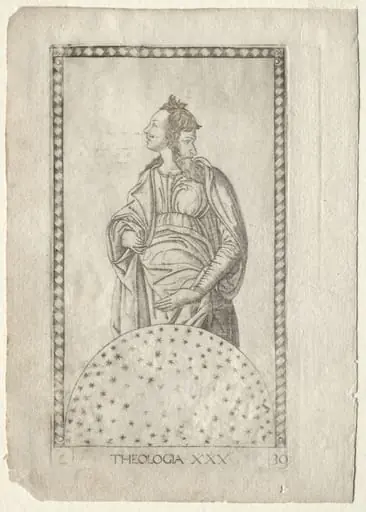 Theology (from the Tarocchi, series C: Liberal Arts, #30)