Artwork
Faith (from the Tarocchi, series B: Cosmic Principles & Virtues, #40)
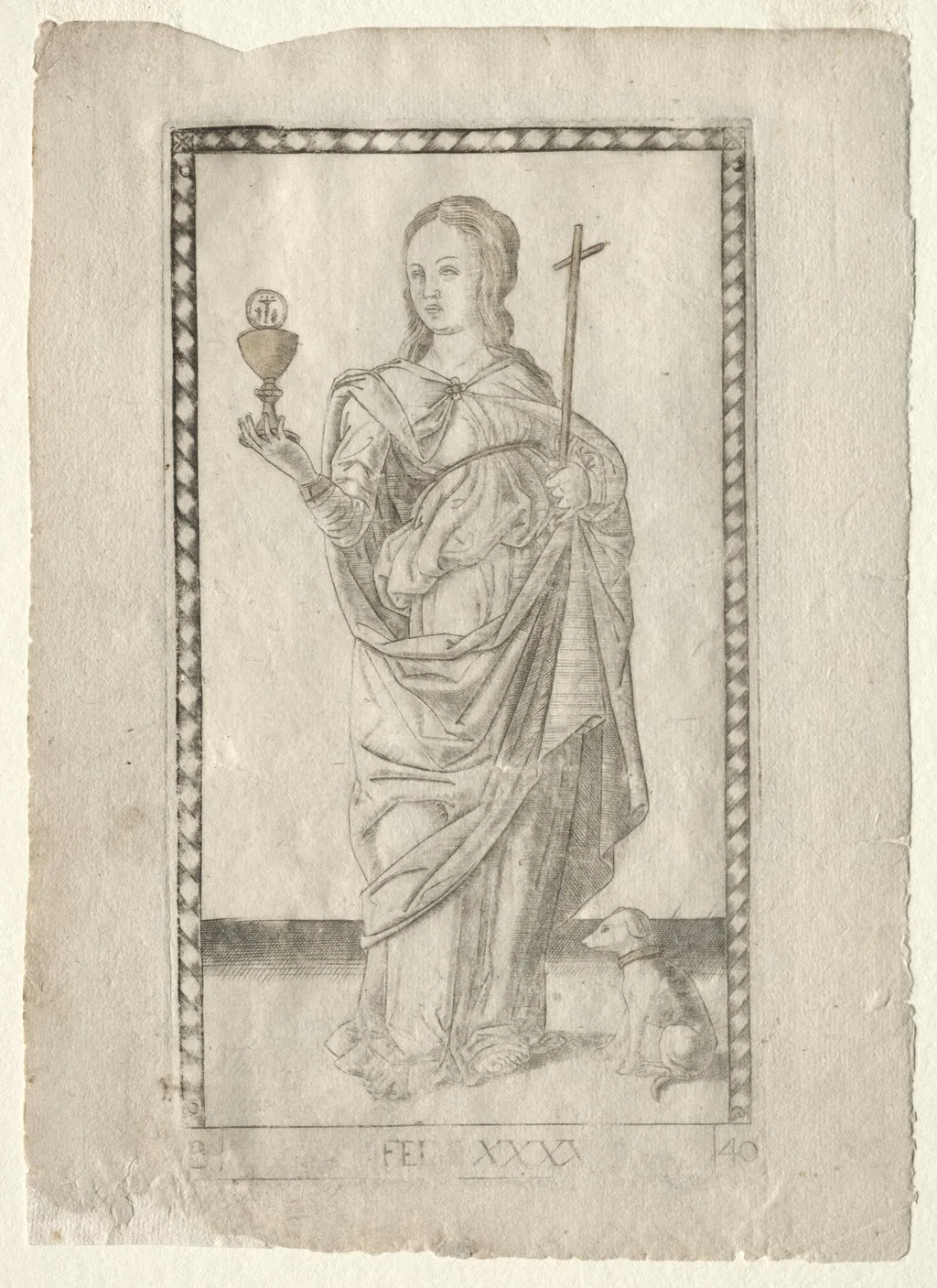
Faith (from the Tarocchi, series B: Cosmic Principles & Virtues, #40) is a print by the Renaissance artist Master of the E-Series Tarocchi. It dates from 1467 and is held in the collection of the Cleveland Museum of Art. This engraving is one of thirteen prints from the Tarocchi series B, titled Cosmic Principles and the Virtues.
About this work
Overview
Created before playing cards became dominant, the set was not intended for games but as a didactic visual guide to moral and spiritual ideals.
This engraving is one of thirteen prints from the Tarocchi series B, titled Cosmic Principles and the Virtues. Created before playing cards became dominant, the set was not intended for games but as a didactic visual guide to moral and spiritual ideals. Faith, as the fourth card in the series, represents one of the three theological virtues rooted in Christian doctrine, depicted through symbolic imagery rather than narrative.
Subject & Meaning
Faith is personified as a serene female figure holding a cross in her left hand and a chalice bearing the host in her right—symbols of Christ’s sacrifice and the Eucharist. At her feet, a dog rests, traditionally associated with loyalty and fidelity, reinforcing the virtue’s theme of steadfast devotion. The composition merges Christian theology with classical allegory, presenting faith not as abstract belief but as embodied, quiet resolve.
Technique & Style
The figure is rendered in fine line engraving with subtle chiaroscuro to suggest volume and softness in the robes, avoiding flatness without color. Light falls gently across her face and upper body, emphasizing calm focus and inner stillness. The architectural arch behind her frames the figure, while the grassy ground grounds the scene in a naturalistic space, balancing symbolic weight with tactile realism.
History & Provenance
The Tarocchi series B was produced in northern Italy during the late 15th or early 16th century, likely by an anonymous engraver connected to humanist circles. These prints circulated among educated elites as tools for moral reflection, not entertainment. Their survival in private collections and institutional archives suggests they were valued as intellectual artifacts rather than mass-produced imagery.
Context
Created during a period of religious reform and renewed interest in classical allegory, the Tarocchi cards reflect a synthesis of medieval symbolism and Renaissance humanism. The inclusion of theological virtues alongside cosmic principles reveals an attempt to map divine order onto visible reality. Unlike later devotional art, these images avoid overt emotion, favoring clarity and restraint to encourage contemplation.
Legacy
Though largely forgotten after the rise of standardized playing cards, the Tarocchi series B remains a rare example of early print culture used for ethical instruction. Its integration of theological concepts with visual allegory influenced later emblem books and moral iconography. The quiet dignity of Faith’s portrayal continues to resonate as a model of symbolic representation unburdened by spectacle.
Artist & collection
Artist
Master of the E-Series Tarocchi
Master of the E-Series Tarocchi (b. 1400) was an Italian artist.

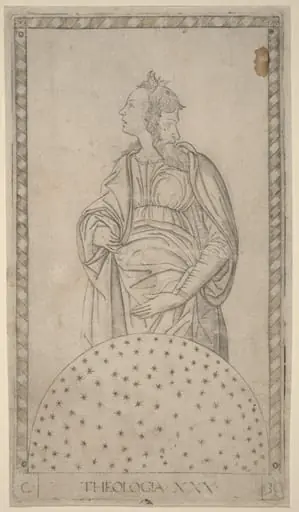
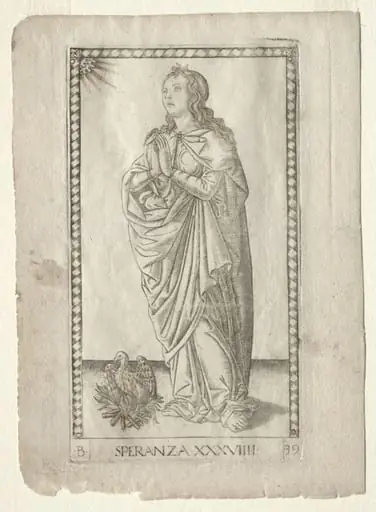 Hope (from the Tarocchi, series B: Cosmic Principles & Virtues, #39)
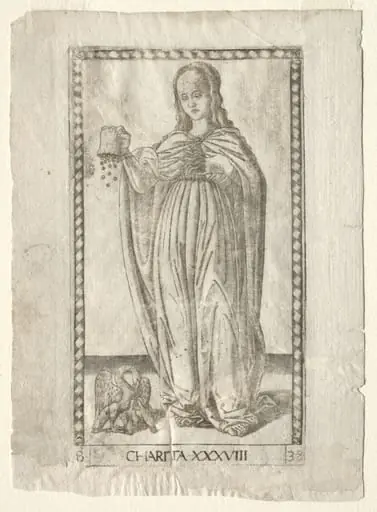 Charity (from the Tarocchi, series B: Cosmic Principles & Virtues, #38)
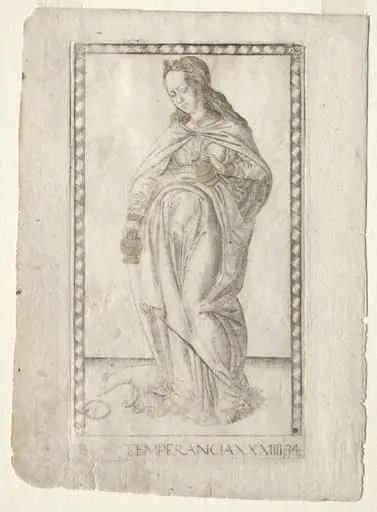 Temperance (from the Tarocchi, Series B: Cosmic Principles & Virtues, #34)
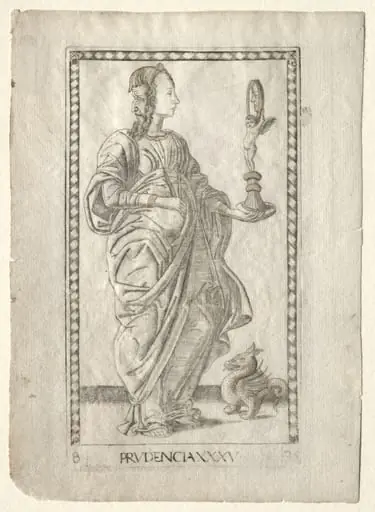 Prudence (from the Tarocchi, series B: Cosmic Principles & Virtues, #35)
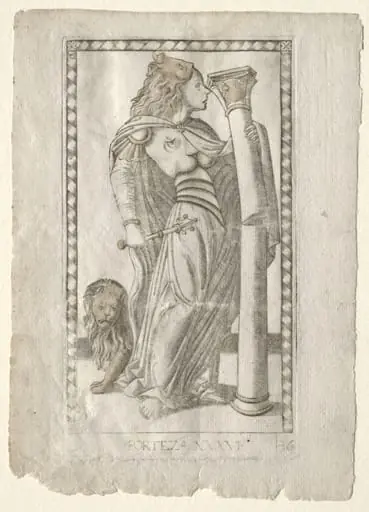 Forteza (from the Tarocchi, series B: Cosmic Principles & Virtues, #36)
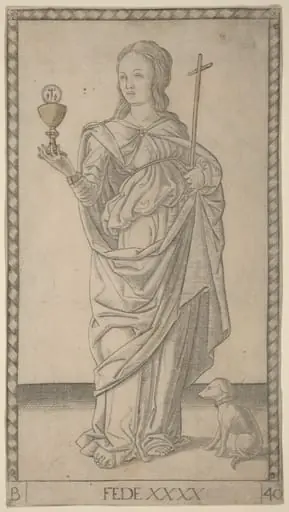 Fede (Faith)
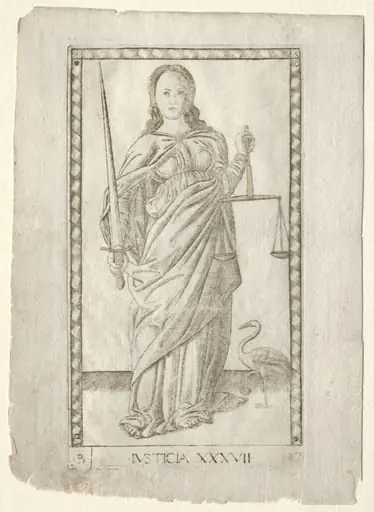 Justice (from the Tarocchi, series B: Cosmic Principles & Virtues, #37)