Artwork
Don Quixote Outside an Inn (from Cervantes' novel)
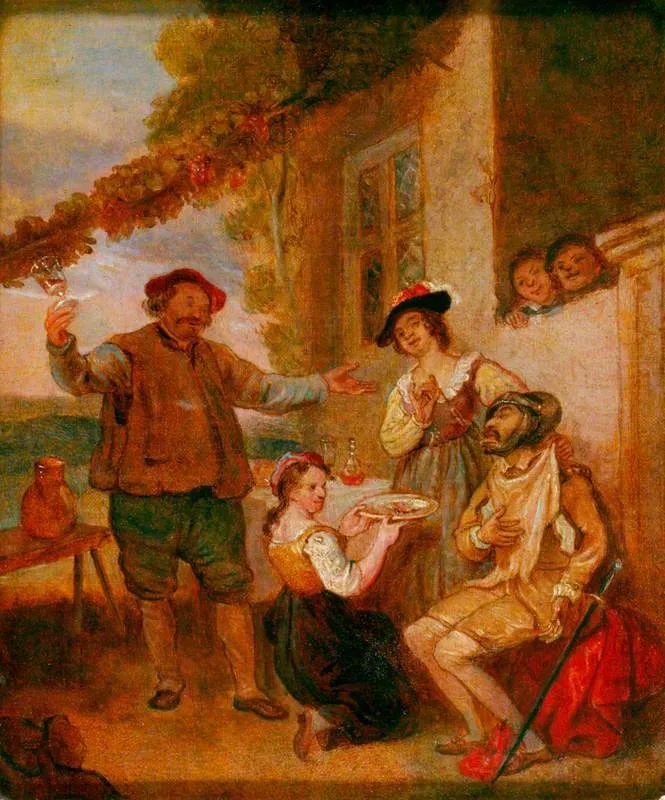
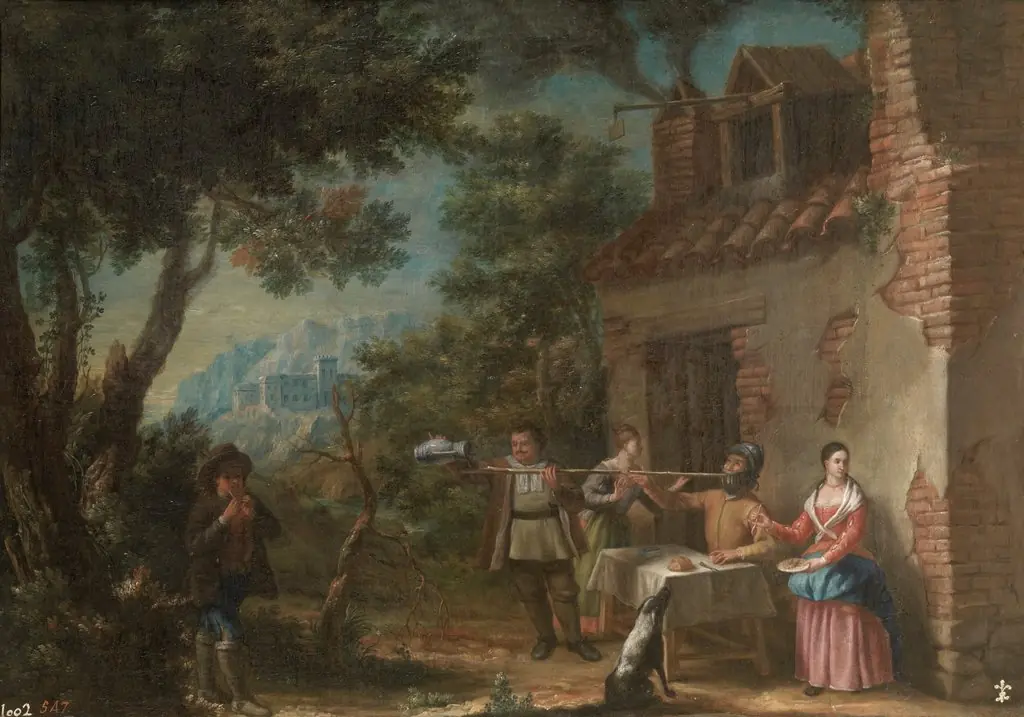
Don Quixote Outside an Inn (from Cervantes' novel) is an oil painting by John Masey Wright. It dates from 1815 and is held in the collection of the Victoria and Albert Museum.
About this work
Overview
Largely self-taught, he gained early exposure through Thomas Stothard’s studio and later assisted in panoramic battle scenes with Henry Aston Barker.
John Masey Wright, born in 1777 to an organ-builder, began his career in craftsmanship before shifting to painting. Largely self-taught, he gained early exposure through Thomas Stothard’s studio and later assisted in panoramic battle scenes with Henry Aston Barker. In 1815, he turned to literary subjects, producing this oil painting inspired by Cervantes’ Don Quixote. The work stands as a rare example of his transition from large-scale spectacle to intimate narrative illustration.
Subject & Meaning
The scene captures Don Quixote, dressed in his outdated armor and helmet, seated outside a modest inn, his lance resting nearby. A woman kneels before him, offering food—an act of quiet compassion toward the deluded knight. Behind them, a bystander gestures outward while children observe from a window, suggesting the community’s mixture of tolerance and amusement. The moment reflects the novel’s theme: the collision of idealism with ordinary reality, rendered without mockery.
Technique & Style
Wright employed oil paint with a restrained palette of warm earth tones—ochres, browns, and muted reds—to ground the scene in tangible reality. Soft, diffused lighting enhances the intimacy of the moment, avoiding theatrical contrast. Figures are rendered with subtle gestures rather than exaggerated drama, and facial expressions are understated, inviting quiet contemplation. His handling of texture in fabric and stone suggests observational precision, rooted in his earlier work in topographical detail.
History & Provenance
Painted in 1815, the work emerged during a period when British artists increasingly turned to literary subjects for commercial and cultural appeal. Wright’s reputation as a watercolorist and panorama assistant lent credibility to his foray into oil. Though documented in exhibition records of the time, the painting’s early ownership remains unclear. It has since been held in private and institutional collections, valued for its quiet reinterpretation of a classic tale.
Context
In early 19th-century Britain, Cervantes’ Don Quixote was widely read and admired as both satire and humanist allegory. Artists like Wright responded to this literary revival by translating scenes into visual form, often for middle-class audiences seeking cultural refinement. Unlike grand historical paintings, Wright’s approach favored domestic scale and emotional nuance, aligning with a broader trend toward intimate, narrative-driven art over heroic spectacle.
Legacy
Wright’s painting is not widely reproduced today, but it remains a significant example of how British artists engaged with European literature outside the academic mainstream. Its restrained tone and focus on everyday humanity distinguish it from more flamboyant interpretations of Quixote. While not influential in technique, it contributes to the understanding of how literary themes were visually domesticated in early Victorian visual culture.
Artist & collection
Artist
John Masey Wright (1777–1866) was a British watercolourist. He was the son of an organ-builder and was apprenticed to the same business, but, as it proved distasteful to him, he was allowed to follow his natural…

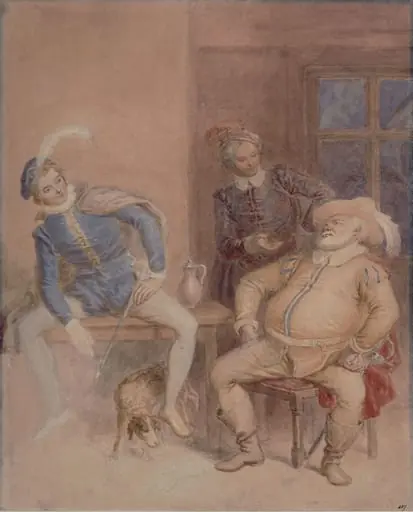
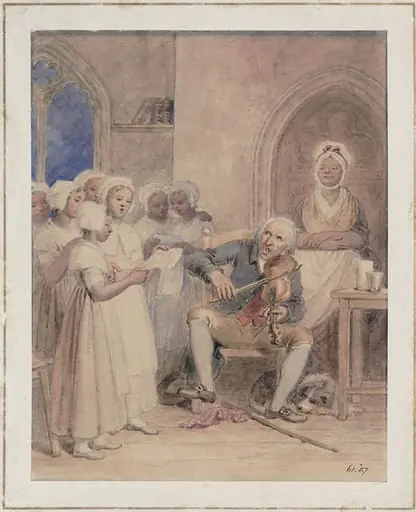
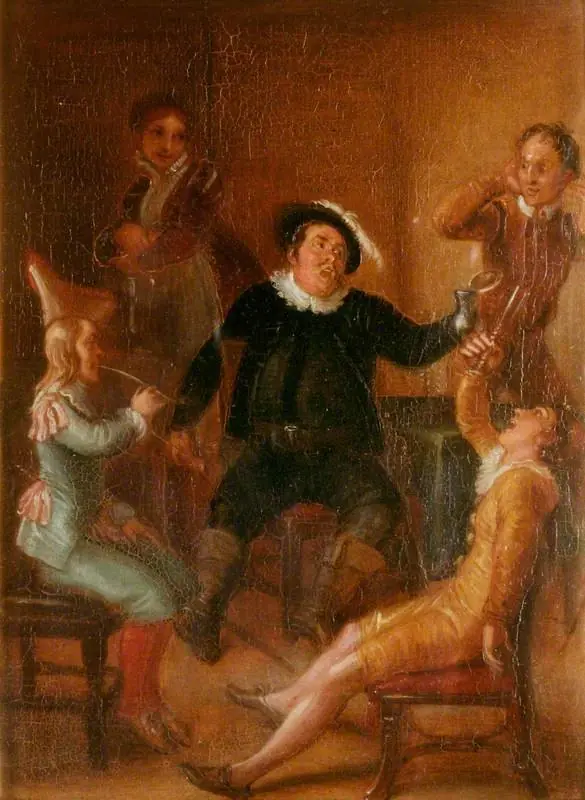 Scene from William Shakespeare's 'Twelfth Night' (Act II, Scene 3)
 The Parable of the Rich Man and Lazarus
 Man with a fiddle in bad company
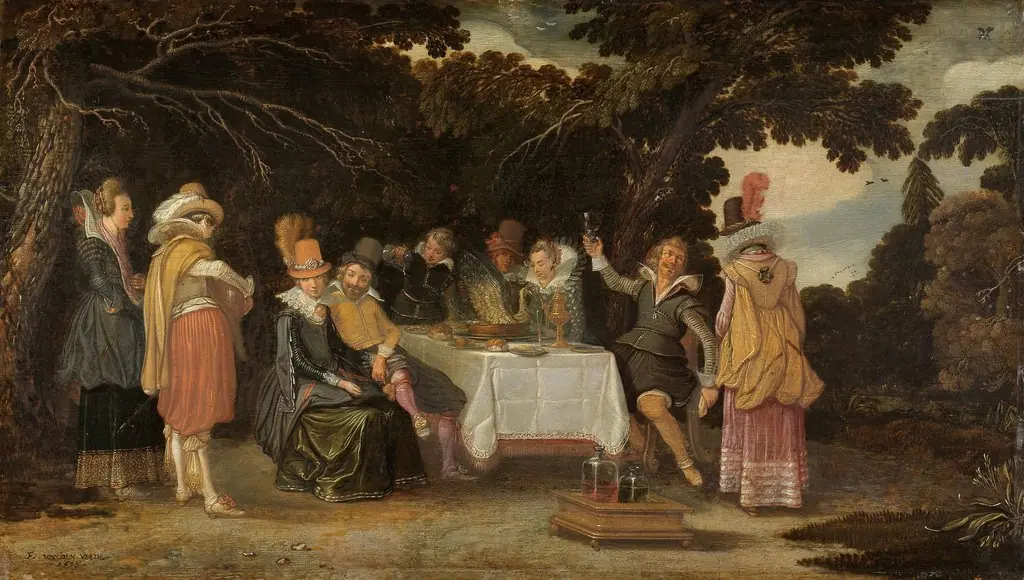 Elegant company dining in the open air
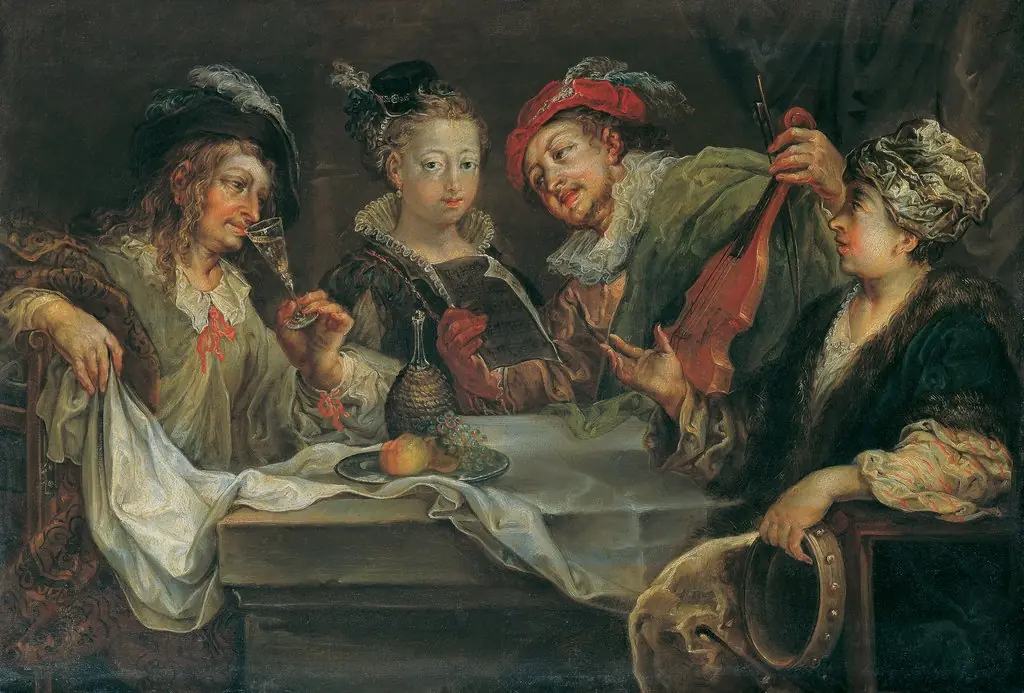 Making avances after the meal
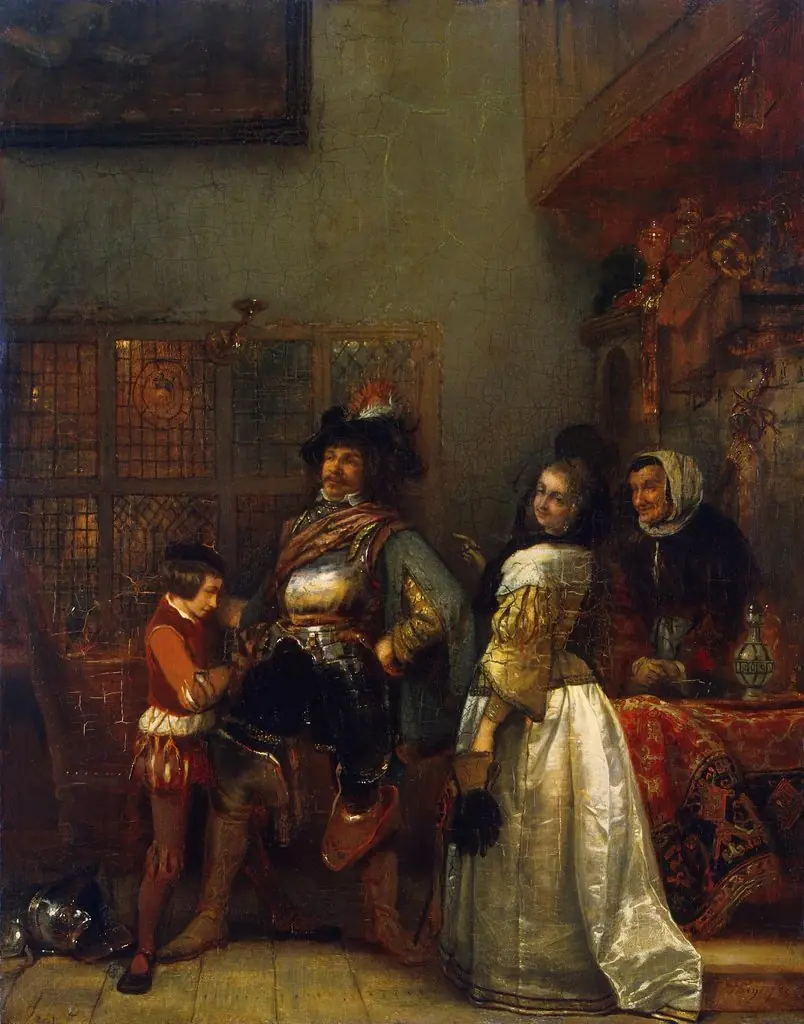 Home-Coming
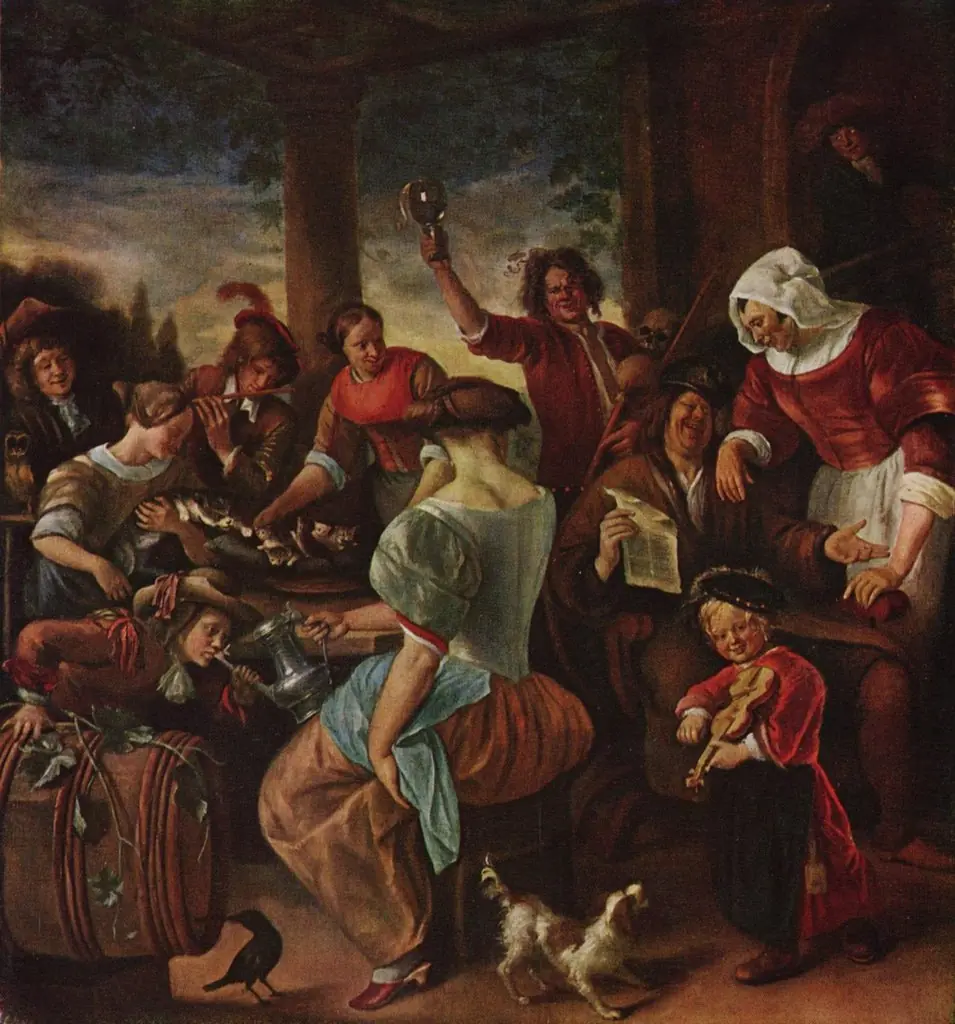 The Merry Family with Cats
 The Tinker
 The King Drinks
 Tre personer ved et bord
 The good news
 Don Quixote at the Inn