Artwork
The village choir, the church interior
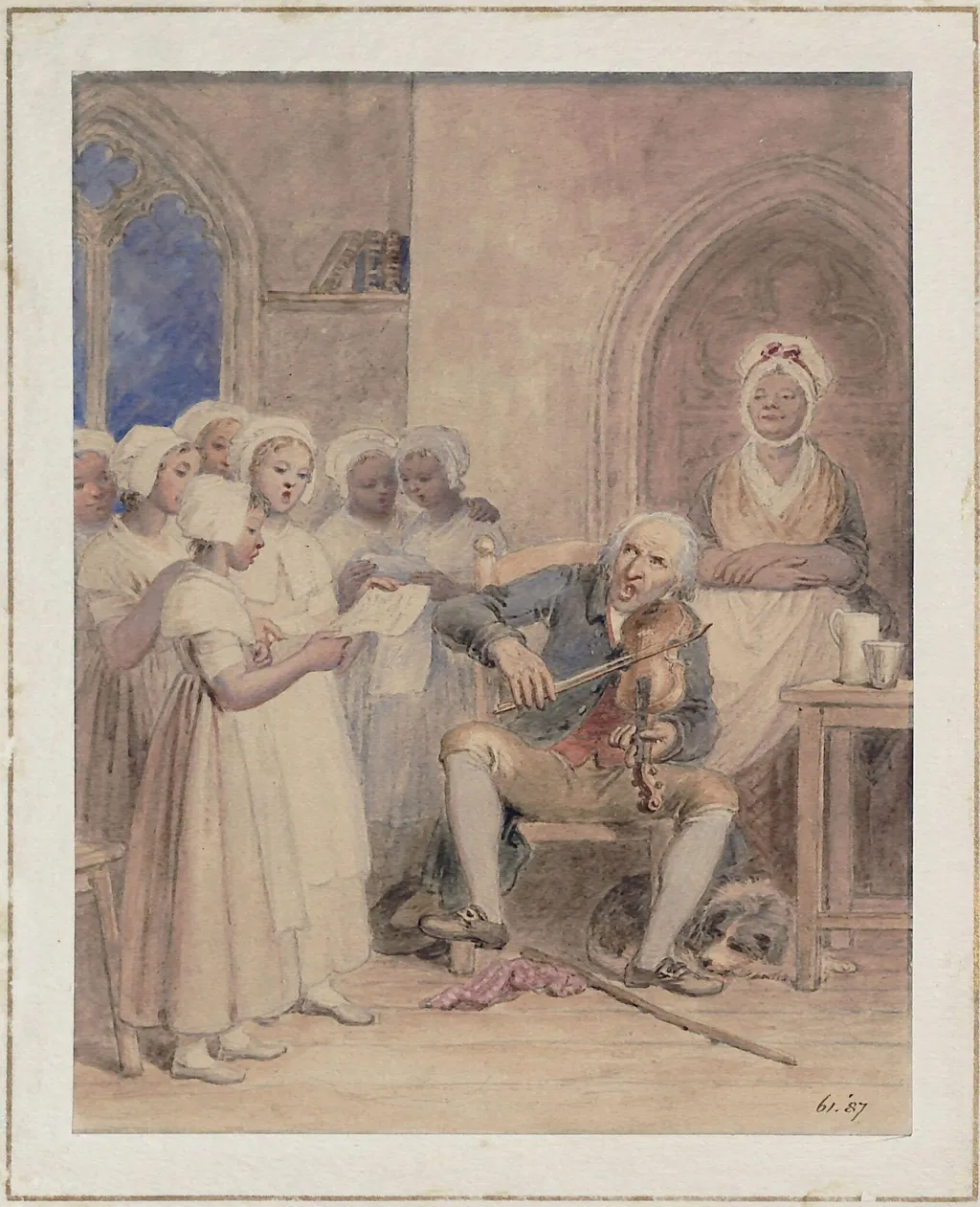
The village choir, the church interior is a watercolor work on paper by the Romanticist artist John Masey Wright. It dates from 1790 and is held in the collection of the Victoria and Albert Museum.
About this work
Overview
John Masey Wright’s watercolour, *The village choir, the church interior*, was executed in 1790 when the artist was still in his early twenties. The work portrays a modest church space filled with a small ensemble of villagers engaged in music-making, capturing a moment of communal activity rather than architectural grandeur. It is part of the Victoria and Albert Museum’s collection.
Subject & Meaning
The scene gathers a mixed group of villagers: a violinist seated on a pew, a standing female accompanist, and several children and adults positioned nearby, some appearing to sing. The composition emphasizes the social bond forged through shared music, suggesting a gentle, collective devotion that transcends the sacred setting and highlights everyday rural life.
Technique & Style
The fluid washes convey the interior’s muted light, while the careful delineation of figures draws attention to their gestures and expressions.
Rendered in transparent watercolour, Wright employs a delicate palette that softens edges and creates an atmospheric, almost lyrical ambience. The fluid washes convey the interior’s muted light, while the careful delineation of figures draws attention to their gestures and expressions. The approach aligns with the early Romantic interest in intimate, emotive scenes rendered with a sense of immediacy.
History & Provenance
Born in 1777 to an organ‑builder, Wright was largely self‑taught as a painter, later collaborating with panorama specialist Henry Aston Barker. *The village choir* reflects his formative period before he turned to larger panoramic projects. The watercolour entered the Victoria and Albert Museum’s holdings, where it remains on display as an example of his early output.
Context
Created at the close of the eighteenth century, the work mirrors a broader Romantic fascination with ordinary people and their customs. While not overtly dramatic, the piece shares the period’s inclination to celebrate rural community life, echoing contemporary depictions that favored sentiment and the quiet dignity of everyday rituals.
Artist & collection
Artist
John Masey Wright (1777–1866) was a British watercolourist. He was the son of an organ-builder and was apprenticed to the same business, but, as it proved distasteful to him, he was allowed to follow his natural…

 Annette and Lubin
 The Power of Justice
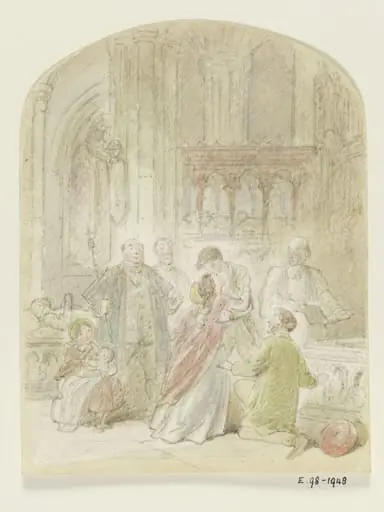 Untitled
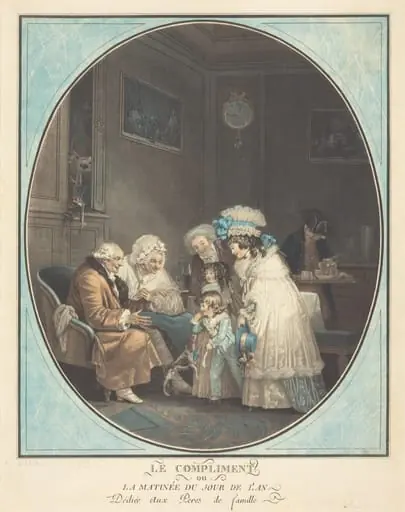 Le Compliment ou La Matinée du jour de l'an (The Compliment or New Year's Morning)
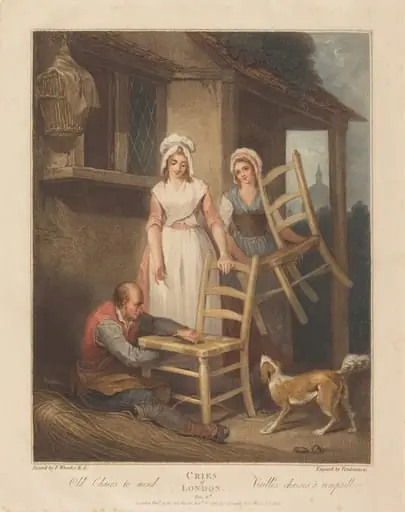 Old Chairs to Mend
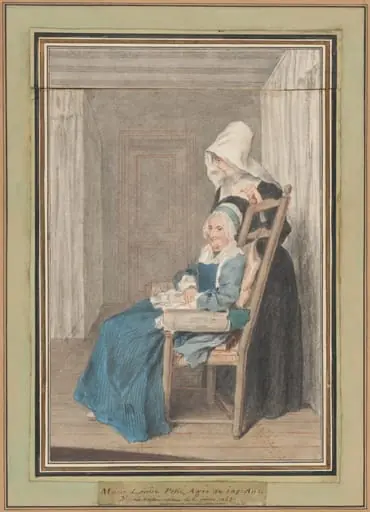 Marie Louise Petit at the Age of 105, with Her Young Nurse
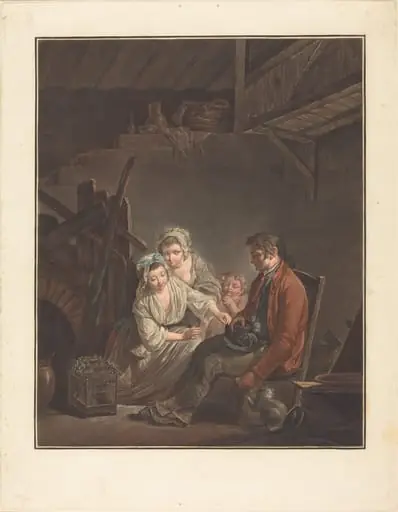 L'Oiseau privé
 H Beard Print Collection
 Two sketches for book illustrations
 The Wounded Leg
 A Poor Family Lamenting Their Situation in Their Humble Home