Artwork
The Everlasting Club
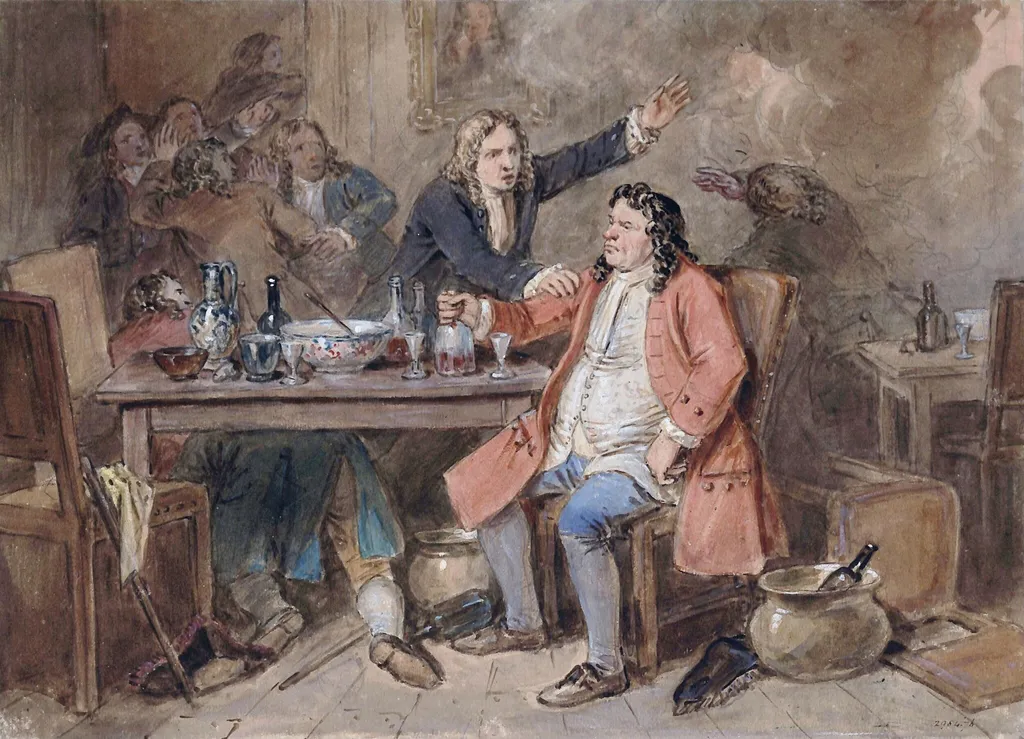
The Everlasting Club is a watercolor work on paper by the British Romanticist artist John Masey Wright. It dates from 1800 and is held in the collection of the Victoria and Albert Museum.
About this work
Overview
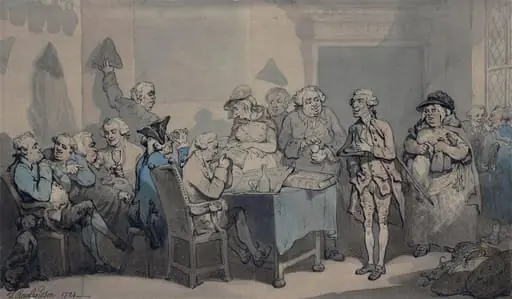
Created in 1800 by John Masey Wright, this watercolour was made as an illustration for issue 72 of *The Spectator*. It depicts a moment of social tension in a modest interior, capturing a scene of informal gathering and quiet conflict. The work was intended to accompany a published essay, blending literary narrative with visual storytelling in a format common to periodical publishing of the era.
Subject & Meaning
The scene portrays a group of men in a dim room, one slumped in his chair with a glass, another standing with an outstretched arm as if reprimanding.
The scene portrays a group of men in a dim room, one slumped in his chair with a glass, another standing with an outstretched arm as if reprimanding. Others observe with varied expressions—boredom, curiosity, detachment. The setting suggests a moment of moral reckoning or social critique, likely tied to *The Spectator*'s themes of manners and conduct. The tension is subtle, not violent, reflecting the essay’s focus on personal conduct within domestic spaces.
Technique & Style
Wright employed loose, fluid brushwork and a restrained palette of earth tones—ochres, browns, muted reds—to convey texture and atmosphere. The watercolour’s transparency allows underlying paper to suggest shadow and depth, while the unpolished surfaces of tableware and walls reinforce the scene’s informality. The lack of sharp detail invites the viewer to infer narrative from gesture and posture rather than precise realism.
History & Provenance
The work was produced for publication in *The Spectator*, a widely read periodical of the time. It entered the collection of the Victoria and Albert Museum, where it remains as part of their holdings in British illustration. Its survival reflects the cultural value placed on printed ephemera and the growing recognition of watercolour as a medium capable of nuanced narrative expression in the early 19th century.
Context
In the early 1800s, illustrated periodicals like *The Spectator* used visual art to extend the reach of literary essays on morality, society, and daily life. Wright’s illustration aligns with this tradition, translating Joseph Addison’s prose into a visual anecdote. The domestic interior, cluttered and unidealized, reflects contemporary interest in ordinary life as a subject worthy of artistic attention, distinct from grand historical or mythological themes.
Legacy
Though not widely exhibited today, the piece endures as an example of how illustration functioned as a bridge between literature and visual culture in the Georgian era. It demonstrates the capacity of watercolour to convey psychological nuance and social observation without theatricality. Its presence in a major museum collection affirms its role in documenting the visual language of print media during a formative period in British publishing.
Own this work as a print
Artist & collection
Artist
John Masey Wright (1777–1866) was a British watercolourist. He was the son of an organ-builder and was apprenticed to the same business, but, as it proved distasteful to him, he was allowed to follow his natural…

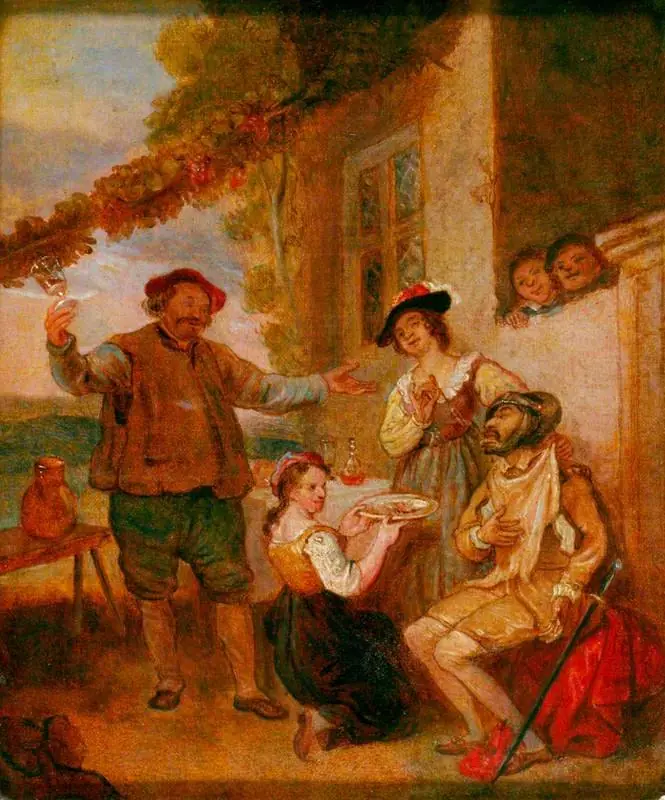 Don Quixote Outside an Inn (from Cervantes' novel)
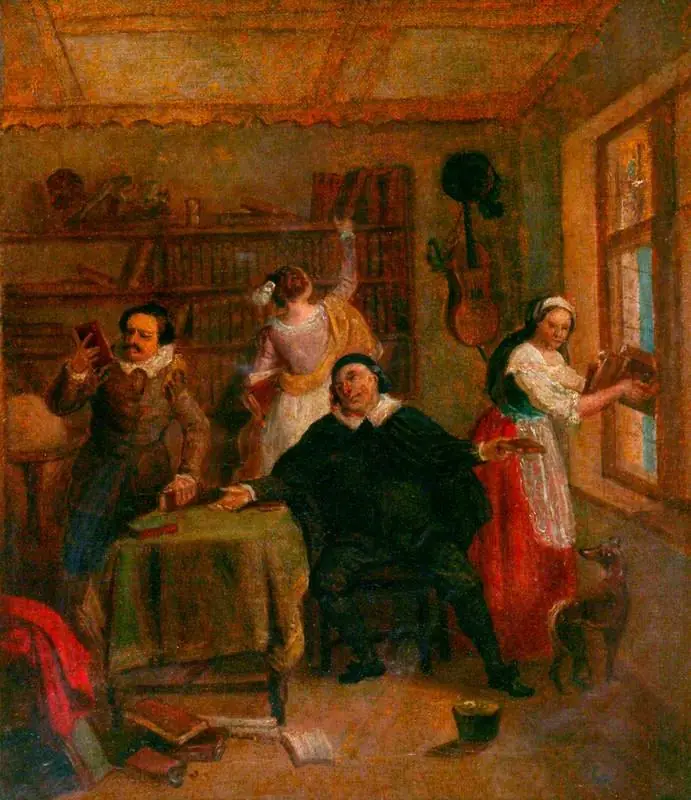 The Barber and Others Purging Don Quixote's Library (from Cervantes' novel)
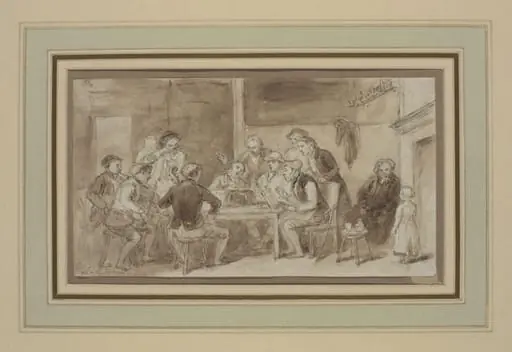 <i>A Musical Party</i>
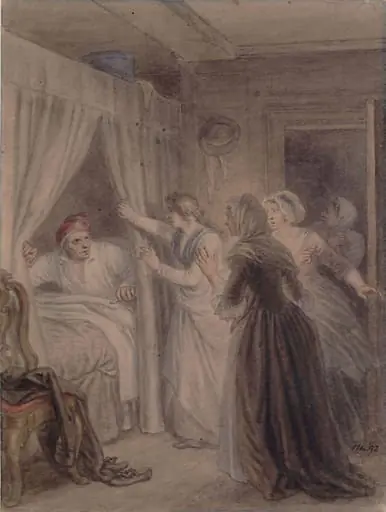 The Alarm
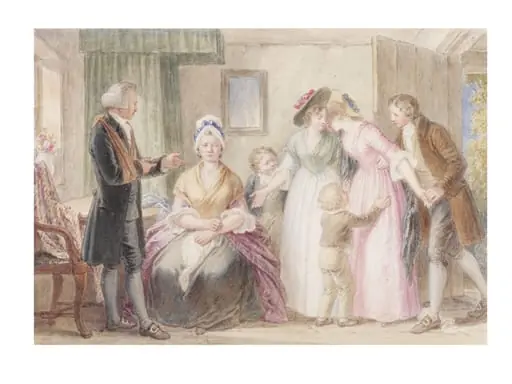 The Return of Olivia Goldsmith
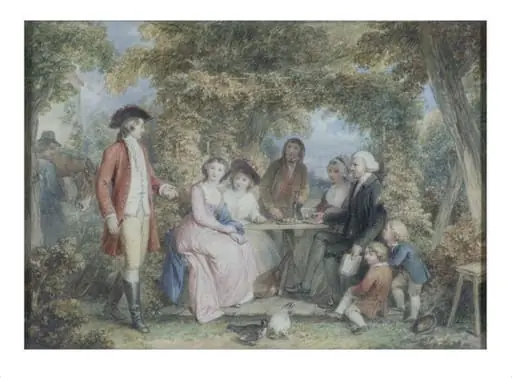 Young Thornhill introducing himself to the Primrose Family
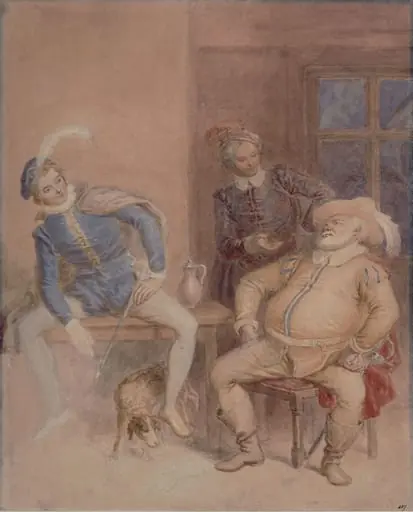 Falstaff, Prince Henry and Poins
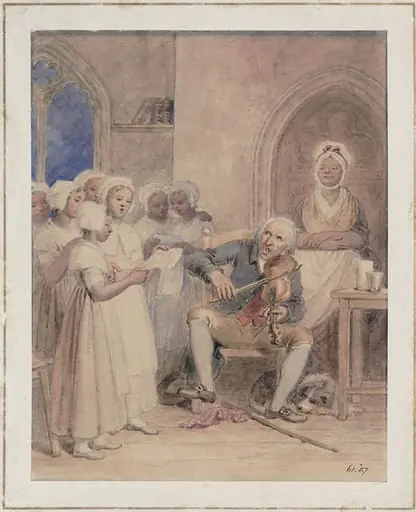 The village choir, the church interior
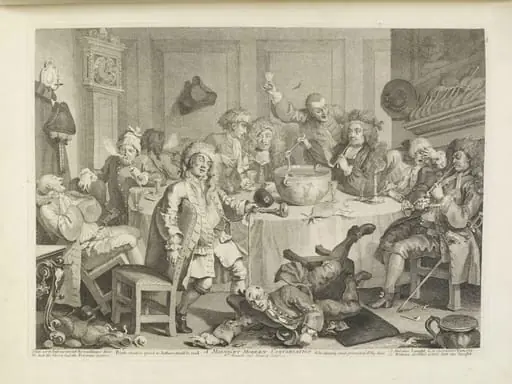 A Midnight Modern Conversation
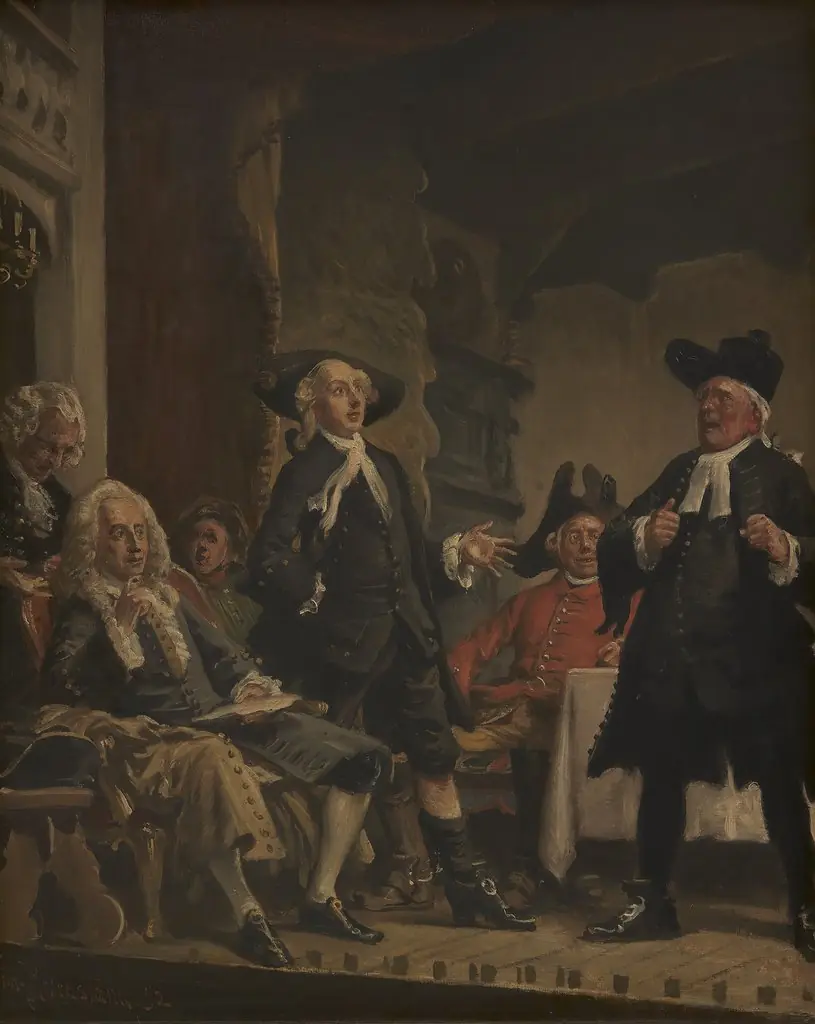 Holberg overværer en prøve på Erasmus Montanus
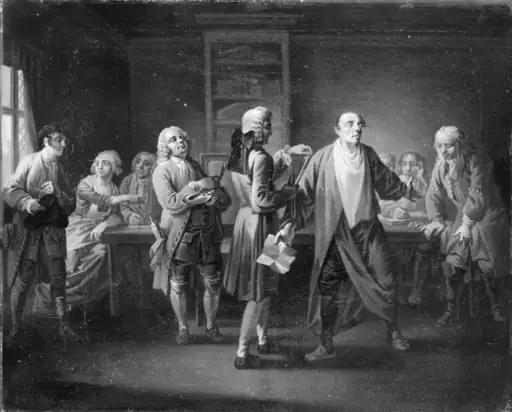 Den Stundesløse, I akt, 6. scene
 Holberg overværer en prøve på Erasmus Montanus
 Regents of the Almshouse, 1729
 Den Stundesløse, I akt, 6. scene
 Den politiske Kandestøber, II akt, 2. scene
 Fra Ludvig Holbergs "Erasmus Montanus", III akt, 3. scene
 The Hazard Room
 Fra Ludvig Holbergs "Den Stundesløse", I akt, 6. scene
 The Philosophers' Meal
 The Parish Vestry