Artwork
Part of Old London Bridge, with St. Magnus's Church
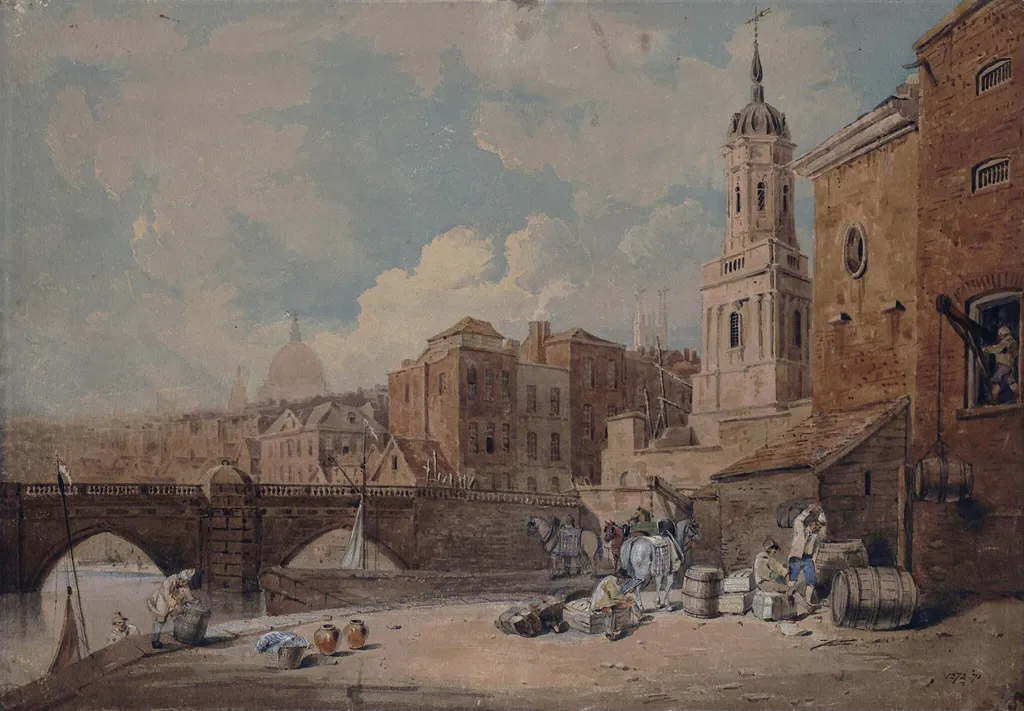
Part of Old London Bridge, with St. Magnus's Church is a watercolor work on paper by the British Romanticist artist John Thirtle. It dates from 1800 and is held in the collection of the Victoria and Albert Museum.
About this work
Overview
John Thirtle’s 1800 watercolour captures a quiet stretch of Old London Bridge, focusing on its architectural presence and the daily rhythms of its surroundings.
John Thirtle’s 1800 watercolour captures a quiet stretch of Old London Bridge, focusing on its architectural presence and the daily rhythms of its surroundings. The scene is neither ceremonial nor dramatic, but grounded in the ordinary movements of riverfront life. Soft washes of color and delicate brushwork convey a sense of calm observation, typical of early 19th-century topographical watercolours.
Subject & Meaning
The painting portrays laborers unloading goods, fishermen, and passersby along the bridge’s edge, emphasizing the commercial function of the Thames at the time. St. Magnus’s Church rises behind the activity, its tower anchoring the composition as a symbol of community continuity. The absence of monumental events underscores a focus on the lived experience of urban workers rather than official or heroic narratives.
Technique & Style
Thirtle employs transparent watercolour washes to suggest light and atmosphere, allowing the paper’s white to define highlights on water and stone. Subtle gradations in tone model the surfaces of buildings and the curve of the bridge, while loose, quick strokes imply movement in figures and sails. The palette is restrained—ochres, greys, and pale blues—enhancing the naturalism of the scene without theatrical effect.
History & Provenance
Created during Thirtle’s early career in Norwich, this work reflects his engagement with English landscape traditions and his interest in documenting regional architecture. It likely originated as a personal study or commission, later entering private collections before being acquired by the Victoria and Albert Museum, where it remains part of a broader collection of British watercolours from the period.
Context
In 1800, Old London Bridge was still the primary crossing over the Thames, lined with shops and homes, and bustling with trade. The church, built after the Great Fire, stood as a landmark amid dense urban development. Thirtle’s depiction aligns with a growing trend among artists to record everyday urban environments, contrasting with the grand historical or pastoral subjects favored by academic circles.
Legacy
Thirtle’s watercolour contributes to a quiet but significant body of work that documented England’s pre-industrial cities with sincerity and attention to detail. Though not widely known in his lifetime, his focus on ordinary scenes influenced later topographical artists and remains valuable as a visual record of London’s pre-modern riverscape.
Artist & collection
Artist
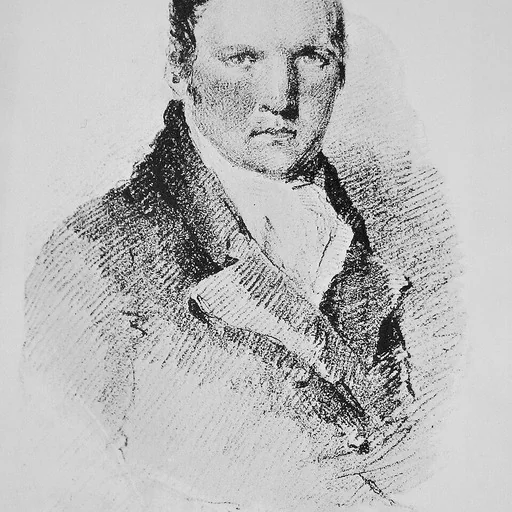
John Thirtle (baptised 22 June 1777 – 30 September 1839) was an English watercolour artist and frame-maker.

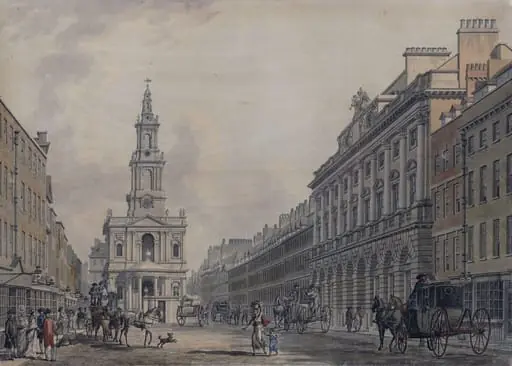 The Strand, with Somerset House and St Mary's Church
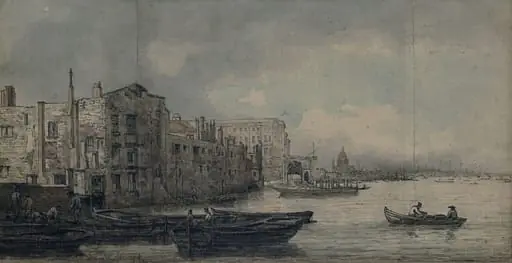 The Thames, showing Somerset House in the course of construction
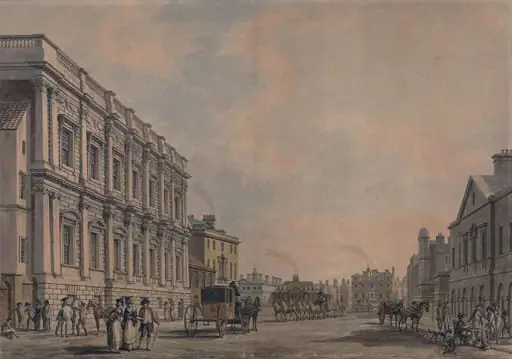 Whitehall, with the Banqueting House
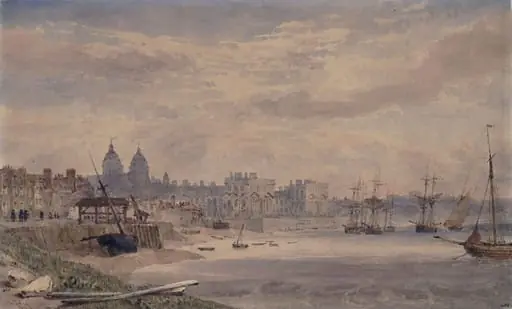 Greenwich Hospital
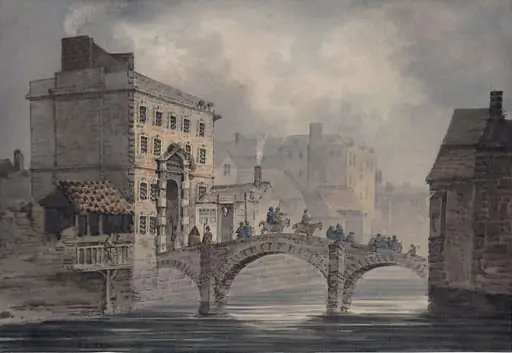 A Bridge over a River in a Town
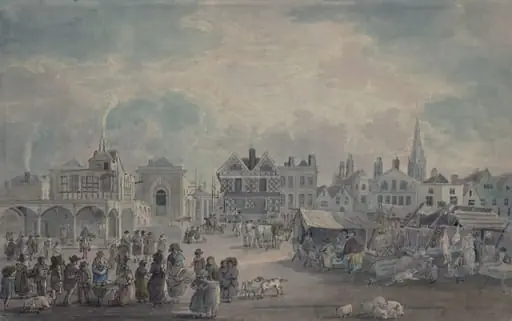 The Market Place, Salisbury
 Cheyne Walk, Chelsea
 Untitled
 St. Paul's Cathedral, from the terrace of Old Somerset House
 The Naval College from the River at Greenwich