Artwork
Farm carts, Near Wisbech
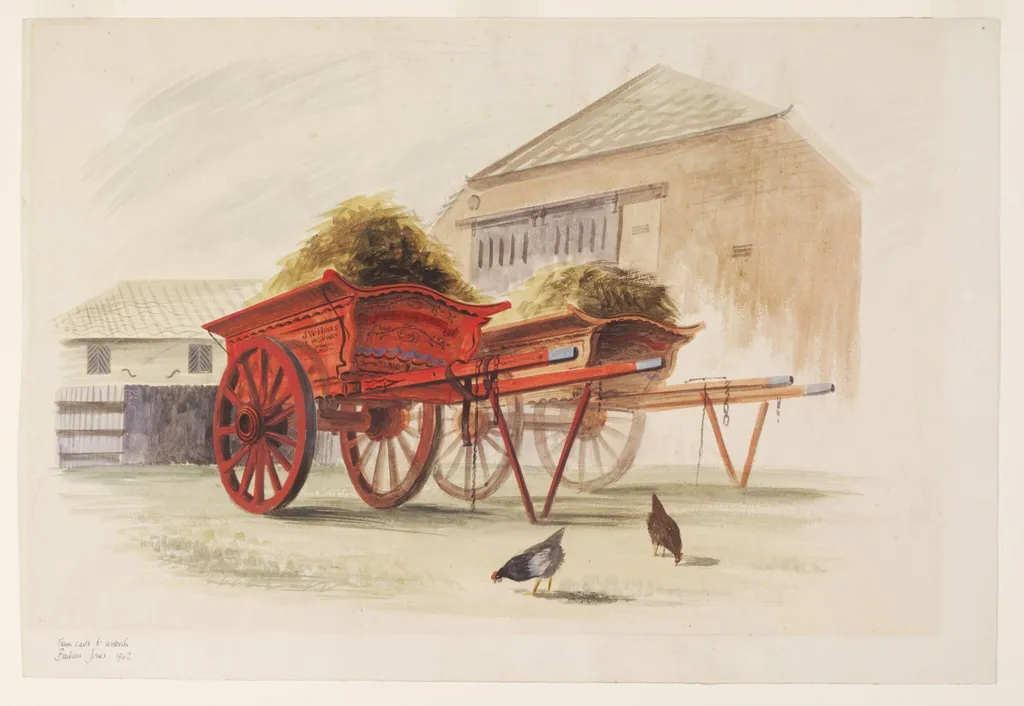
Farm carts, Near Wisbech is a watercolor work on paper by the Social Realist artist Barbara Jones. It dates from 1942 and is held in the collection of the Victoria and Albert Museum.
About this work
Overview
Created as part of the *Recording Britain* initiative, the work documents rural scenes deemed at risk during wartime.
Painted in 1942, this watercolour by Barbara Jones captures two traditional farm carts near Wisbech, England. Created as part of the *Recording Britain* initiative, the work documents rural scenes deemed at risk during wartime. The piece belongs to a larger collection of over 1,500 artworks produced by 97 artists between 1940 and 1943, funded by the Pilgrim Trust and directed by Sir Kenneth Clark to preserve visual records of everyday British life.
Subject & Meaning
The scene portrays two hand-painted carts stacked with hay, their wooden wheels and decorative motifs reflecting regional craftsmanship. Two birds near the front suggest quiet rural activity, while the modest buildings in the background hint at an enduring agricultural landscape. The work does not idealize its subject but instead records the ordinary, emphasizing the quiet dignity of rural labor and vernacular design during a time of national upheaval.
Technique & Style
Jones employed loose, fluid brushwork to suggest texture and light, particularly on the hay and wagon surfaces. The palette is restrained, with muted earth tones surrounding the vivid red of the cart, which draws the eye without dominating. Delicate washes define form rather than sharp lines, conveying atmosphere over detail. The composition is uncluttered, focusing attention on the carts and their immediate surroundings with minimal background intrusion.
History & Provenance
The painting was produced under the *Recording Britain* project, which systematically commissioned artists to document at-risk rural scenes during World War II. It entered the Victoria and Albert Museum’s collection as part of this initiative, where it remains accessible to the public. The project’s archives preserve not only the artworks but also correspondence and location notes, grounding each piece in a specific time and place.
Context
During the early 1940s, Britain faced rapid social and physical change due to war, industrialization, and shifting land use. The *Recording Britain* initiative responded to fears that traditional rural life—its crafts, buildings, and tools—would vanish. Jones’s depiction of farm carts, common in agricultural communities, served as a quiet act of preservation, capturing objects and practices that were increasingly replaced by mechanized alternatives.
Legacy
The *Recording Britain* collection, including this watercolour, now serves as a vital historical archive of pre-industrial rural England. Jones’s work, like others in the series, offers insight into regional aesthetics and daily life before widespread modernization. These images continue to inform scholarly research and public understanding of mid-20th-century British material culture, valued for their documentary integrity rather than artistic flourish.
Artist & collection
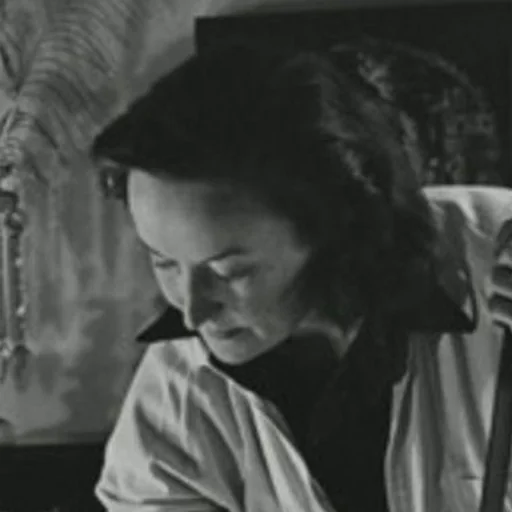
Artist
Barbara Mildred Jones (25 December 1912 – 28 August 1978) was an English artist, writer and mural painter. She is known for curating the exhibition Black Eyes and Lemonade (1951) and her book The Unsophisticated Arts (1951).

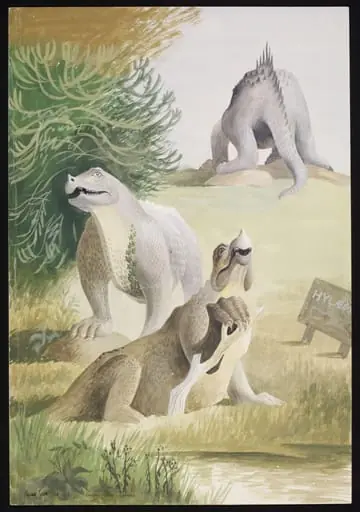 Crystal Palace Gardens, Sydenham, Kent
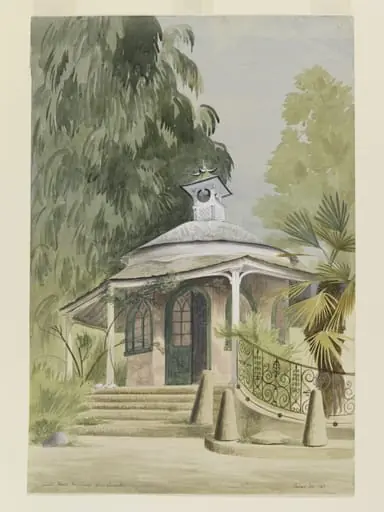 Summer House, Marlborough House, Falmouth
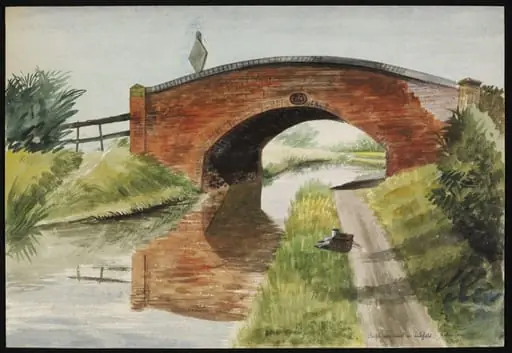 Bridge over Canal, near Litchfield
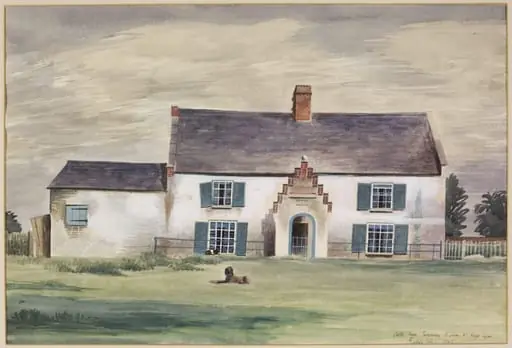 Castle Farm, Terrington St John, near King's Lynn
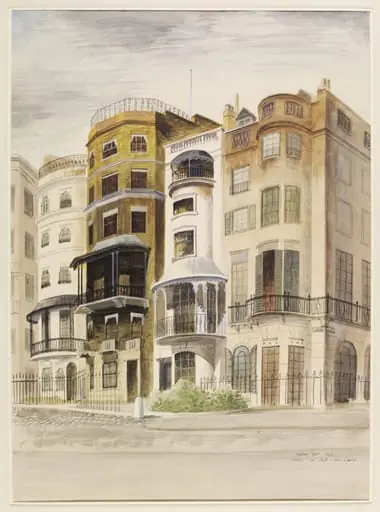 93 to 97 Park Lane, W.1.
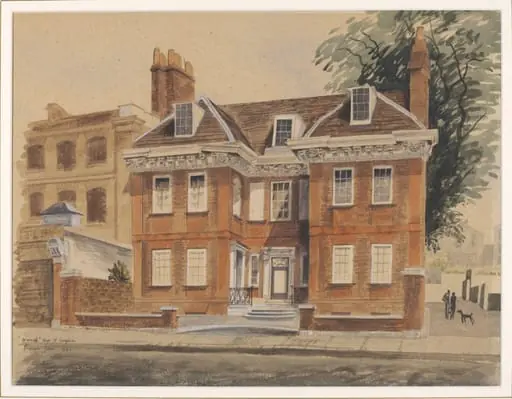 "Wrencote," High Street, Croydon
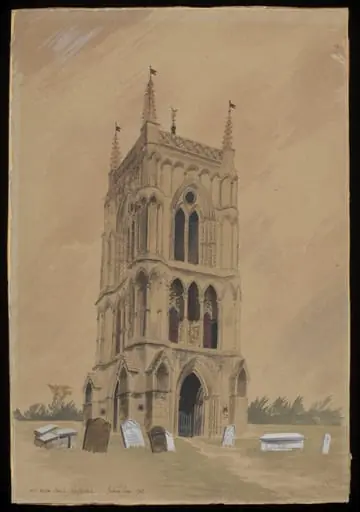 The bell tower, St. Mary's Church, West Walton near Wisbech
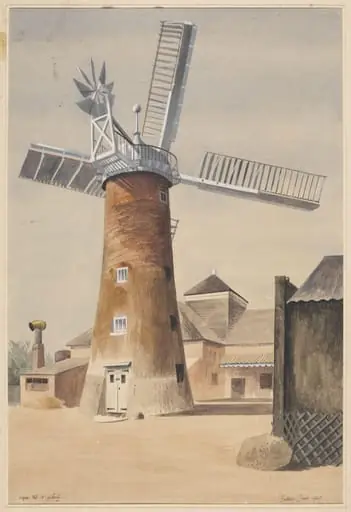 The Mill, Walpole Highway, near Wisbech
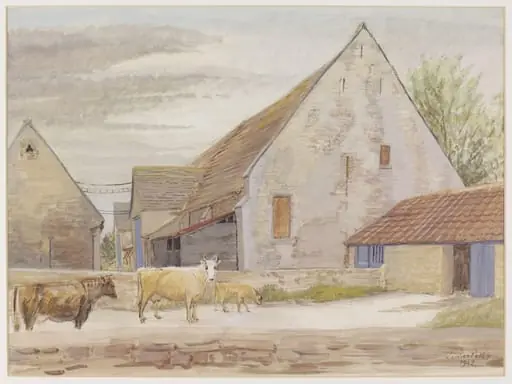 Barns at Frocester Court, Near Stonehouse
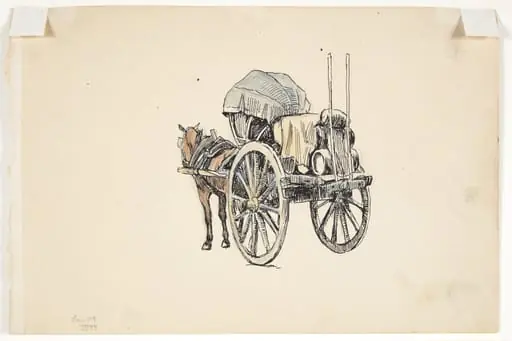 Italiensk fragtvogn
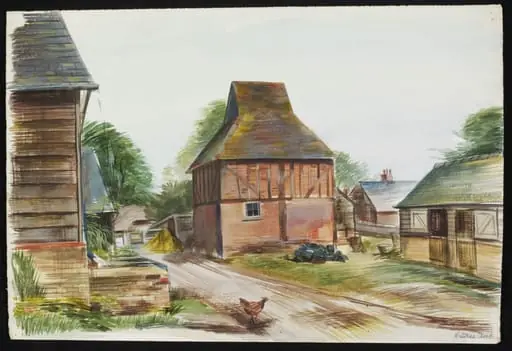 Sixteenth Century Dovehouse, Offley
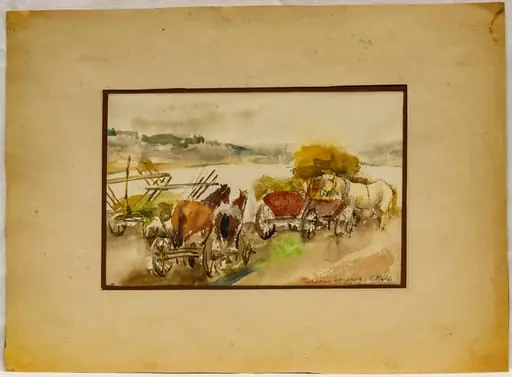 Căruțe la Dunăre
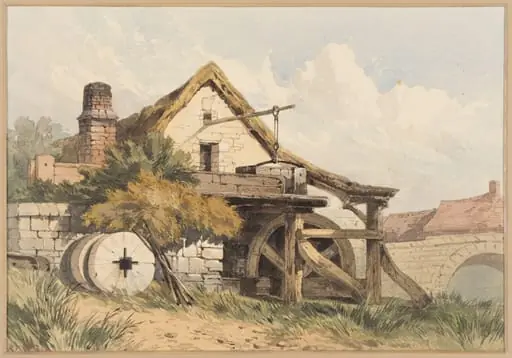 Untitled
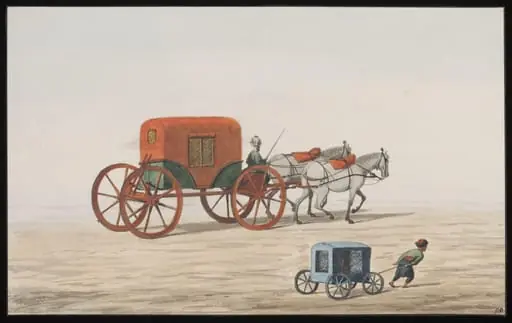 Araba or carriage, and a small araba for children
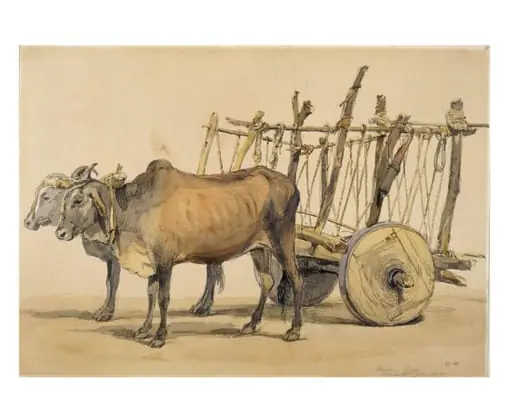 Deccani bullock cart
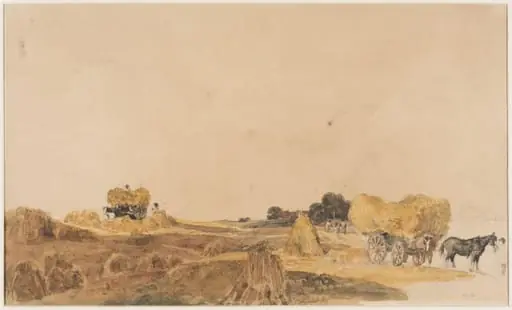 Cornfield with loaded wagons, near Lincoln
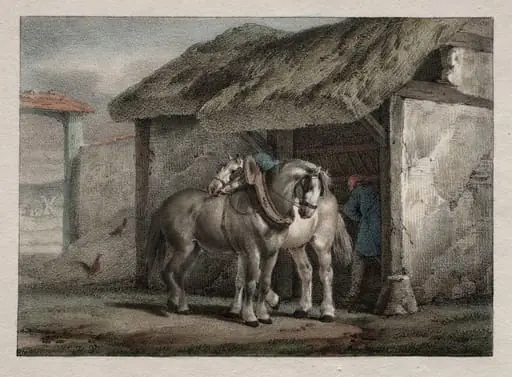 Farm Horse
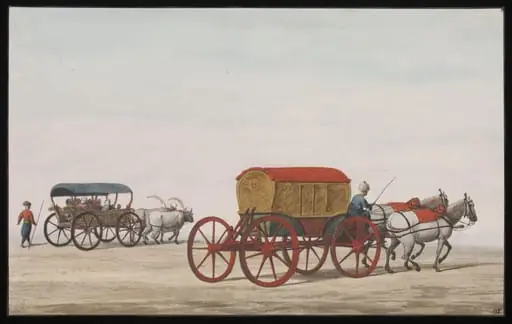 Arabas, or carriages
 Madams Farm, West Sussex
 Red House Farm, Sproughton, near Ipswich