Artwork
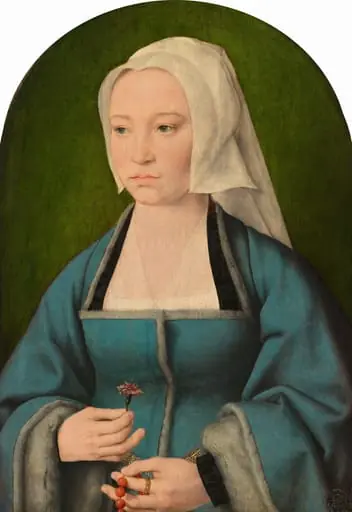
Portrait of a woman with a rosary
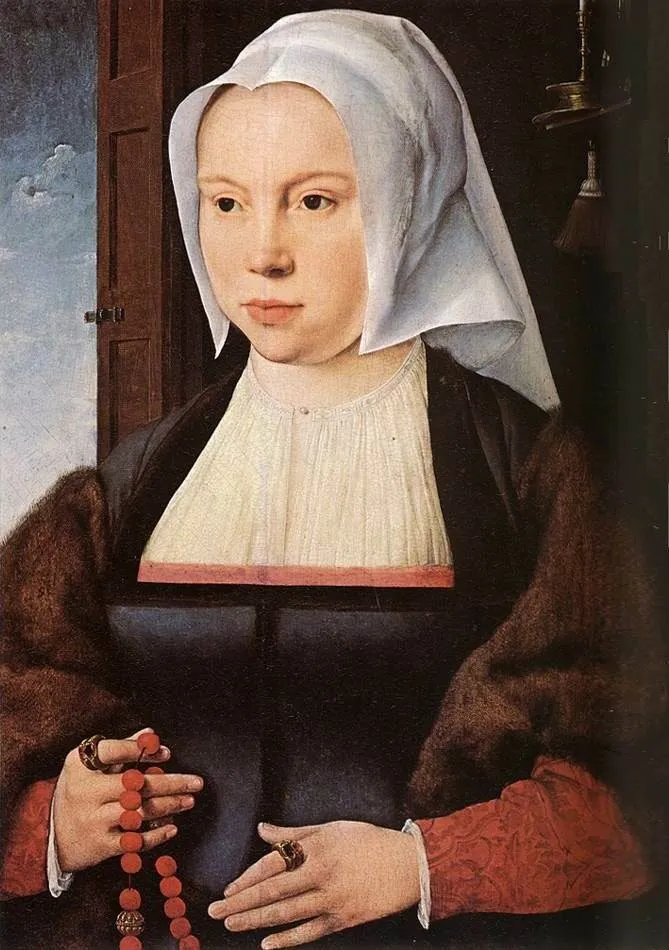
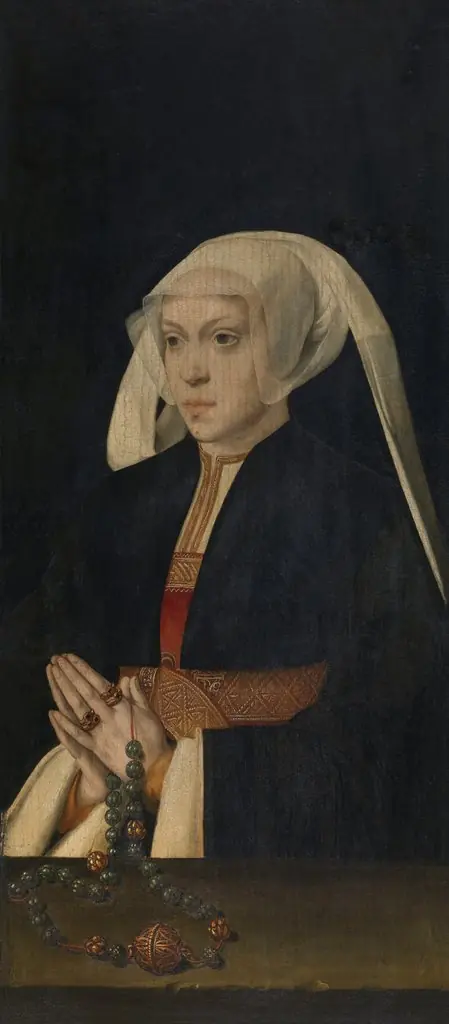
Portrait of a woman with a rosary is an oil painting by the Northern Renaissance artist Joos van Cleve. It dates from 1520 and is held in the collection of the Uffizi Gallery.
About this work
Overview
Created circa 1520 by Joos van Cleve, a prominent Antwerp painter active in the early sixteenth century, this oil on panel presents a half‑length portrait of a woman. The work is part of the Uffizi Gallery’s collection and exemplifies the artist’s blend of Netherlandish tradition with the emerging Renaissance sensibility.
Subject & Meaning
The sitter wears a modest white cap, a dark gown trimmed with fur, and a simple ring. In her left hand she holds a string of red rosary beads, while her right hand rests gently on her chest. The combination of devotional object and restrained attire suggests a pious identity without overt narrative detail.
Technique & Style
Van Cleve employs the smooth, luminous modeling characteristic of early Netherlandish oil painting, using a restrained palette of muted whites, deep blacks, and subtle reds. Soft transitions and delicate brushwork give the figure a calm, three‑dimensional presence against a plain backdrop composed of a dark curtain and a small, light‑filled window.
History & Provenance
The portrait entered the Uffizi’s holdings at an unspecified date, where it remains on display. Its attribution to Joos van Cleve has been supported by stylistic analysis linking it to his known works from the 1520s, a period when the artist was at the height of his career in Antwerp.
Context
Working during the Northern Renaissance, van Cleve merged the meticulous detail of Early Netherlandish art with the emerging humanist interest in individual character. Portraits such as this one reflect the era’s growing demand for personal devotional images that combine intimate realism with subtle religious symbolism.
Artist & collection
Artist
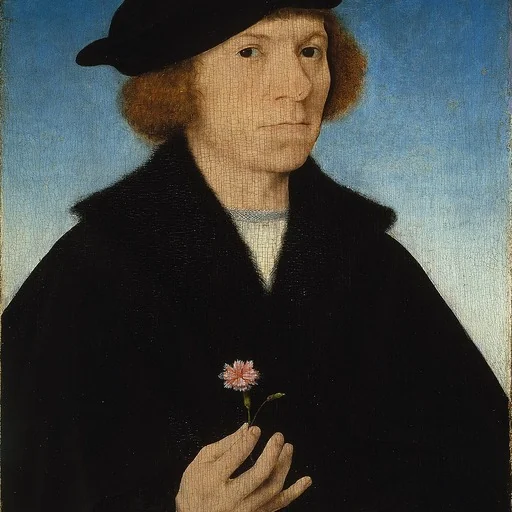
Joos van Cleve (; also Joos van der Beke; c. 1485–1490 – 1540/1541) was a leading painter active in Antwerp from his arrival there around 1511 until his death in 1540 or 1541. Within Dutch and Flemish Renaissance…

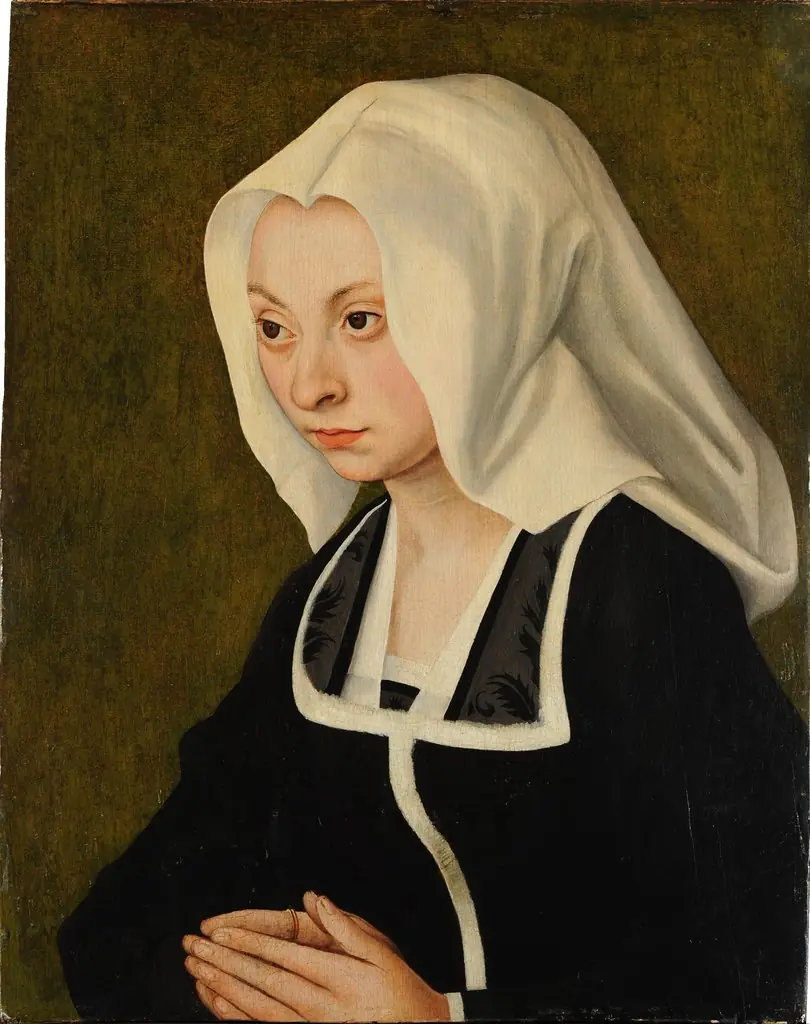 Portrait of a Woman
 Portrait of a Woman
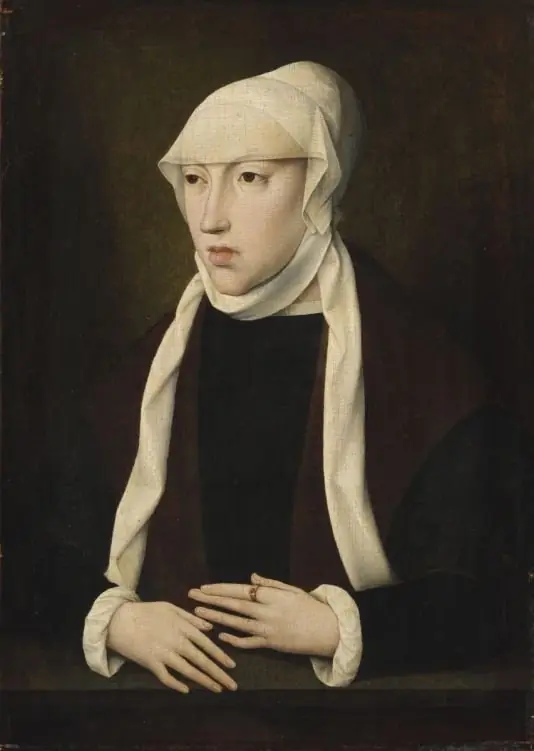 Portrait of Mary of Hungary (Mary of Austria, Queen of Hungary)
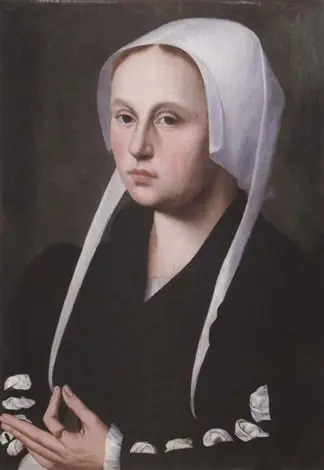 Portrait of a Lady, called Agatha van Schoonhoven
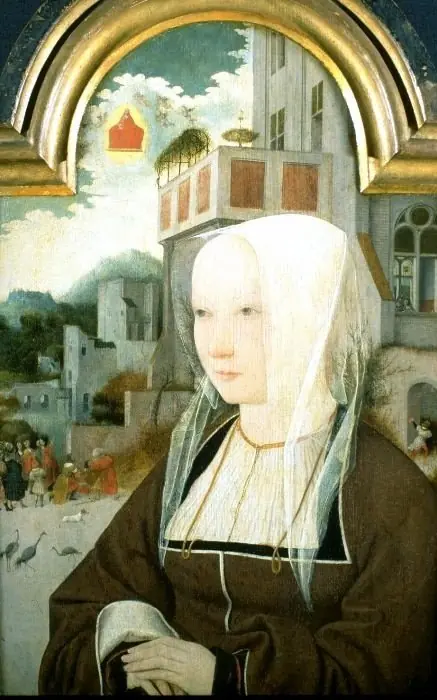 Portrait of a lady, with the Tiburtine Sibyl foretelling the advent of Christ to the emperor Augustus
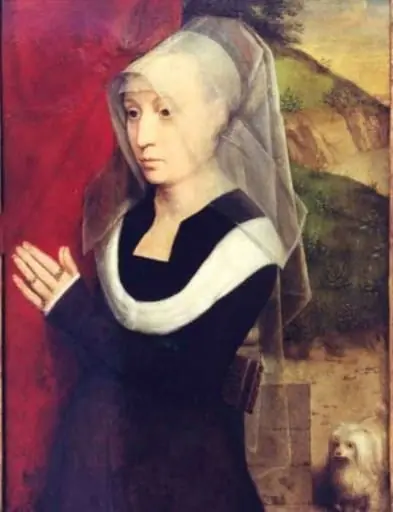 Portret de donatoare
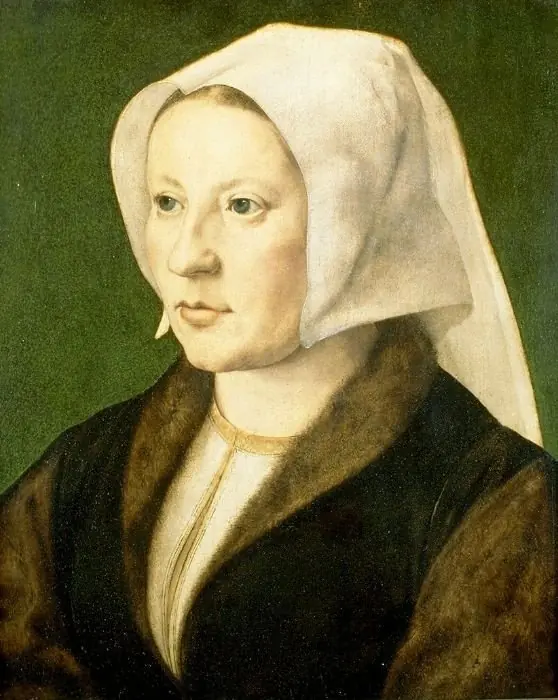 Portrait of a woman
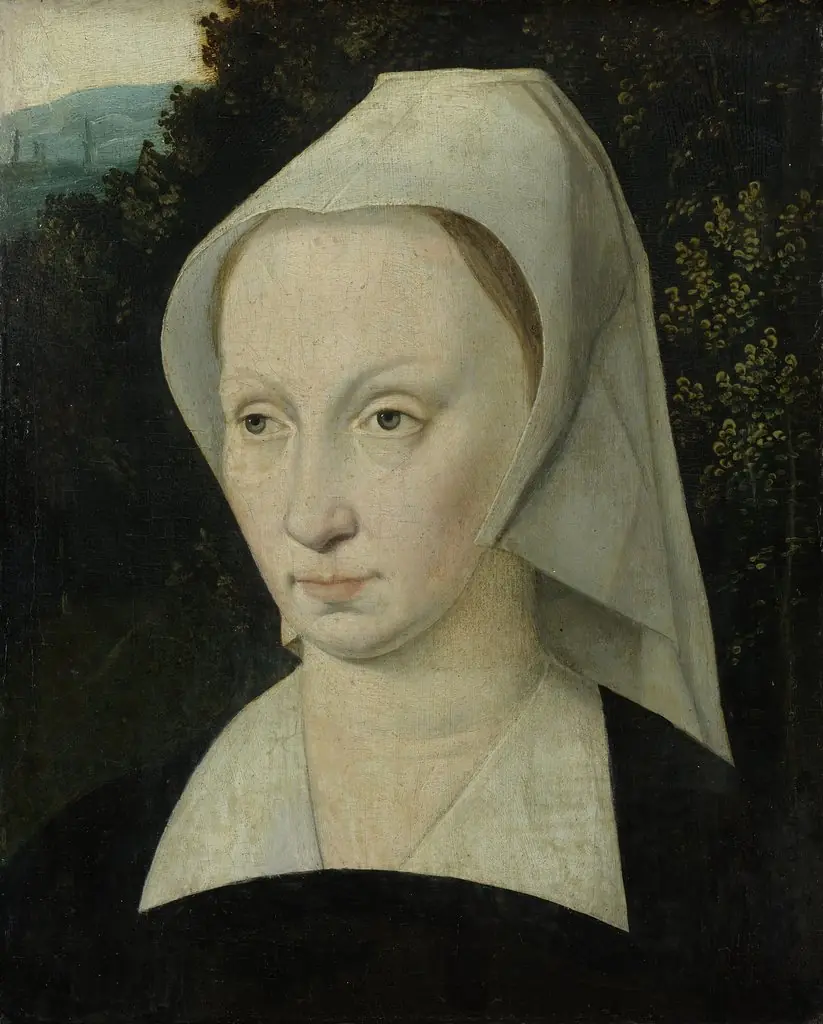 Portrait of a woman
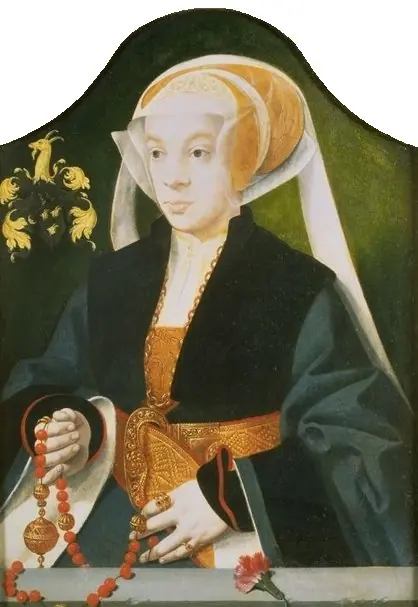 Bildnis einer Frau mit Rosenkranz und Nelke
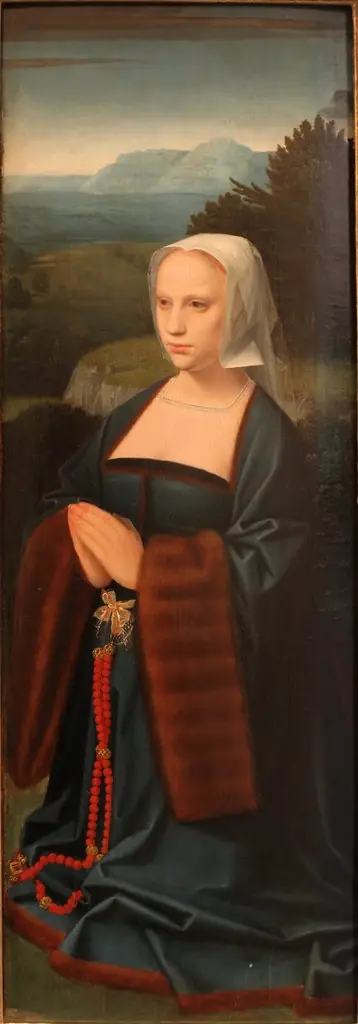 Female donor
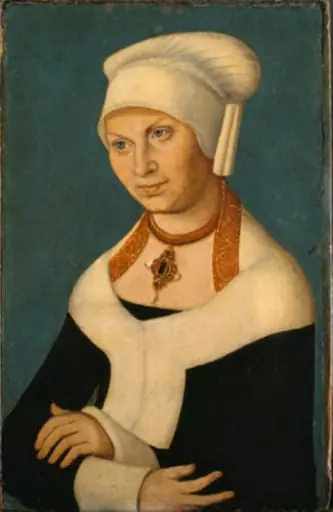 Portrait of the Duchess Barbara of Saxony, 1478-1534 (wife of George the Bearded)
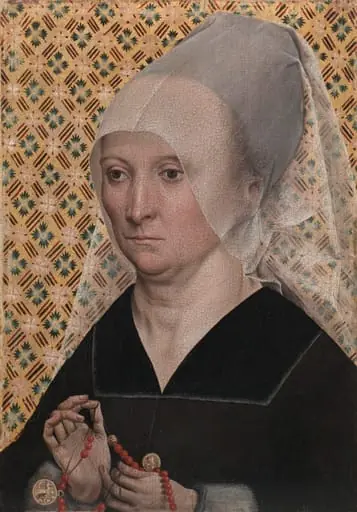 Portrait of a Woman