Artwork
Female donor
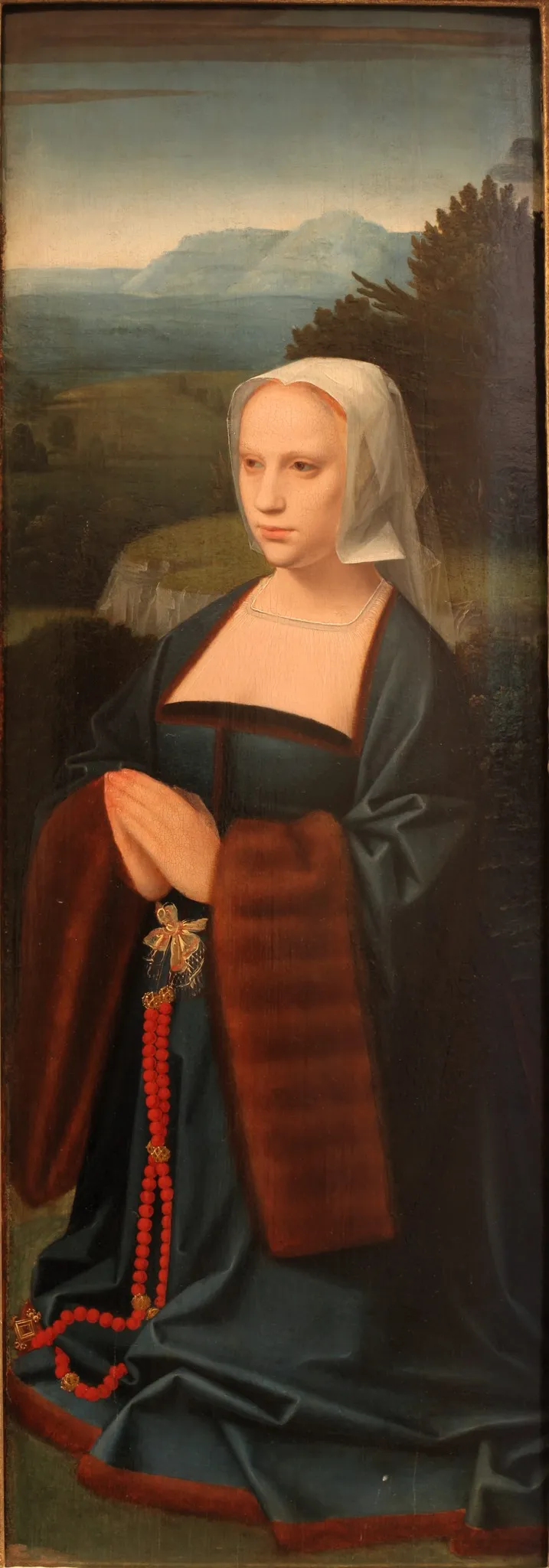
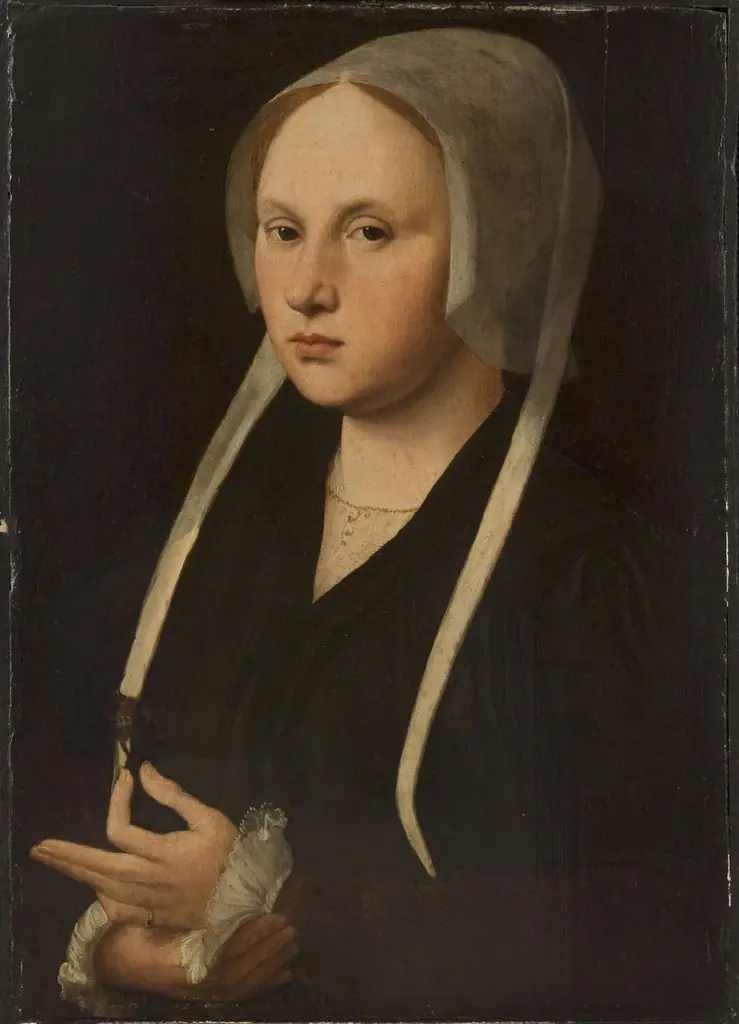
Female donor is an oil painting by the Early Baroque Italian artist Adriaen Isenbrandt. It dates from 1525 and is held in the collection of the Museum of Fine Arts of Lyon.
About this work
Overview
Though often associated with the Northern Renaissance, it predates the Baroque period and reflects the lingering traditions of Early Netherlandish art.
Painted in 1525 by Adriaen Isenbrandt, this oil portrait depicts a woman in private devotion. Though often associated with the Northern Renaissance, it predates the Baroque period and reflects the lingering traditions of Early Netherlandish art. The work resides in the Museum of Fine Arts of Lyon, where it stands as a quiet example of devotional portraiture from a time when religious imagery remained central to artistic production in Flanders.
Subject & Meaning
The woman is shown in a moment of personal prayer, hands clasped before her, a rosary with a gold crucifix resting in her grip. Her attire—dark blue gown, red cloak, and white headdress—signals modesty and social standing, while the rosary underscores her piety. The absence of saints or biblical scenes shifts focus entirely to the individual’s inner devotion, suggesting the painting served as a private spiritual aid rather than a public altarpiece.
Technique & Style
Isenbrandt employed fine brushwork to render textures: the sheen of silk, the weave of linen, and the smoothness of the rosary beads. The palette is restrained, dominated by muted blues, deep reds, and soft grays, with gentle lighting that avoids dramatic contrast. The landscape behind her, softly rendered with rolling hills and sparse trees, extends the sense of calm, reinforcing the contemplative mood without distracting from the figure.
History & Provenance
Adriaen Isenbrandt was a documented master in Bruges, operating a busy workshop that produced religious panels for local patrons. This portrait likely belonged to a wealthy laywoman who commissioned it for private use. Its presence in Lyon today suggests it entered a French collection sometime after the Reformation, possibly through trade or inheritance, though its exact path from Bruges to Lyon remains undocumented.
Context
In the 1520s, Bruges was still a center of devotional art, even as religious upheaval spread across Europe. Isenbrandt’s conservative style—rooted in the traditions of Van Eyck and Memling—contrasted with emerging Reformation ideals that rejected such imagery. This portrait reflects a world where personal piety was expressed through material objects and quiet ritual, before the full impact of Protestant reform reshaped visual culture.
Legacy
Though Isenbrandt’s name faded after his death, his works, including this portrait, remain valuable for understanding lay devotion in early 16th-century Flanders. The painting’s emphasis on individual spirituality, rather than institutional religion, offers insight into how ordinary believers engaged with faith. It stands as a modest but enduring record of private religious life in a time of profound change.
Artist & collection
Artist
Adriaen Isenbrandt or Adriaen Ysenbrandt (between 1480 and 1490 – July 1551) was a painter in Bruges, in the final years of Early Netherlandish painting, and the first of the Dutch and Flemish Renaissance painting of the Northern…

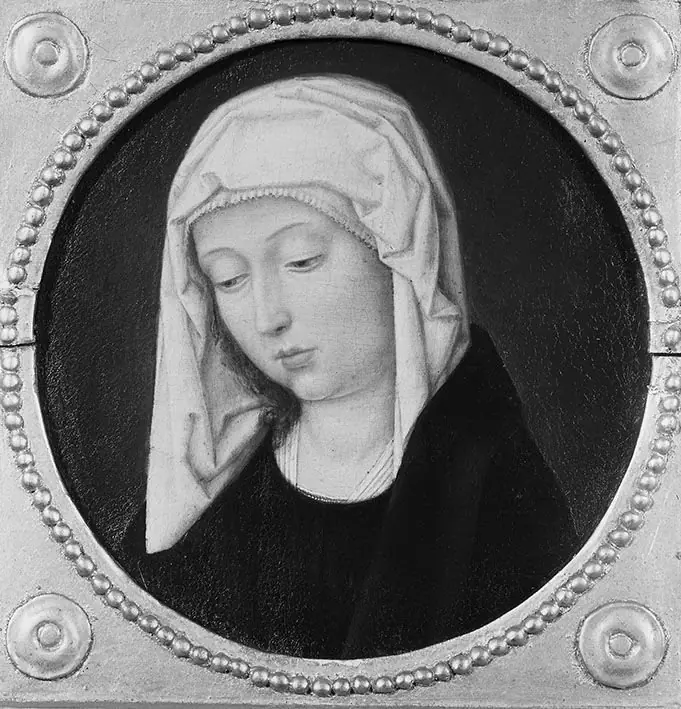
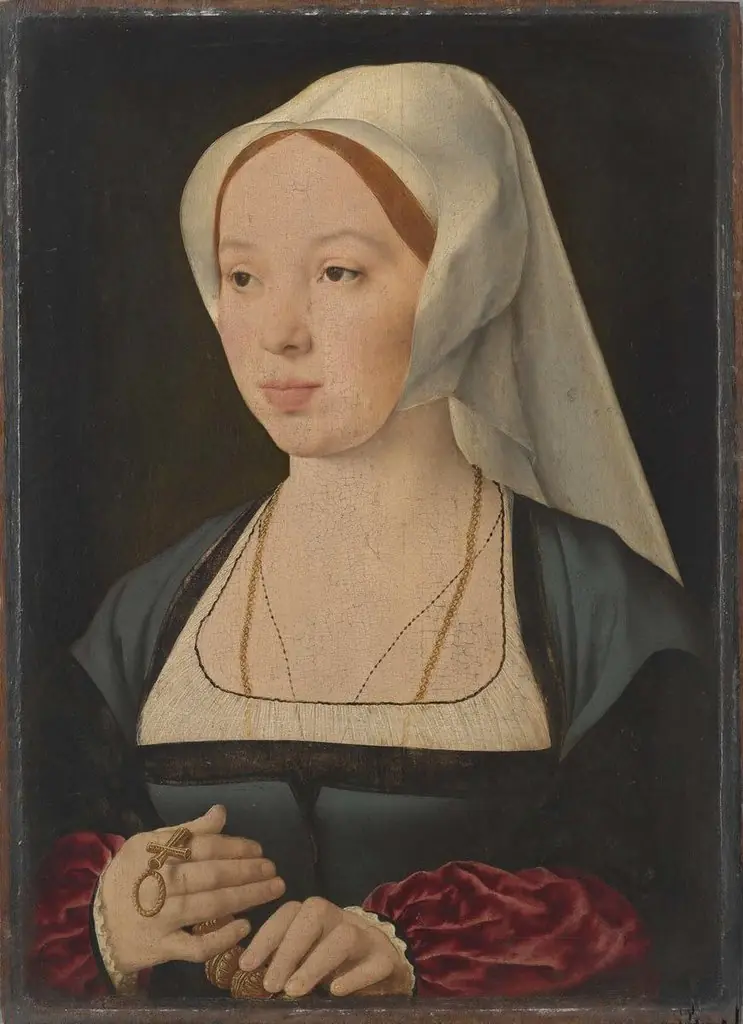 Portrait of a Lady
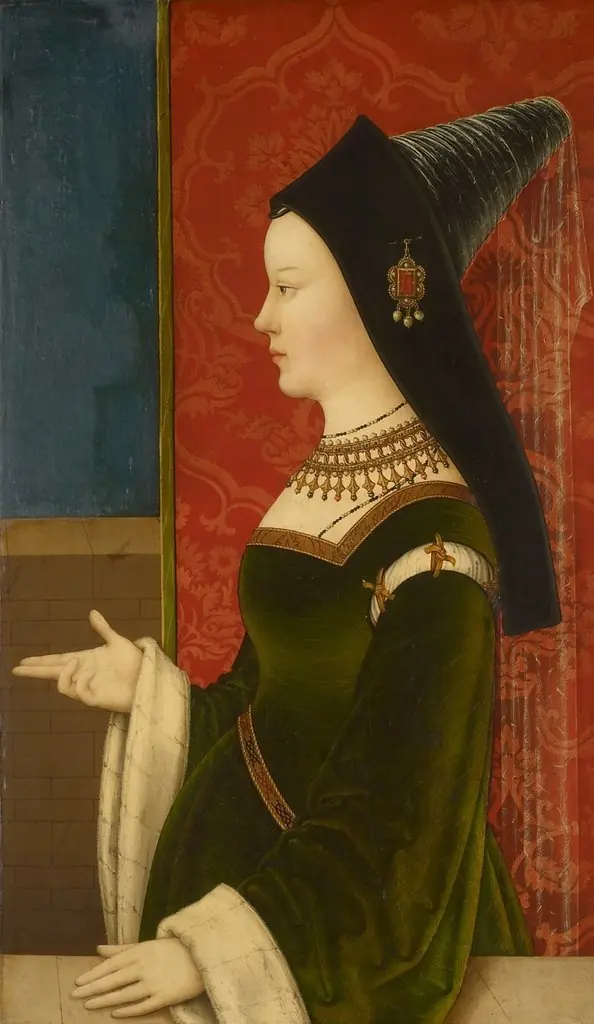 Mary Duchess of Burgundy
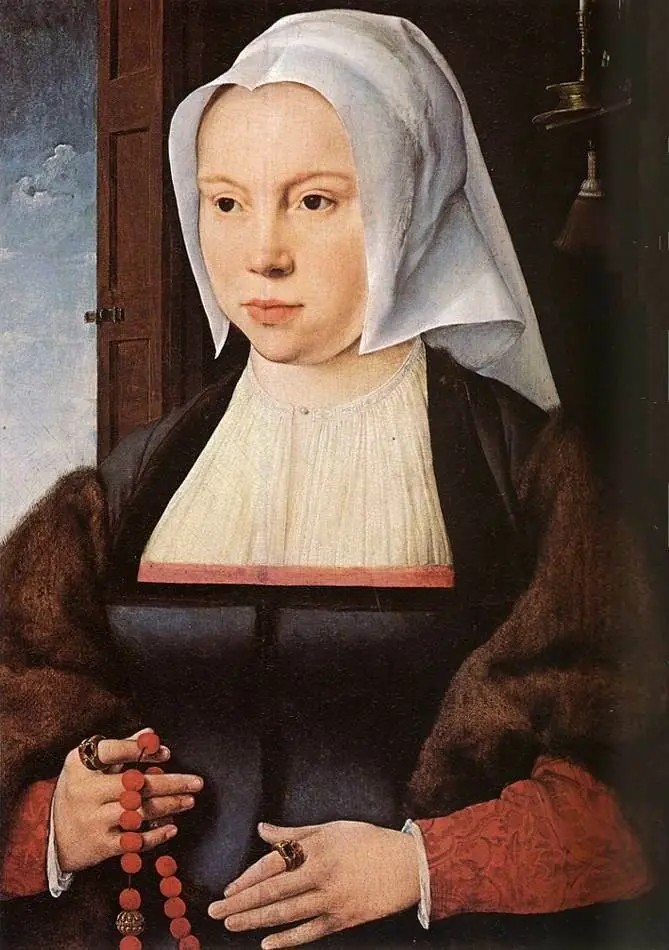 Portrait of a woman with a rosary
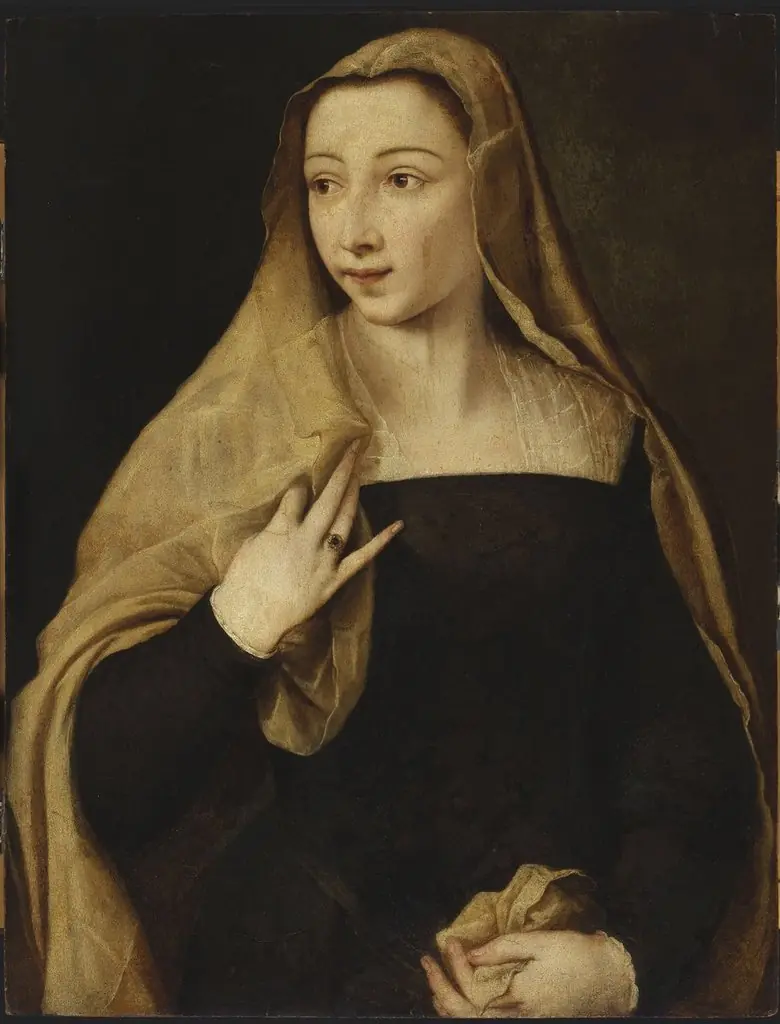 Portrait of Settimia Jacovacci (?)
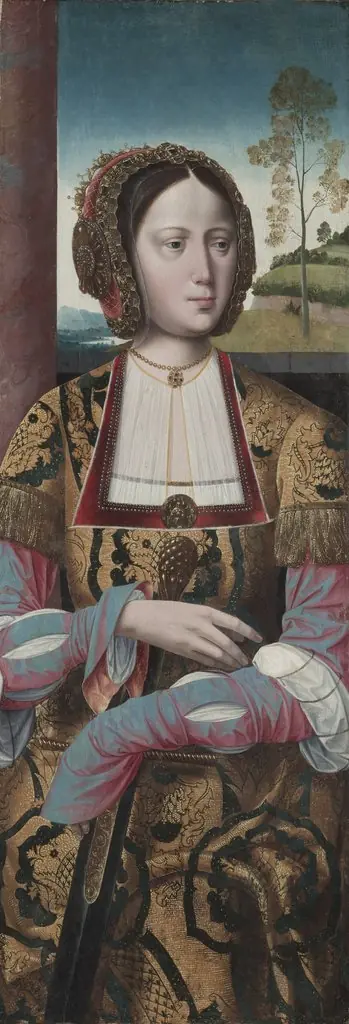 Saint Catherine
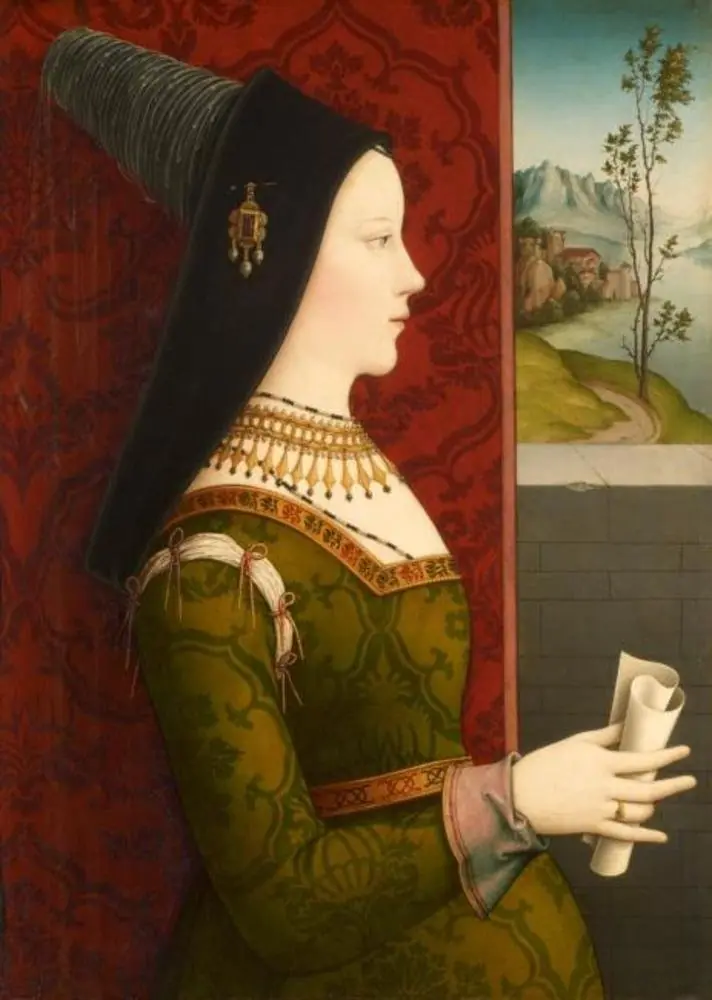 Portrait of Mary of Burgundy
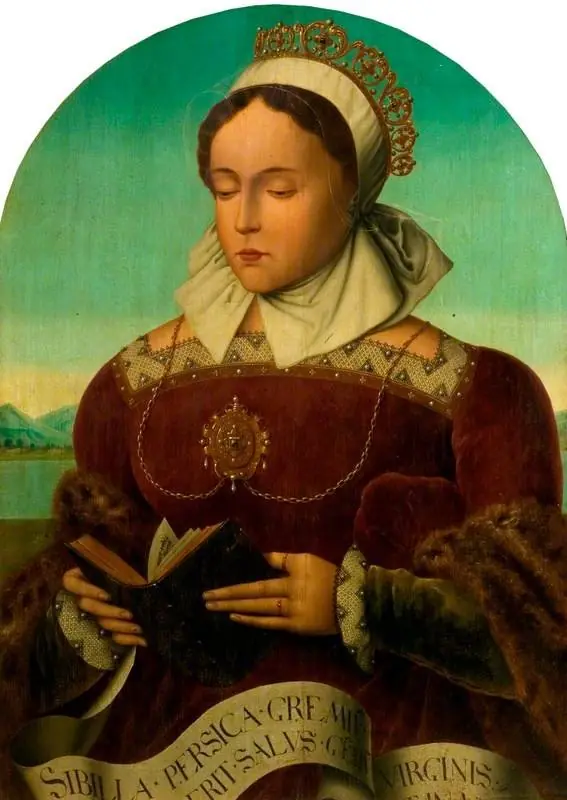 Sibilla Persica (The Persian Sibyl)
 Portrait of Mary of Hungary (Mary of Austria, Queen of Hungary)
 Portret de donatoare
 Portrait of Marguerite Numan, wife of Philippe Haneton, with her five daughters and Saint Margaret
 Portrait of a Lady, called Agatha van Schoonhoven
 Portrait of a Lady