Artwork
Seated Woman
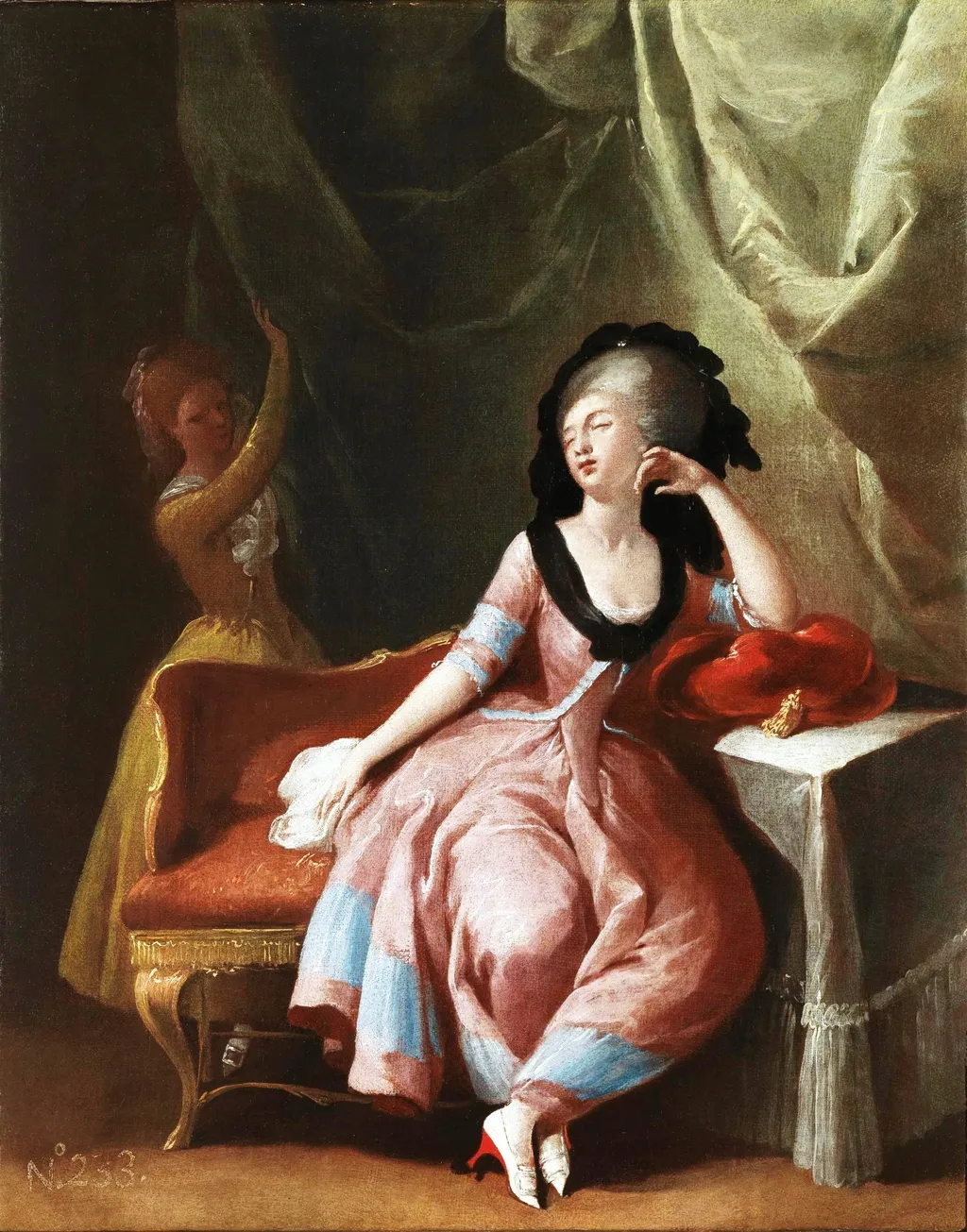
Seated Woman is an oil painting by the Rococo painting artist José Camarón y Bonanat. It dates from 1793 and is held in the collection of the Museo del Prado.
About this work
Overview
Created in 1793, *Seated Woman* is an oil painting by Spanish artist José Camarón y Bonanat. The work belongs to the late Rococo period and is part of the Museo del Prado’s permanent collection. It presents a quiet interior scene centered on a solitary female figure, rendered with the soft palette and delicate handling typical of the era.
Subject & Meaning
The composition shows a woman seated on a chair, her head rested on her right hand while her left hand lies gently on her lap. She wears a pink dress accented with blue, a black shawl, and a red hat placed on a nearby table. Behind her, a second figure in a yellow dress stands, while a curtain forms the backdrop, suggesting a moment of private repose and introspection.
Technique & Style
Camarón employed oil on canvas to achieve a smooth, luminous surface, allowing subtle gradations of light across the fabrics and skin. The muted coloration and the slightly blurred facial features reflect Rococo’s preference for elegance over strict realism. The handling of drapery and the delicate rendering of textures demonstrate the artist’s skill as both draftsman and painter.
History & Provenance
Born in Segorbe in 1731, José Camarón y Bonanat pursued a career as a draftsman, painter, and engraver, dying in Valencia in 1803. *Seated Woman* entered the Museo del Prado’s holdings, where it remains on display. Documentation of its acquisition is limited, but the painting has been catalogued as part of the museum’s collection of 18th‑century Spanish works.
Context
The presence of a secondary figure and theatrical curtain hints at the influence of genre painting and the period’s interest in staged, narrative interiors.
The painting emerges at a time when Spanish art was transitioning from the exuberance of the Baroque toward the lighter, more decorative sensibilities of Rococo. Camarón’s work reflects this shift, emphasizing intimate domestic scenes and refined elegance. The presence of a secondary figure and theatrical curtain hints at the influence of genre painting and the period’s interest in staged, narrative interiors.
Own this work as a print
Artist & collection
Artist
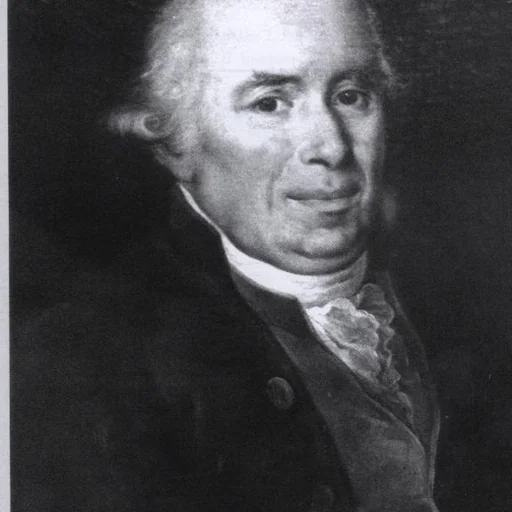
José Camarón Bonanat, or Bononat (18 May 1731, Segorbe - 14 July 1803, Valencia) was a Spanish draftsman, painter and engraver. Most early sources give his maternal family name as Boronat.

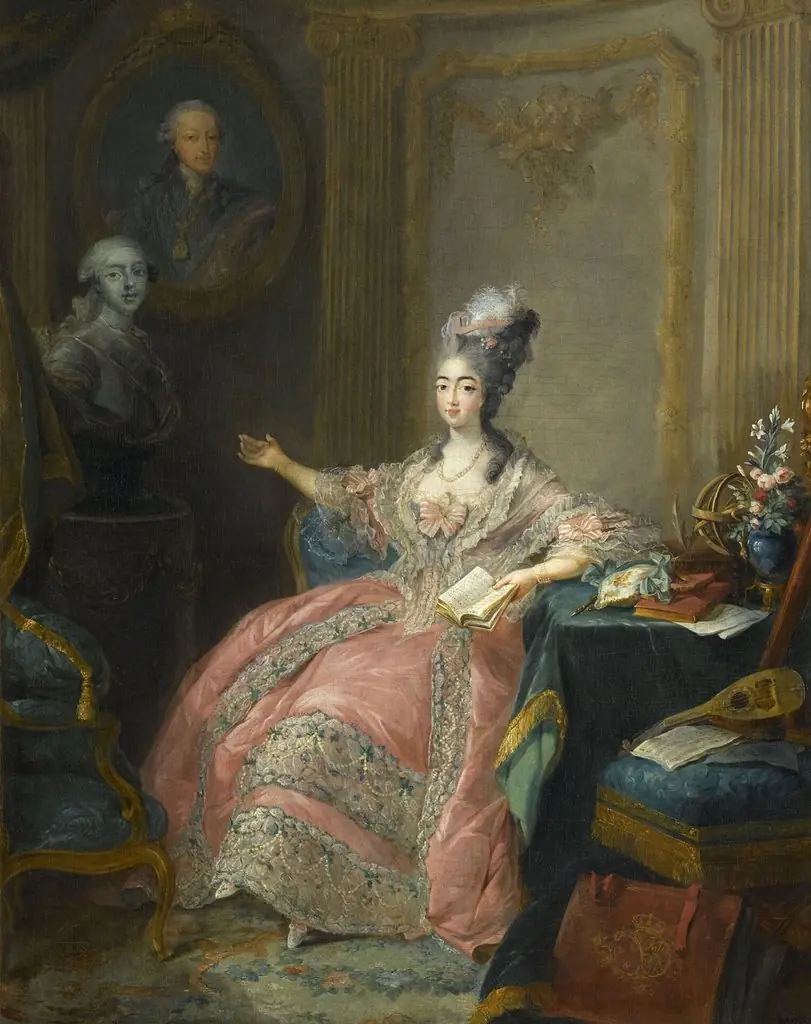 Marie-Joséphine-Louise de Savoie, Countess of Provence
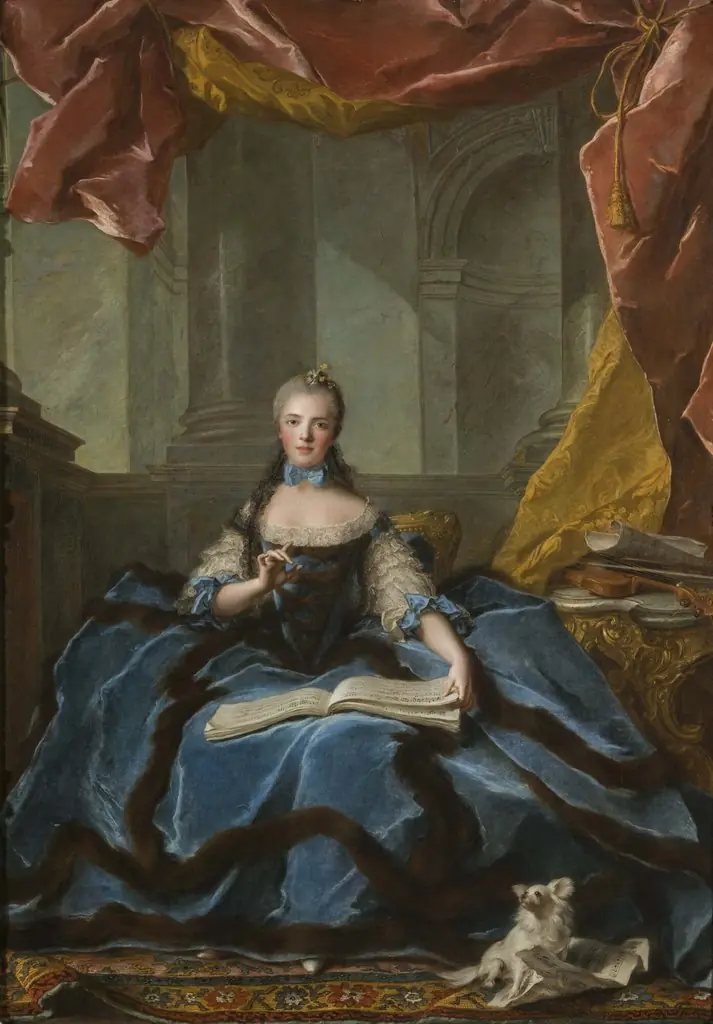 Marie-Adélaïde of France, known as Madame Adélaïde
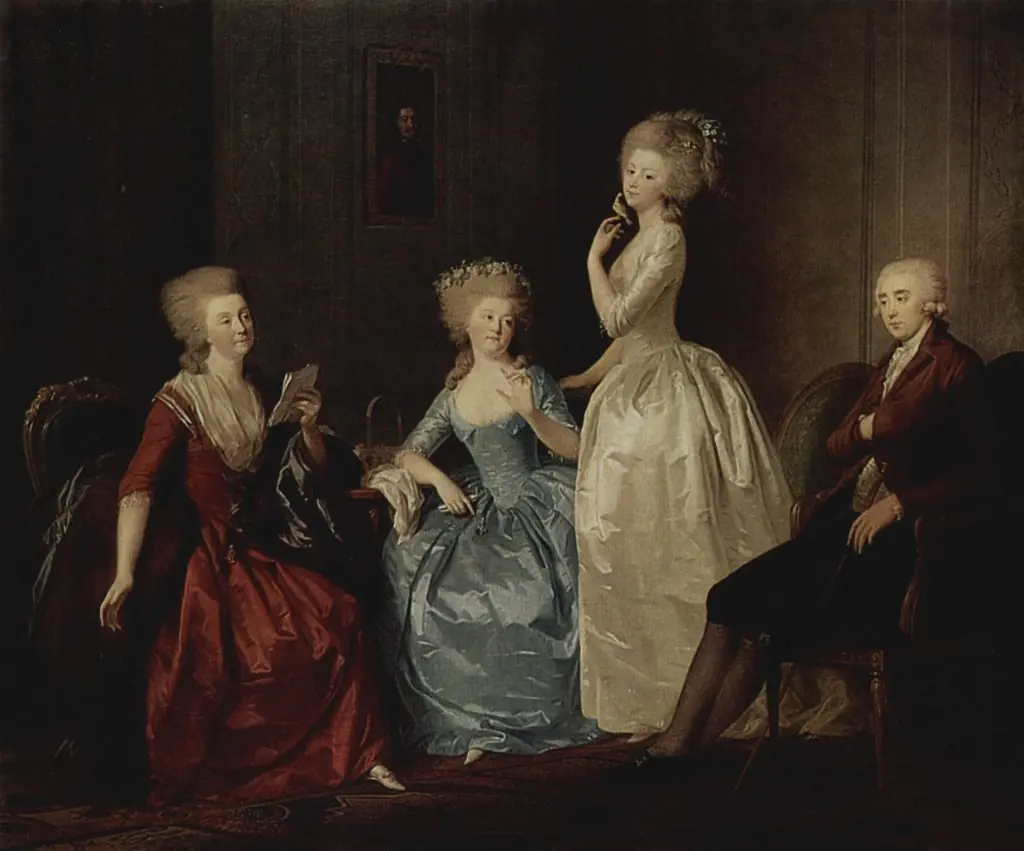 Portrait of the Saltykov Family
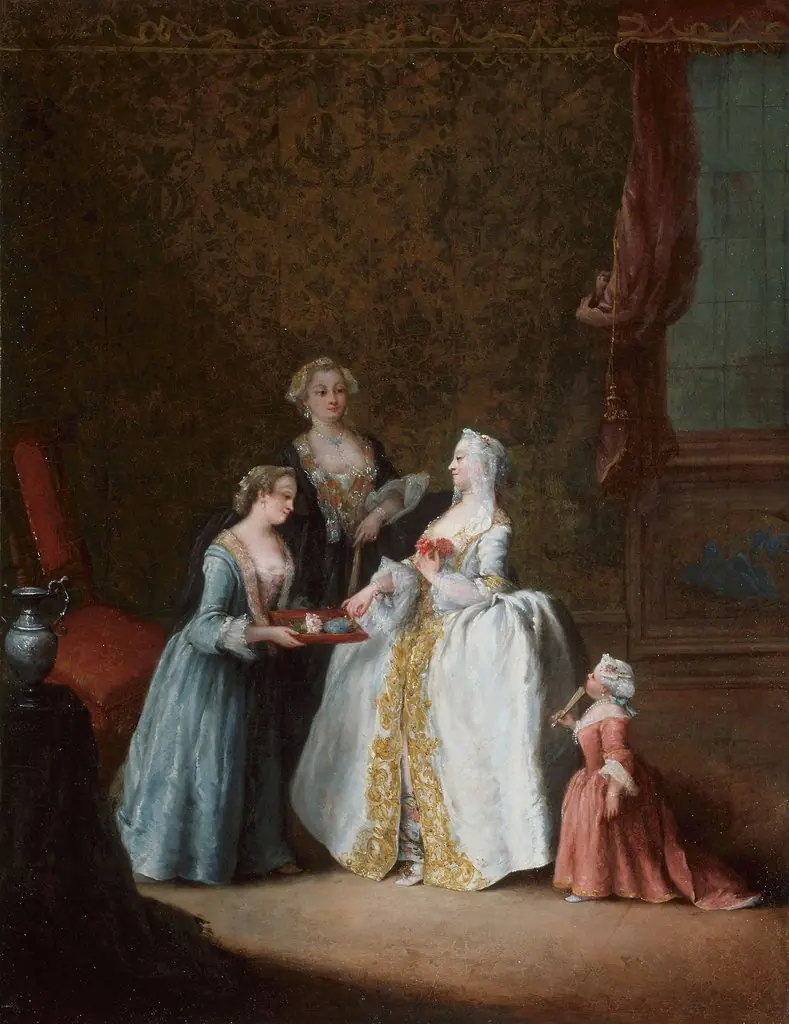 Lady at Her Toilette
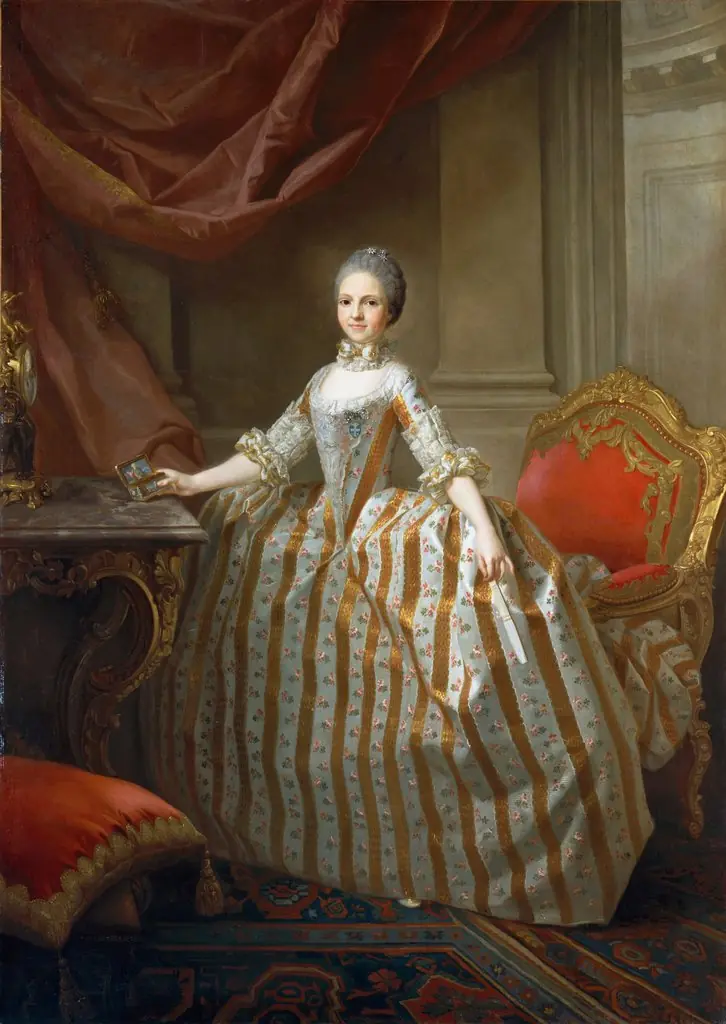 Maria Luisa of Parma (1751–1819), Later Queen of Spain
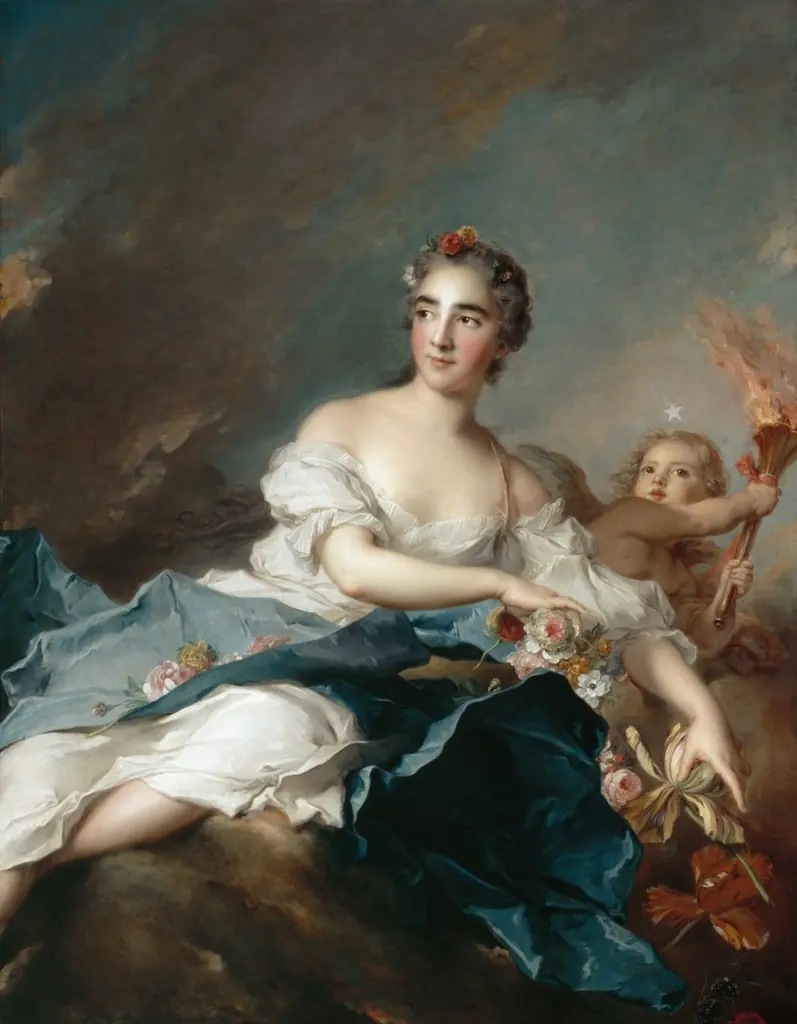 The Countess de Brac as Aurora
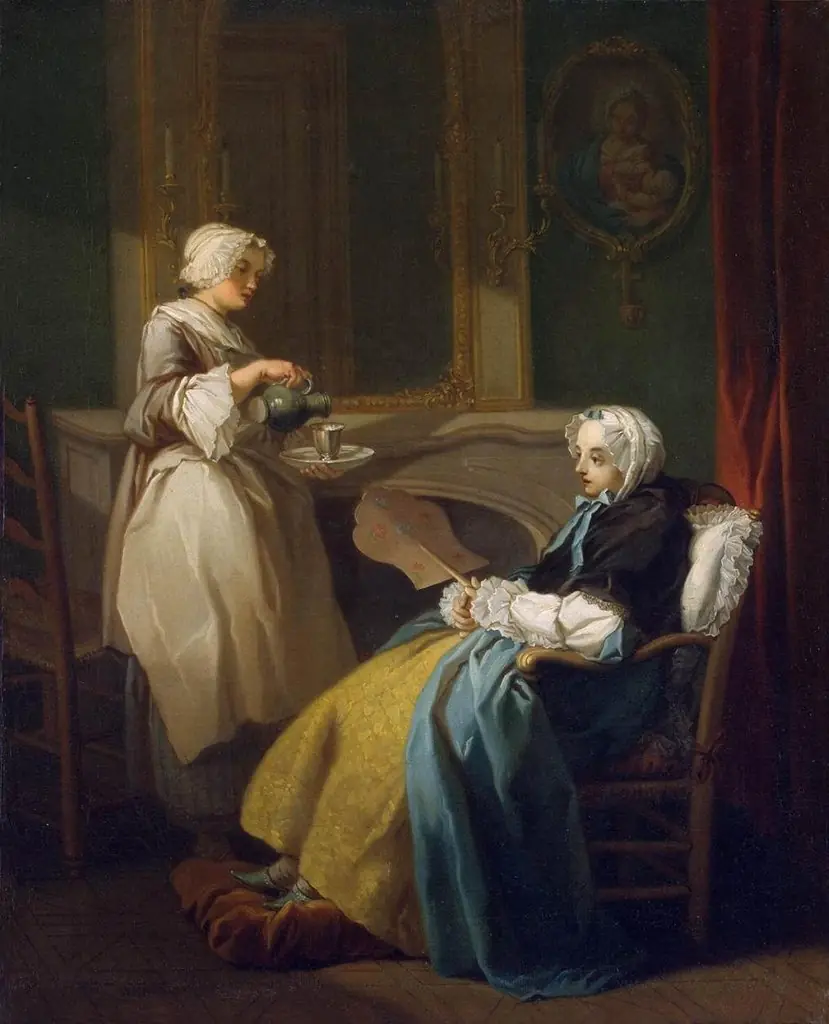 Recovering
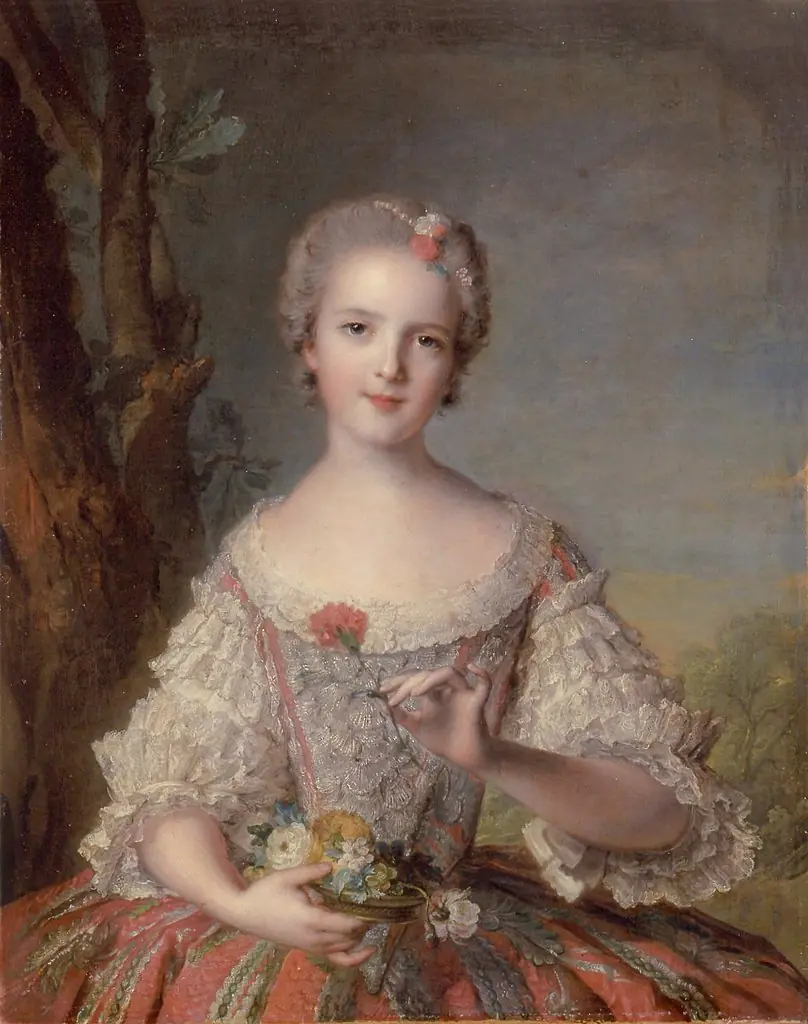 Madame Louise of France
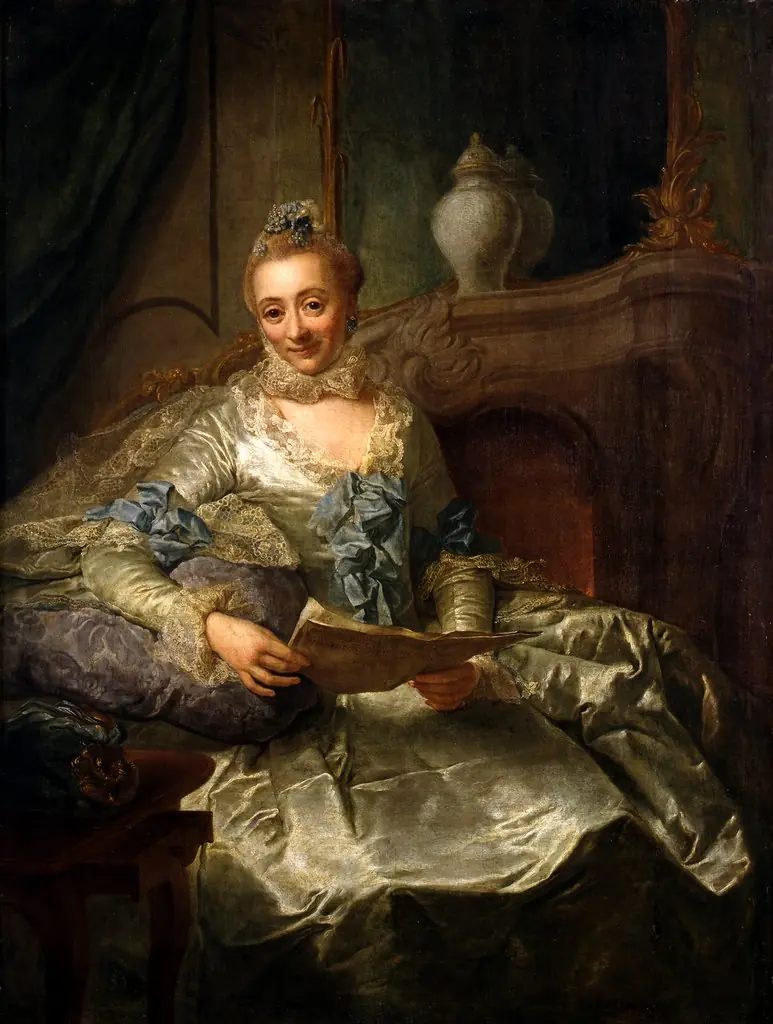 Chamber Councilor Sophie Elisabeth Giese, born von Schwerin
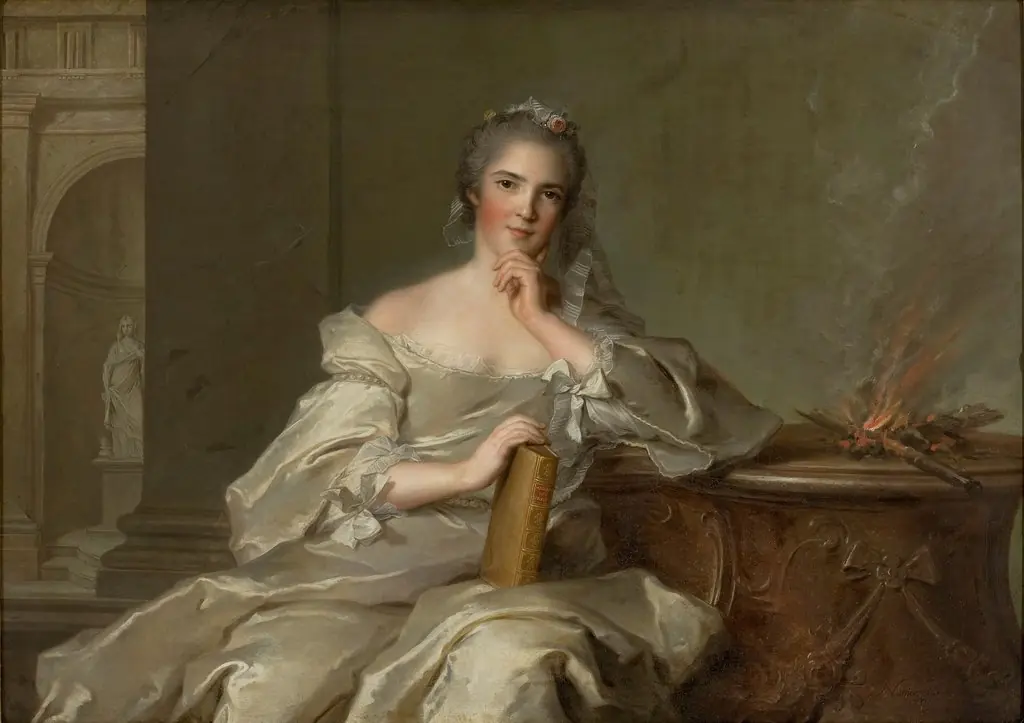 Princess Anne-Henriette of France - The Fire
 Marie-Adélaïde of France, known as Madame Adélaïde
 Portrait of Horace Walpole's Nieces: The Honorable Laura Keppel and Charlotte, Lady Huntingtower