Artwork
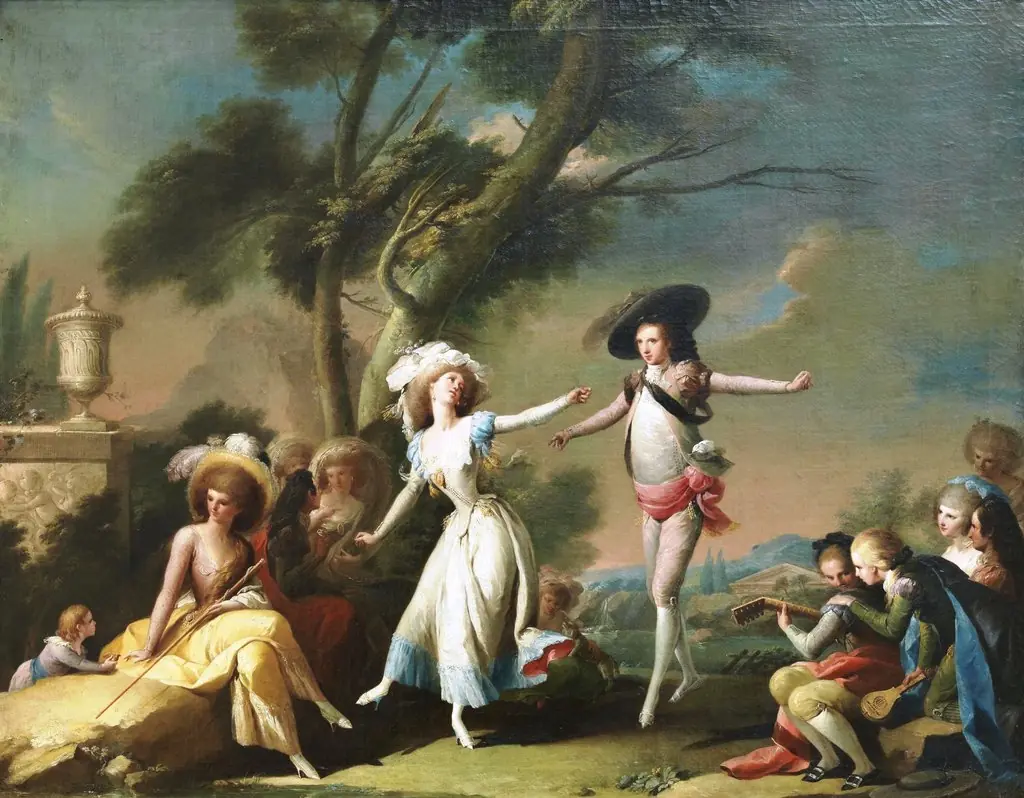
Couples in a Park
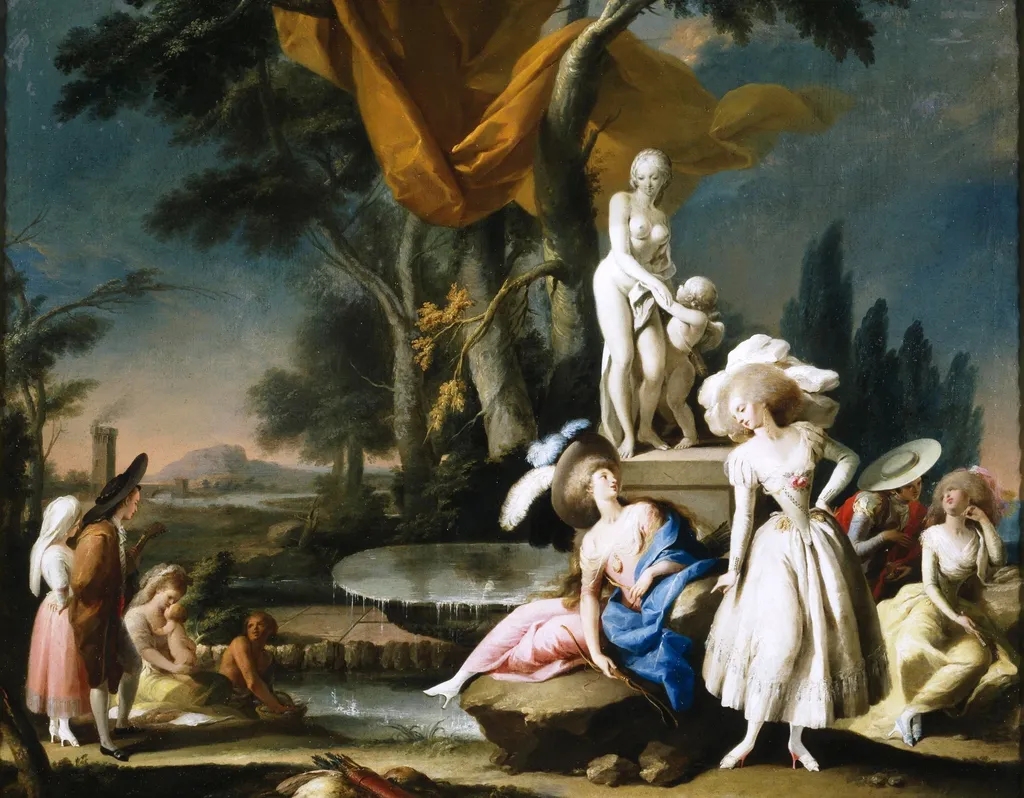
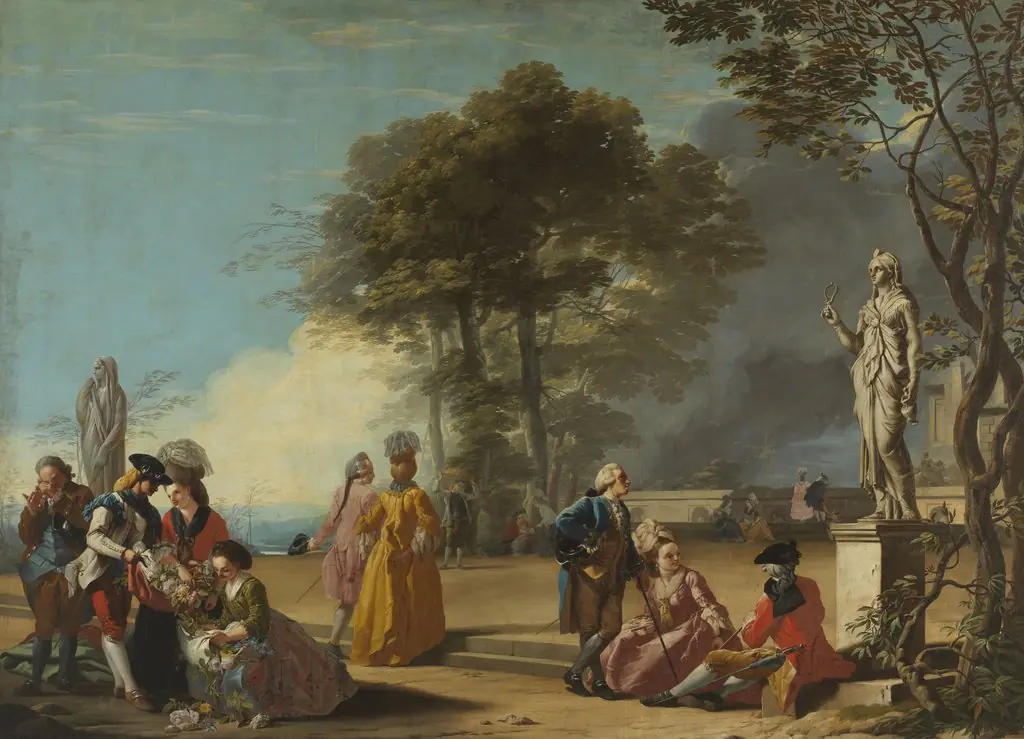
Couples in a Park is an oil painting by the Rococo painting artist José Camarón y Bonanat. It dates from 1793 and is held in the collection of the Museo del Prado.
About this work
Overview
José Camarón y Bonanat completed this oil painting in 1793, capturing a quiet moment in a cultivated garden. As a Spanish artist active in the late 18th century, he worked across drawing, painting, and engraving. The piece is part of the Museo del Prado’s collection, reflecting the period’s interest in domestic leisure and naturalistic settings rendered with refined technique.
Subject & Meaning
The scene portrays two pairs of figures in a park, engaged in quiet companionship. A standing couple in elegant attire faces the viewer, while another pair rests on a stone nearby. The absence of dramatic action suggests an emphasis on intimacy and social grace, aligning with Rococo ideals of refined leisure and the quiet pleasures of nature among the upper classes.
Technique & Style
Camarón y Bonanat employed oil paint to achieve subtle gradations of light and texture, particularly in the foliage and fabric. Chiaroscuro is used sparingly to model forms and suggest depth, without the theatricality of Baroque lighting. The brushwork is delicate, favoring soft edges and atmospheric perspective to unify the figures with the wooded background.
History & Provenance
Created in 1793, the painting entered the Museo del Prado’s holdings as part of Spain’s national collection. Camarón y Bonanat, born in Segorbe and active in Valencia, was known for his illustrations and religious works, but this piece represents his engagement with secular, everyday subjects. Its preservation suggests it was valued within contemporary artistic circles.
Context
In late 18th-century Spain, Rococo influences persisted in aristocratic art, even as Neoclassicism gained ground. This painting reflects a transitional moment, blending lightness of subject with emerging naturalism. Unlike French Rococo, Spanish interpretations often retained a restrained tone, avoiding overt ornamentation in favor of calm, observed moments.
Legacy
While Camarón y Bonanat is better known for his engravings and religious compositions, this work offers insight into his ability to handle secular themes with sensitivity. It remains one of the few surviving examples of his genre scenes, contributing to scholarly understanding of Spanish painting beyond official or ecclesiastical commissions.
Own this work as a print
Artist & collection
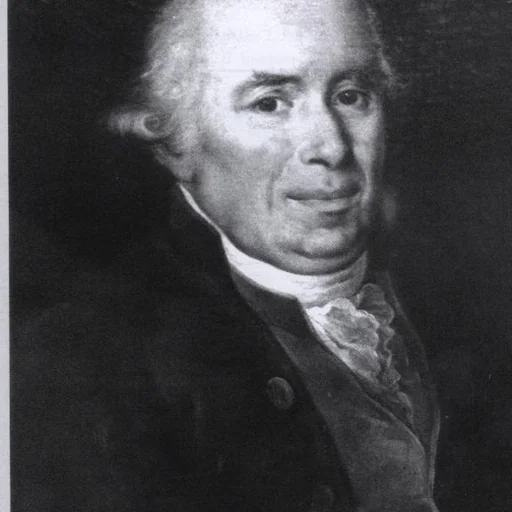
Artist
José Camarón Bonanat, or Bononat (18 May 1731, Segorbe - 14 July 1803, Valencia) was a Spanish draftsman, painter and engraver. Most early sources give his maternal family name as Boronat.