Artwork
La conversión del lobo de Gubbio
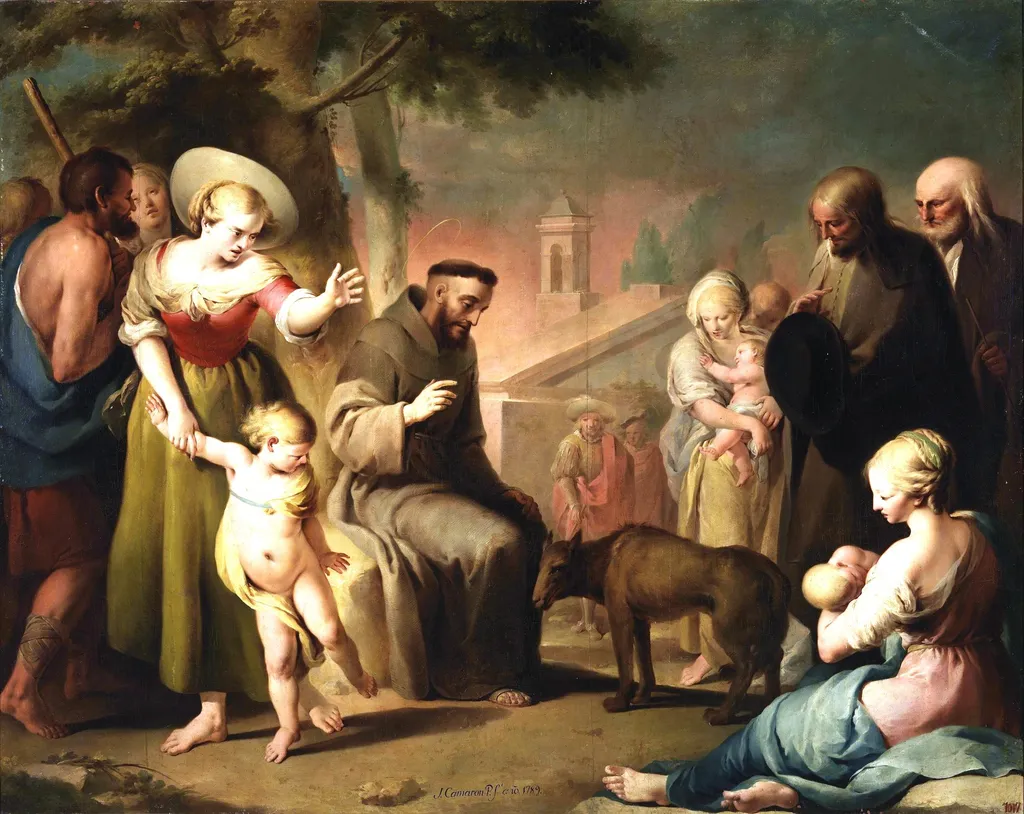
La conversión del lobo de Gubbio is an oil painting by the Rococo painting artist José Camarón y Bonanat. It dates from 1795 and is held in the collection of the Museo del Prado.
About this work
Overview
Created in 1795, *La conversión del lobo de Gubbio* is an oil on canvas executed in a Rococo idiom. It is part of the permanent collection of the Museo del Prado in Madrid. The work portrays a bustling group scene set outdoors, with a central figure in a brown robe addressing an unseen interlocutor, surrounded by a varied assembly of onlookers.
Subject & Meaning
The composition illustrates the legendary episode of Saint Francis of Assisi taming the wolf of Gubbio. The seated man in the brown habit is identified as the saint, his outstretched hand and attentive gaze suggesting a dialogue with the beast, while villagers of different ages and a mother with infant observe the miraculous encounter.
Technique & Style
Camarón y Bonanat employs the light, fluid brushwork characteristic of late Rococo, rendering figures with soft modeling and delicate color transitions. The palette combines warm earth tones with brighter accents on the woman's red top and green skirt, creating a lively visual rhythm that guides the eye across the scene.
History & Provenance
The painting was produced by José Camarón y Bonanat, a Valencian artist born in Segorbe in 1731. After a career that included drawing, painting, and engraving, he died in 1803. The work entered the Prado’s holdings during the 19th‑century consolidation of Spanish national collections, where it remains on display.
Context
Camarón y Bonanat worked primarily in Valencia, where religious narratives were in demand for churches and private devotion. This piece reflects the period’s interest in combining devotional subjects with a theatrical, almost genre‑like presentation, aligning with broader European trends toward more accessible, emotionally resonant religious art.
Own this work as a print
Artist & collection
Artist
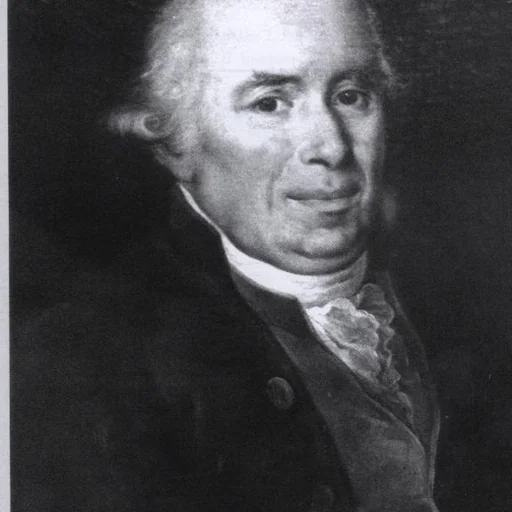
José Camarón Bonanat, or Bononat (18 May 1731, Segorbe - 14 July 1803, Valencia) was a Spanish draftsman, painter and engraver. Most early sources give his maternal family name as Boronat.

 Vision of Saint Francis
 Vintage Scene
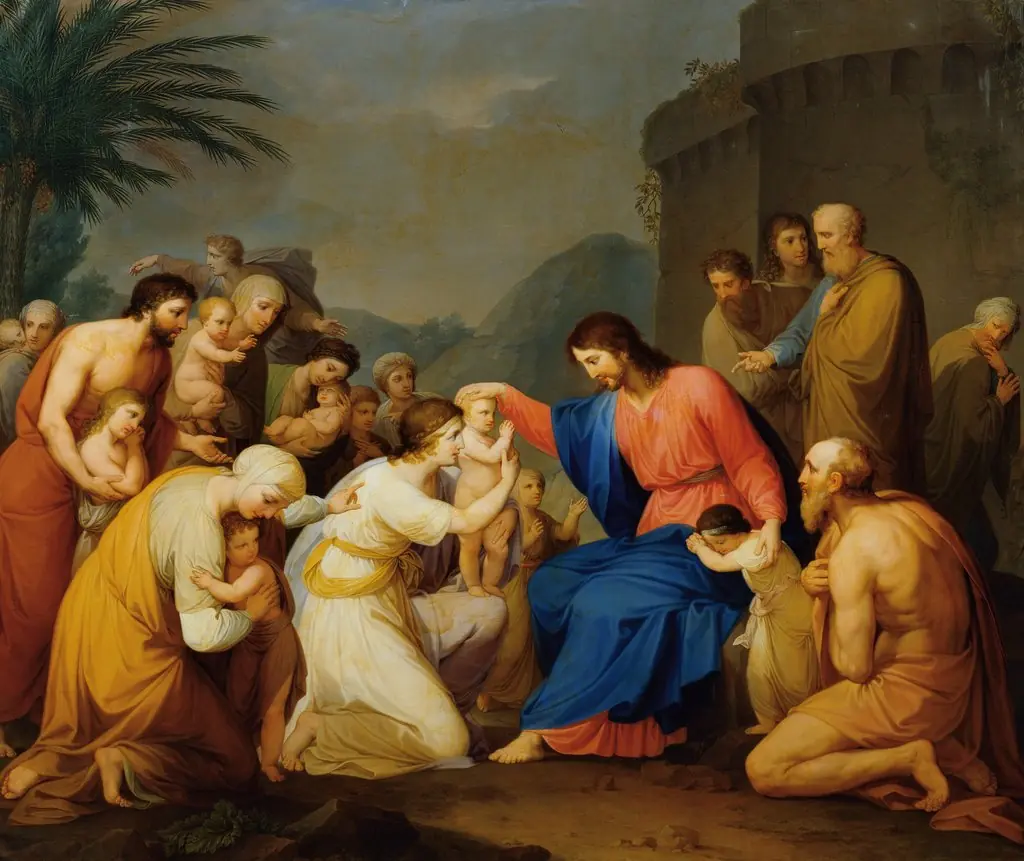 Lasset die Kindlein zu mir kommen
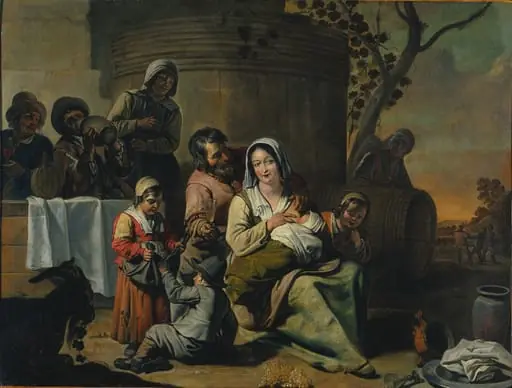 Vintage Scene
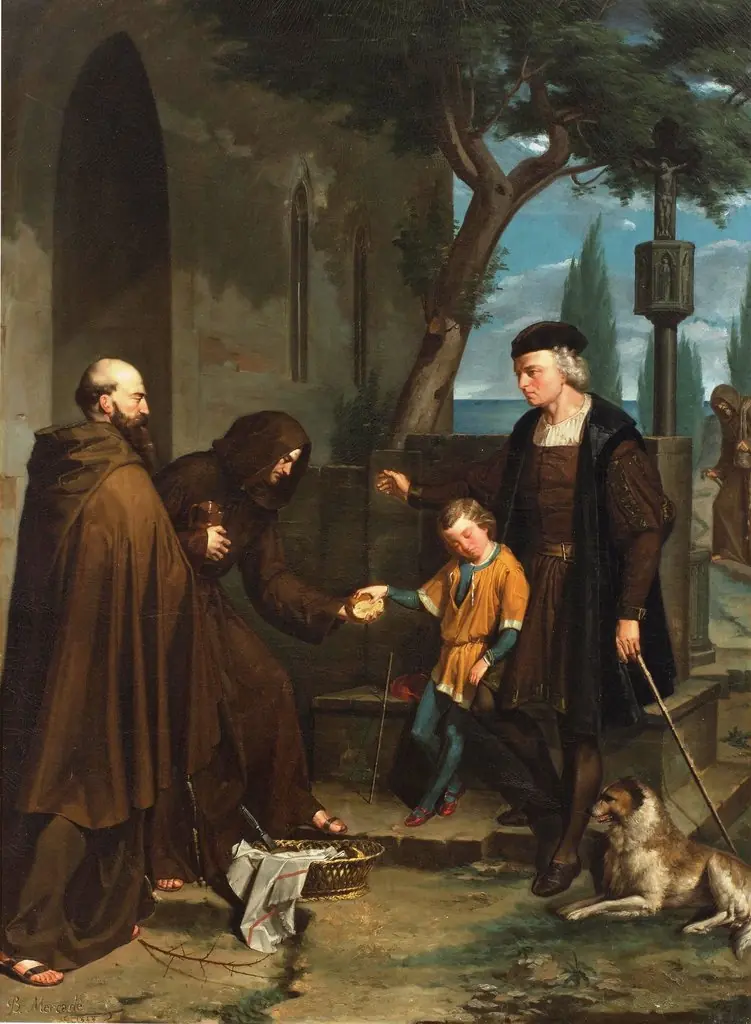 Colón en las puertas del convento de Santa María de la Rábida pidiendo pan y agua para su hijo
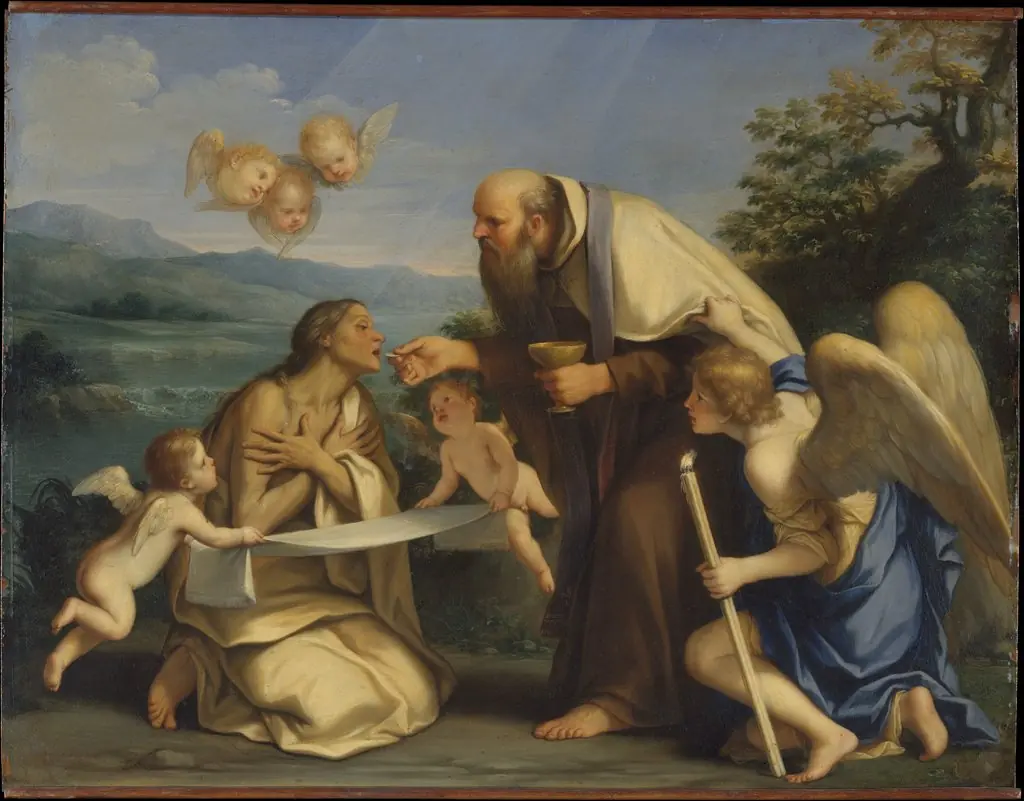 The Last Communion of Saint Mary of Egypt
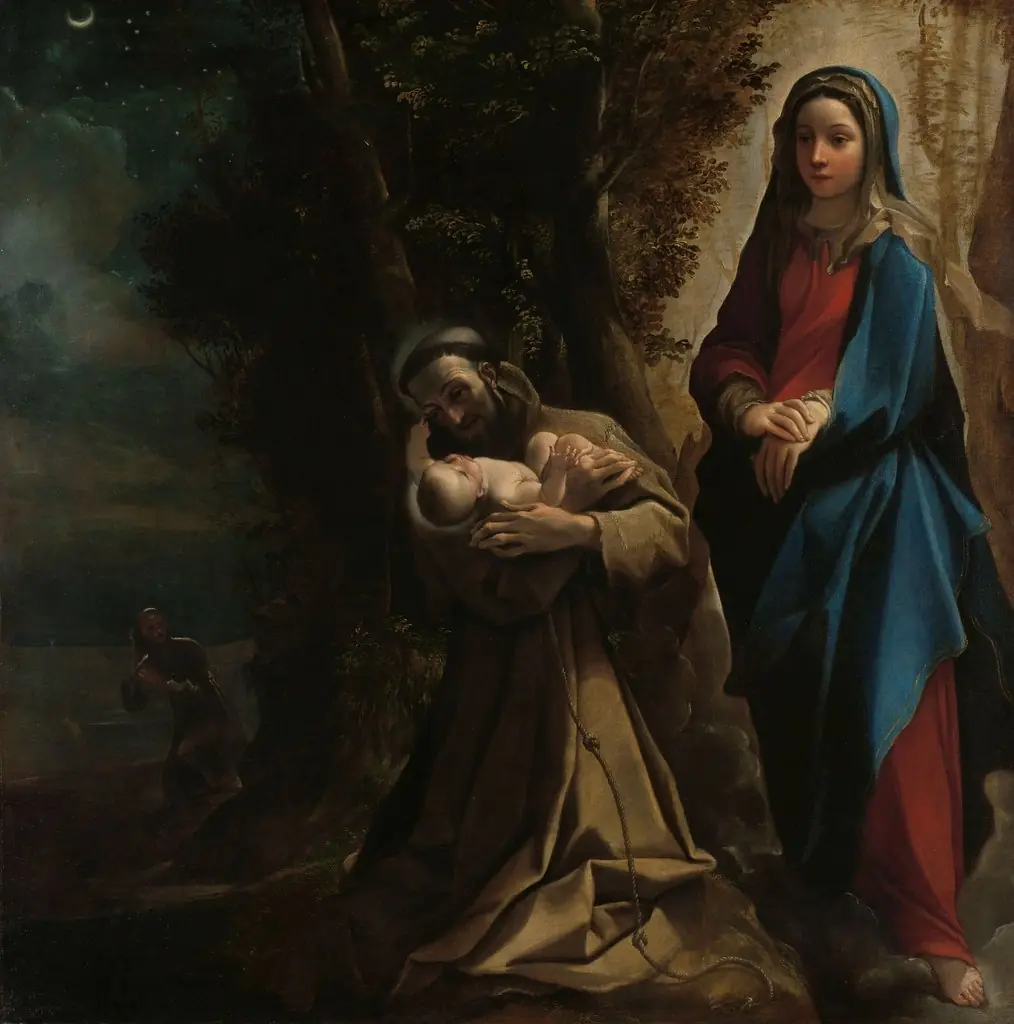 The Vision of Saint Francis of Assisi
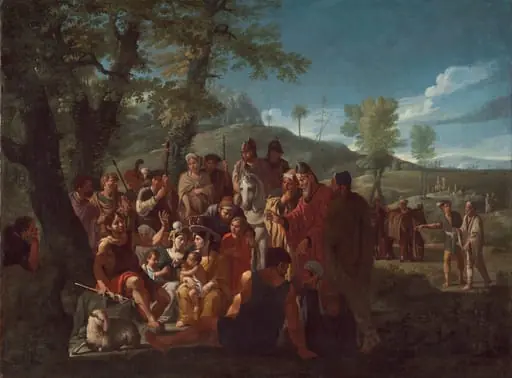 Saint John the Baptist Preaching
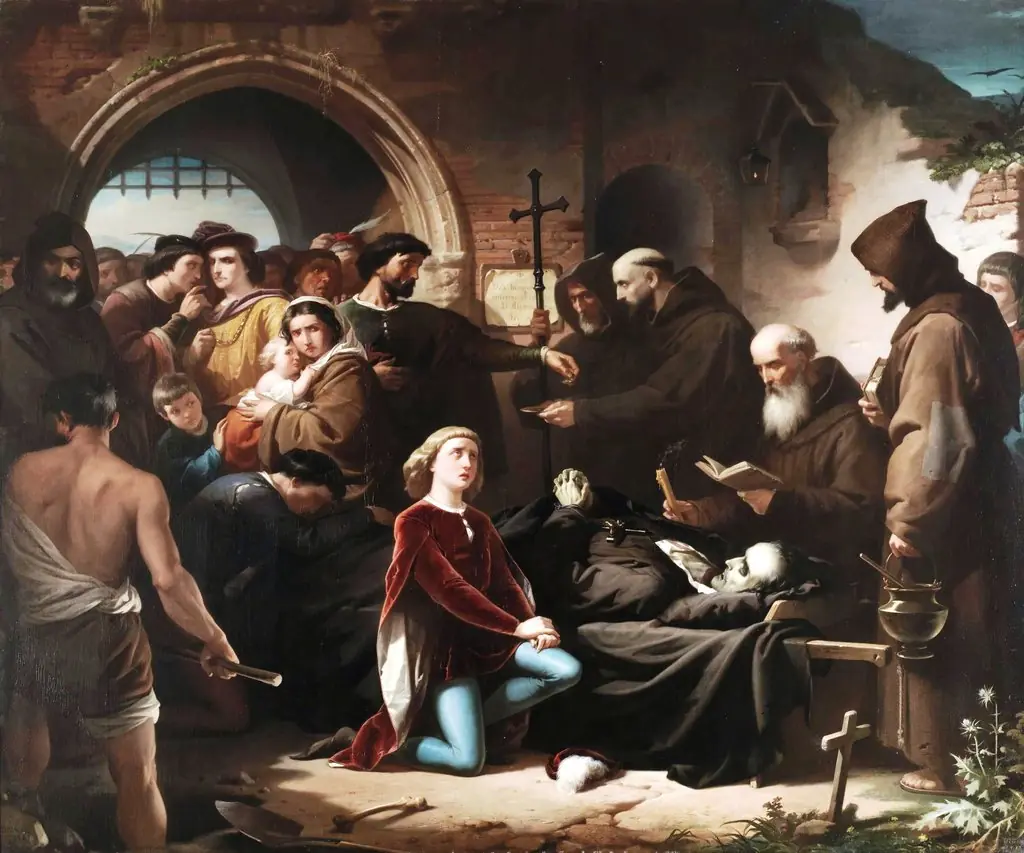 Don Álvaro de Luna condestable y favorito del rey D. Juan II de Castilla decapitado públicamente en la Plaza Mayor de Valladolid el 2 de junio de 1453 es enterrado de limosna en el cementerio de los ajusticiados extramuros de dicha ciudad
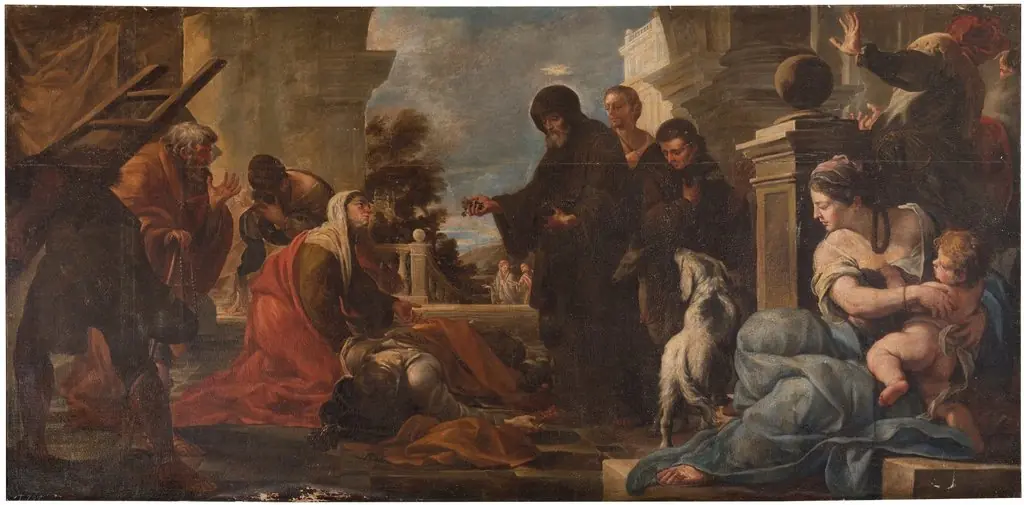 Milagro de San Francisco de Paula