Artwork
Longing
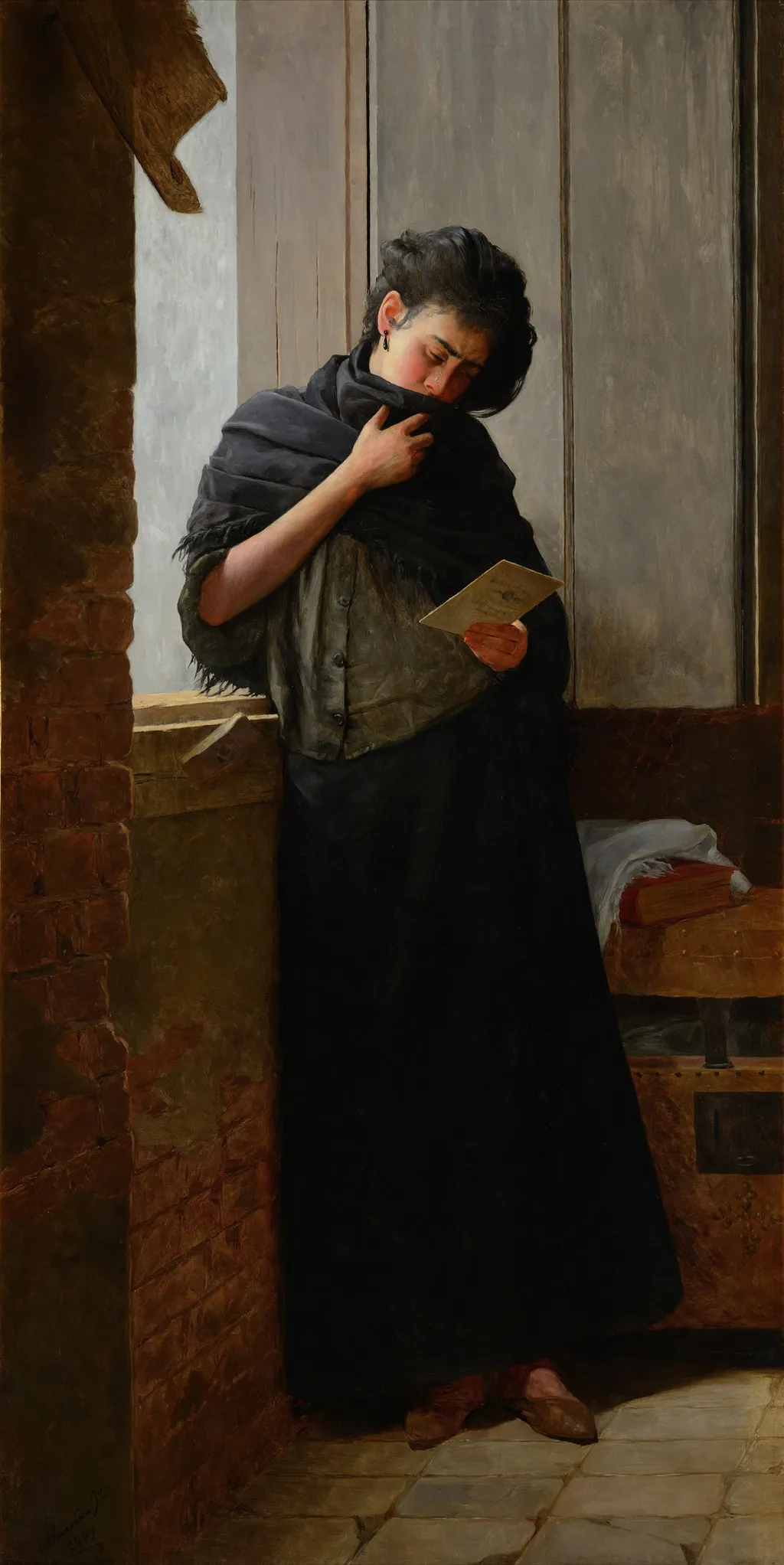
Longing is an oil painting by the Impressionist artist José Ferraz de Almeida Júnior. It dates from 1900 and is held in the collection of the Pinacoteca de São Paulo.
About this work
Overview
Painted in 1900 by Brazilian artist José Ferraz de Almeida Júnior, *Longing* is an oil-on-canvas work that reflects the artist’s commitment to realism.
Painted in 1900 by Brazilian artist José Ferraz de Almeida Júnior, *Longing* is an oil-on-canvas work that reflects the artist’s commitment to realism. Though often associated with European naturalism, Almeida Júnior adapted these influences to depict intimate, emotionally resonant scenes from Brazilian domestic life. The painting is held in the Pinacoteca do Estado de São Paulo, where it remains a key example of late 19th-century Brazilian figurative art.
Subject & Meaning
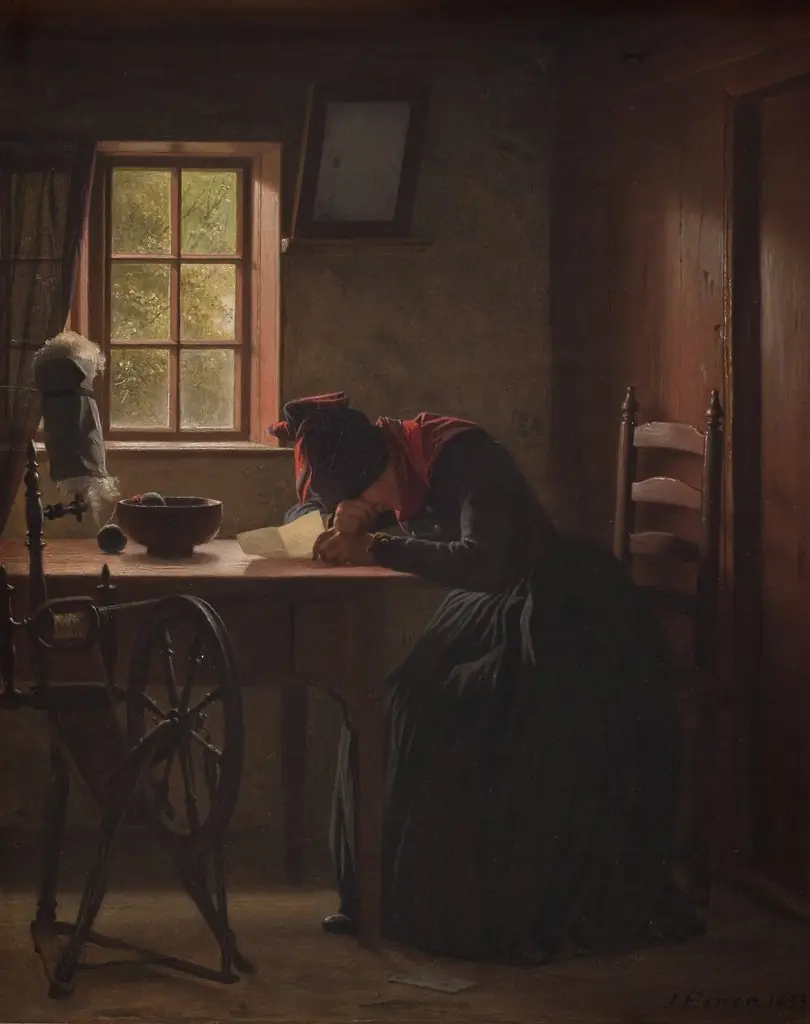
The painting portrays a woman alone in a modest interior, clutching a letter and wiping a tear with her right hand. Her posture and expression suggest quiet grief or anticipation, evoking a personal moment of emotional weight. The absence of narrative context invites viewers to contemplate solitude and unspoken loss. The letter, central to the composition, implies communication from afar—perhaps news of absence, death, or separation.
Technique & Style
Almeida Júnior employs chiaroscuro to model the figure with subtle gradations of light and shadow, directing focus to the woman’s face and the letter. The palette is restrained—dominated by grays, blacks, and muted whites—enhancing the somber mood. Brushwork is controlled and precise, avoiding the looseness of Impressionism; instead, the style aligns with academic realism, emphasizing form and emotional gravity over atmospheric effect.
History & Provenance
Created in 1900, the painting entered the collection of the Pinacoteca do Estado de São Paulo early in its history, likely through state acquisition or donation. It was produced during a period when Brazilian artists were actively engaging with European traditions while seeking to define a national visual language. Almeida Júnior’s reputation as a leading realist helped secure the work’s institutional recognition soon after its completion.
Context
In early 20th-century Brazil, realism was a dominant mode for depicting social and emotional truths, particularly among artists trained in Europe. Almeida Júnior, influenced by Courbet and Millet, turned his attention to everyday interiors and private grief, diverging from grand historical or mythological themes. *Longing* reflects a broader cultural shift toward introspection and the dignity of ordinary experience in Brazilian art.
Legacy
Though not widely exhibited outside Brazil, *Longing* endures as a quiet landmark in the country’s artistic canon. It exemplifies how Brazilian painters synthesized European techniques to express local emotional landscapes. The work’s restraint and psychological depth continue to inform discussions of gender, emotion, and domesticity in 19th-century Latin American art.
Artist & collection

Artist
José Ferraz de Almeida Júnior (8 May 1850 – 13 November 1899) was a Brazilian artist and designer; one of the first there to paint in the Realistic tradition of Gustave Courbet and Jean-François Millet.