Artwork
Untitled
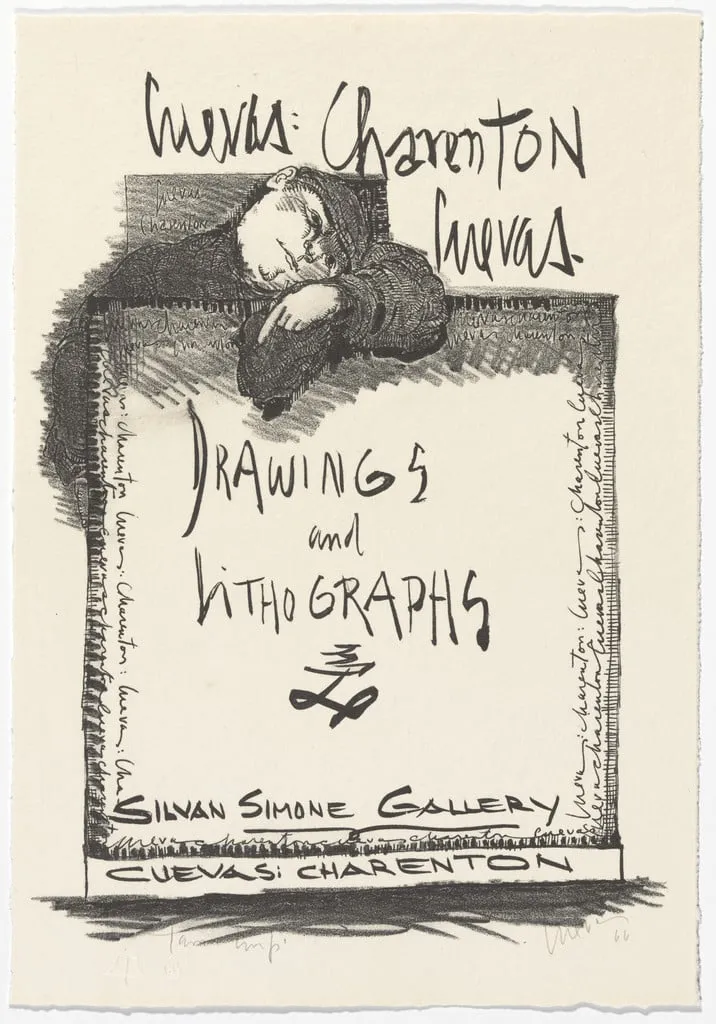
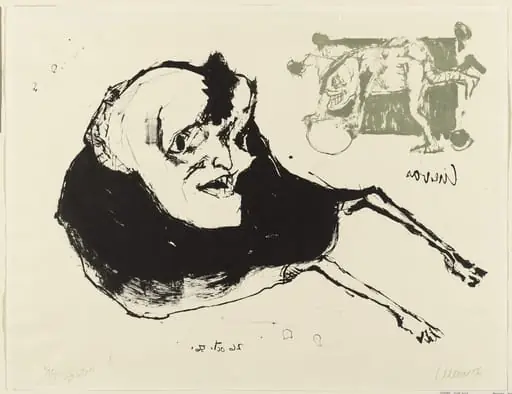
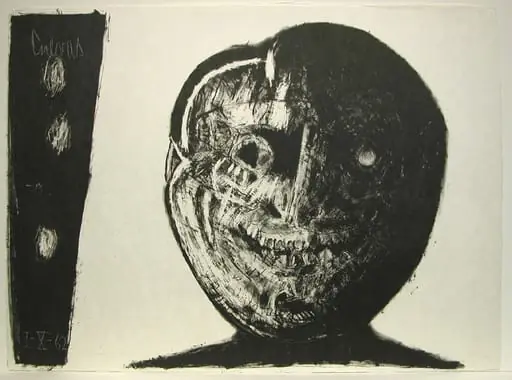
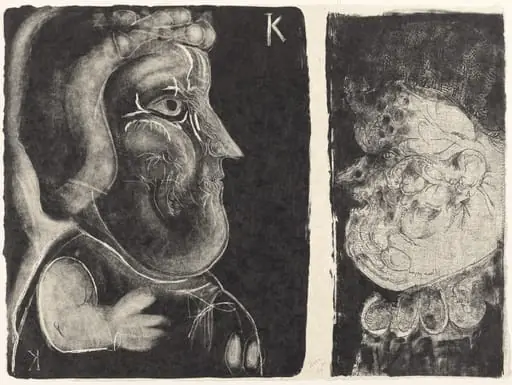
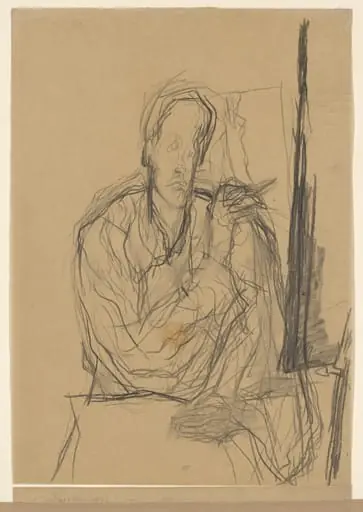
Untitled is an ink print by José Luis Cuevas. It dates from 1966 and is held in the collection of the Museum of Modern Art.
About this work
Overview
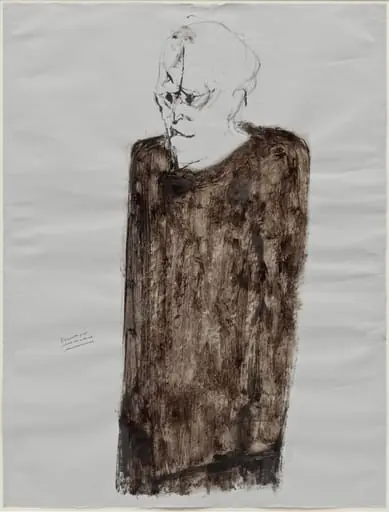
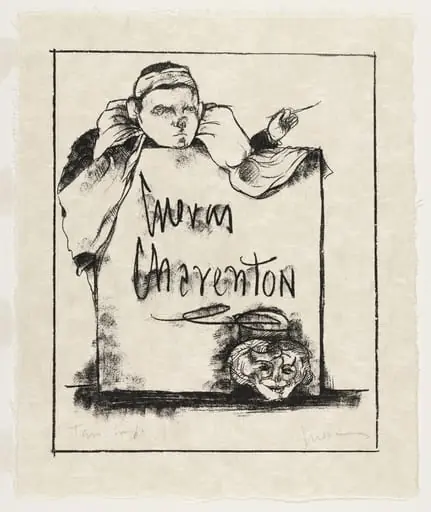
The signature 'Cuevas: Charenton' appears in the lower corner, possibly alluding to a location or personal reference.
José Luis Cuevas produced this lithograph in 1966 as part of a series of works on paper. It is held in the collection of The Museum of Modern Art, New York. The piece bears handwritten annotations referencing exhibition venues and the medium, suggesting its origin in a private or preparatory context rather than a formal publication. The signature 'Cuevas: Charenton' appears in the lower corner, possibly alluding to a location or personal reference.
Subject & Meaning
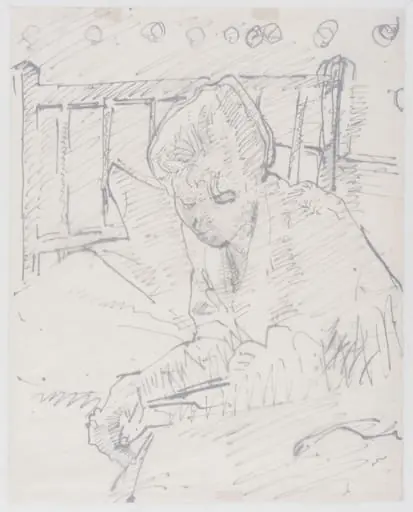
The figure is hunched in a chair, its posture conveying exhaustion or withdrawal. The lack of defined features and the absence of narrative context invite interpretation as a psychological state rather than a specific person. The blurred background and minimal detail emphasize isolation, reinforcing a sense of inwardness. The work resists clear symbolism, instead evoking mood through physical collapse and spatial ambiguity.
Technique & Style
Cuevas employed lithography to achieve a spontaneous, sketch-like quality. The lines are loose and uneven, with areas of dense ink contrasted by sparse, almost erased passages. The background is intentionally indistinct, created through smudged tonal washes. Handwritten text, integrated into the image, blurs the boundary between annotation and composition, reinforcing the work’s raw, unpolished character.
History & Provenance
The lithograph was produced during a period when Cuevas was actively exploring printmaking as a means of personal expression. Annotations referencing Silvan Simone Gallery suggest it may have been made for or exhibited in a small-scale show. Its inclusion in MoMA’s collection indicates early institutional recognition of his graphic work, though its origins remain tied to private artistic practice rather than commercial reproduction.
Context
In mid-1960s Mexico, Cuevas was known for challenging official artistic narratives through distorted figures and introspective themes. This work aligns with his broader rejection of muralist idealism, favoring psychological intensity over public messaging. The use of lithography allowed him to work quickly and privately, contrasting with the monumental scale of state-sponsored art prevalent at the time.
Legacy
This lithograph exemplifies Cuevas’s contribution to modern printmaking through its emphasis on emotional immediacy over technical refinement. Its inclusion in major collections helped legitimize expressive, non-monumental drawing as serious art. Later artists have cited his graphic works as influential in expanding the boundaries of printmaking beyond traditional modes of reproduction.
Artist & collection

Artist
José Luis Cuevas was a Mexican artist, he often worked as a painter, writer, draftsman, engraver, illustrator, and printmaker.