Artwork
Portrait of Konstanzia Nákó
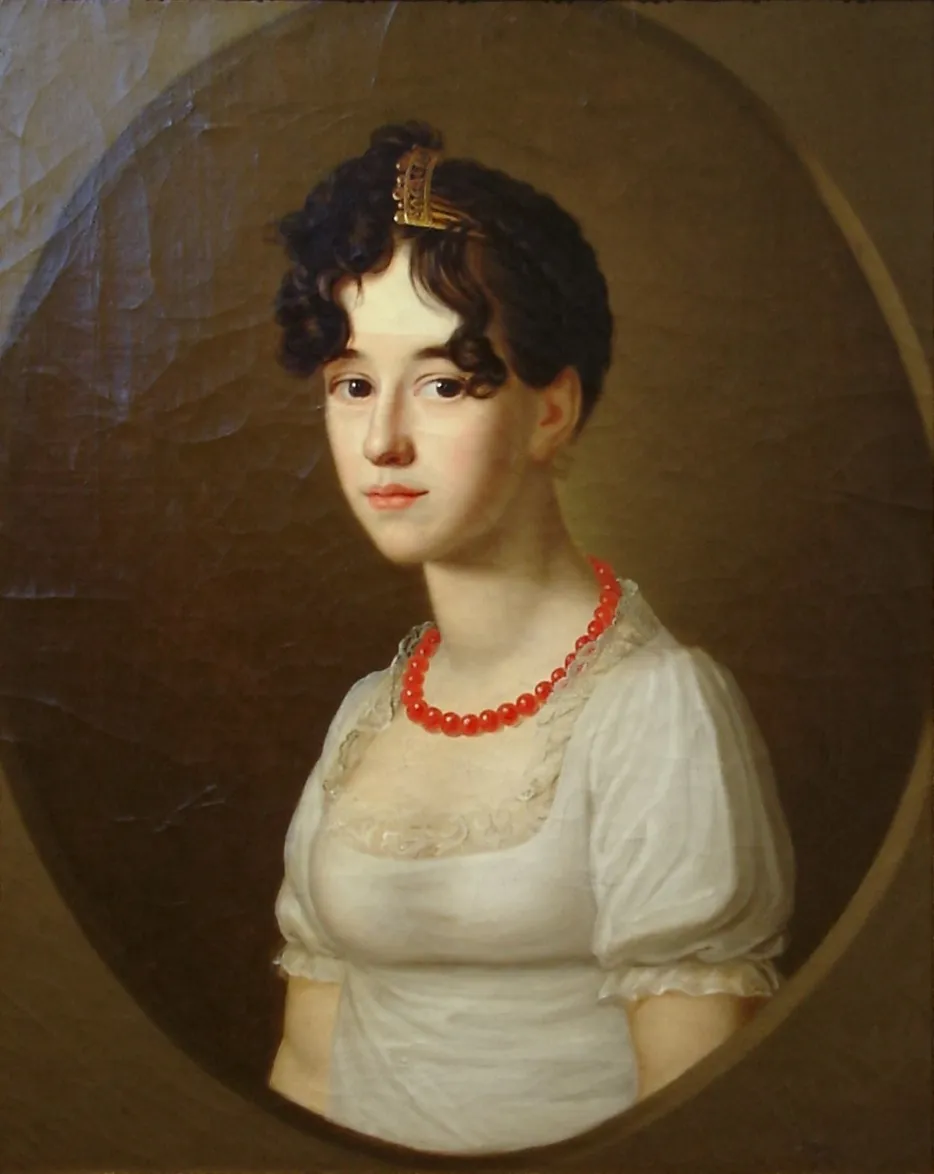
Portrait of Konstanzia Nákó is an oil painting by the Biedermeier artist Josef Abel. It dates from 1809 and is held in the collection of the Hungarian National Gallery.
About this work
Overview
Painted in 1809 by Josef Abel, this oil portrait captures Konstanzia Nákó, a Hungarian noblewoman. The work is part of the Hungarian National Gallery’s collection and exemplifies early 19th-century portraiture in Central Europe. Abel’s technique emphasizes subtle modeling and quiet dignity, reflecting the tastes of the aristocratic class during the Napoleonic era.
Subject & Meaning
The portrait conveys personal identity rather than symbolic allegory, focusing on individual presence over narrative.
Konstanzia Nákó is depicted with composed stillness, her gaze direct but unassuming. Her attire—white dress with puffy sleeves and a red beaded necklace—signals both fashion and social standing. The gold hairpiece and refined details suggest her position within the Hungarian nobility. The portrait conveys personal identity rather than symbolic allegory, focusing on individual presence over narrative.
Technique & Style
Abel employed oil paint to achieve soft transitions in skin tones and fabric textures. The warm brown background recedes gently, drawing attention to the figure’s form and clothing. Brushwork is controlled yet expressive, particularly in the rendering of curls and the shimmer of beads. The composition is balanced and intimate, avoiding theatricality in favor of restrained elegance.
History & Provenance
The painting entered the Hungarian National Gallery’s holdings in the 19th century, likely through private donation or state acquisition following the dissolution of noble collections. Its documented history traces back to the Nákó family, though specific details of its early ownership remain limited. It has remained in public custody since at least the 1870s.
Context
Created during a period of rising Hungarian national consciousness, the portrait reflects the cultural aspirations of the aristocracy amid Habsburg rule. While not overtly political, its emphasis on refined personal identity aligns with broader European trends favoring individual portraiture over dynastic imagery. Abel, trained in Vienna, brought a Central European sensibility to his subjects.
Legacy
The portrait stands as one of Abel’s better-preserved works, offering insight into the visual culture of Hungarian elites before the 1848 revolutions. Though not widely reproduced, it remains a key example of early 19th-century Hungarian portraiture in institutional collections. Its quiet realism continues to inform scholarly understanding of regional artistic practice.
Artist & collection

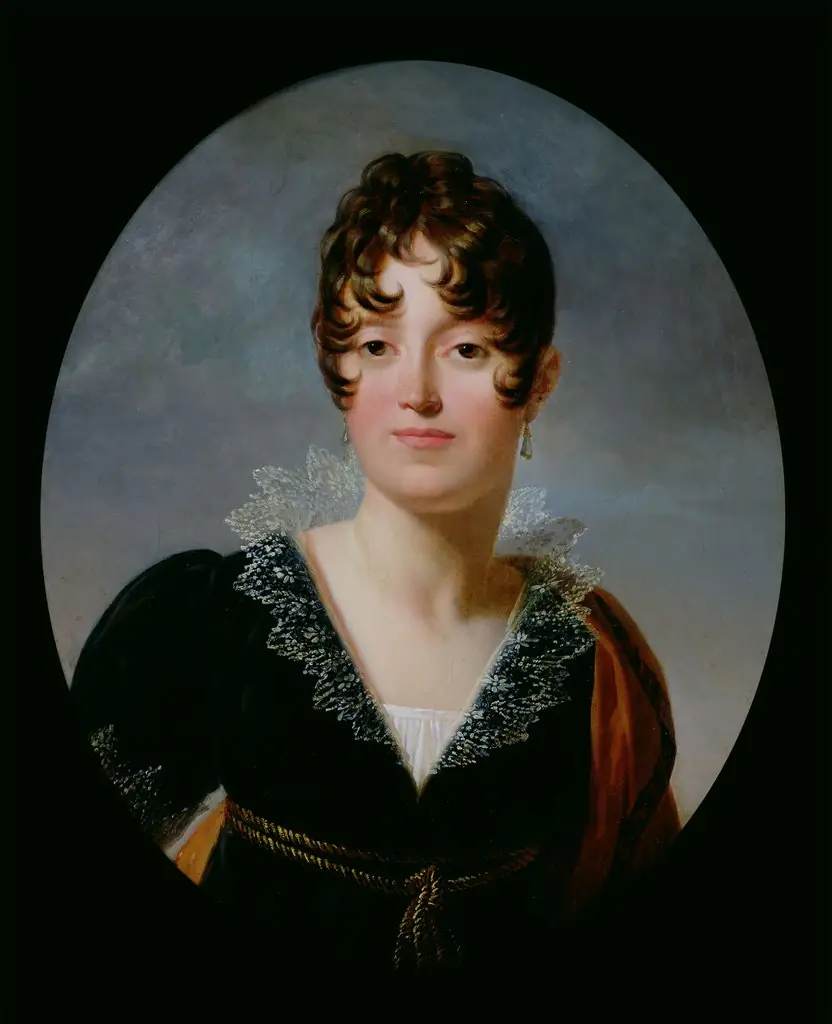 Désirée Clary
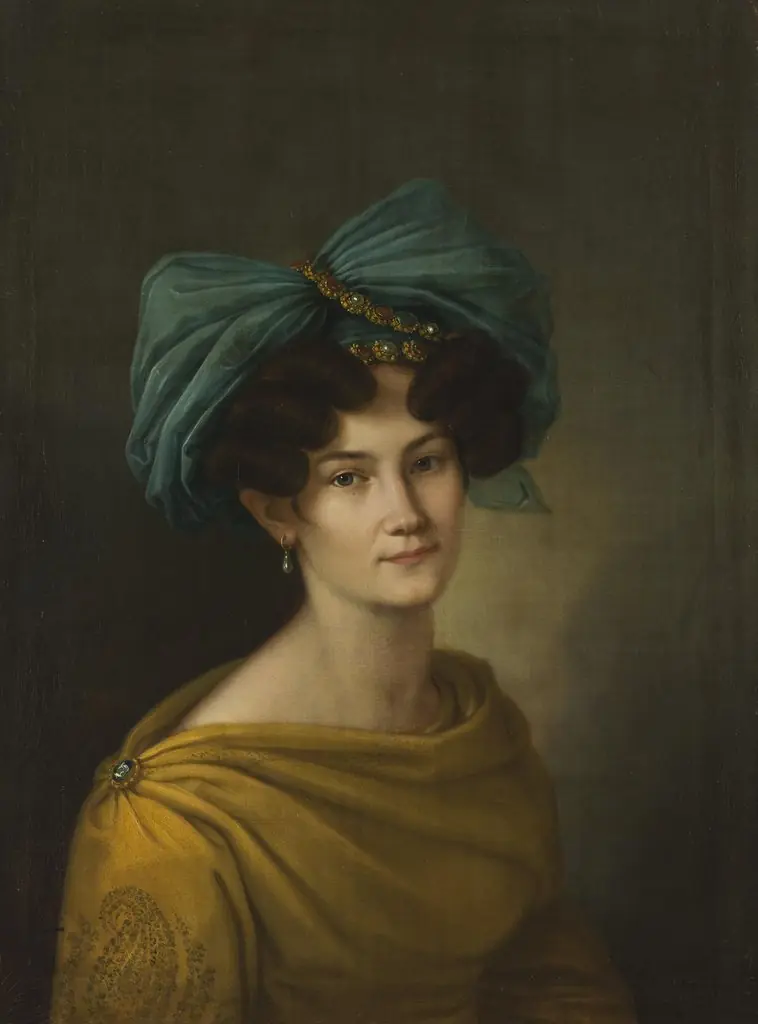 Portrait of Anastasia Vadkovskaya
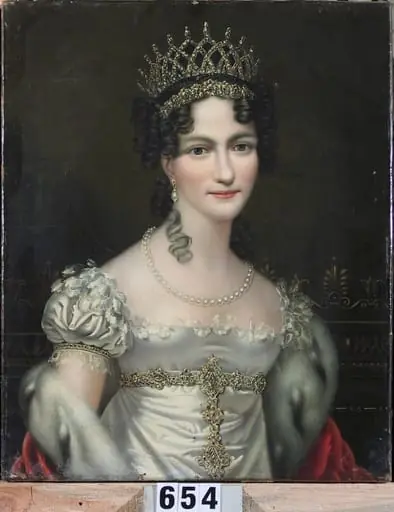 Carolina Augusta, soția împăratului austriac Franz I
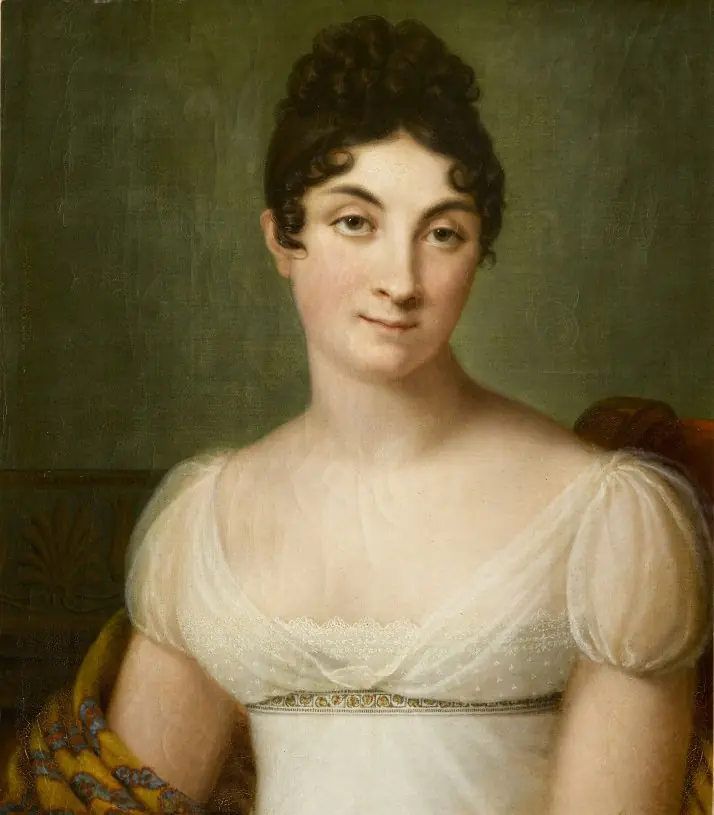 Portrait de Claire Élisabeth de Vergennes, Comtesse de Rémusat
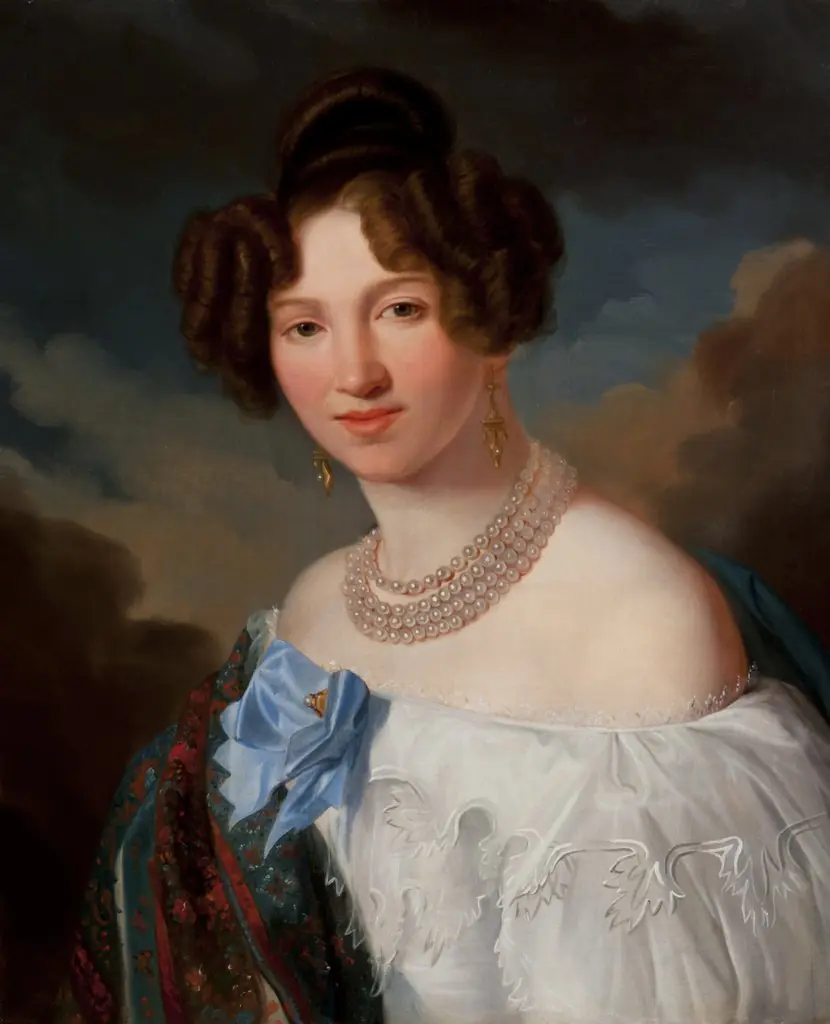 Portrait of Sydonia Henoch née Roller (Copy?)
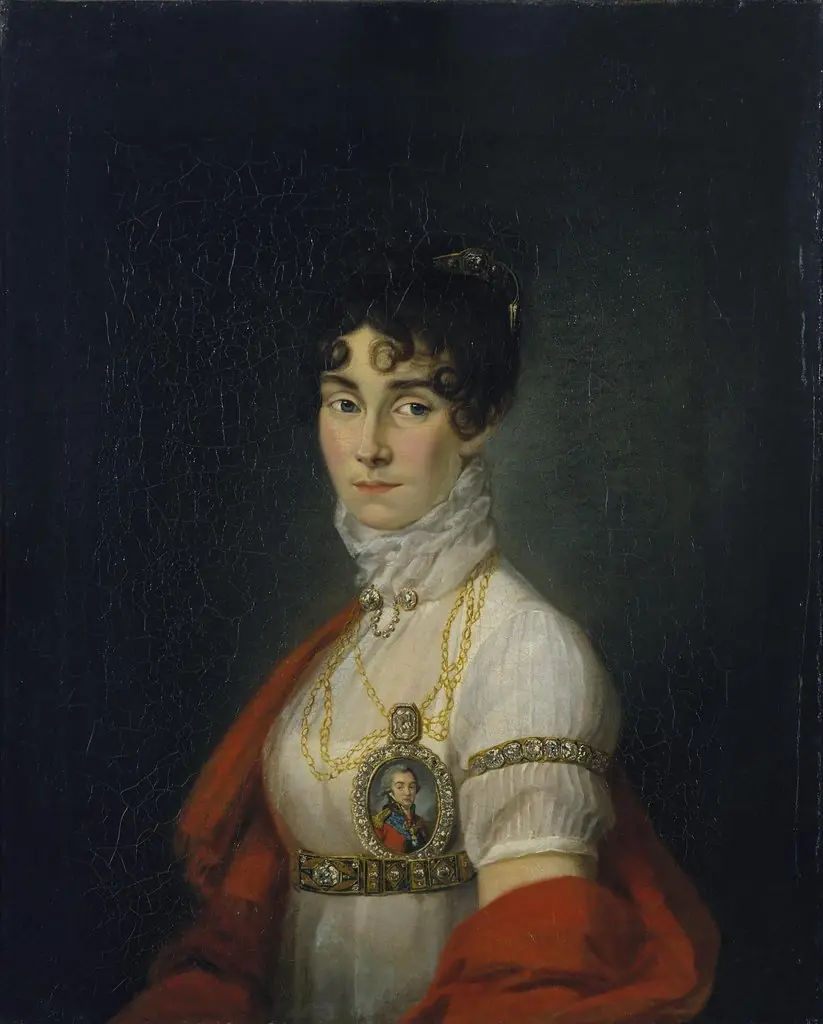 Portrait of Praskovia Kovalyova-Zhemchugova, Countess Sheremeteva (1768-1803)
 Portrait of Princess Anna Nikolayevna
 Portrait of a Woman from the Schmidt Family
 Portrait of Grand Duchess Maria Pavlovna
 Портрет Д.С. Яковлевой
 Portrait of Sofia Apraxina
 Portrait of Mme de Staël