Artwork
Architecture of the Middle Ages: Shrine of St. Fridswode, Cathedral, Oxford
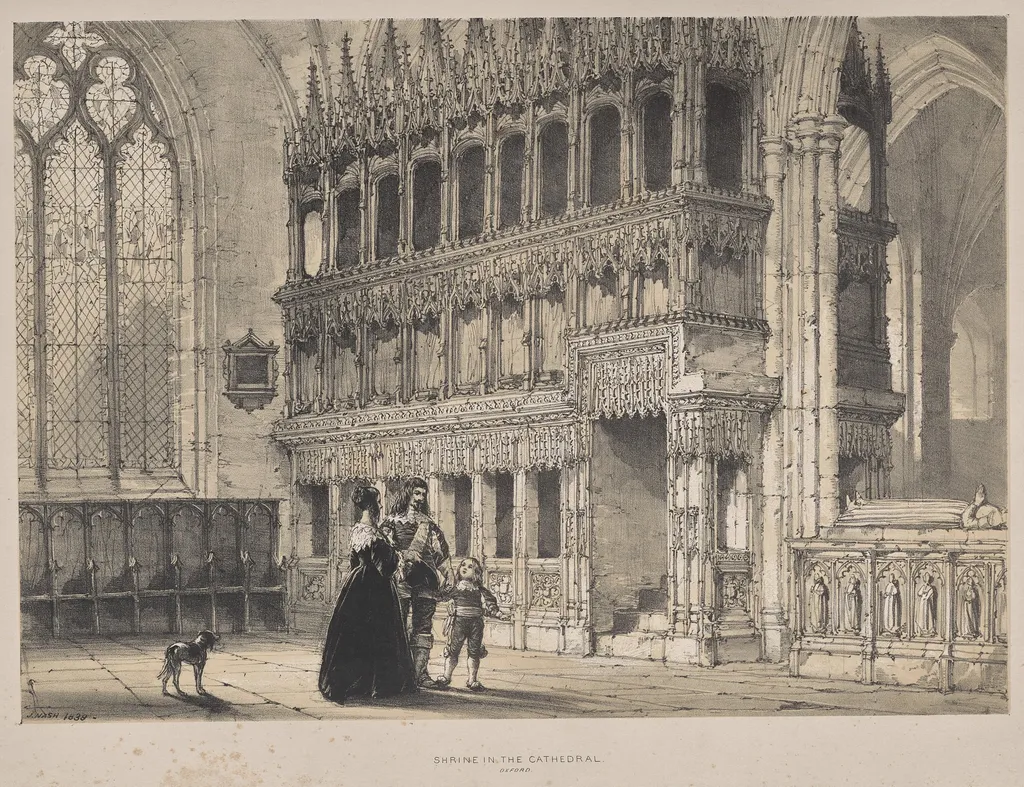
Architecture of the Middle Ages: Shrine of St. Fridswode, Cathedral, Oxford is a print by the Romanticist artist Joseph Nash. It dates from 1838 and is held in the collection of the Cleveland Museum of Art.
About this work
Overview
The work belongs to a series of topographical drawings that sought to preserve the appearance of historic sites before modern alterations.
Created in 1838 by Joseph Nash, this watercolour depicts the Shrine of St. Fridswode within Oxford Cathedral. Nash, known for his precise architectural studies, rendered the structure with meticulous attention to detail, reflecting his broader project to document England’s medieval buildings. The work belongs to a series of topographical drawings that sought to preserve the appearance of historic sites before modern alterations.
Subject & Meaning
The shrine, a devotional structure housing relics of St. Fridswode, is shown as a focal point of religious and architectural significance. Three figures—two adults and a child with a dog—appear in the foreground, suggesting contemporary visitors rather than historical reenactment. Their presence anchors the scene in the artist’s own time, emphasizing the shrine’s continued presence in 19th-century religious life.
Technique & Style
Nash employed fine-line watercolour and ink to capture the intricate stonework of the Gothic shrine, including carved balustrades, column tracery, and diamond-paned windows. The monochrome palette enhances the structural clarity, allowing viewers to focus on texture and form. His method aligns with 19th-century antiquarian practices, where accuracy in recording architectural detail took precedence over artistic embellishment.
History & Provenance
The drawing was produced during Nash’s extensive survey of English ecclesiastical architecture, later compiled in his multi-volume work *Mansions of England in the Olden Time*. It was likely made as a preparatory study for publication. The work entered the collection of The Cleveland Museum of Art, where it remains as part of a broader archive of 19th-century architectural documentation.
Context
In the 1830s, a growing interest in medieval heritage coincided with the Gothic Revival movement in Britain. Artists like Nash played a key role in recording structures threatened by neglect or renovation. His depictions served both scholarly and cultural purposes, offering visual records for historians and the public at a time when photography was not yet widely available for architectural study.
Legacy
Nash’s detailed renderings of medieval sites, including this shrine, contributed to the preservation of visual knowledge about England’s architectural past. Though the original shrine no longer exists in its 19th-century form, his work remains a valuable reference for historians and conservators studying the evolution of ecclesiastical interiors and devotional spaces.
Artist & collection
Artist
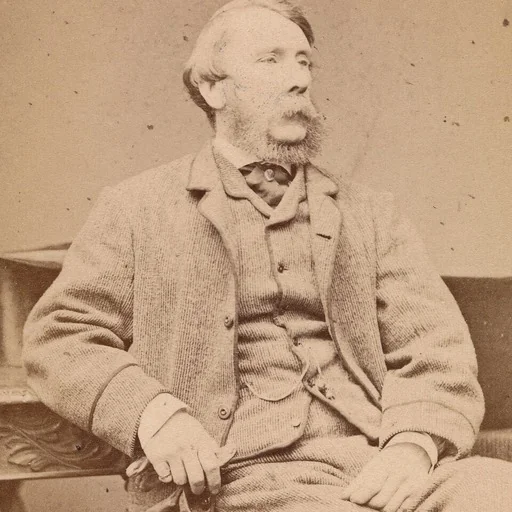
Joseph Nash (17 December 1809 – 19 December 1878) was an English watercolour painter and lithographer, specialising in historical buildings. His major work was the 4-volume Mansions of England in the Olden Time, published from 1839–49.

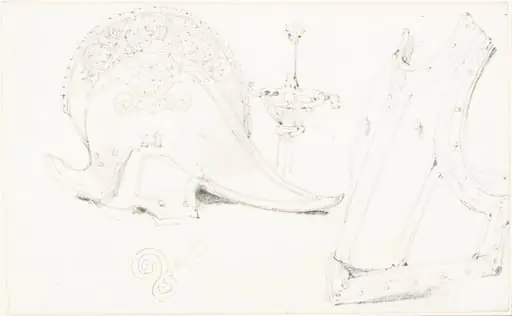 Study of a Helmet, Breastplate, and Rapier
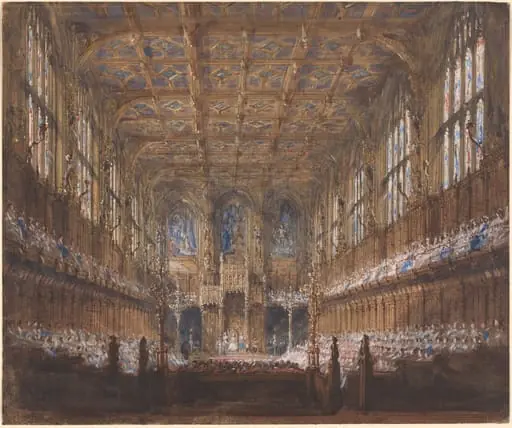 The State Opening of Parliament in the Rebuilt House of Lords
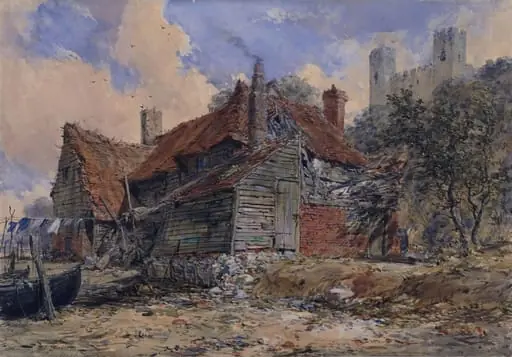 Rochester
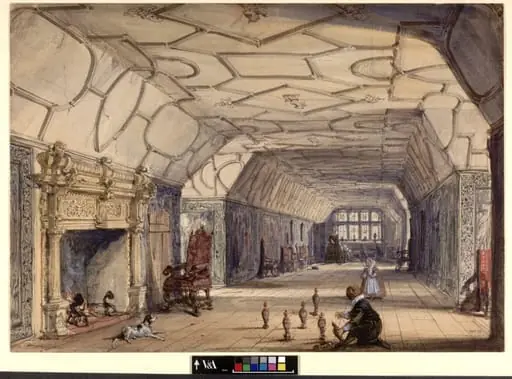 The gallery at Knole House, near Sevenoaks
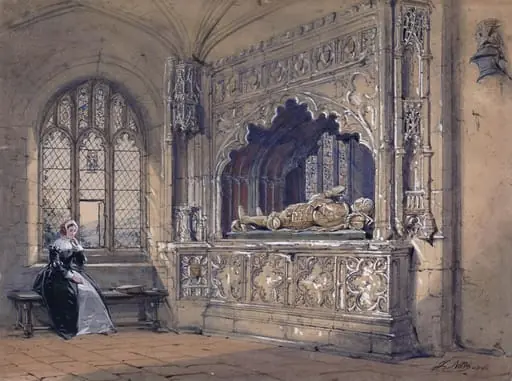 The supposed tomb of Thomas Fiennes, in Herstmonceux Church, Sussex, looking south-east from the North Chapel
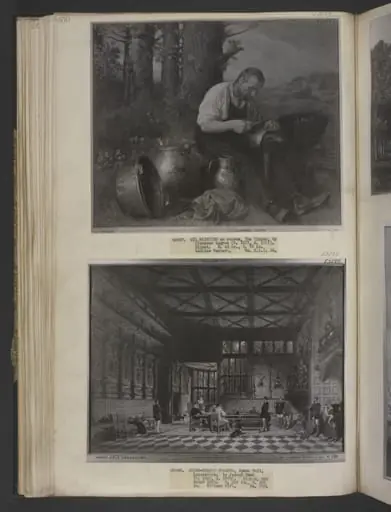 Speke Hall, Lancashire
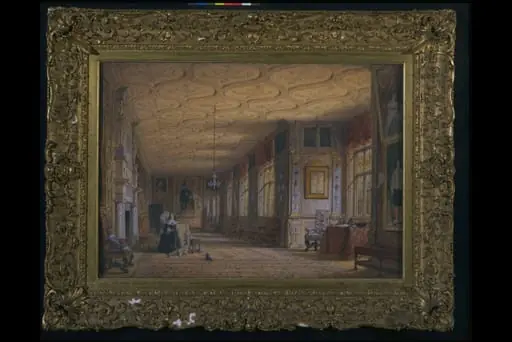 The Cartoon Gallery at Knole
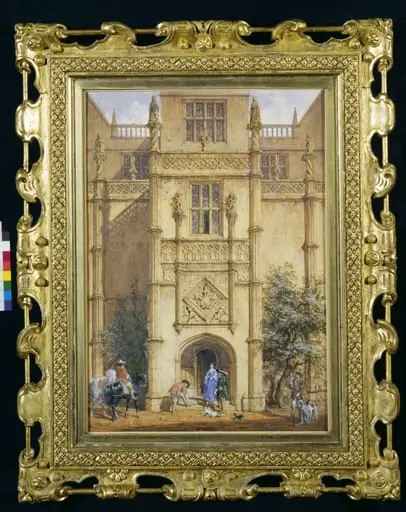 The Porch at Montacute House, Somerset
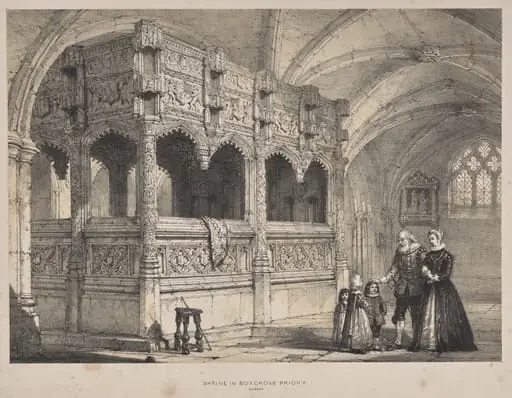 Architecture of the Middle Ages: Shrine of the Countess de la Warre in Boxgrove Priory, Sussex
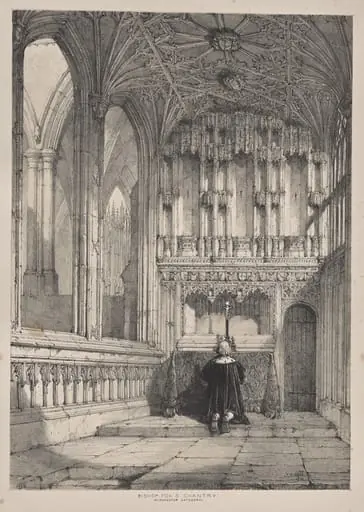 Architecture of the Middle Ages: Bishop Fox's Chantry, Winchester Cathedral
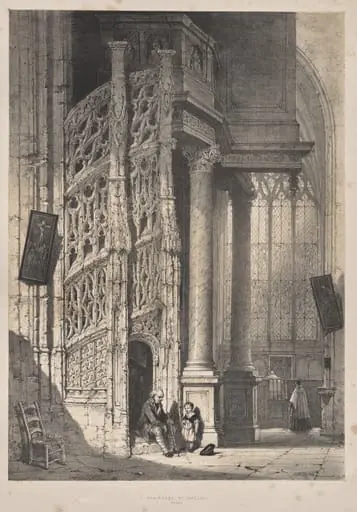 Architecture of the Middle Ages: Staircase, St. Maclou, Rouen
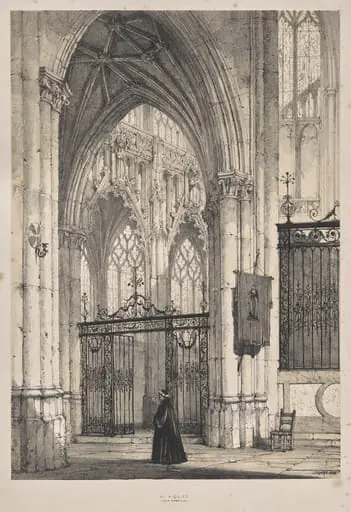 Architecture of the Middle Ages: Church of St. Riquier, near Abbeville
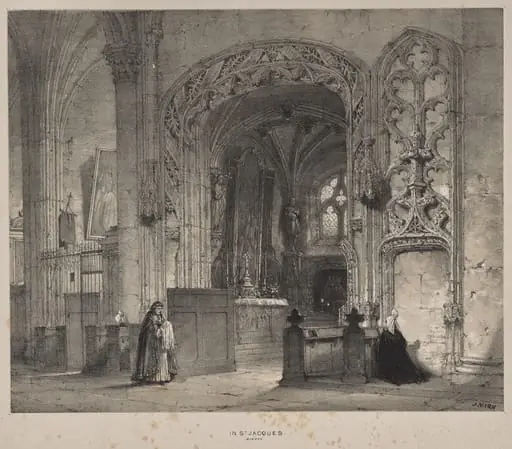 Architecture of the Middle Ages: Chapel in St. Jacques, Dieppe
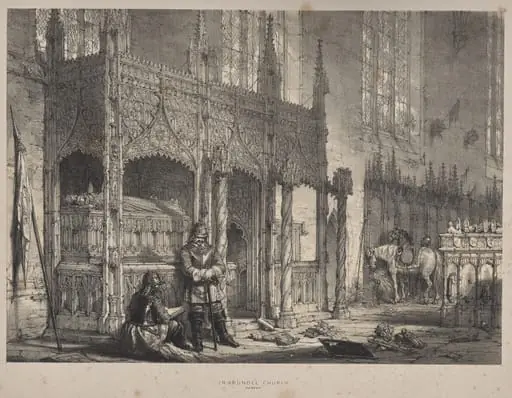 Architecture of the Middle Ages: In Arundel Church, Sussex
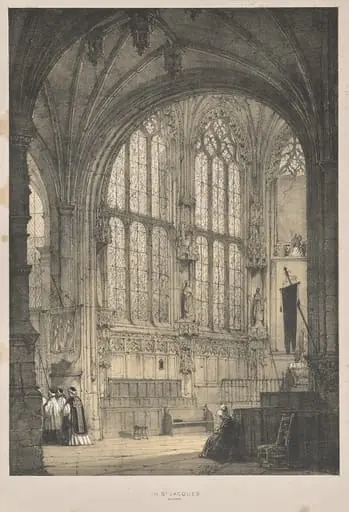 Architecture of the Middle Ages: In St. Jacques, Dieppe, East End, Interior
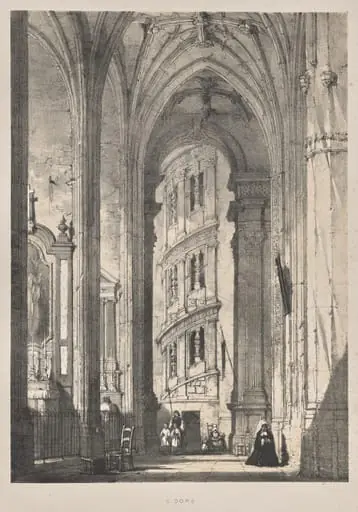 Architecture of the Middle Ages: Church of St. Gisors, Interior
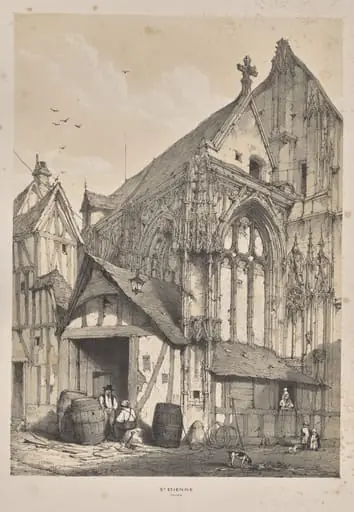 Architecture of the Middle Ages: St. Etienne, Rouen
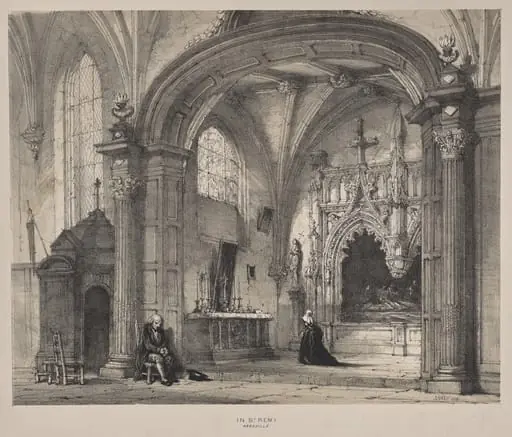 Architecture of the Middle Ages: In St. Remi, Abbeville