Artwork
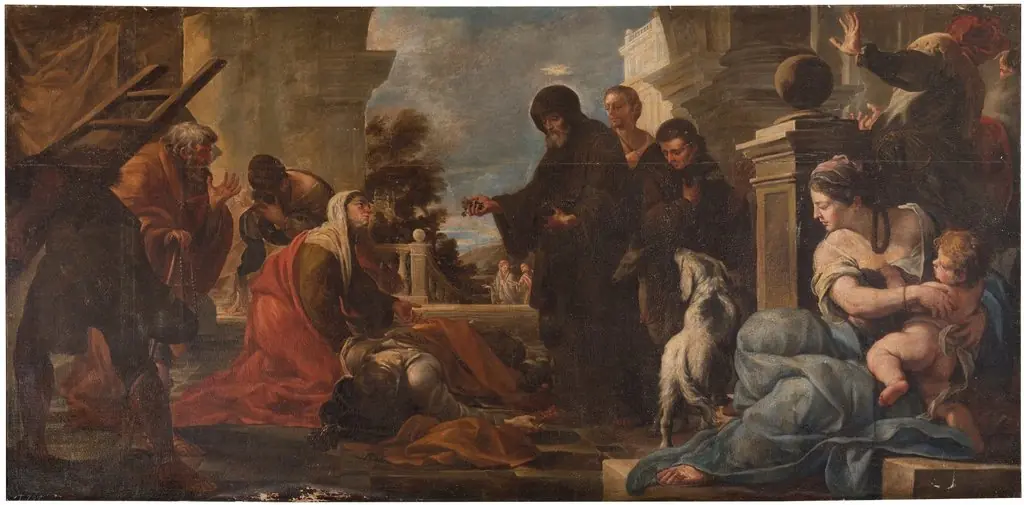
Comunión de Santa Rosa de Viterbo
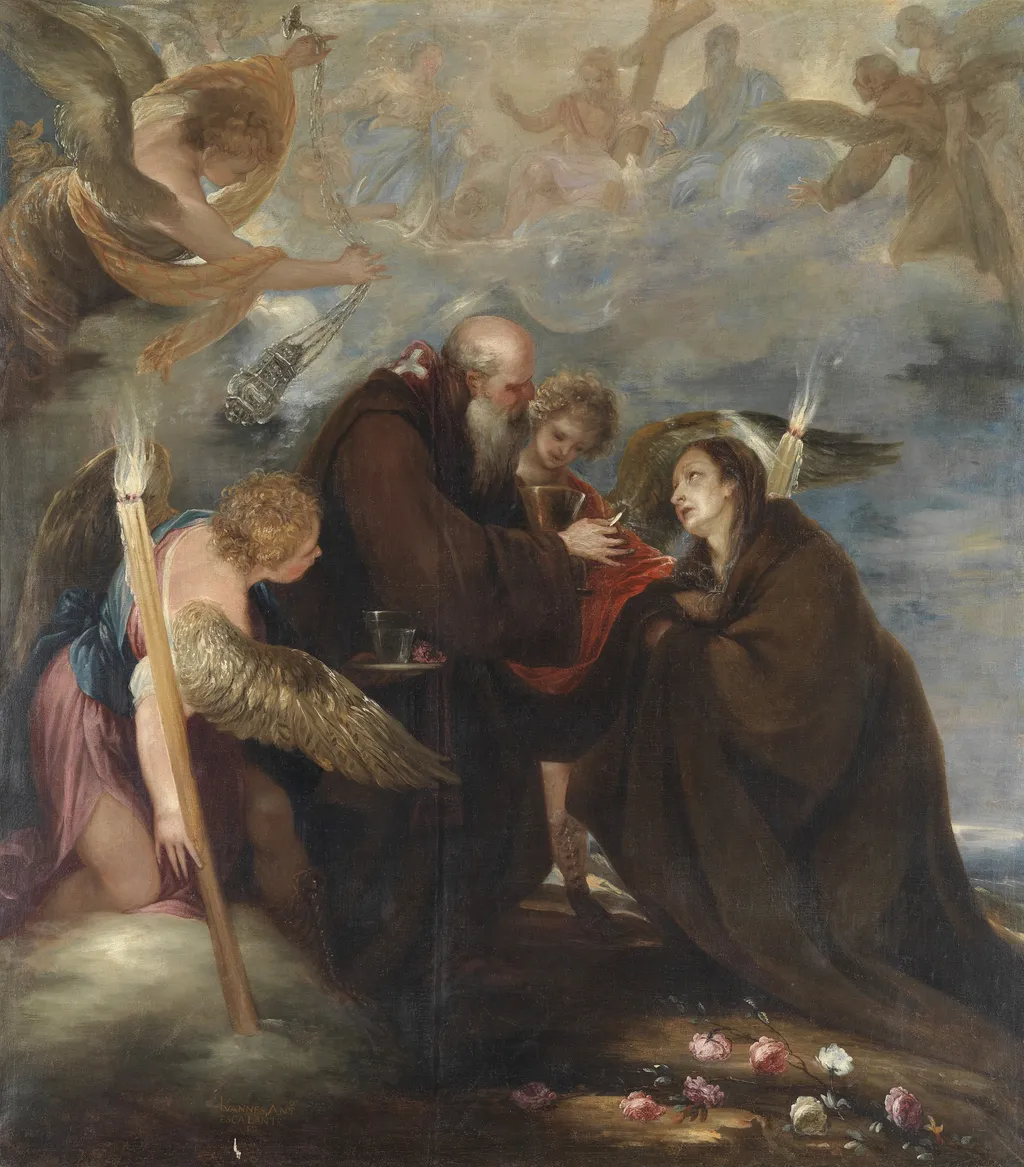
Comunión de Santa Rosa de Viterbo is an oil painting by the Early Baroque Italian artist Juan Antonio de Frías y Escalante. It dates from 1667 and is held in the collection of the Museo del Prado.
About this work
Overview
Comunión de Santa Rosa de Viterbo is a 1667 oil painting by Spanish Baroque artist Juan Antonio de Frías y Escalante, depicting a religious scene from Roman Catholic tradition.
Subject & Meaning
The painting portrays a Eucharistic event centered on Saint Rose of Viterbo, featuring a bearded figure (likely a priest) with chalice and plate, accompanied by the saint in a dark robe, flanked by two winged children (angels), set against a sky with additional celestial figures.
Technique & Style
Executed in oil paint, the work exhibits characteristics of the early Baroque Italian movement, marked by a predominantly dark color palette with contrasting light emanating through the cloudy background, typical of the dramatic lighting prevalent in Baroque art.
History & Provenance
Created in 1667 by Juan Antonio de Frías y Escalante, a Córdoba-born artist trained under Francisco Ricci in Madrid and associated with the Spanish Court until his death in 1669, the painting is now part of the Museo del Prado's collection.
Context
As a product of the Spanish Golden Age's Baroque period, the painting reflects the era's emphasis on religious themes and dramatic visual elements, aligning with the artistic and religious sentiments of 17th-century Spain.
Legacy
While specific impact details are not provided, the painting's inclusion in the Museo del Prado suggests its recognition as a notable work of Spanish Baroque art, contributing to the broader understanding and appreciation of Frías y Escalante's oeuvre.
Own this work as a print
Artist & collection
Artist
Juan Antonio de Frías y Escalante
Juan Antonio de Frías y Escalante (1633 in Cordoba–1669 in Madrid) was a Spanish Baroque Golden Age painter.

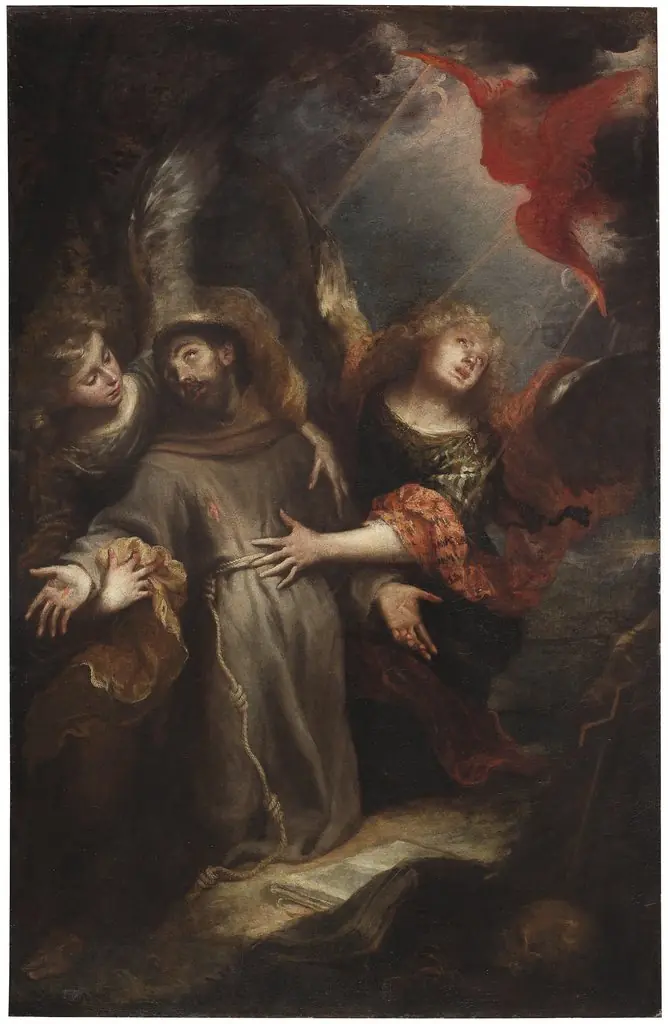 Estigmatización de San Francisco
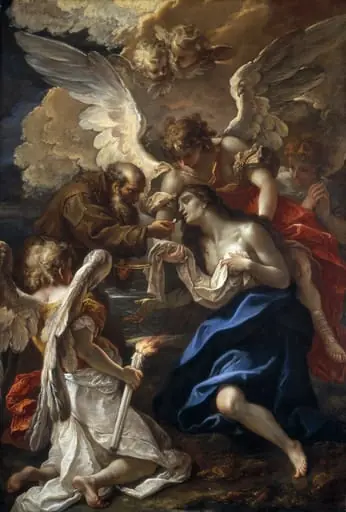 The Last Communion of Saint Mary of Egypt
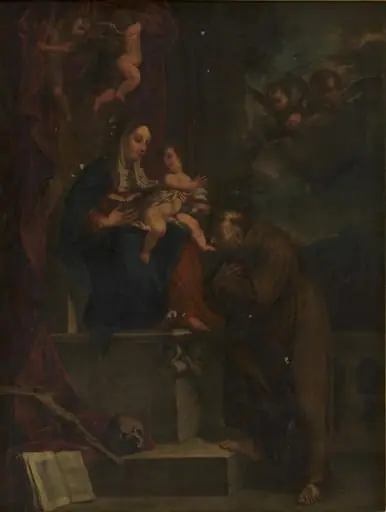 Mary, Jesus and St Francis
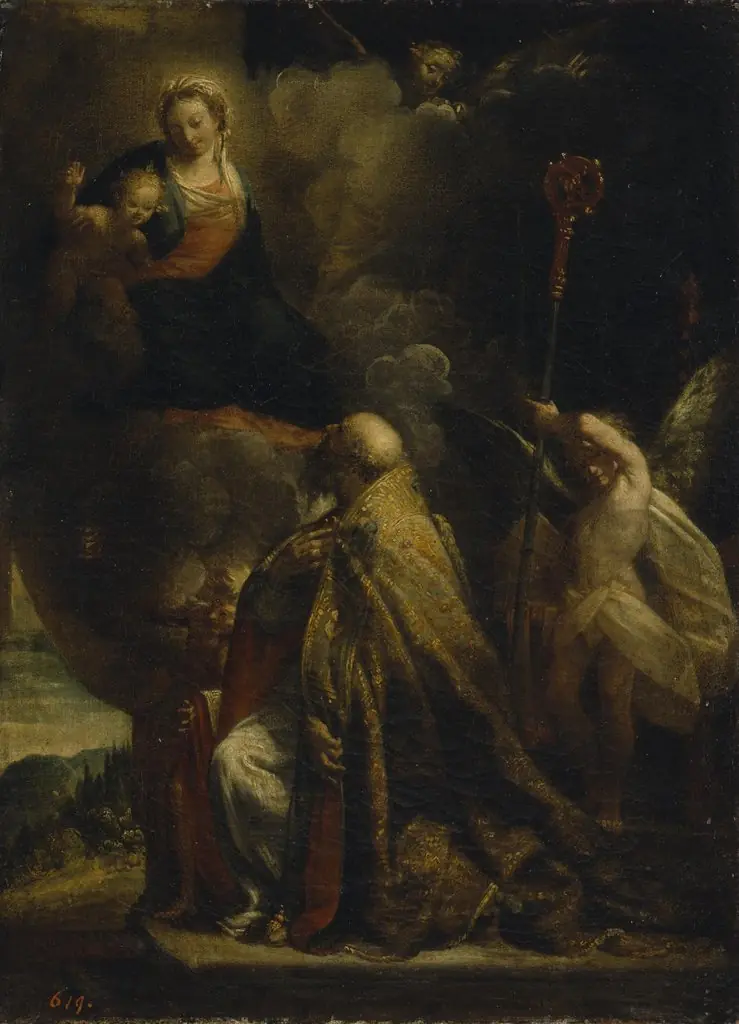 Vision of St Gregory (?)
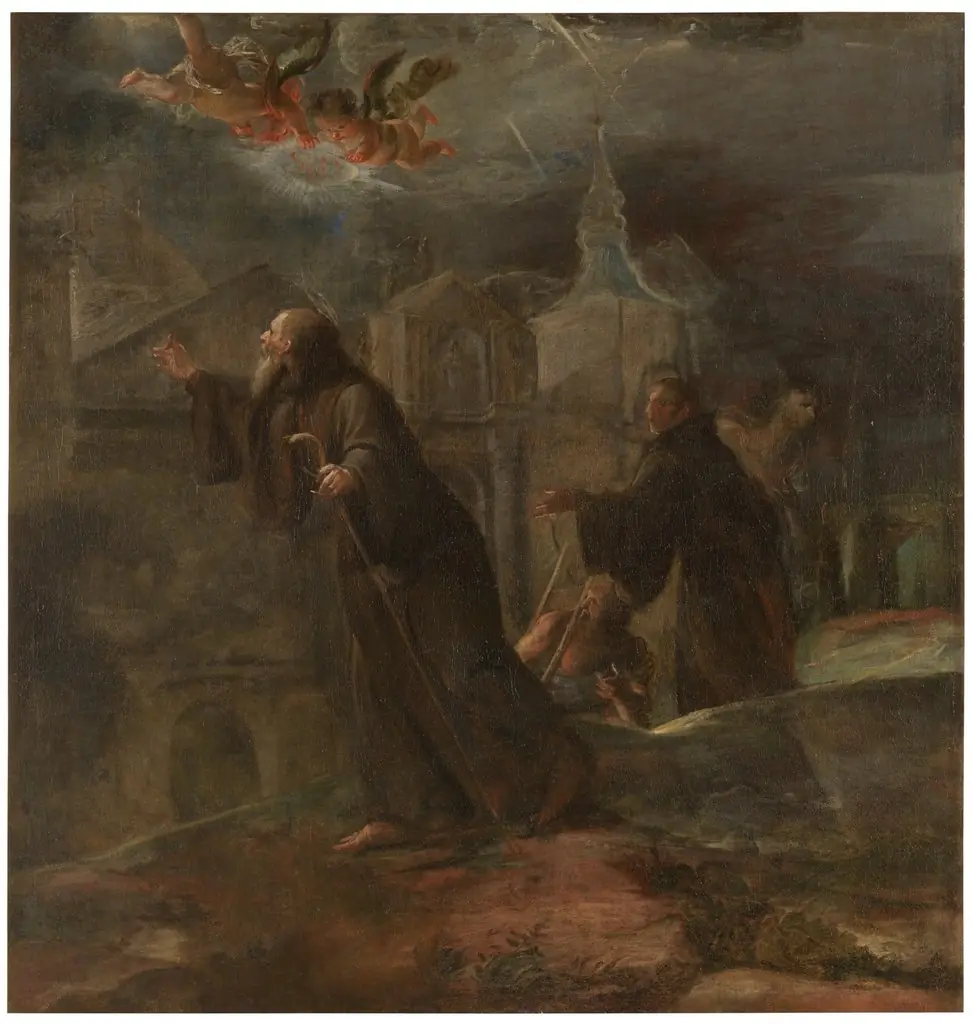 Visión de San Francisco de Paula
 Virgin and Child with Saint Francis
 A Miracle of Saint Francis of Paola
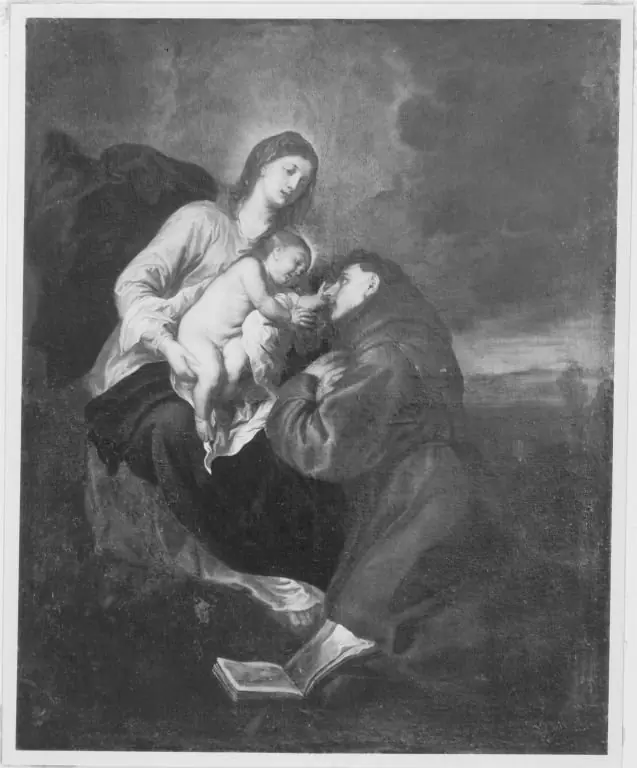 Vision des hl. Antonius von Padua
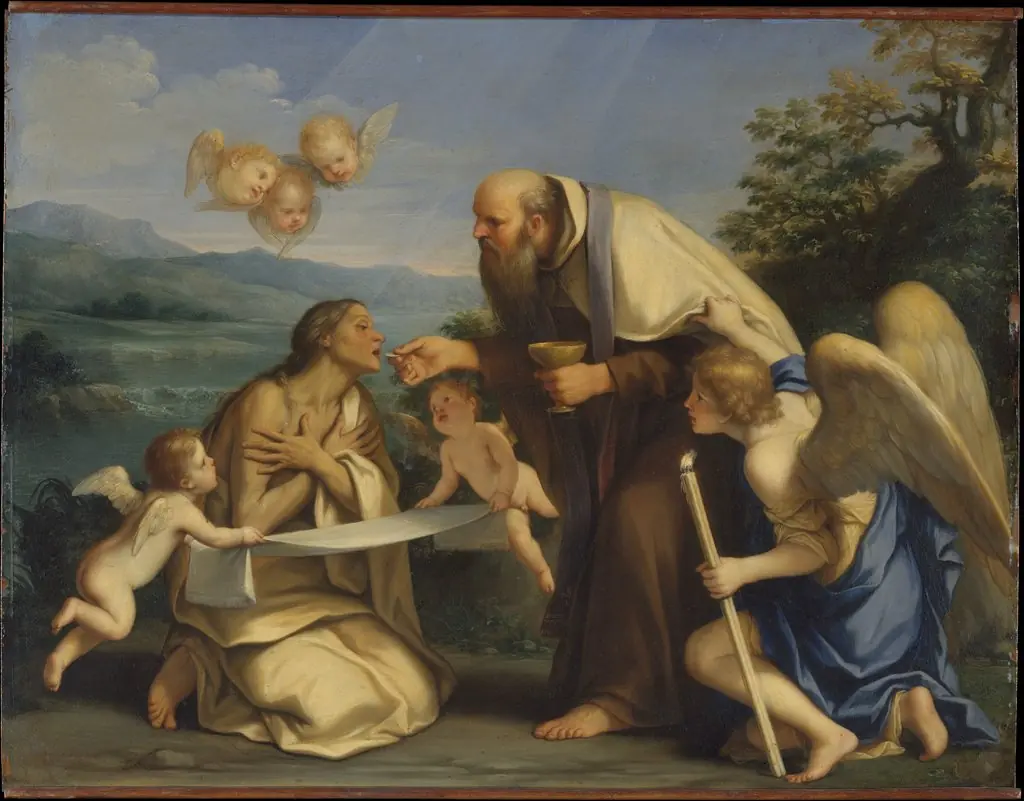 The Last Communion of Saint Mary of Egypt
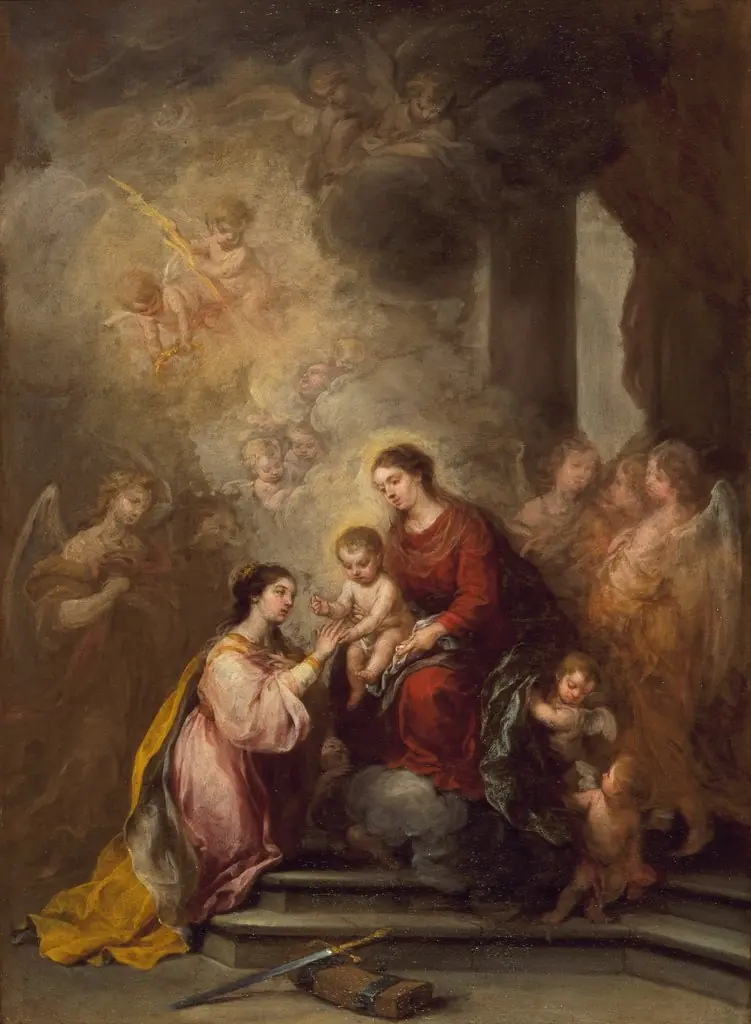 The Mystic Marriage of Saint Catherine
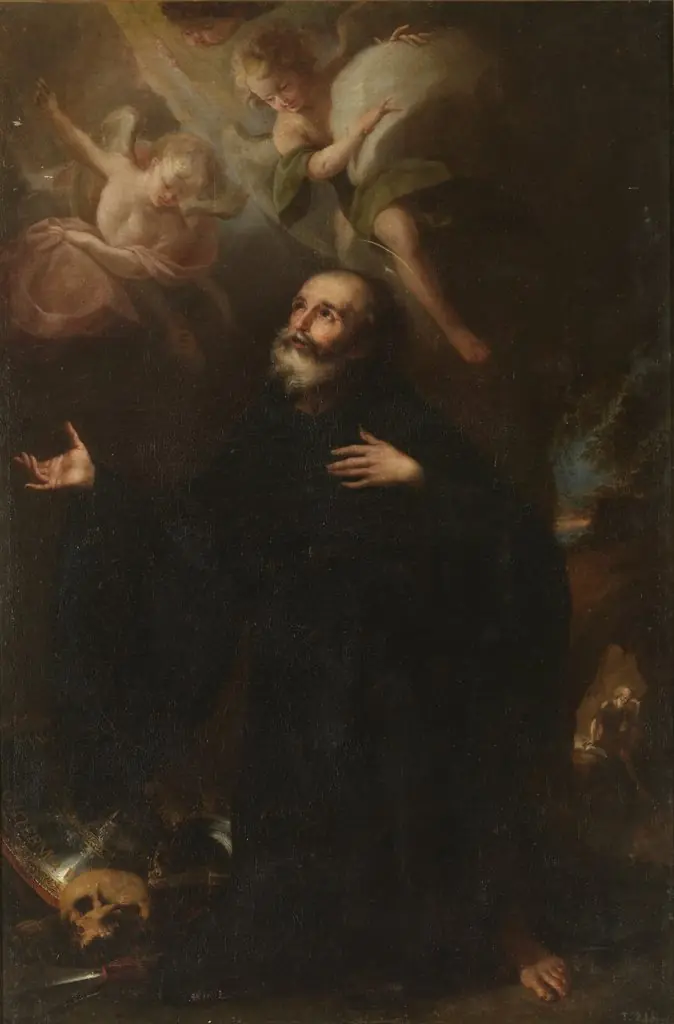 Saint William of Aquitaine
 Milagro de San Francisco de Paula