Artwork
La copa en el saco de Benjamín
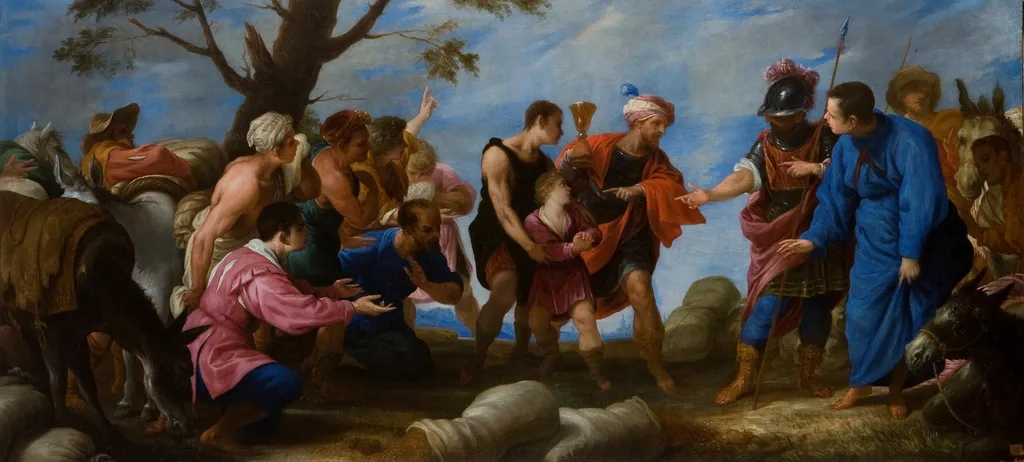
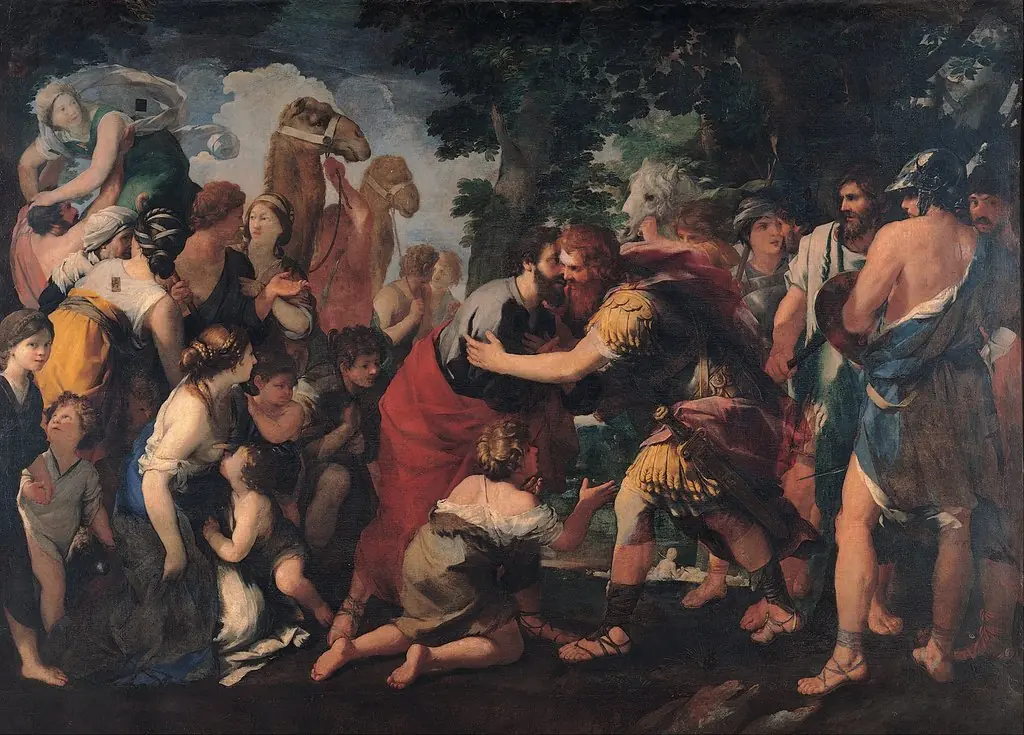
La copa en el saco de Benjamín is an oil painting by the Early Baroque Italian artist Juan Antonio de Frías y Escalante. It dates from 1668 and is held in the collection of the Museo del Prado.
About this work
Overview
Created in 1668 by the Spanish Baroque painter Juan Antonio de Frías y Escalante, *La copa en el saco de Benjamín* is an oil on canvas that now hangs in Madrid’s Museo del Prado. The work presents a bustling outdoor scene populated by roughly fifteen figures, some mounted on horses, set against a sky dotted with white clouds and a landscape of trees and rocks.
Subject & Meaning
The composition illustrates a biblical episode, likely drawn from the story of Benjamin, in which a man in a blue robe gestures toward an unseen object while another figure cradles a child and watches the gesture. The inclusion of colorful attire, helmets, and weapons situates the narrative within a dramatic, martial context, reflecting the artist’s frequent engagement with religious themes.
Technique & Style
Frías y Escalante employs the chiaroscuro characteristic of early Baroque painting, balancing illuminated figures against deeper shadows to model form. His palette combines vivid reds, blues, and earth tones, while the handling of light recalls the influence of Venetian masters such as Tintoretto and Veronese, whom he studied through the teachings of his mentor Francisco Ricci.
History & Provenance
Born in Córdoba in 1633, the artist spent much of his career in Madrid, serving the Spanish court. After its completion, the painting entered the royal collection and was eventually transferred to the Prado Museum, where it remains part of the institution’s holdings of 17th‑century Spanish Baroque art.
Artist & collection
Artist
Juan Antonio de Frías y Escalante
Juan Antonio de Frías y Escalante (1633 in Cordoba–1669 in Madrid) was a Spanish Baroque Golden Age painter.

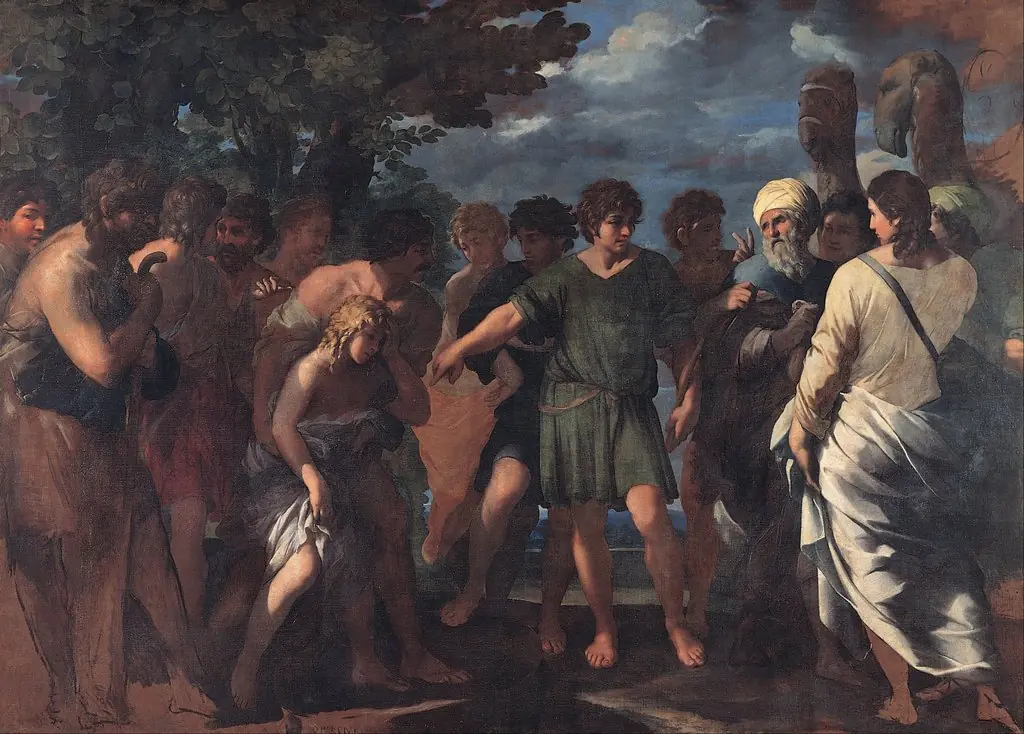 Joseph sold by his brothers
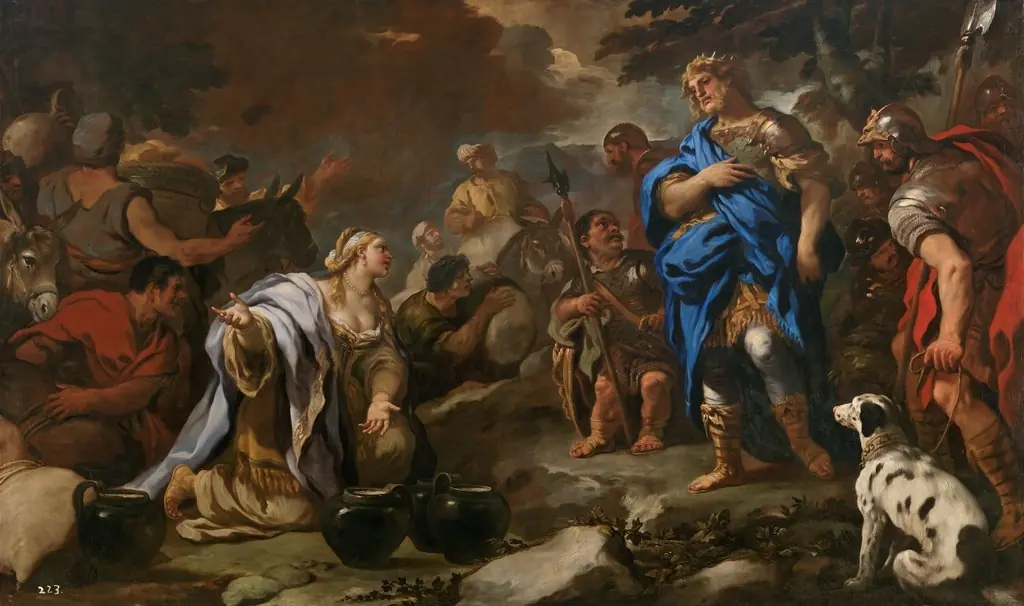 La prudente Abigail
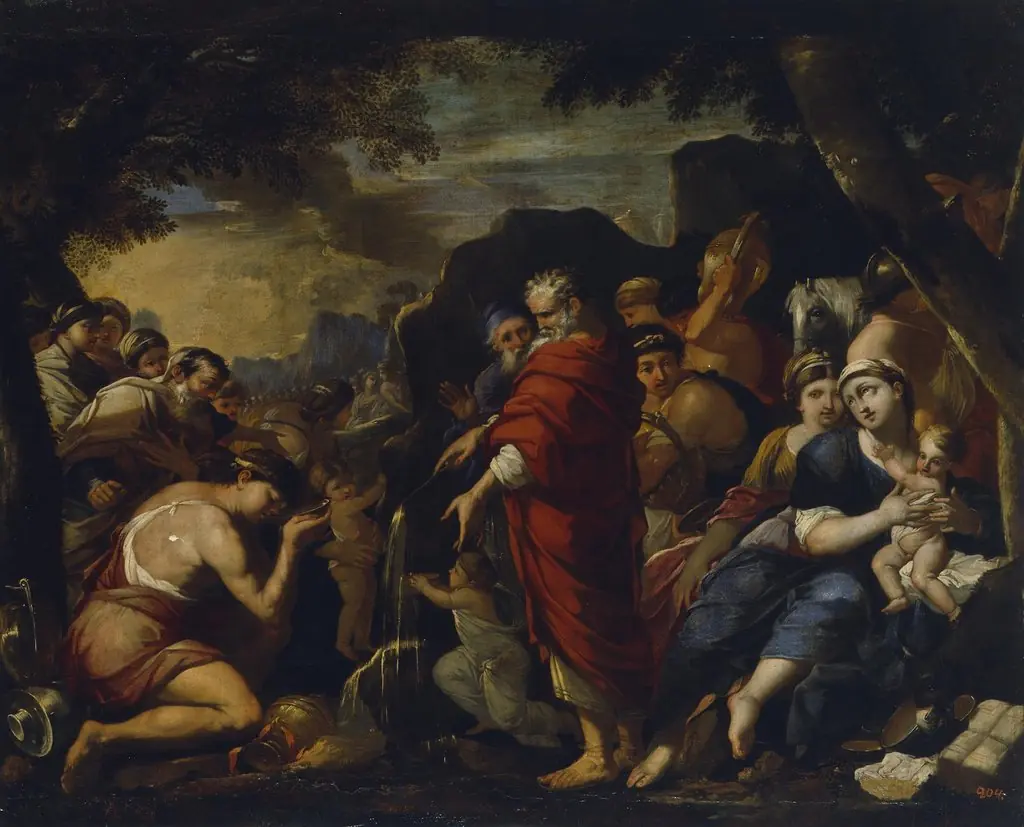 Moses Striking the Rock
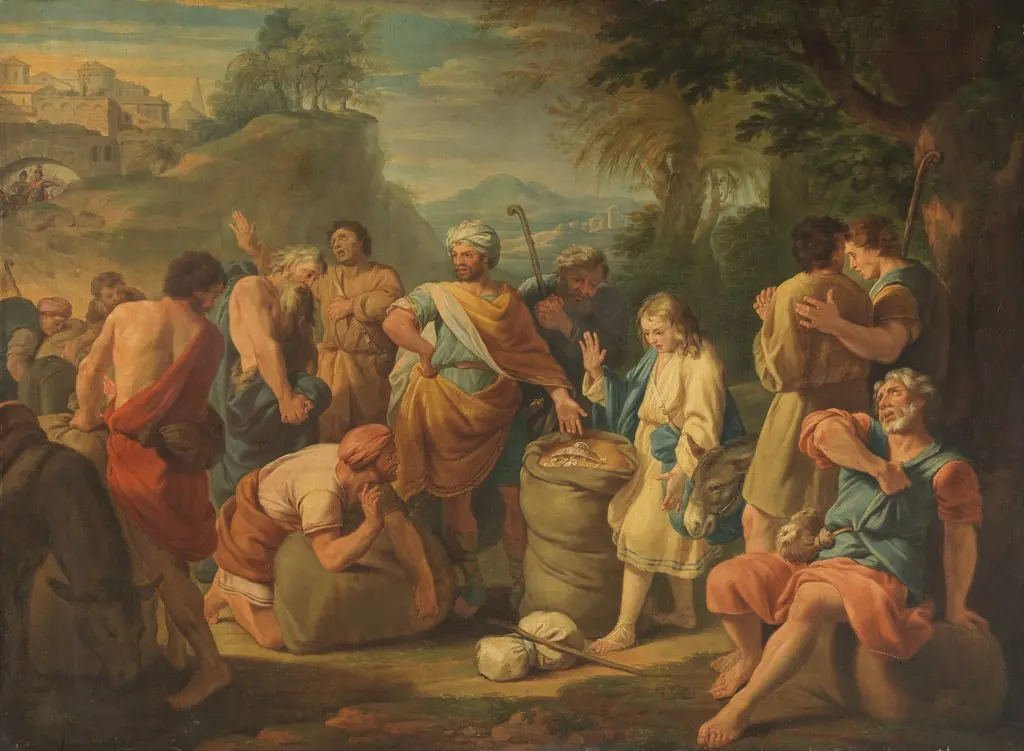 The Finding of the Money in Benjamin's Sack
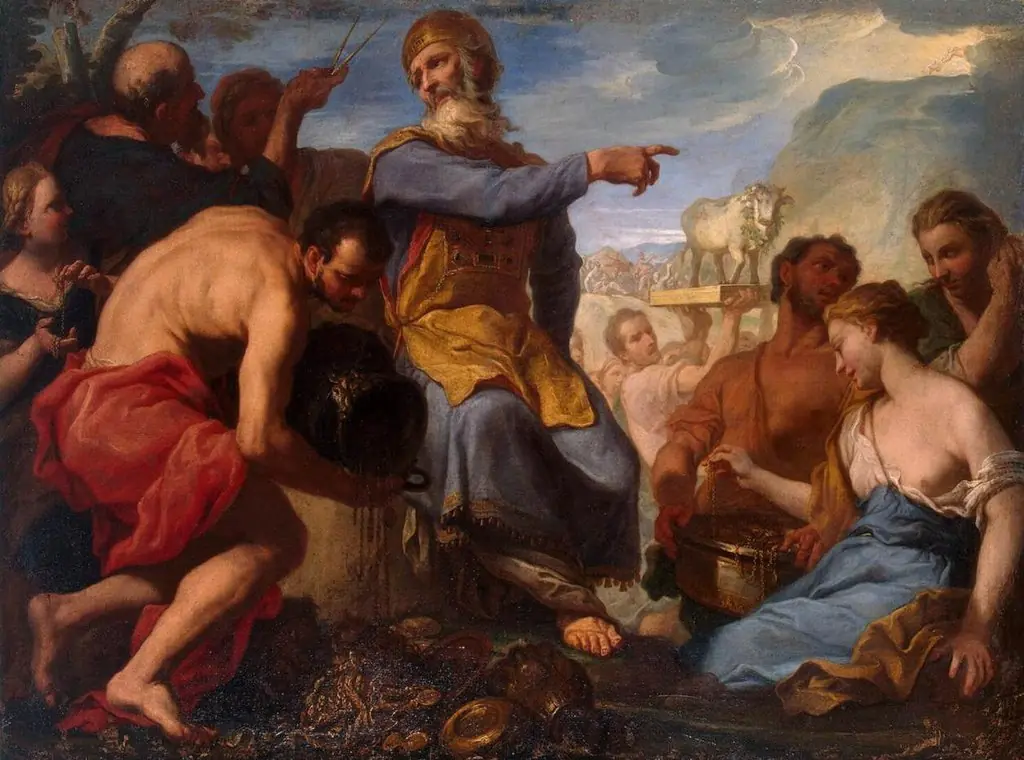 Adoration of the Golden Calf
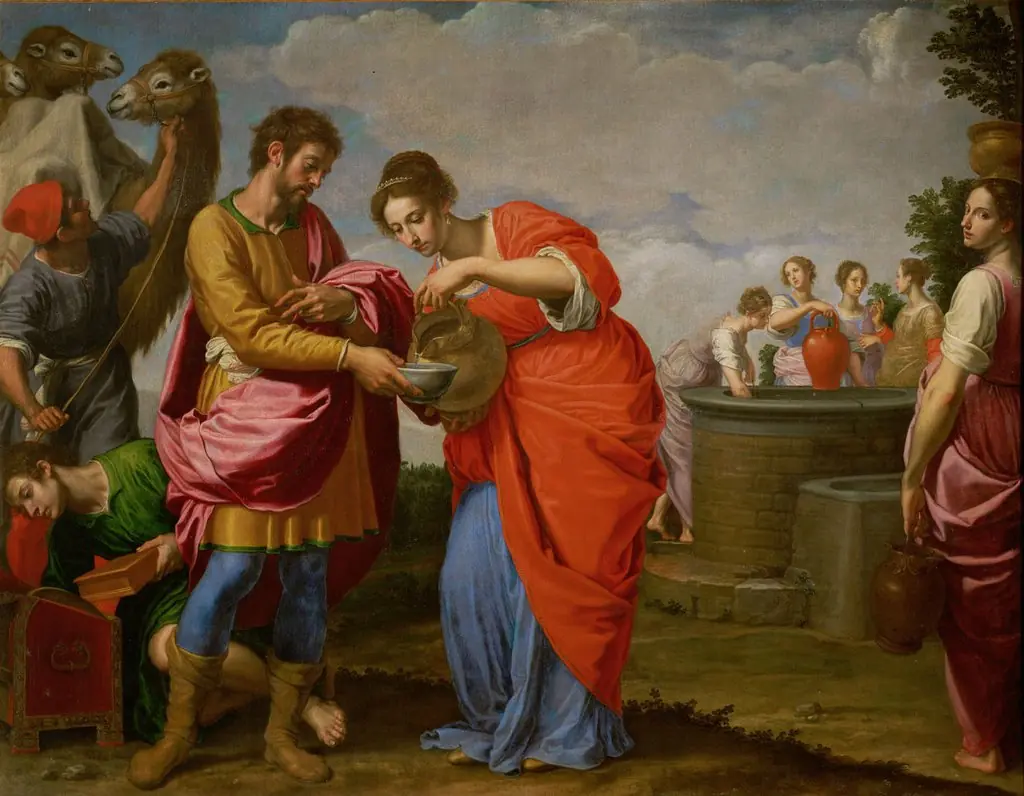 Rebekka und Elieser am Brunnen
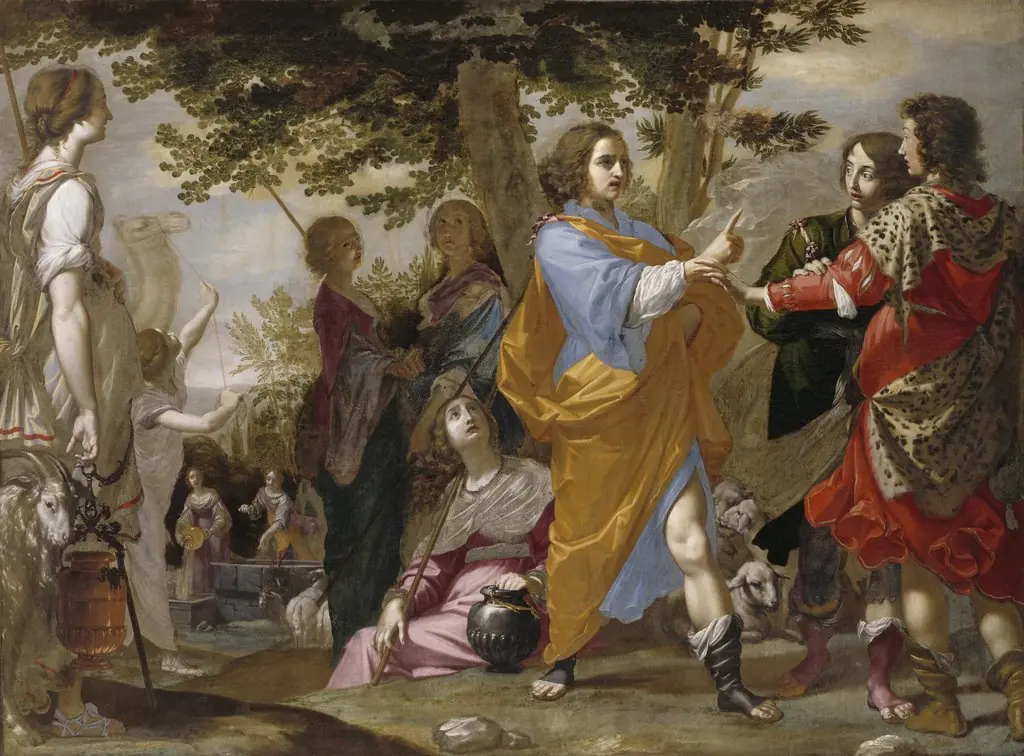 Moses Defending Jethro's Daughters at the Well
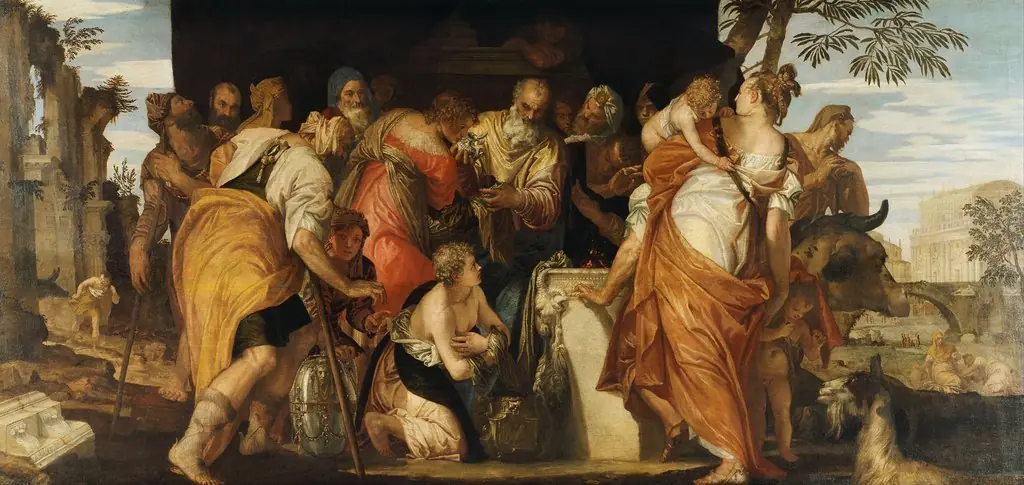 The Anointing of David
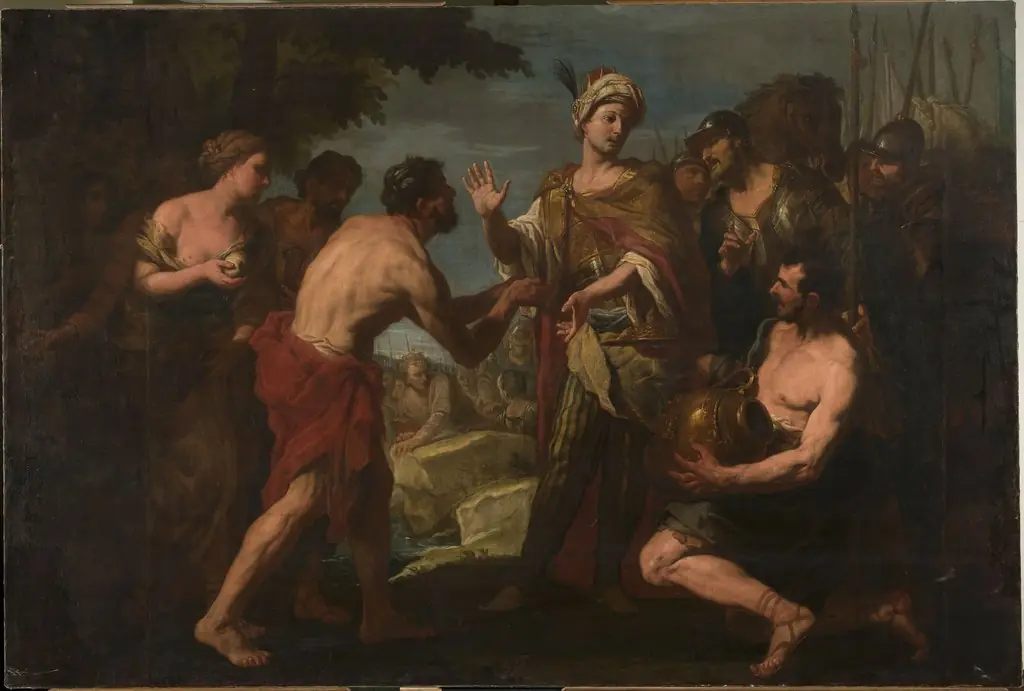 A historical scene
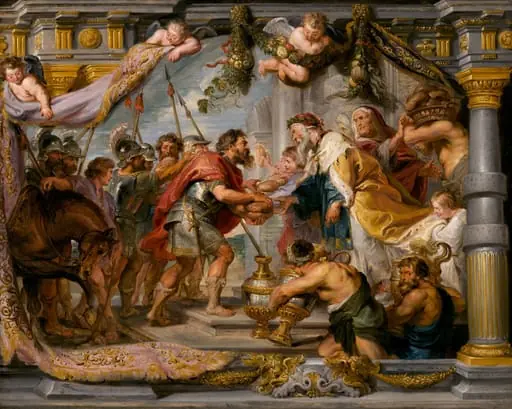 The Meeting of Abraham and Melchizedek
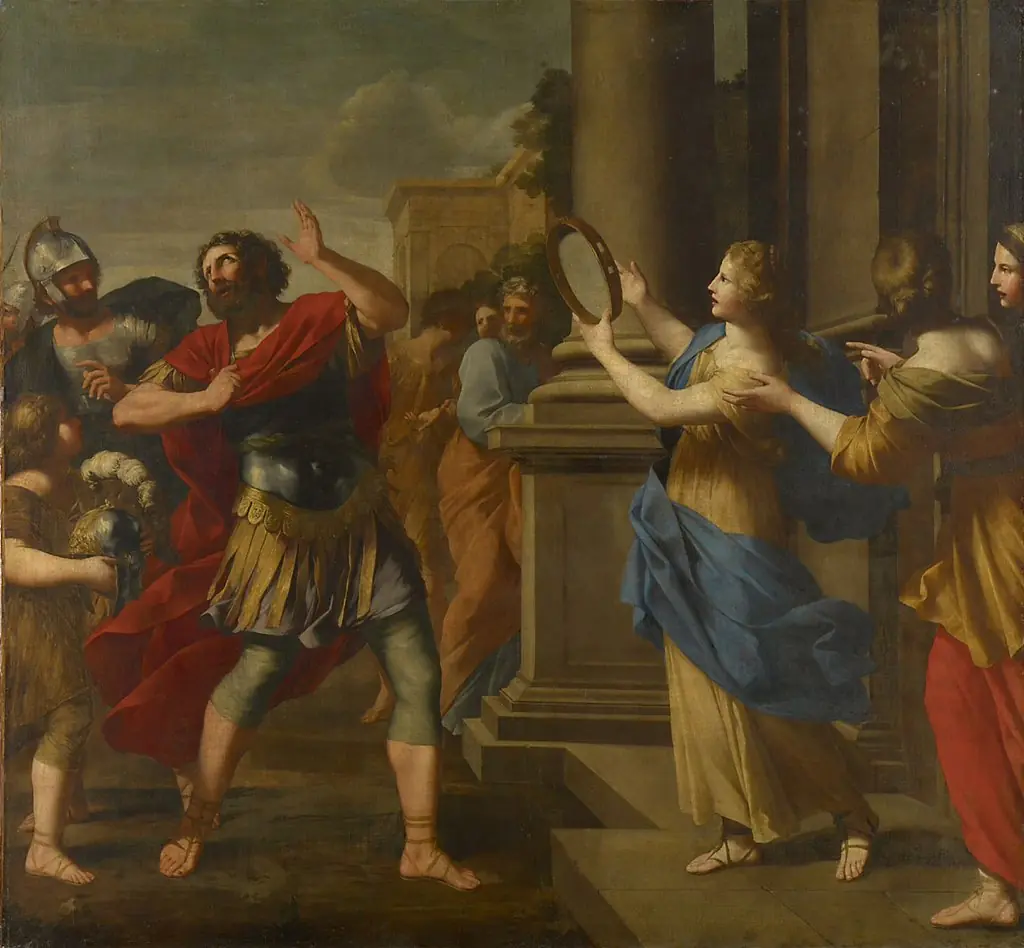 Jephta erblickt seine Tochter
 Meeting between Esau and Jacob