Artwork
Saint Teresa of Avila
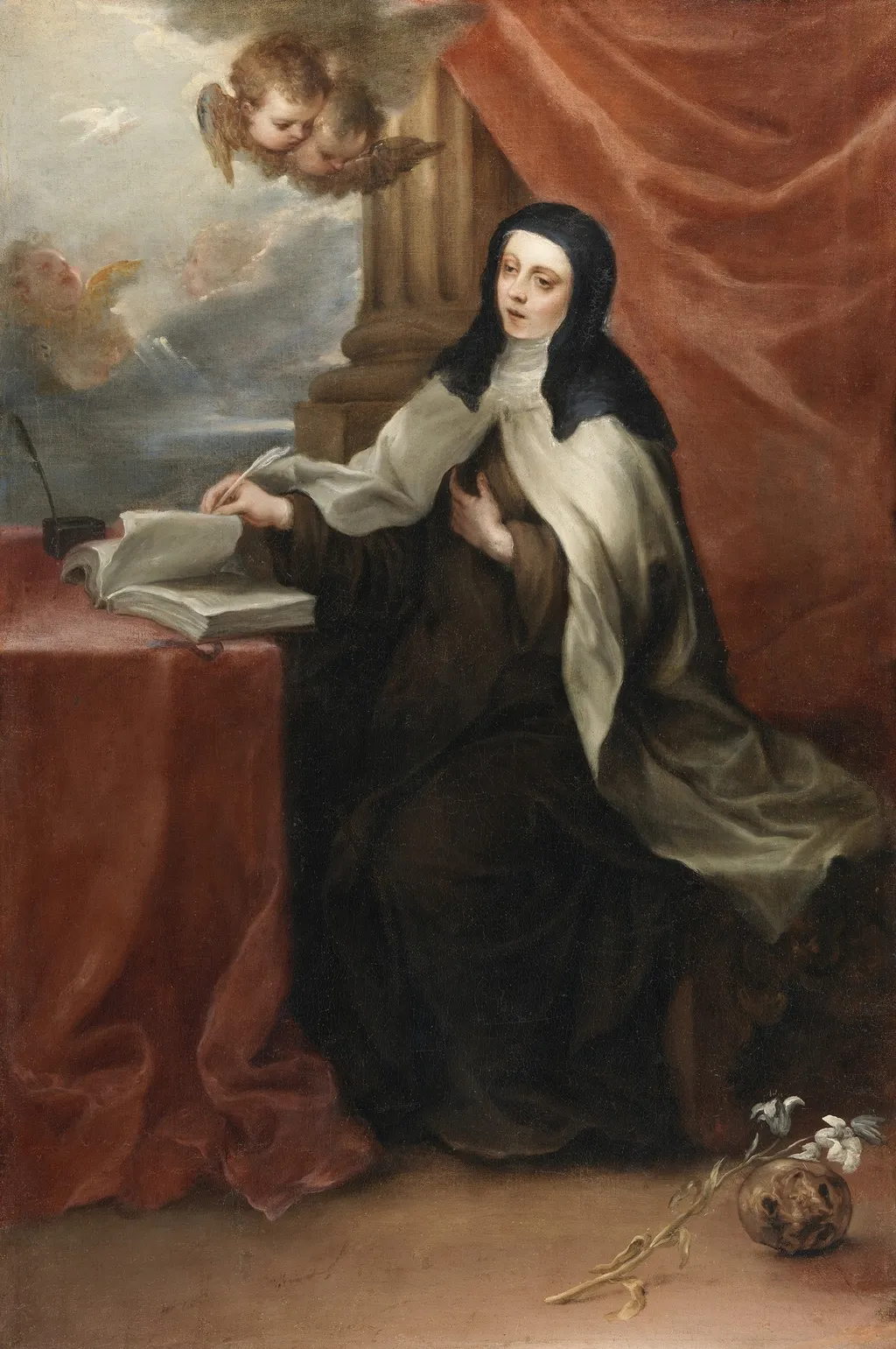
Saint Teresa of Avila is an oil painting by the Spanish Baroque Tenebrist artist Juan Antonio de Frías y Escalante. It dates from 1661 and is held in the collection of the National Gallery of Ireland.
About this work
Overview
Juan Antonio de Frías y Escalante’s oil painting titled *Saint Teresa of Avila* dates to roughly 1661. The work presents a solitary female figure seated at a table, absorbed in reading and writing, set against a darkened backdrop punctuated by a red drapery and a faintly rendered cherubic head in the clouds.
Subject & Meaning
The sitter, clothed in a somber robe with a white shawl, holds a quill in her right hand while her left hand rests on her chest, suggesting a moment of prayerful contemplation or scholarly devotion. The open book and the contemplative gaze imply an interior spiritual dialogue, aligning the image with Catholic traditions of saintly meditation.
Technique & Style
Executed in the tenebrist strand of Spanish Baroque, the painting employs stark chiaroscuro to model the figure against deep shadows, allowing the illuminated flesh and the red curtain to emerge with dramatic contrast. The soft modeling of the cherub’s head in the sky adds a subtle, ethereal counterpoint to the otherwise grounded scene.
History & Provenance
Frías y Escalante, a native of Córdoba born in 1633, trained under Francisco Ricci in Madrid and later served the Spanish court. He completed this work shortly before his premature death in 1669. The painting has remained within Spanish collections, reflecting the artist’s career centered on courtly and religious commissions.
Context
The piece belongs to a broader 17th‑century Spanish tradition that fused devotional imagery with intimate genre settings. By portraying Saint Teresa in a private, scholarly pose, the work mirrors contemporary Counter‑Reformation efforts to present saints as accessible models of piety, while also showcasing the period’s fascination with dramatic lighting and emotional depth.
Own this work as a print
Artist & collection
Artist
Juan Antonio de Frías y Escalante
Juan Antonio de Frías y Escalante (1633 in Cordoba–1669 in Madrid) was a Spanish Baroque Golden Age painter.

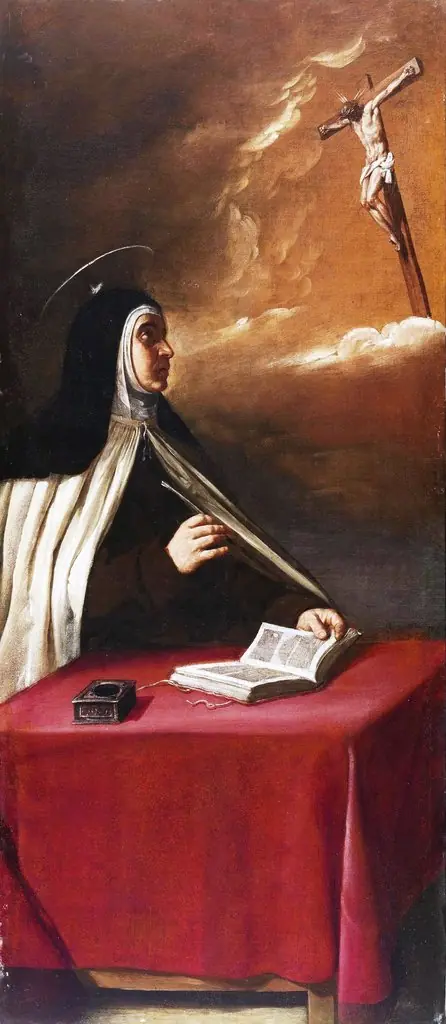 The crucified Christ appears to Saint Teresa of Avila
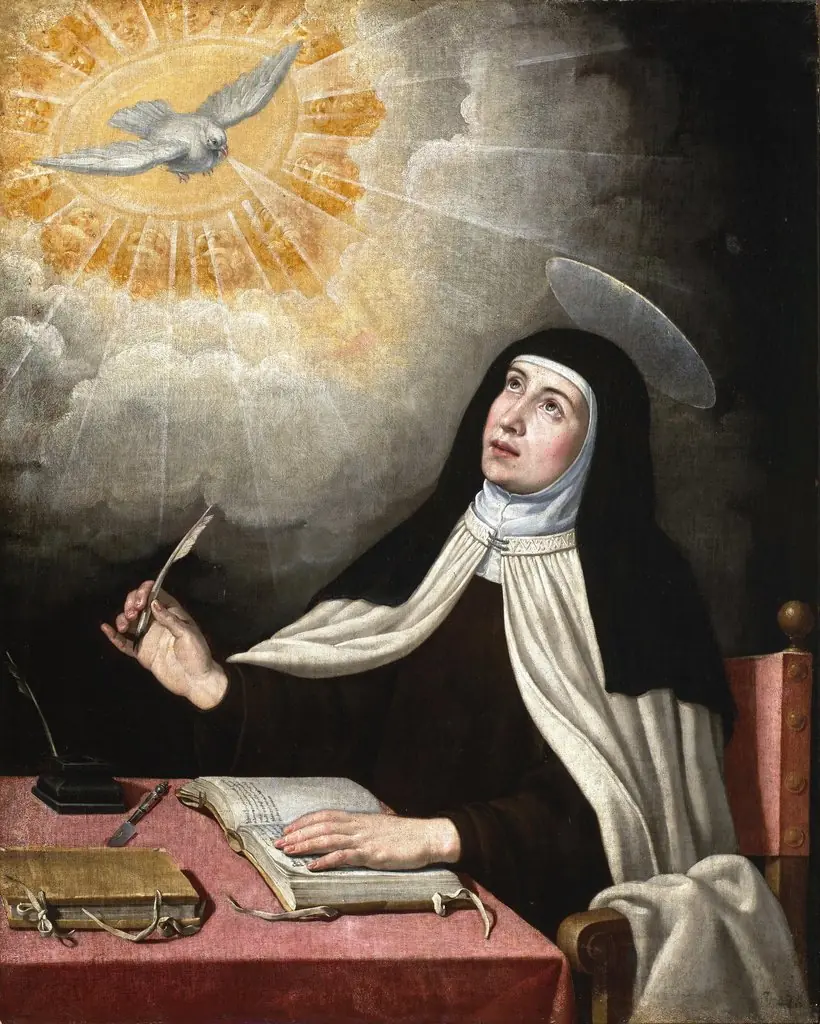 Santa Teresa de Jesús
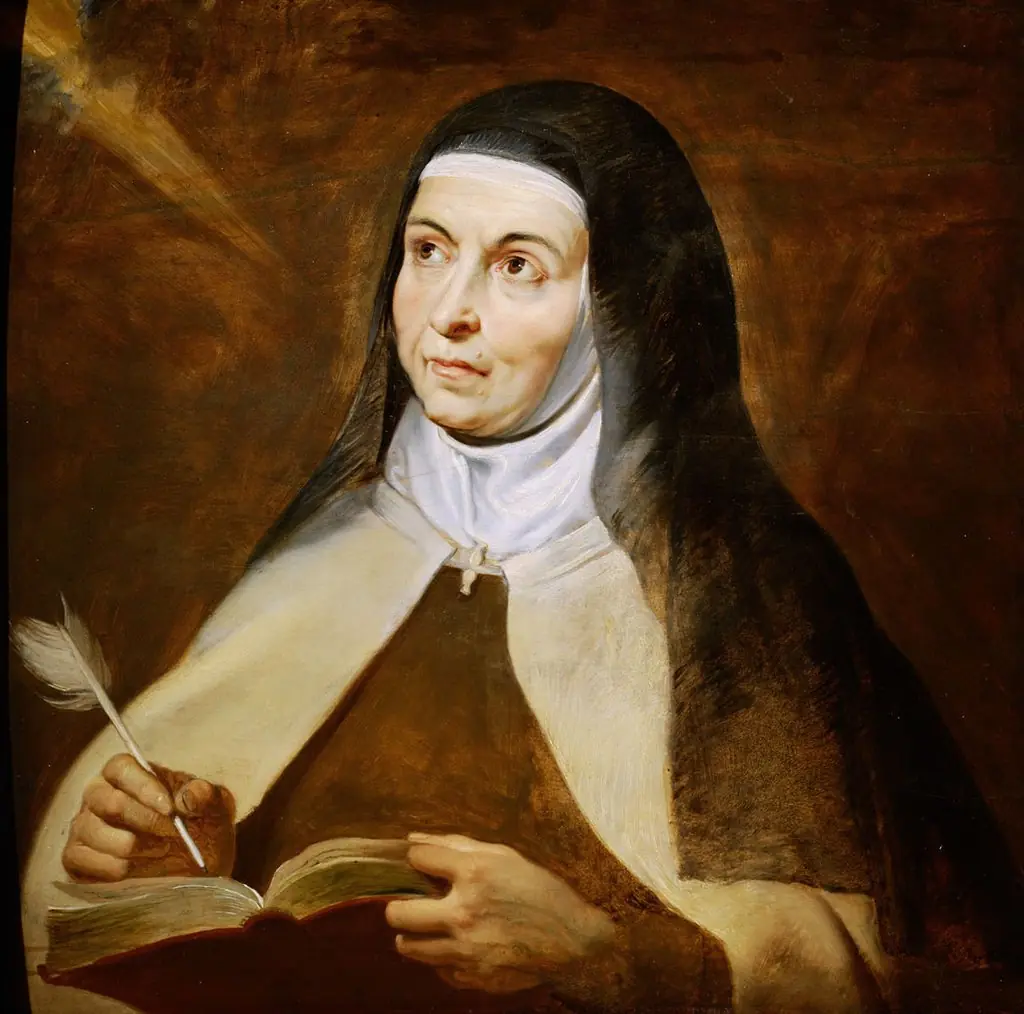 Theresa of Avila
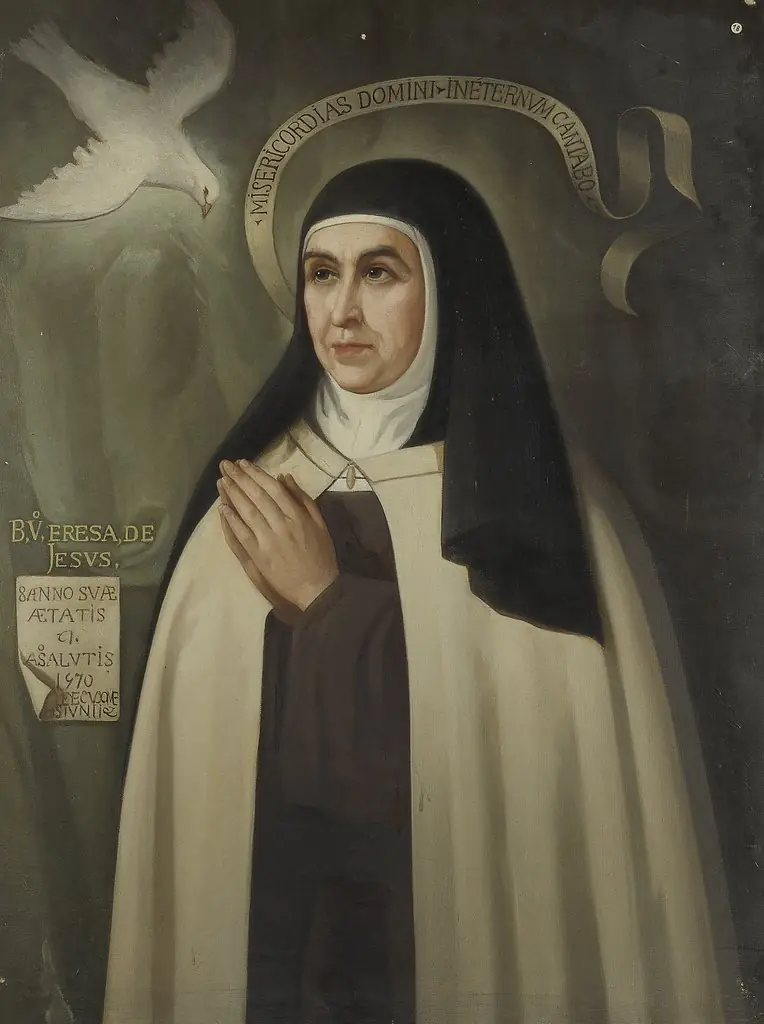 Saint Teresa of Ávila
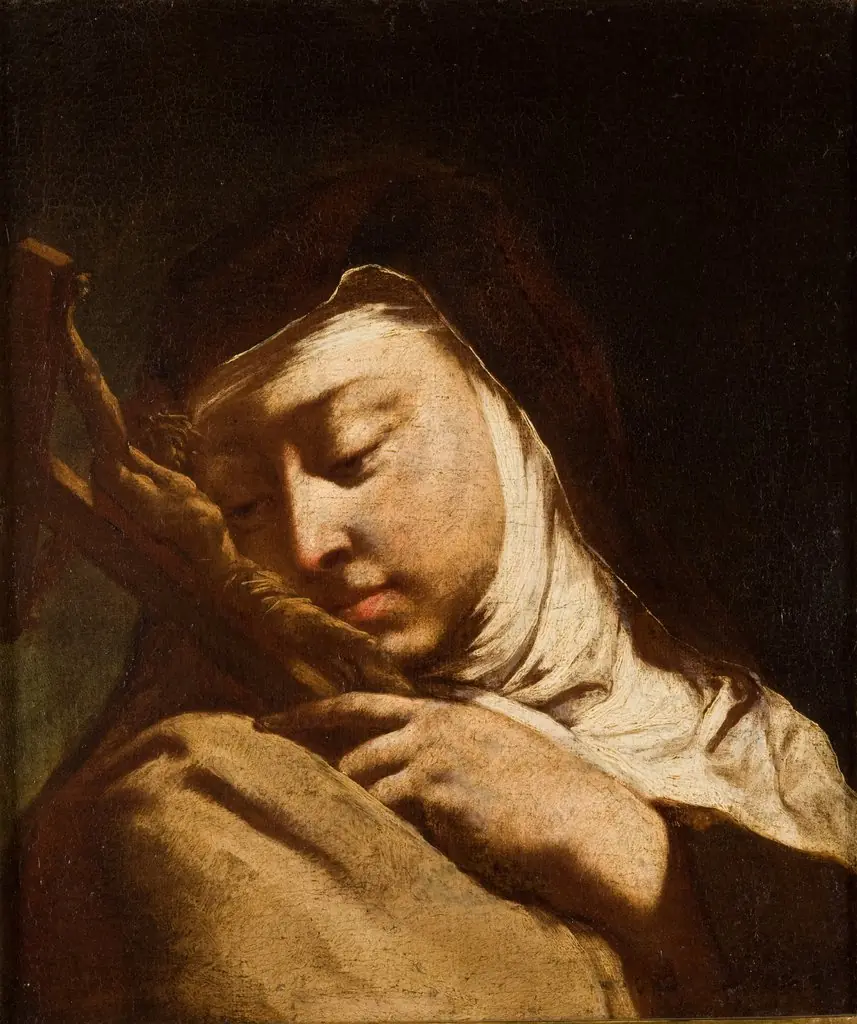 Saint Teresa of Ávila Contemplating the Cross
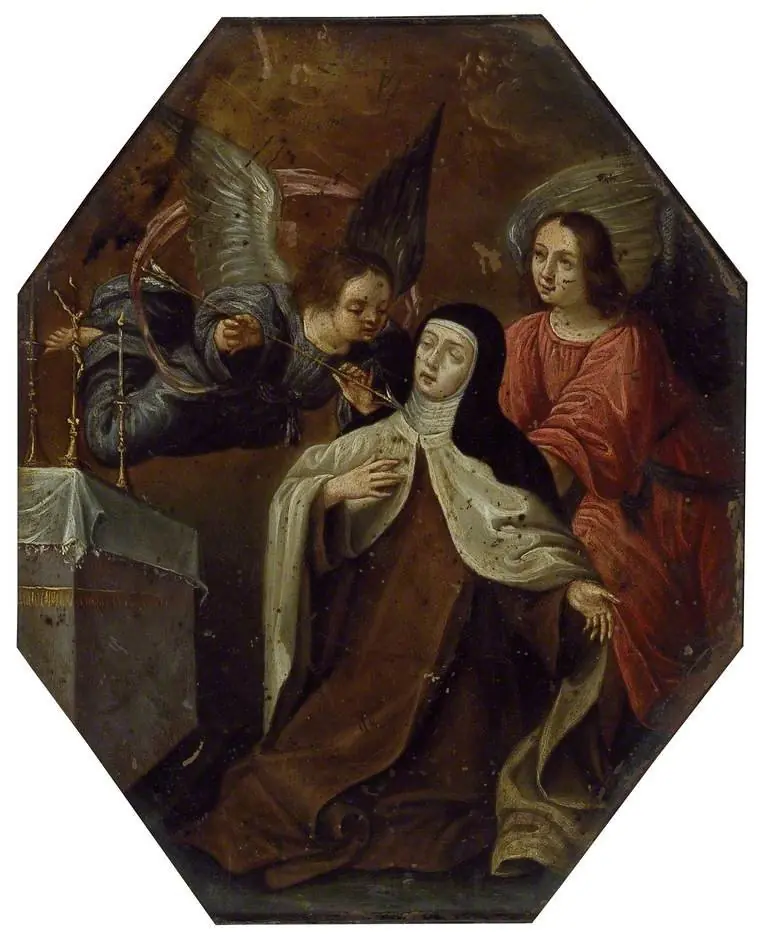 St Teresa of Avila in Ecstasy
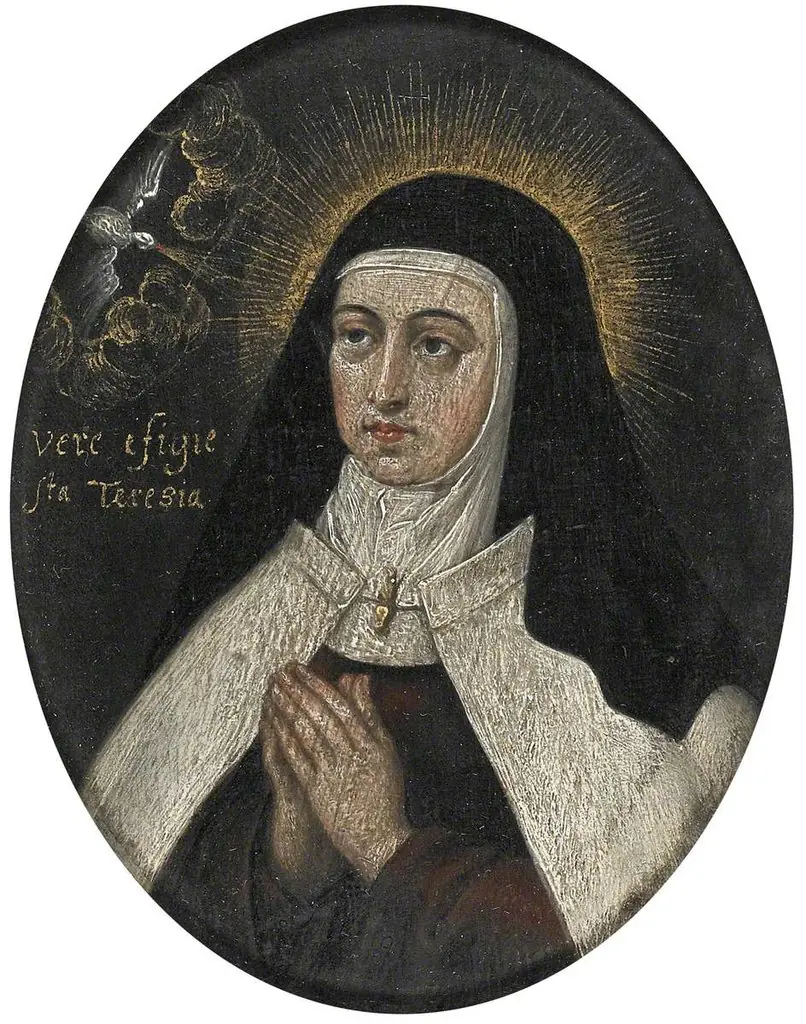 Saint Teresa of Ávila (1515–1582)
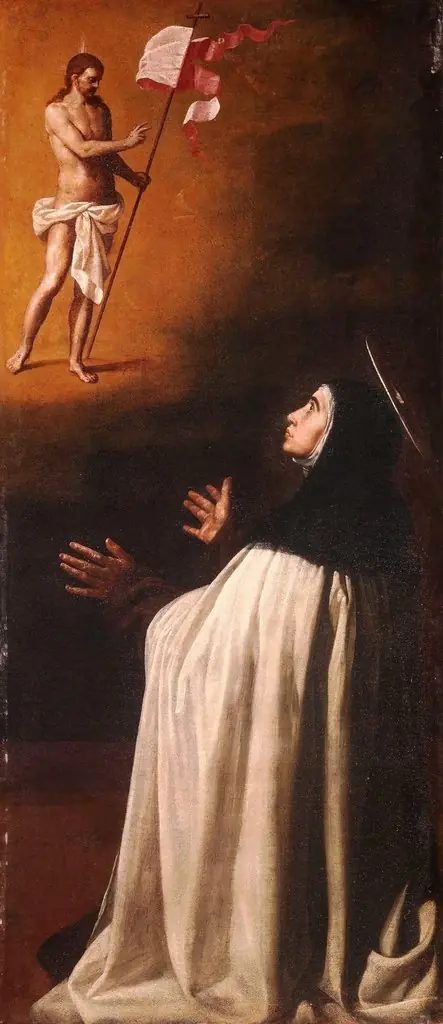 The crucified Christ appears to Saint Teresa
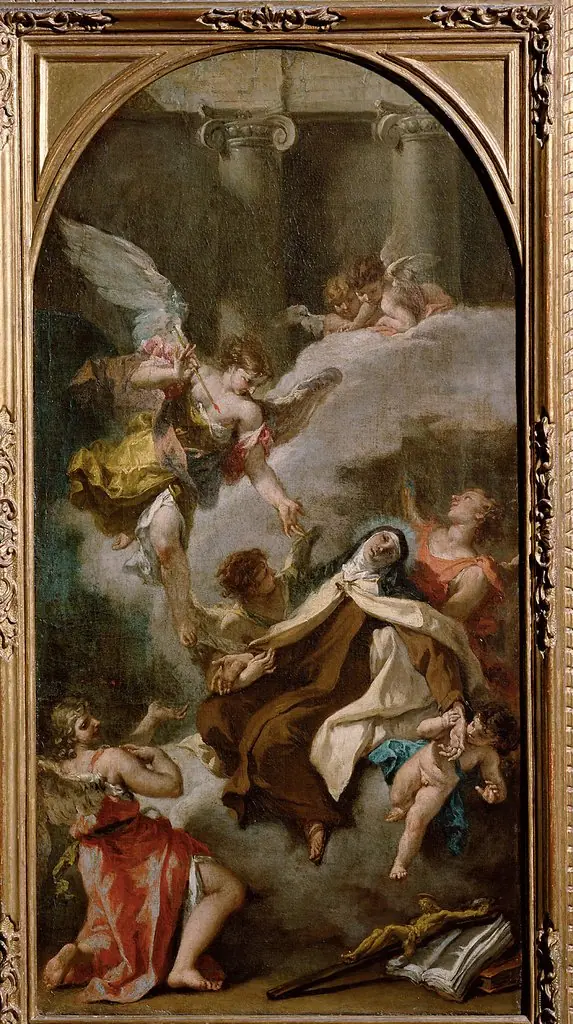 Vision of St. Teresa of Avila
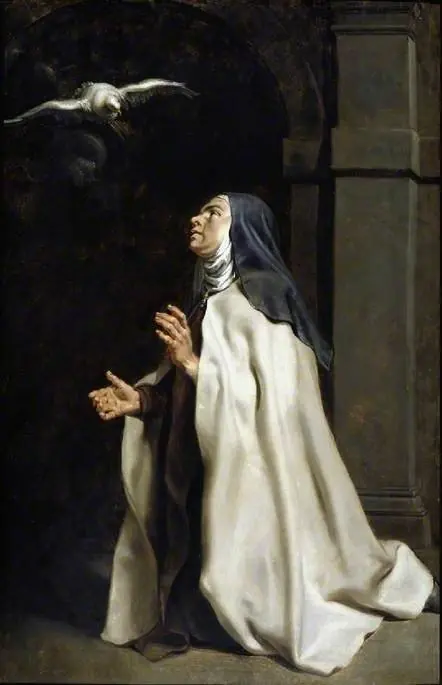 Teresa of Avilà's Vision of the Dove