Artwork
Pentecost
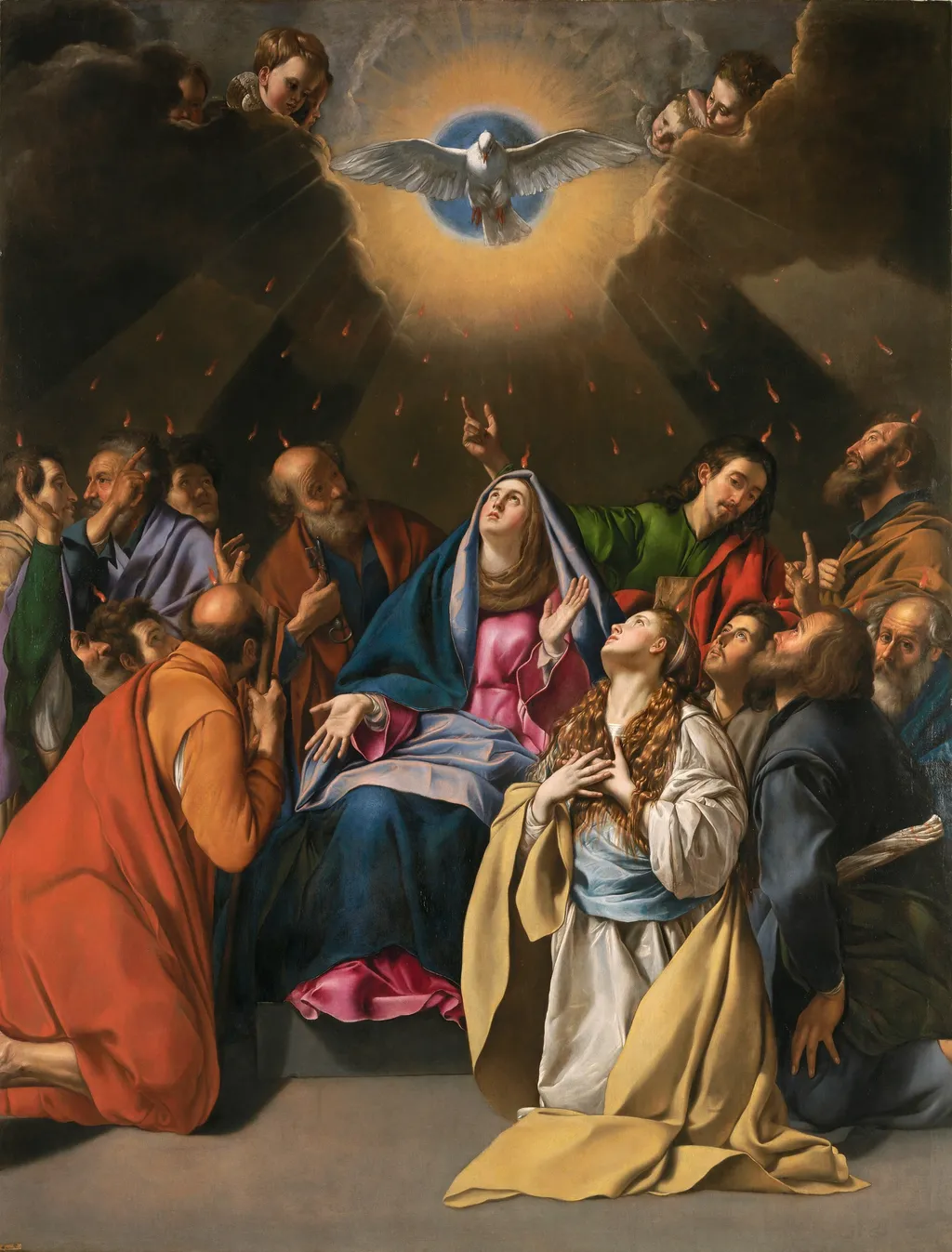
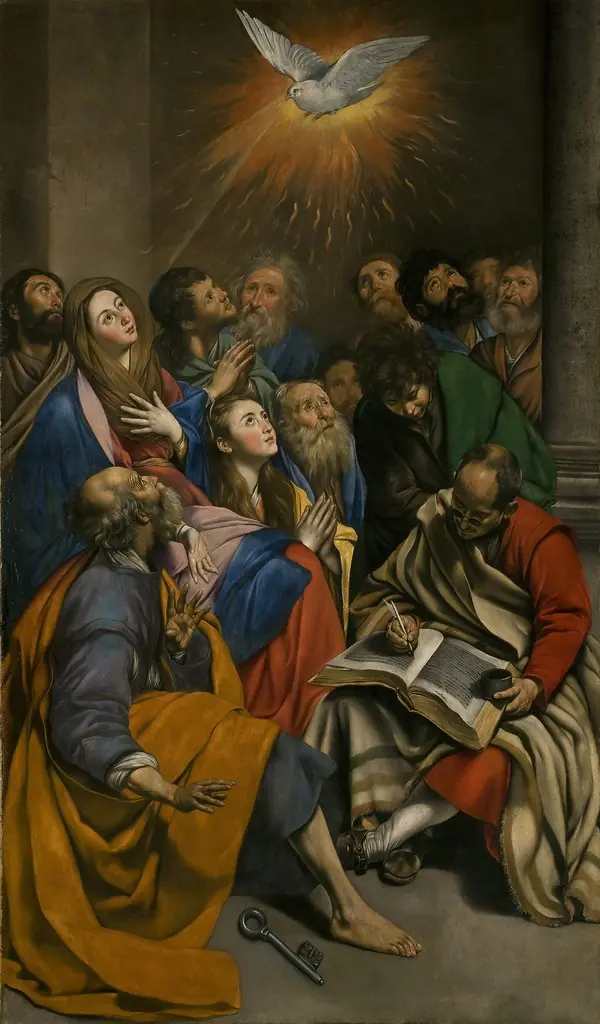
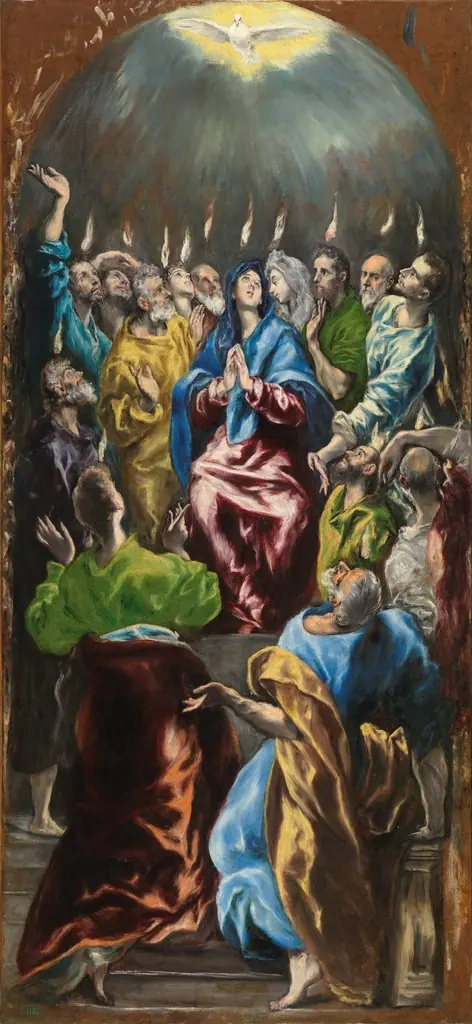
Pentecost is an oil painting by the Early Baroque Italian artist Juan Bautista Maíno. It dates from 1615 and is held in the collection of the Museo del Prado.
About this work
Overview
Maíno employs dramatic chiaroscuro to model the figures with volumetric solidity, moving away from the flatter Mannerist style prevalent in Spain at the time.
Juan Bautista Maíno's Pentecost, executed in 1615, is a seminal work of the Spanish Baroque that marks the artist's introduction of Italianate Renaissance and early Baroque influences to the Castilian school. The composition depicts the biblical event from Acts 2, where the Holy Spirit descends upon the Apostles and the Virgin Mary. Maíno arranges the figures in a tight, pyramidal grouping within an architectural setting, directing their collective gaze upward toward a luminous dove surrounded by cherubim and rays of divine light. The Virgin Mary occupies the central position, distinguished by her blue mantle and pink tunic, embodying both spiritual authority and human receptivity. The painting is characterized by a warm, rich palette of deep reds, ochres, and golds, contrasted against the cool tones of the Virgin's garments and the ethereal sky. Maíno employs dramatic chiaroscuro to model the figures with volumetric solidity, moving away from the flatter Mannerist style prevalent in Spain at the time. Created shortly after the artist's return from Italy, this work served as a crucial bridge in Spanish art history, demonstrating a sophisticated synthesis of Venetian colorism and Roman compositional clarity that would influence subsequent generations of Spanish painters.
Subject & Meaning
The work depicts the biblical episode of Pentecost, when the Holy Spirit descended upon the apostles. Central to the scene is a seated woman dressed in blue and pink, whose serene posture anchors the gathering; the surrounding figures react with awe, their expressions conveying the transformative moment of divine inspiration.
Technique & Style
Maíno employs a pronounced chiaroscuro, contrasting bright illumination on faces with deep shadows that model the forms. Warm hues of red, blue and gold dominate the palette, while the darkened sky heightens the sense of drama. The delicate rendering of the dove’s glow and the subtle suggestion of angels demonstrate a careful balance between realism and spiritual symbolism.
History & Provenance
Painted in the early seventeenth century, Pentecost entered the Prado’s holdings as part of the museum’s early acquisitions of Spanish Baroque art. Its attribution to Maíno has been consistently affirmed by scholars, and the painting remains a key example of his religious output during the period following his Roman training.
Own this work as a print
Artist & collection