Artwork
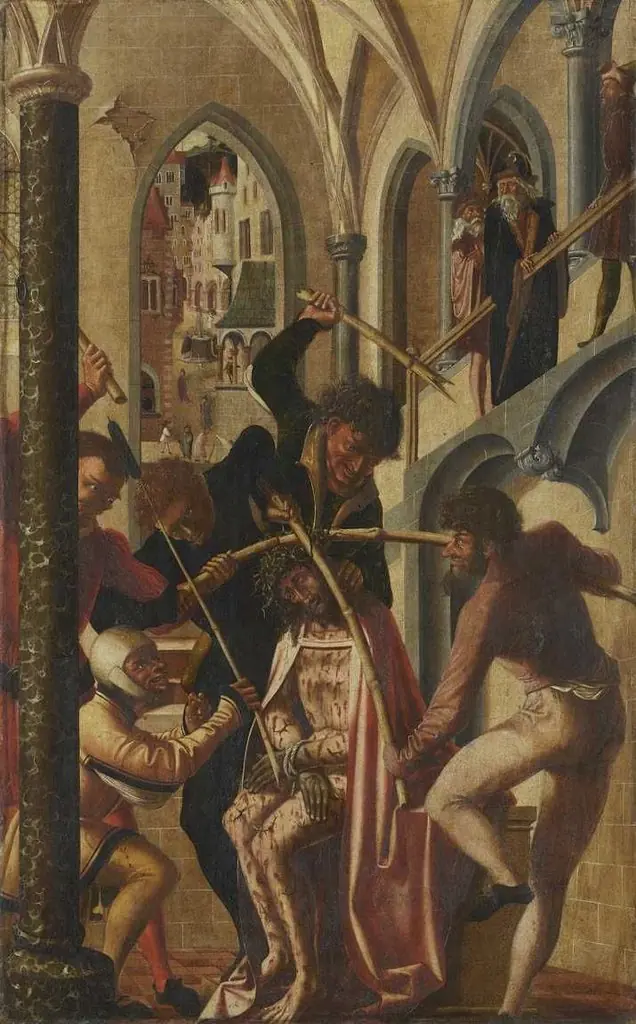
Christ Crowned with Thorns
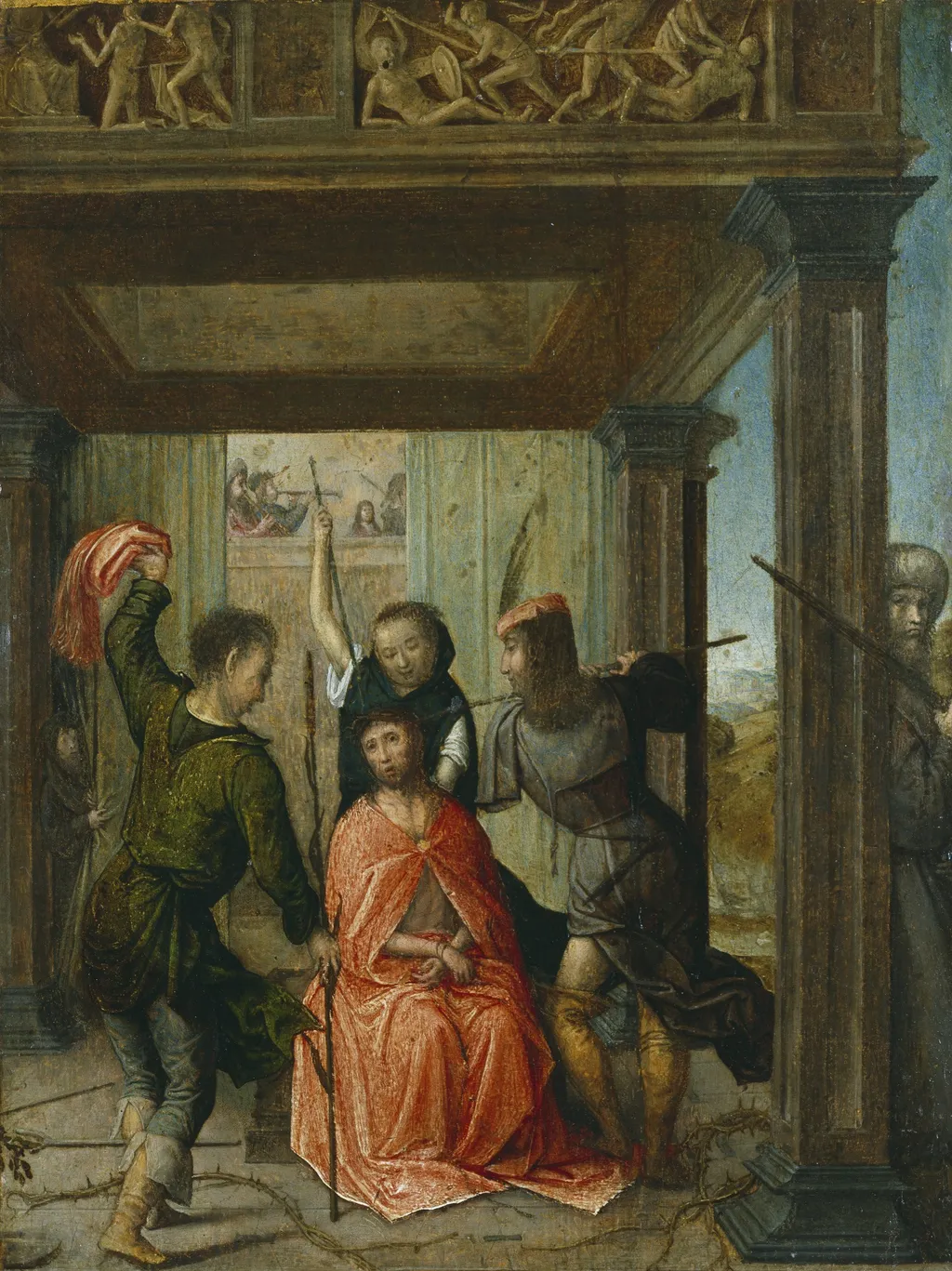
Christ Crowned with Thorns is an unspecified painting by the Northern Renaissance artist Juan de Flandes. It dates from 1505 and is held in the collection of the Detroit Institute of Arts.
About this work
Overview
Juan de Flandes painted *Christ Crowned with Thorns* in 1505. The work, an oil on panel, presents a moment from the Passion of Christ and is part of the collection of the Detroit Institute of Arts. The composition is confined to an interior space, where a central figure in red dominates the visual field.
Subject & Meaning
The central figure is Jesus, shown kneeling with his hands bound and a crown of thorns placed upon his head. Four surrounding men—one clutching a red cloth, another gesturing upward, and two others gripping weapons—suggest the moments of mockery and preparation for the crucifixion, emphasizing the humiliation and suffering inherent in the narrative.
Technique & Style
De Flandes employs a pronounced chiaroscuro, using deep shadows to recede secondary characters while a focused light bathes Christ’s face, drawing the viewer’s attention to his expression. The drapery of the red robe is rendered with delicate folds, and the architectural backdrop, including a tall window that reveals a distant landscape, adds depth to the scene.
History & Provenance
Created in the early sixteenth century, the painting remained in private collections before entering the Detroit Institute of Arts in the twentieth century. Its attribution to Juan de Flandes, a Flemish-born artist active in Spain, has been confirmed through stylistic analysis and documentary evidence linking the work to his workshop.
Context
The work reflects the devotional trends of the Spanish Renaissance, where intimate, emotionally charged depictions of Christ’s Passion were intended for private contemplation. The inclusion of a detailed interior and a glimpse of an external landscape aligns with contemporary efforts to blend sacred narrative with realistic spatial settings, situating the viewer within the event.
Artist & collection


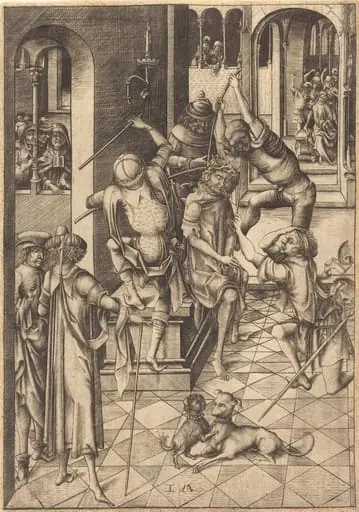 The Crowning with Thorns
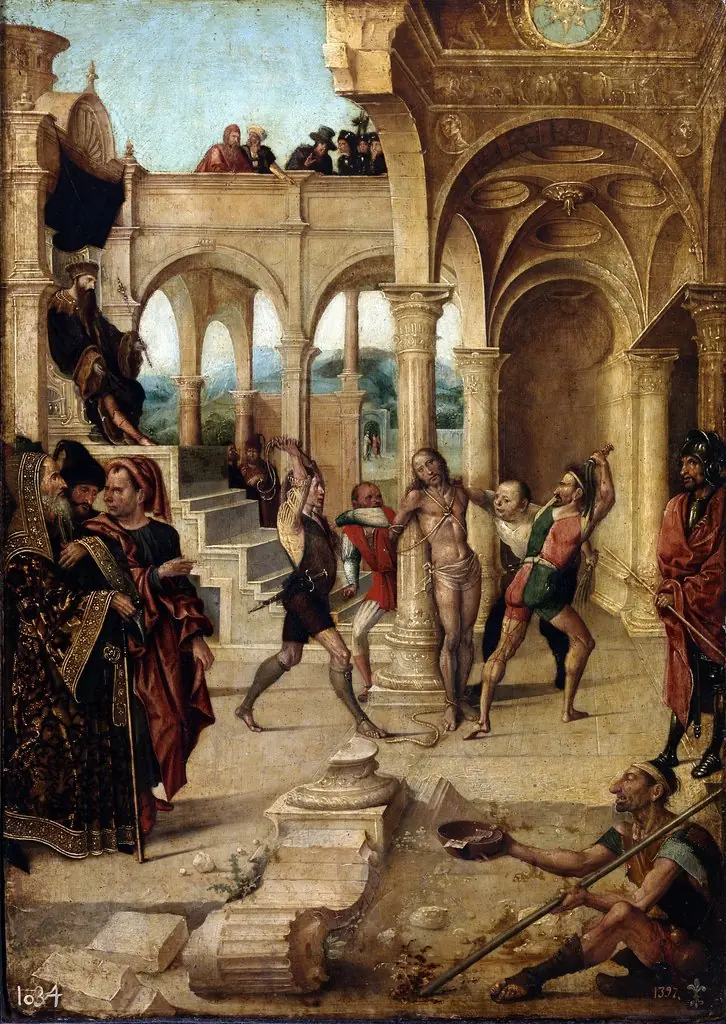 The Flagellation
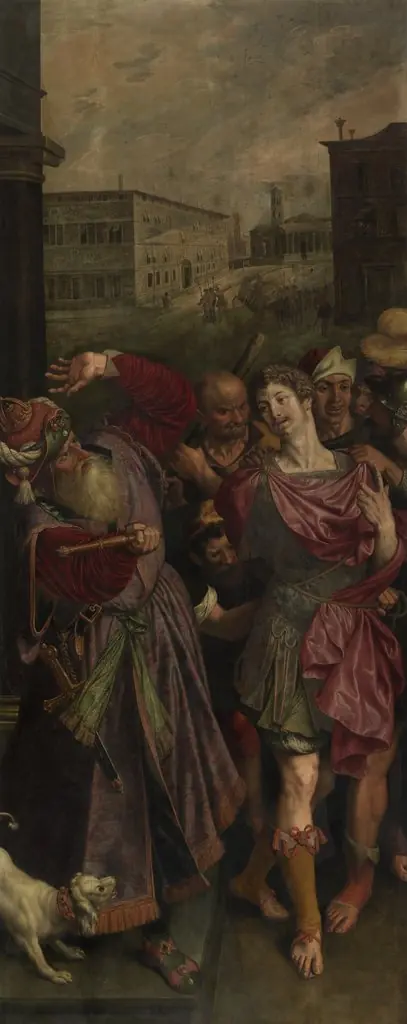 Sebastian of Rome Being Captured by Diocletian
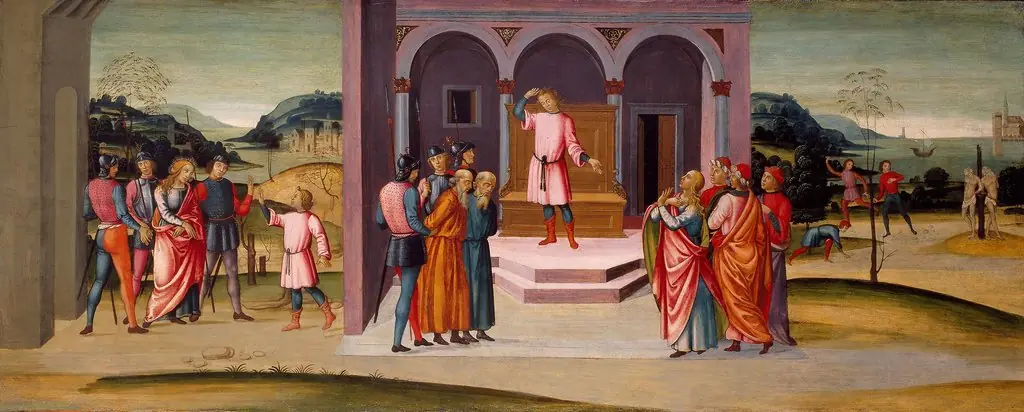 Daniel Saving Susanna, the Judgment of Daniel, and the Execution of the Elders
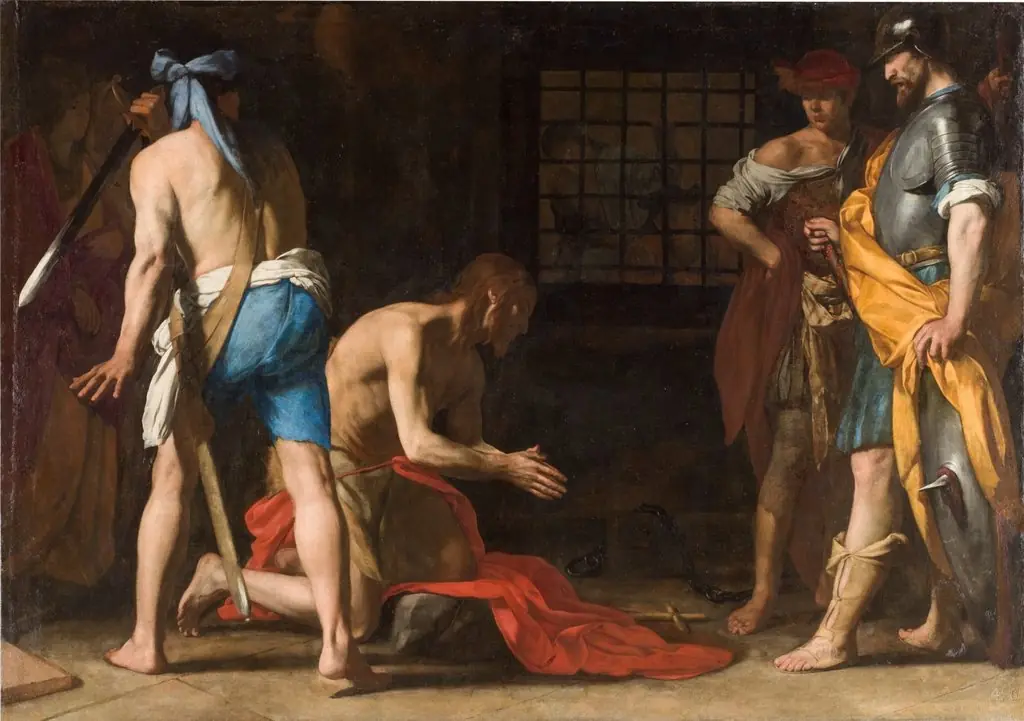 The Beheading of Saint John the Baptist
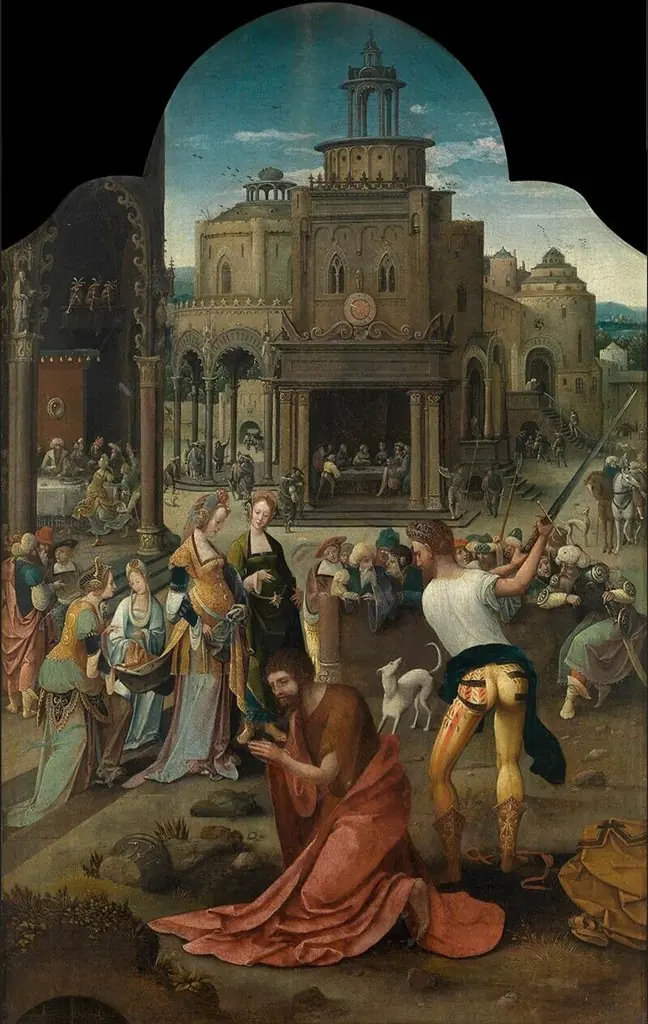 The Beheading of John the Baptist
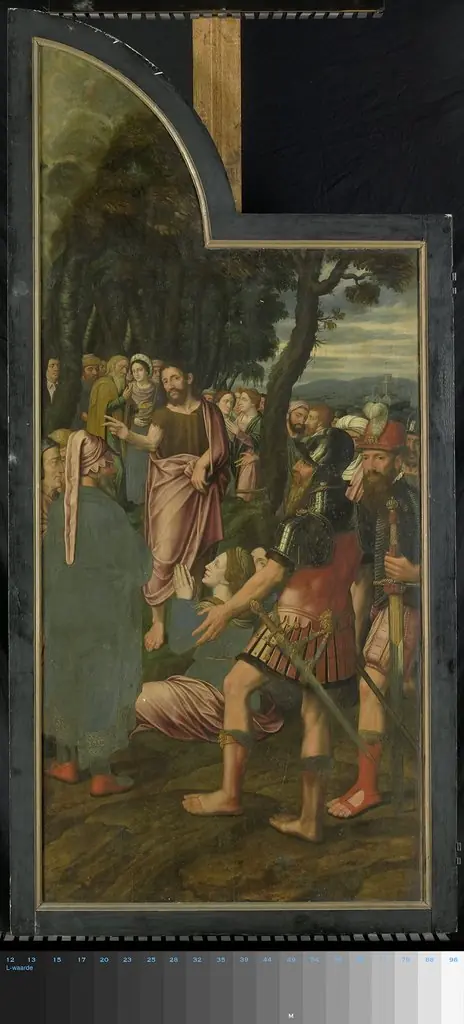 De prediking van Johannes de Doper, linkerpaneel van een drieluik
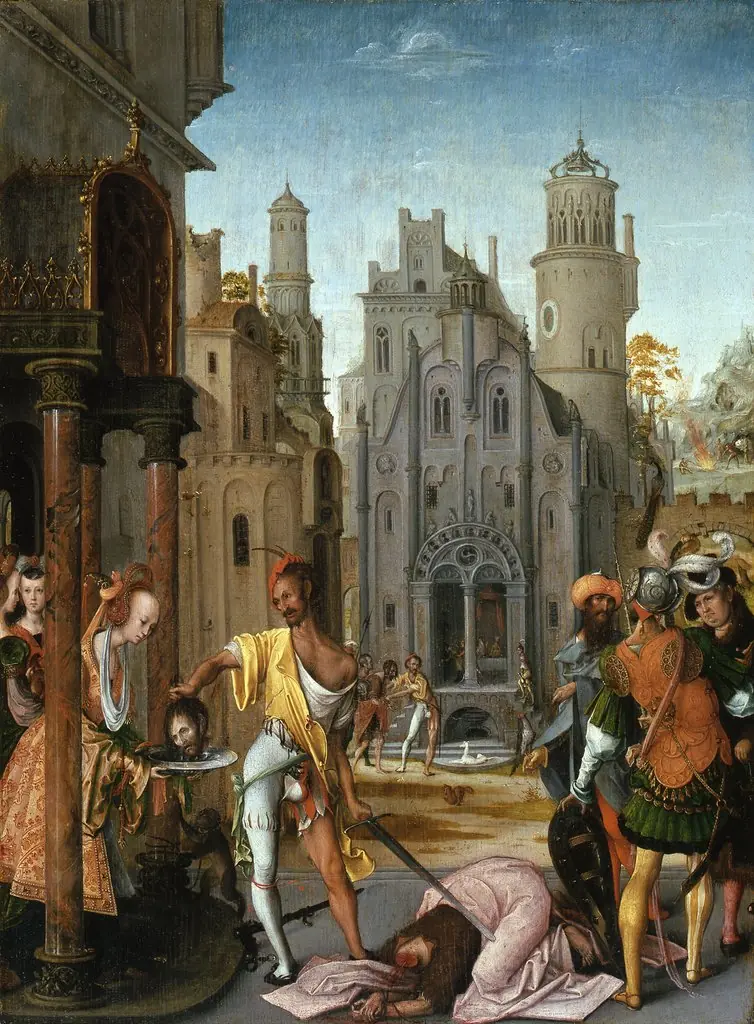 The Beheading of St. John the Baptist
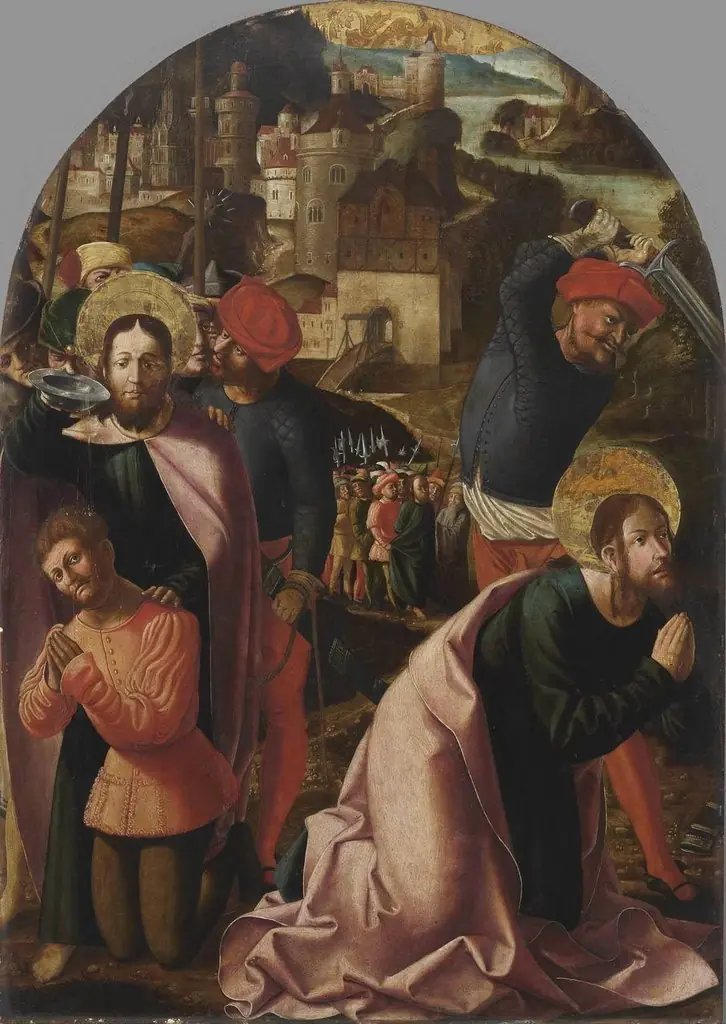 Jakobus-Stephanus-Altar: Der hl. Jakobus tauft Josias und Hinrichtung des Jakobus
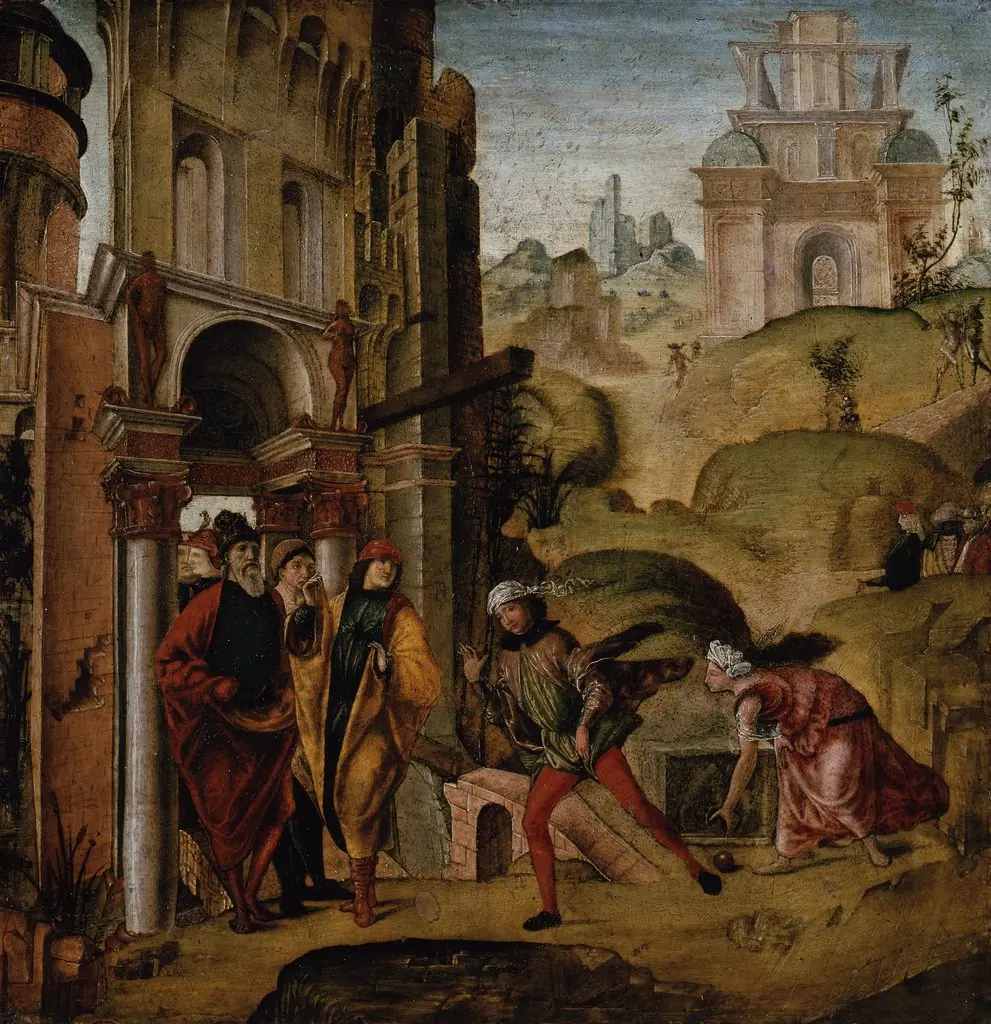 Atalanta Looses in a Race to Hippomenes
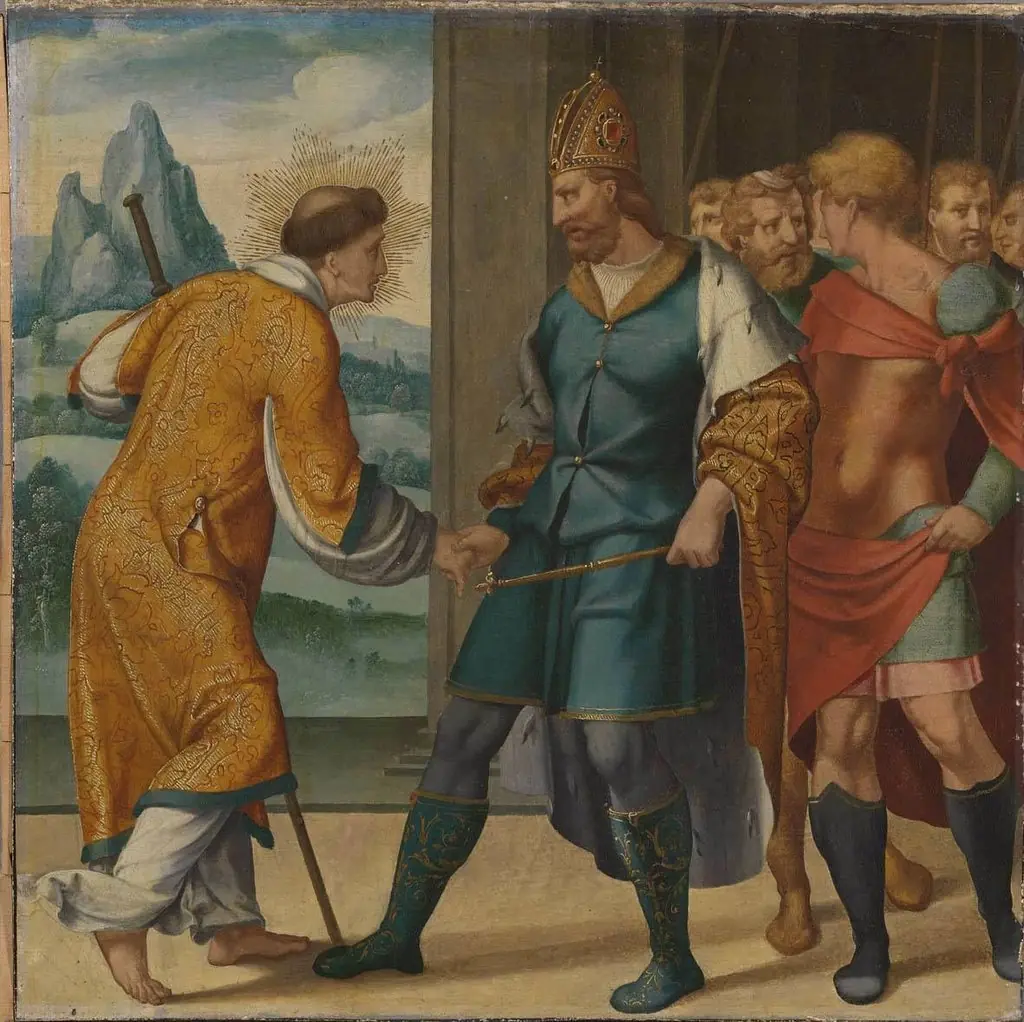 Cyriakus-Folge: Kaiser Diokletian reicht dem hl. Cyriakus die Hand
 Jakobus-Stephanus-Altar: Dornenkrönung Christi