Artwork
Pine forest
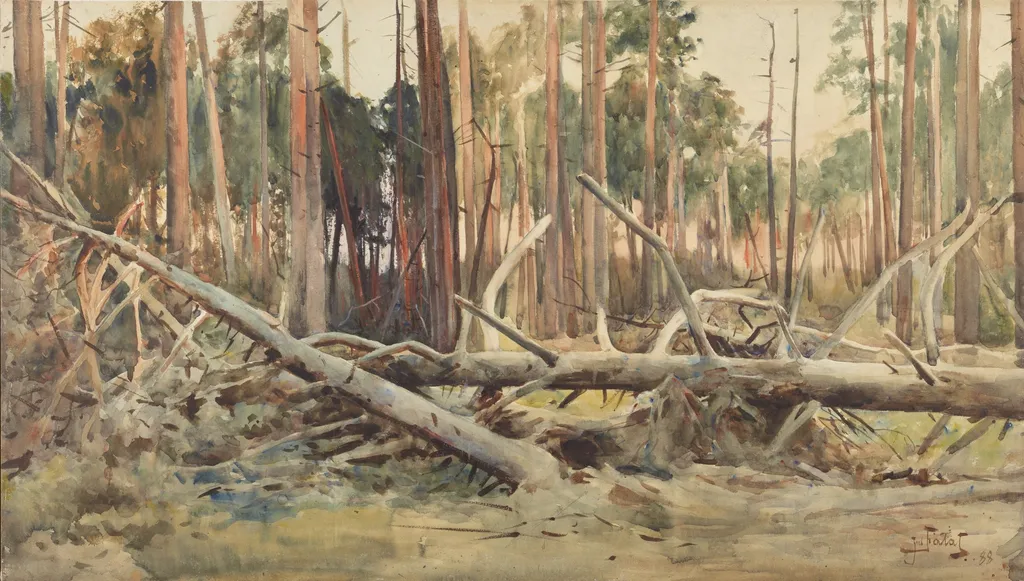
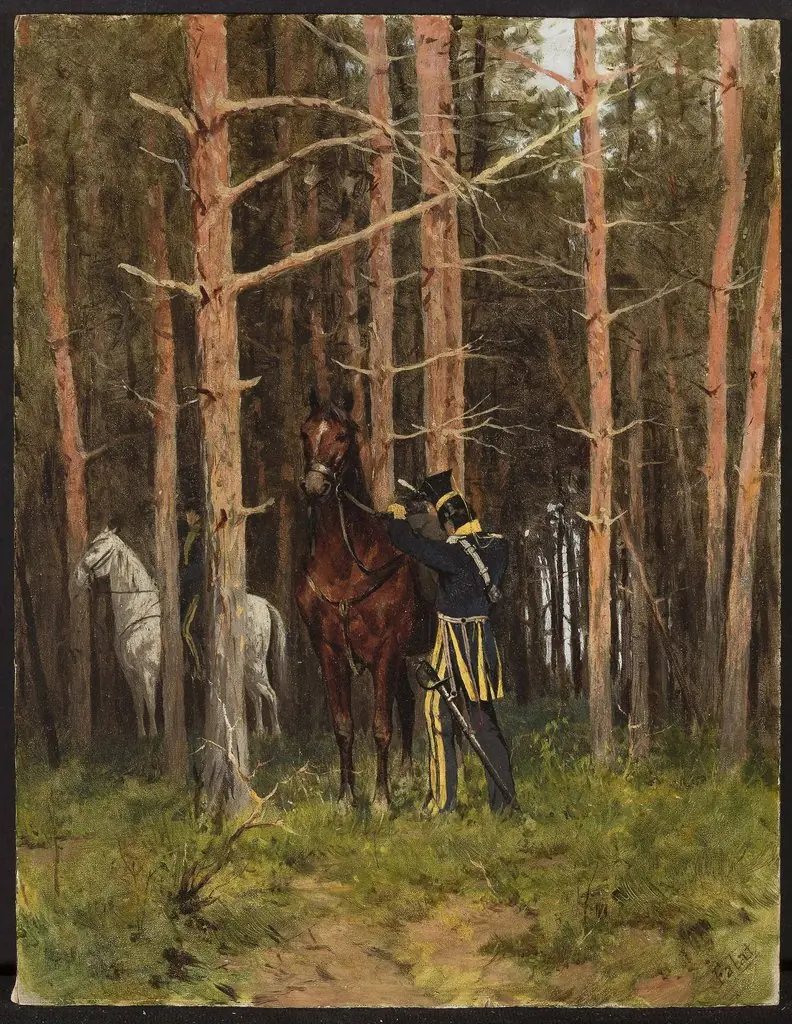
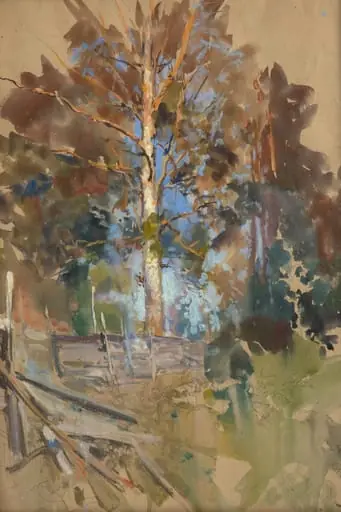
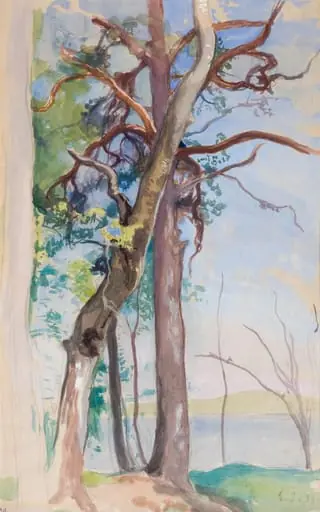
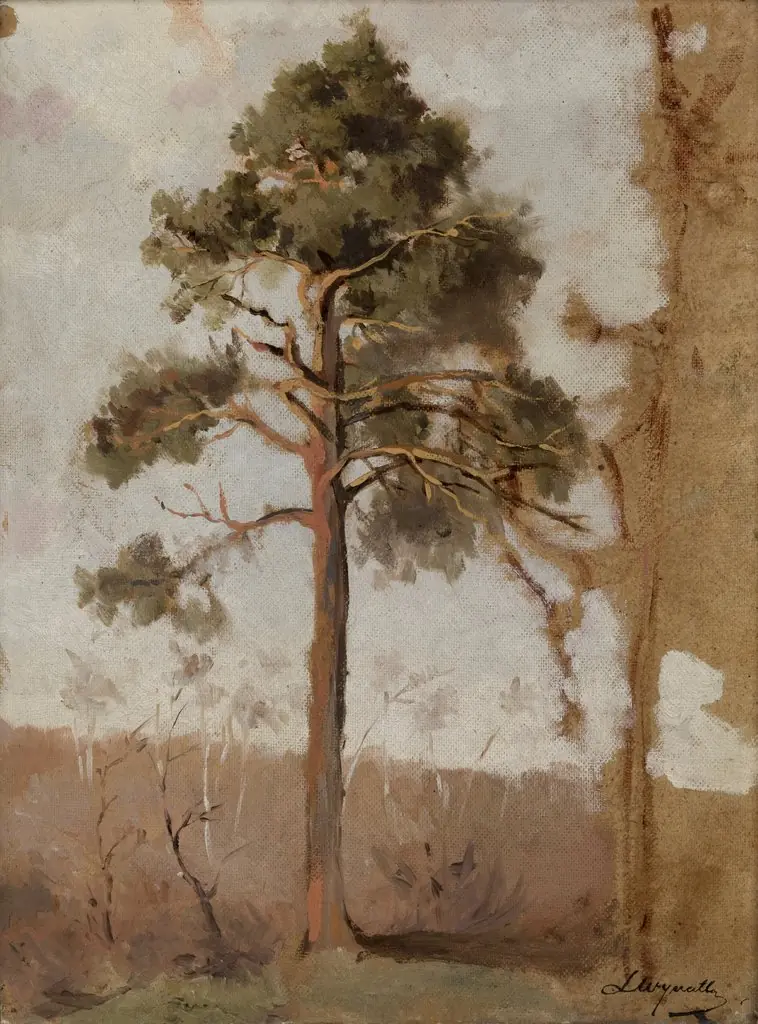
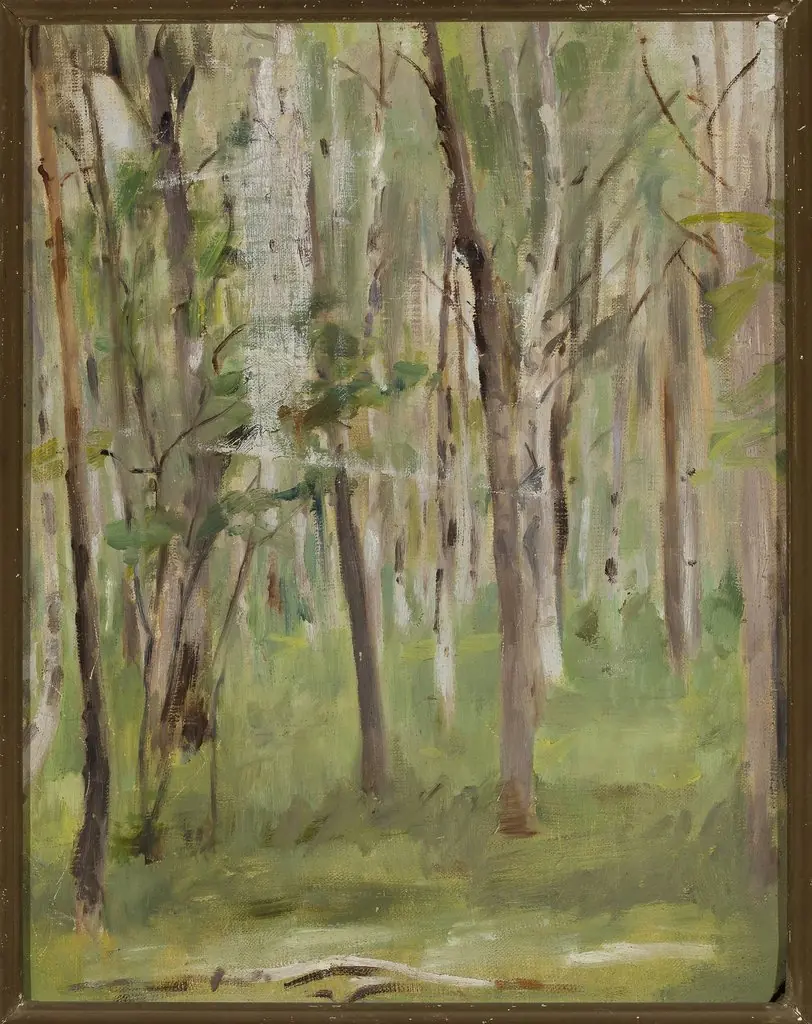
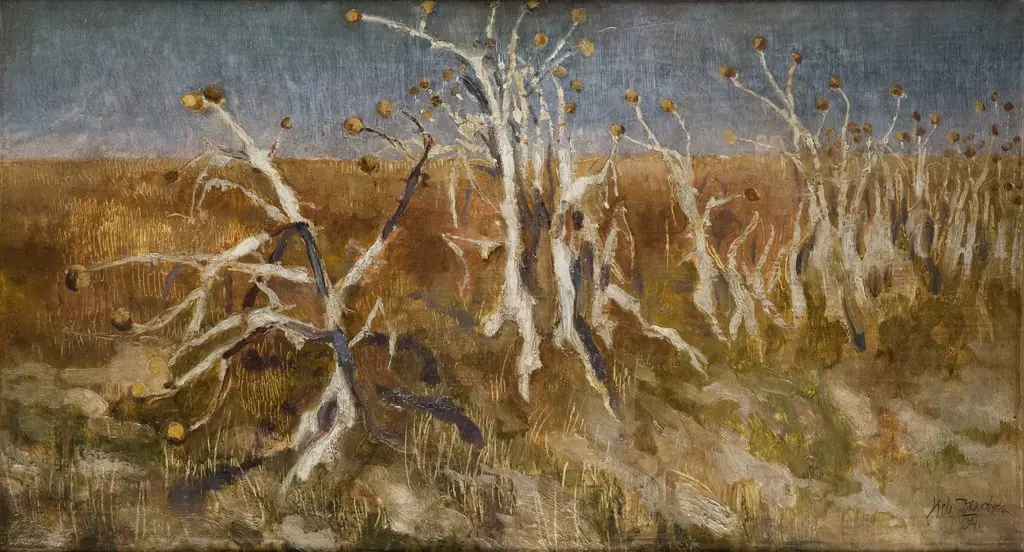
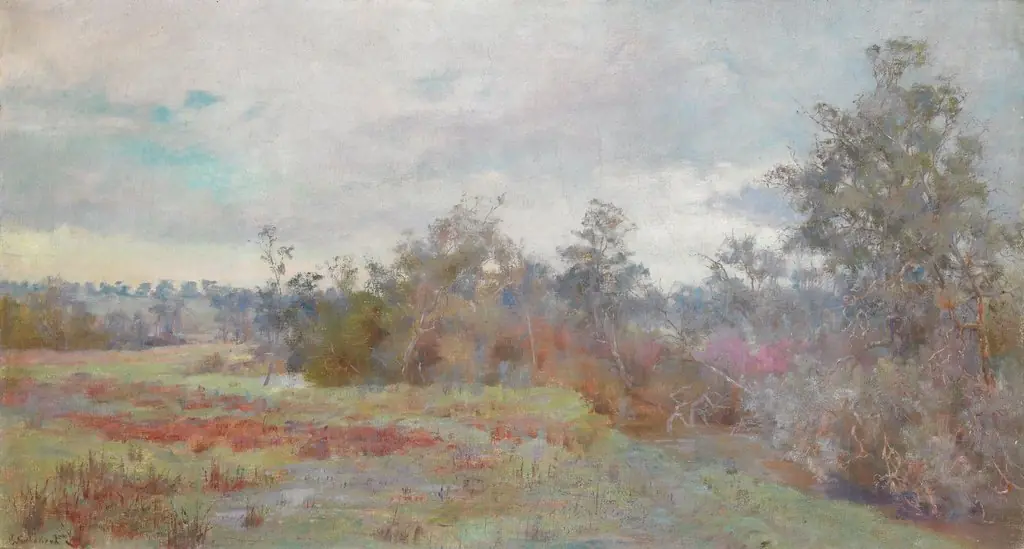
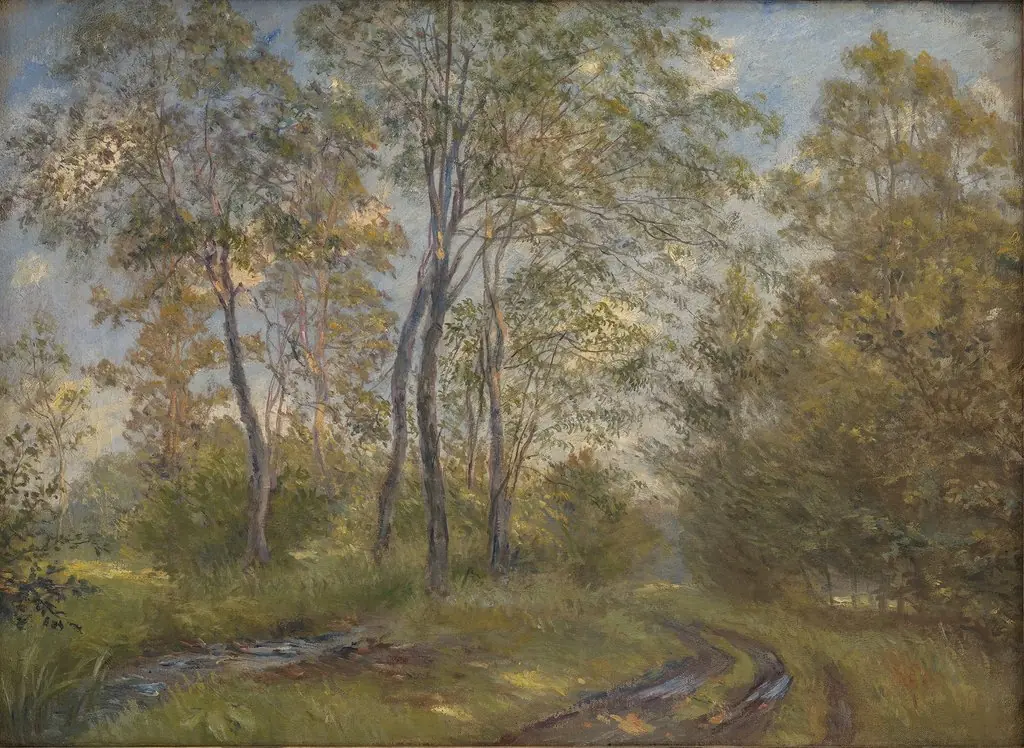
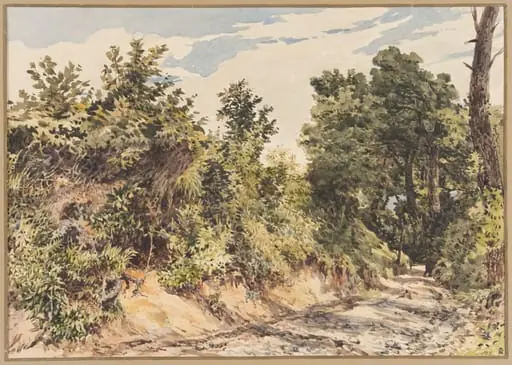
Pine forest is an unspecified painting by the Impressionist artist Julian Fałat. It dates from 1894 and is held in the collection of the National Museum in Kraków.
About this work
Overview
This work exemplifies his dedication to capturing the quiet rhythms of the Polish countryside, rendered with precision and sensitivity to seasonal change.
Julian Fałat created *Pine Forest* in 1894 as a watercolor landscape reflecting his deep engagement with natural environments. A central figure in Poland’s late 19th-century art scene, he favored watercolor for its capacity to convey subtle shifts in light and atmosphere. This work exemplifies his dedication to capturing the quiet rhythms of the Polish countryside, rendered with precision and sensitivity to seasonal change.
Subject & Meaning
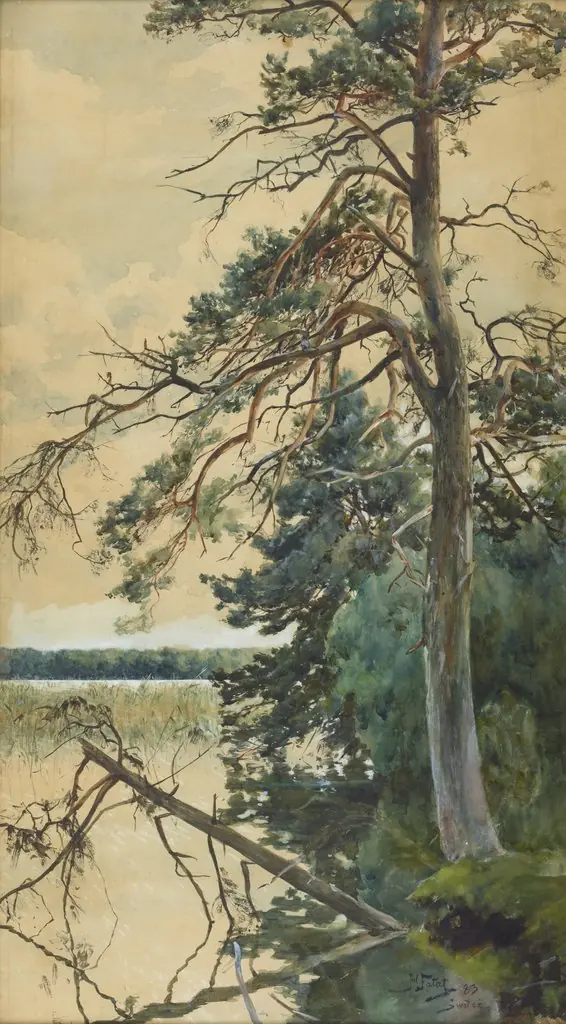
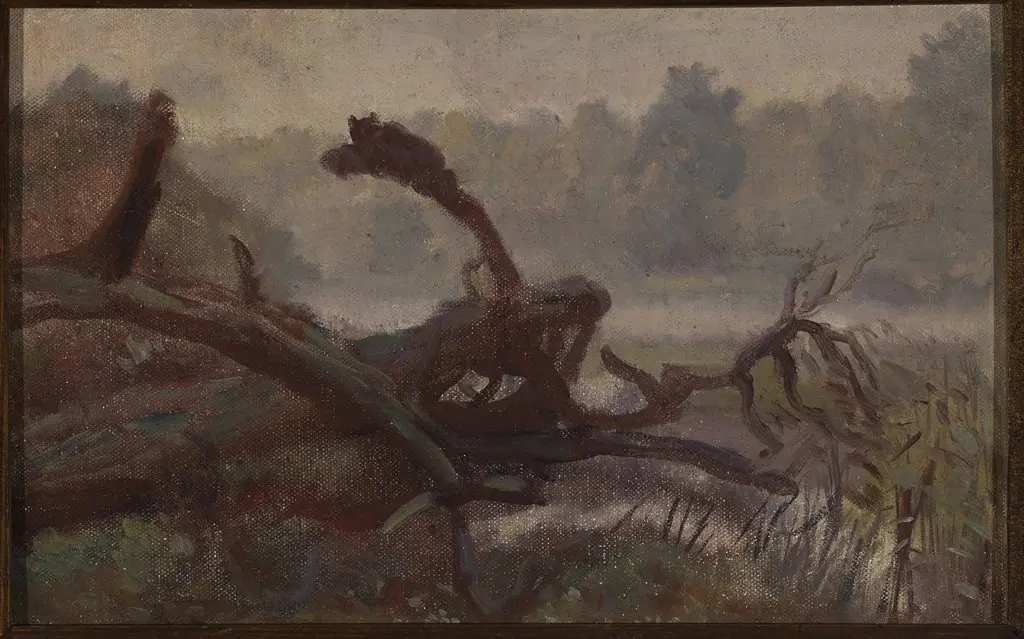
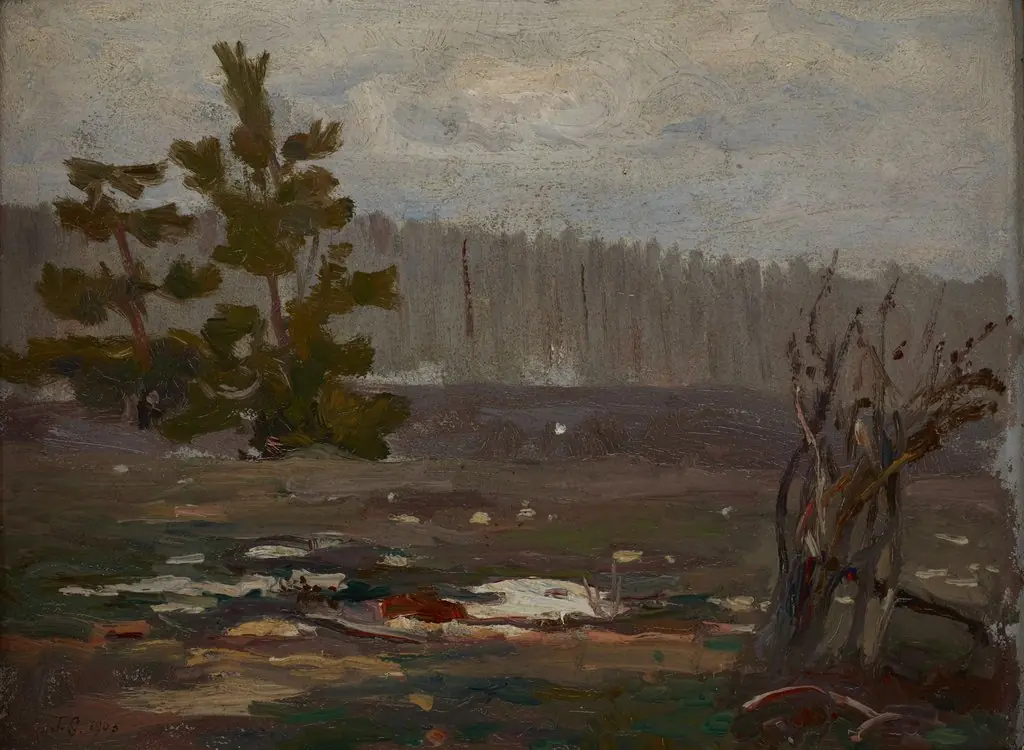
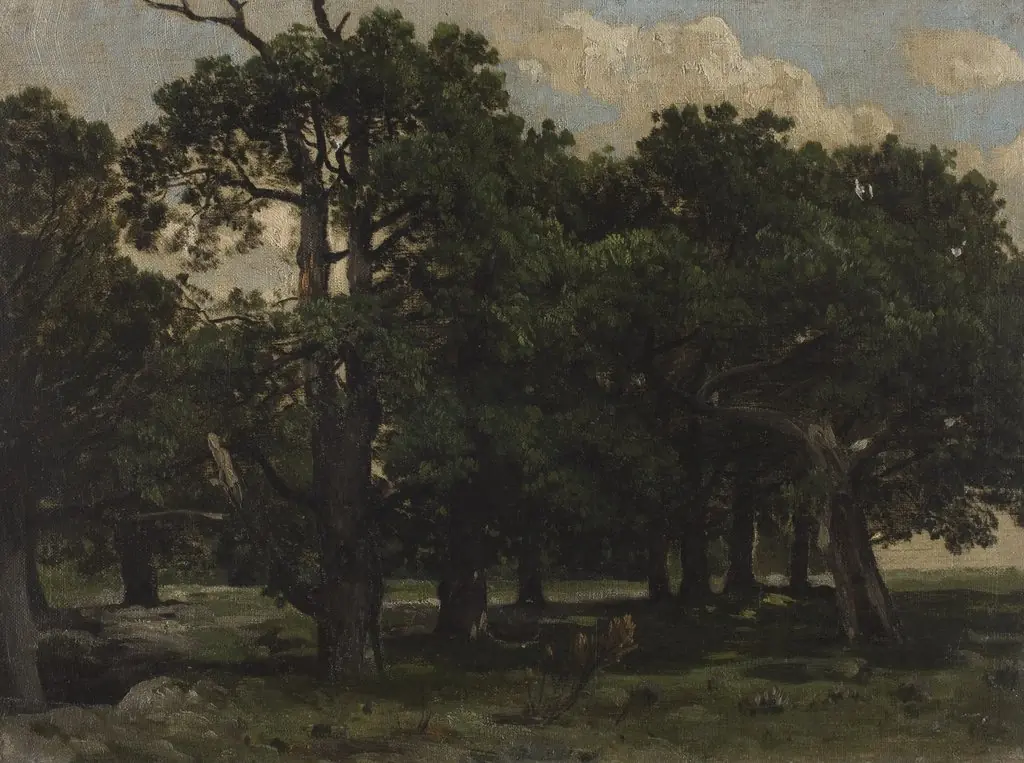
The painting depicts a mature pine forest where nature’s cycles are visibly at work: standing trees, fallen trunks, and a carpet of fallen needles and branches suggest both endurance and decay. There is no human presence, allowing the forest to speak on its own terms. The composition invites contemplation of time, resilience, and the quiet beauty of untended woodland, free from idealization or narrative.
Technique & Style
Fałat employed watercolor with layered washes and delicate brushwork to build depth through gradations of green and brown. The textures of bark, foliage, and leaf litter are suggested rather than meticulously outlined, relying on tonal variation and negative space. His technique balances spontaneity with control, characteristic of impressionist-inspired approaches that prioritize sensory impression over rigid detail.
History & Provenance
Completed in 1894, the painting entered the collection of the National Museum in Kraków, where it remains today. Fałat’s prolific output and reputation as a leading watercolorist ensured his works were widely collected by Polish institutions. This piece reflects the museum’s early commitment to preserving national artistic voices, particularly those engaged with landscape as a cultural and aesthetic subject.
Context
In the 1890s, Polish artists increasingly turned to native landscapes as expressions of national identity under foreign partitions. Fałat’s focus on unspoiled woodland aligned with broader cultural currents seeking authenticity in nature. His watercolors stood apart from academic traditions, offering intimate, observational views that resonated with emerging modern sensibilities in Central European art.
Legacy
Fałat’s *Pine Forest* endures as a representative example of Polish watercolor landscape painting from the fin de siècle. His influence extended through his teaching and exhibitions, helping to elevate watercolor from a sketching medium to a respected artistic form. The painting continues to be studied for its technical restraint and its quiet, unembellished reverence for the natural world.
Artist & collection
Artist
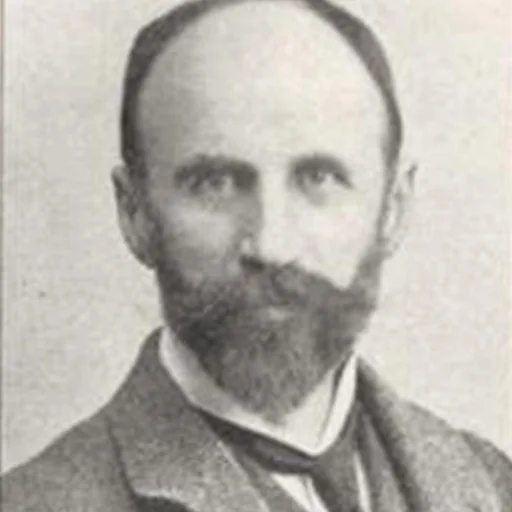
Julian Fałat (Tuligłowy, near Lwów, 30 July 1853 – 9 July 1929, Bystra Śląska) was one of the most prolific Polish watercolorists, one of the country's foremost landscapists, and a leading impressionist.