Artwork
Elk
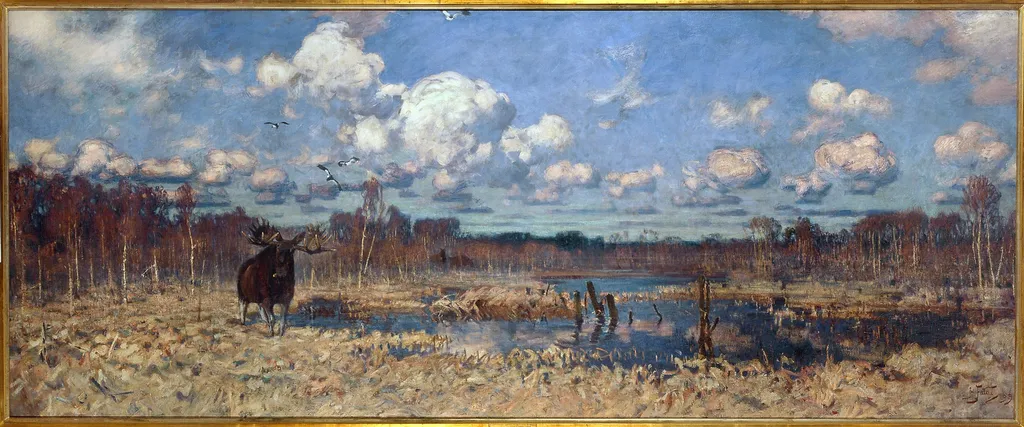
Elk is an oil painting by the Impressionist artist Julian Fałat. It dates from 1900 and is held in the collection of the National Museum in Warsaw.
About this work
Overview
Though best known for his atmospheric watercolors, this work demonstrates his adaptability to oil, capturing a quiet moment in the Polish countryside.
Julian Fałat painted *Elk* in 1900 using oil on canvas, marking a departure from his more familiar watercolor landscapes. Though best known for his atmospheric watercolors, this work demonstrates his adaptability to oil, capturing a quiet moment in the Polish countryside. The painting is part of the National Museum in Warsaw’s permanent collection, reflecting its significance in early 20th-century Polish art.
Subject & Meaning
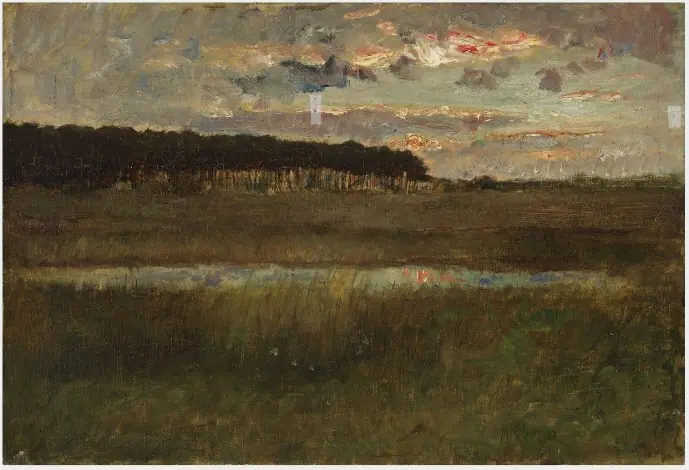
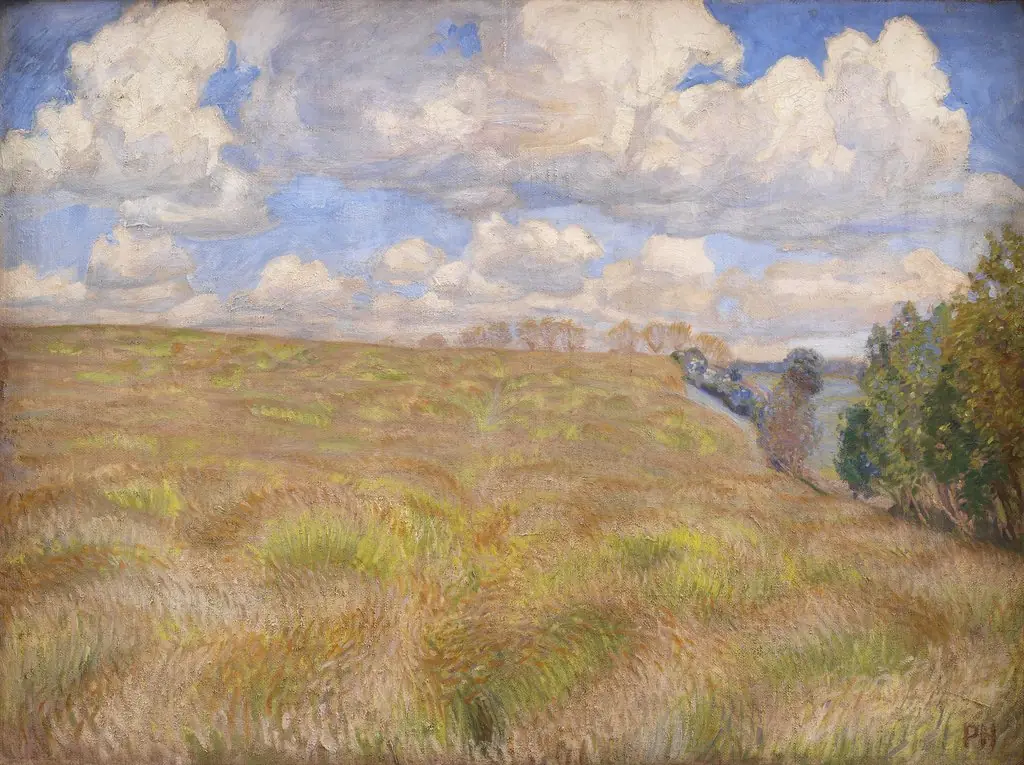
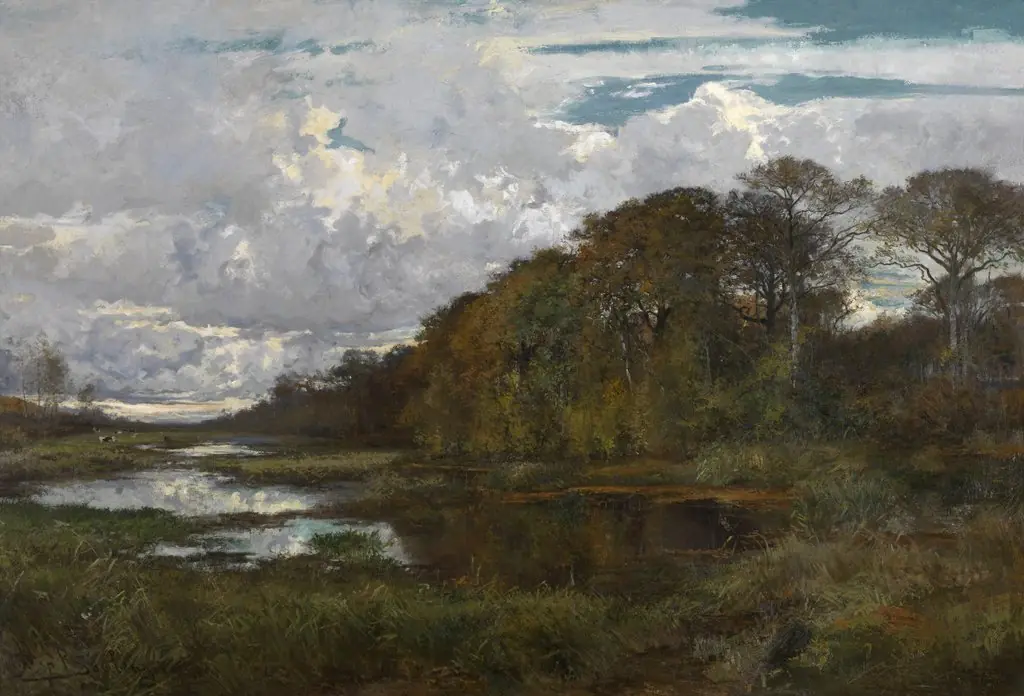
The painting centers on a solitary moose standing in a grassy field beside a pond, facing left with calm alertness. Birds drift overhead, their movement contrasting the animal’s stillness. The scene suggests harmony between wildlife and environment, devoid of human presence. Fałat avoids symbolism, instead presenting nature as a self-contained, tranquil space—emphasizing observation over narrative.
Technique & Style
Fałat employed loose, textured brushwork to render the dry grass, bark, and sky, with warm tones defining the moose’s fur against cooler background hues. The sky, rendered in soft blues and whites, contributes to the painting’s serene mood. While influenced by Impressionist light studies, the composition remains grounded in realism, balancing atmospheric effect with precise animal anatomy.
History & Provenance
Created in 1900, *Elk* entered the National Museum in Warsaw’s collection shortly after its completion. It was likely acquired during a period when Polish institutions actively documented national artistic output. The work’s survival through wartime upheavals and its continued display indicate its recognized place in Poland’s cultural heritage, though specific exhibition history remains limited.
Context
In early 20th-century Poland, landscape painting was a means of asserting national identity amid foreign partitions. Fałat, though associated with Impressionism, focused on native flora and fauna, aligning with broader cultural efforts to celebrate indigenous nature. *Elk* reflects this trend, portraying a species native to Polish forests without romanticization or mythologizing.
Legacy
While Fałat is primarily remembered for his watercolors, *Elk* stands as a notable example of his oil technique and his engagement with wildlife as subject matter. It contributes to a modest but meaningful body of Polish naturalist painting from the era. The work remains accessible to the public, offering insight into how Polish artists interpreted the natural world at the turn of the century.
Artist & collection
Artist
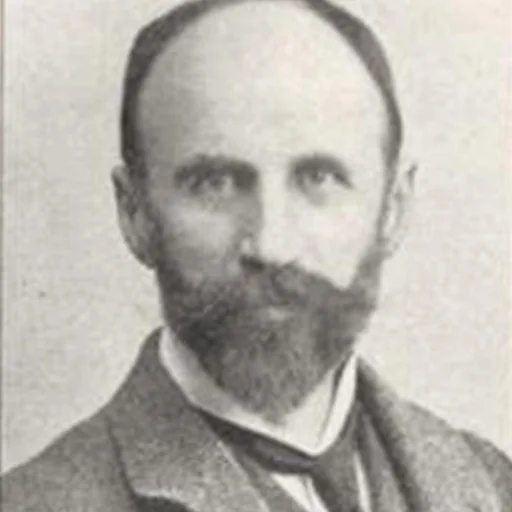
Julian Fałat (Tuligłowy, near Lwów, 30 July 1853 – 9 July 1929, Bystra Śląska) was one of the most prolific Polish watercolorists, one of the country's foremost landscapists, and a leading impressionist.