Artwork
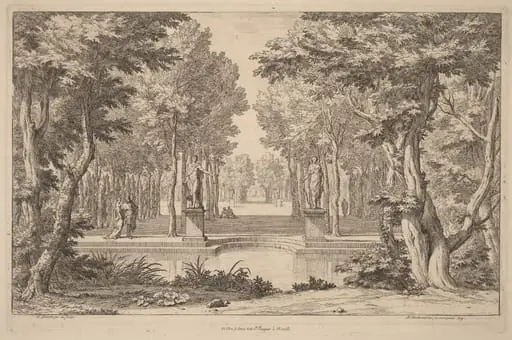
Gardens of Cardinal Coessi, Rome
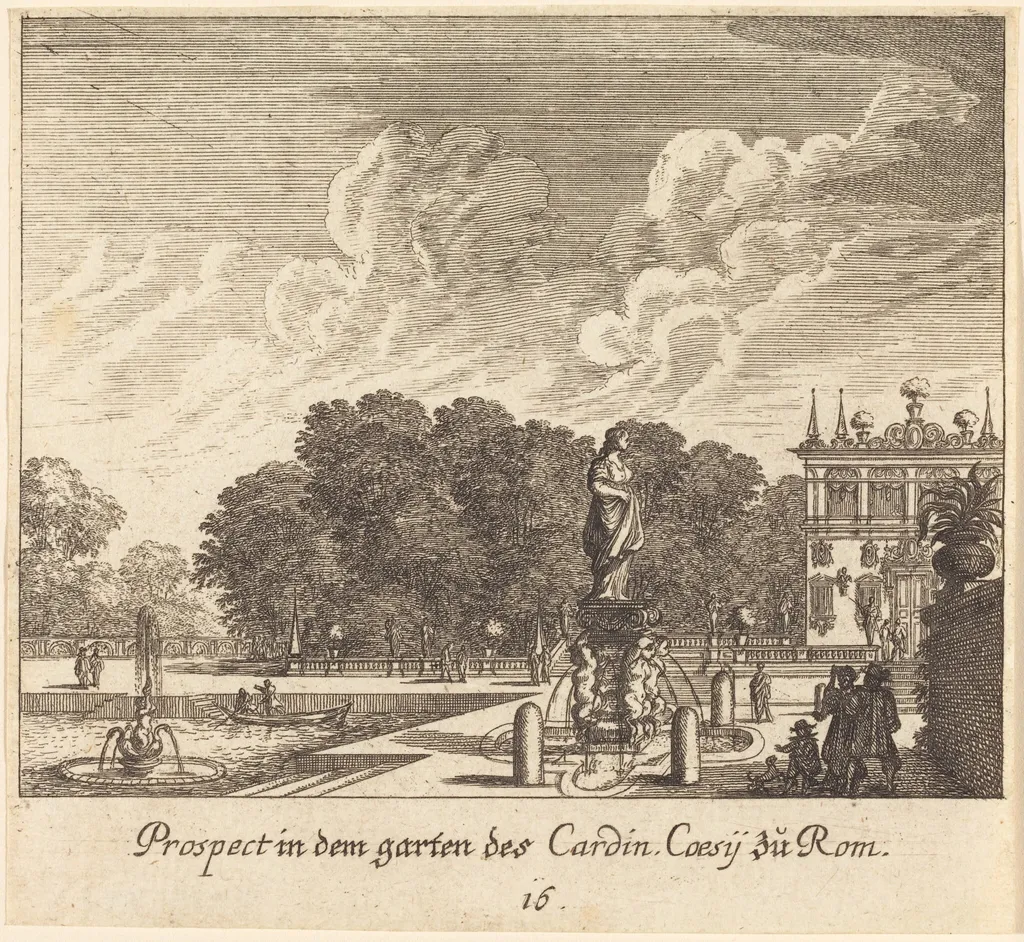
Gardens of Cardinal Coessi, Rome is an ink print by the Baroque artist Melchior Küsel. It dates from 1681 and is held in the collection of the National Gallery of Art.
About this work
To learn more about this style, look up the technique: etching.
The painting shows a serene garden scene.
It's an etching from the 17th century.
The artist included many details, like trees and a fountain, which makes it interesting because it gives us a glimpse of what gardens looked like back then, with lots of greenery and water features.
The garden seems peaceful, with no people around.
This suggests the artist wanted to focus on nature.
To learn more about this style, look up the technique: etching.
Overview
Created in 1681 by Melchior Küsel, this etching depicts the private gardens belonging to Cardinal Coessi in Rome. Executed in fine linear detail, the work captures a tranquil, unpopulated landscape, emphasizing architectural and botanical elements over human presence. As a print, it reflects the 17th-century European tradition of documenting elite landscapes through reproductive techniques.
Subject & Meaning
The scene portrays a formal garden with symmetrical pathways, ornamental trees, and a central fountain, all rendered without figures. The absence of people suggests an idealized vision of nature as ordered and contemplative, aligned with aristocratic ideals of retreat and harmony. The garden functions less as a lived space than as a symbol of cultivated serenity and ecclesiastical privilege.
Technique & Style
Küsel employed etching to achieve delicate tonal gradations and precise linear control. Fine hatching defines foliage, while crisp lines outline architectural features like balustrades and water features. The composition is tightly framed, focusing attention on spatial depth and texture, characteristic of Northern European topographical prints of the period.
History & Provenance
The print was produced during Küsel’s time in Rome, where he documented local gardens and monuments for collectors. It likely circulated among patrons interested in Italianate landscapes and architectural studies. No definitive early ownership records survive, but similar works by Küsel appear in European print collections from the late 17th century.
Context
In late 17th-century Rome, cardinal-led gardens were cultural landmarks, blending horticulture with classical revival aesthetics. Küsel’s etching aligns with a broader trend of documenting these spaces as expressions of power and taste. His work contributed to a visual archive of Roman elite landscapes, often used as reference by artists and travelers.
Legacy
Though not widely exhibited today, the print remains a valuable record of Baroque garden design in papal Rome. It exemplifies how printmaking served as a medium for preserving architectural and horticultural detail before photography. Küsel’s technique influenced later topographical printmakers in Central Europe.
Artist & collection


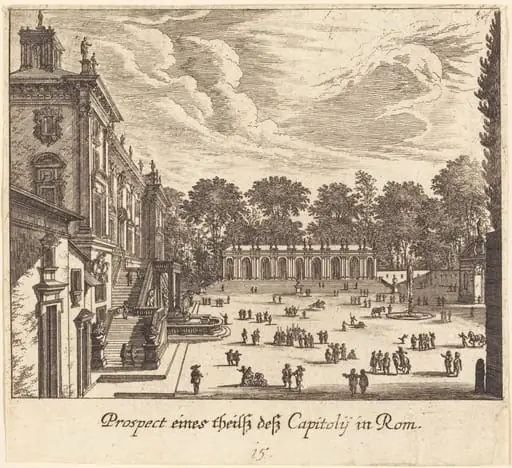
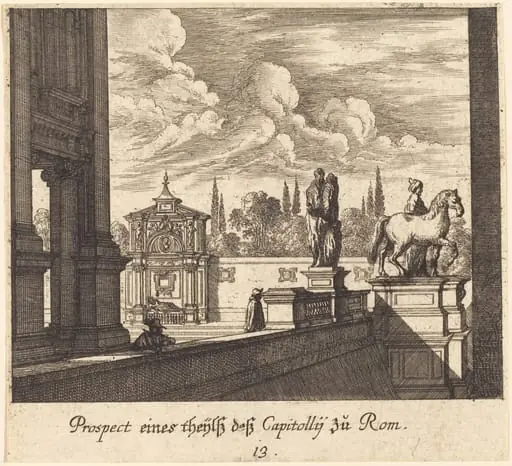 Capitoline, Rome
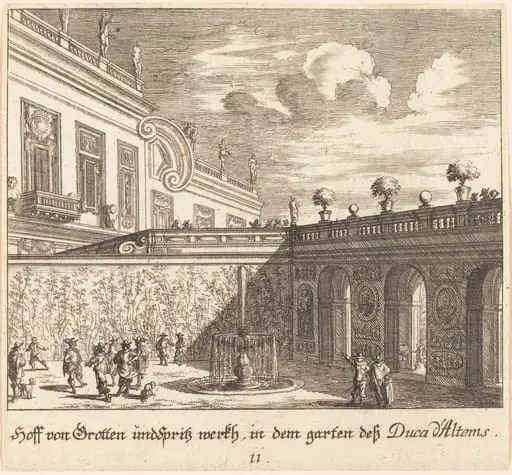
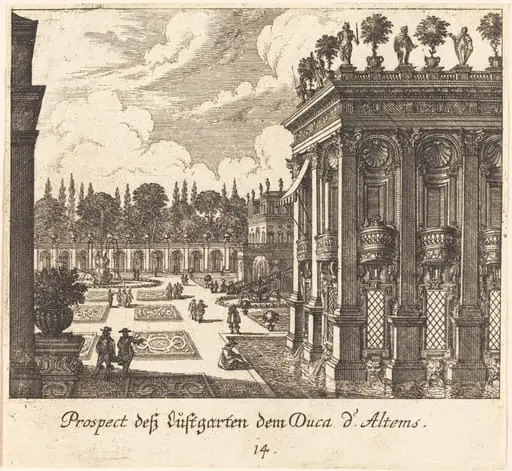 Gardens, Duke d'Altems
 The Two Statues
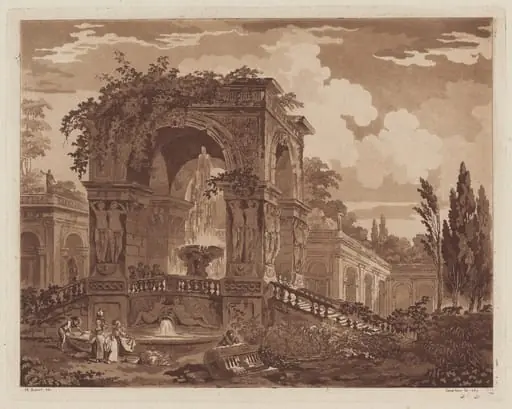 View of an Antique Fountain
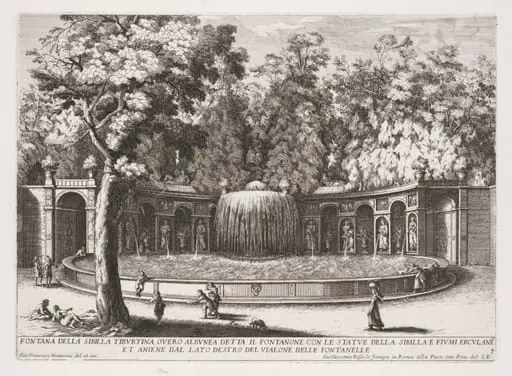 The Fountains of Rome (Le fontane di Roma), Book IV, plate 7: Fountain of the Tiburtine Sibyl (Fontana della Sibilla Tiburtina)
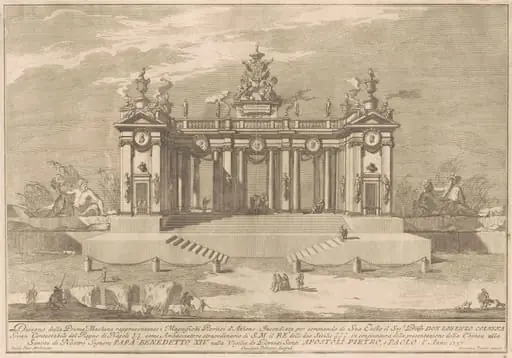 The Prima Macchina for the Chinea of 1757: The Colonnade of the Athenian Lyceum
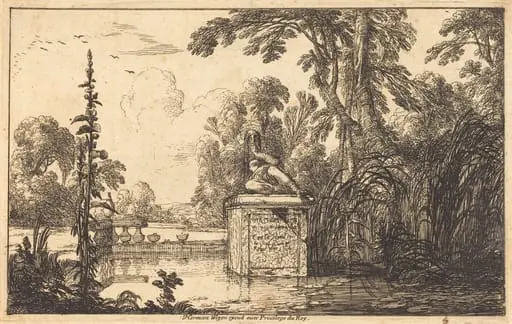 Pool in a Formal Garden