Artwork
Gardens, Duke d'Altems
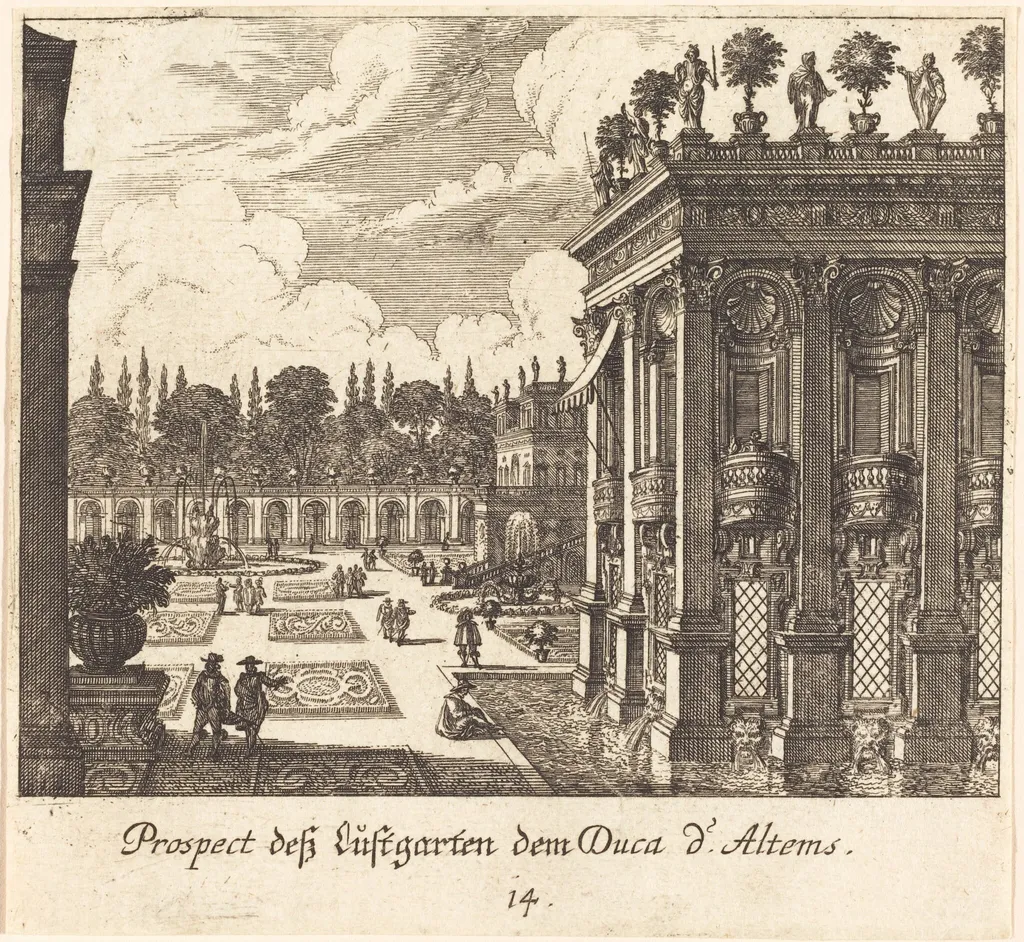
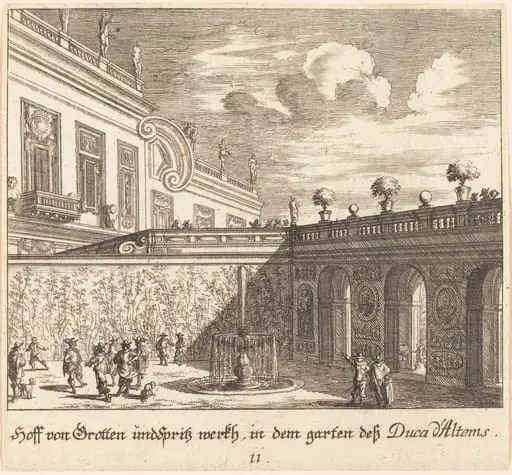
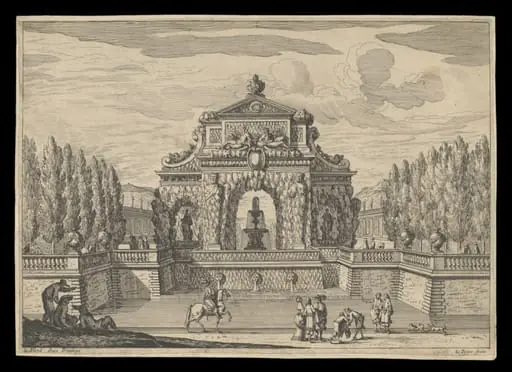
Gardens, Duke d'Altems is an ink print by the Baroque artist Melchior Küsel. It dates from 1681 and is held in the collection of the National Gallery of Art.
About this work
Overview
The composition balances architectural grandeur with natural elements, inviting quiet observation rather than dramatic spectacle.
Created in 1681 by Melchior Küsel, this etching depicts an elaborate formal garden associated with the Duke d'Altems. Rendered in fine linear detail, the print captures a cultivated landscape of symmetry and ornamentation, typical of late 17th-century European aristocratic grounds. The composition balances architectural grandeur with natural elements, inviting quiet observation rather than dramatic spectacle.
Subject & Meaning
The scene portrays a private garden as a symbol of cultivated power and refined taste. Statues, fountains, and meticulously arranged flora reflect the owner’s wealth and control over nature. Figures strolling through the space suggest leisure and social ritual, reinforcing the garden’s role as a stage for elite life. The presence of two men near a large vessel hints at horticultural care, grounding the idealized setting in human activity.
Technique & Style
Küsel employed fine-line etching to achieve intricate textures and spatial depth. Delicate cross-hatching defines foliage, stone surfaces, and architectural details, while varying line weight guides the viewer’s gaze through the composition. The cloudy sky softens the scene’s formality, adding atmospheric nuance. This method aligns with Baroque printmaking traditions that prized precision and tonal richness over bold contrasts.
History & Provenance
The print was produced during a period when engraved garden views circulated among European nobility as status objects. Though specific early ownership records are sparse, Küsel’s association with publishing houses in Augsburg and Nuremberg suggests it was part of a broader market for topographical and decorative prints. Its survival indicates continued interest in aristocratic landscapes into the 18th century.
Context
This work emerges from a tradition of garden imagery tied to absolutist courts, where landscape design mirrored political order. Similar prints by artists like Wenceslaus Hollar reflect the influence of French and Italian formal gardens. Küsel’s version, while less monumental, shares their emphasis on harmony, proportion, and the integration of artifice with nature—values central to Baroque aesthetics.
Legacy
Though not widely reproduced today, the etching remains a representative example of German printmaking’s contribution to garden documentation. It contributes to scholarly understanding of how aristocratic spaces were visually codified and disseminated. Its quiet detail offers insight into the material culture of lesser-known noble circles beyond the major European capitals.
Artist & collection


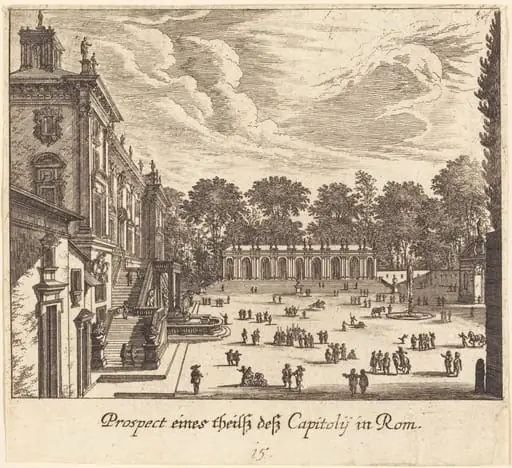
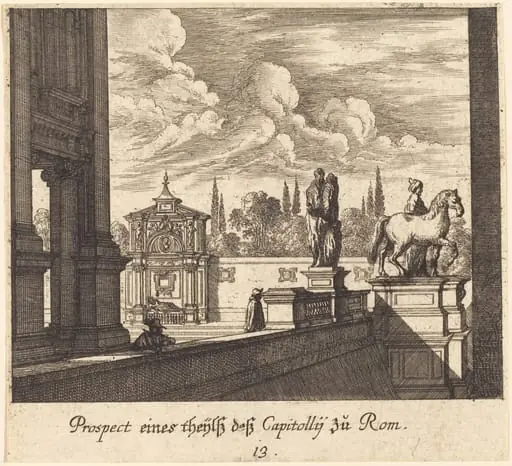 Capitoline, Rome
 H Beard Print Collection
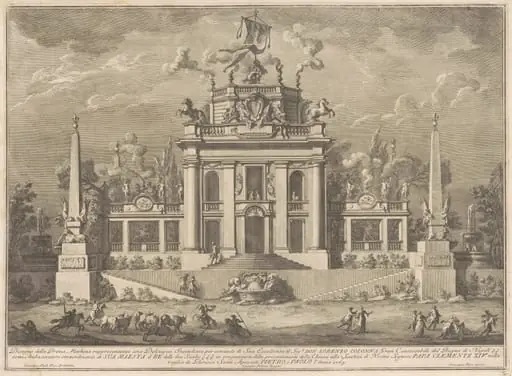 The Prima Macchina for the Chinea of 1769: A "Deliziosa"
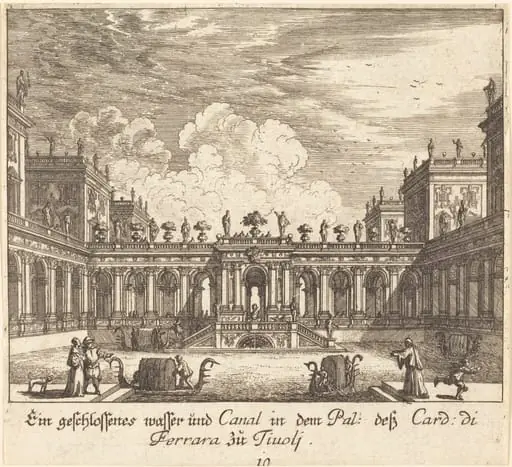 Palace and Canal, Cardinal di Ferrara, Tivoli
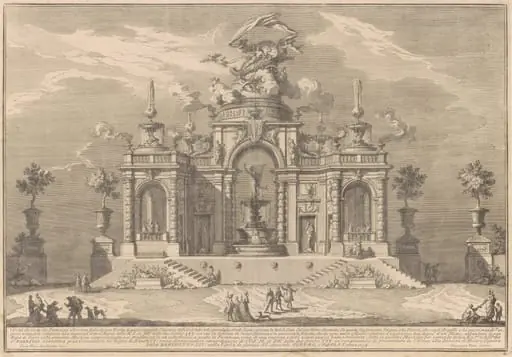 The Prima Macchina for the Chinea of 1754: The Palace of Venus in Cyprus
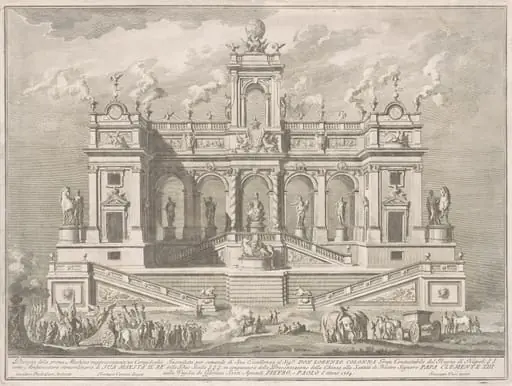 The Prima Macchina for the Chinea of 1764: A Capitol Building
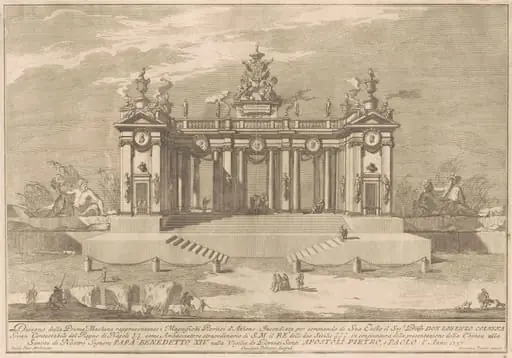 The Prima Macchina for the Chinea of 1757: The Colonnade of the Athenian Lyceum
 Il Greco in Troia: Plate 10
 The Seconda Macchina for the Chinea of 1774: A Villa with Ancient Monuments and a Game of "Giostra"