Artwork
Capitoline, Rome
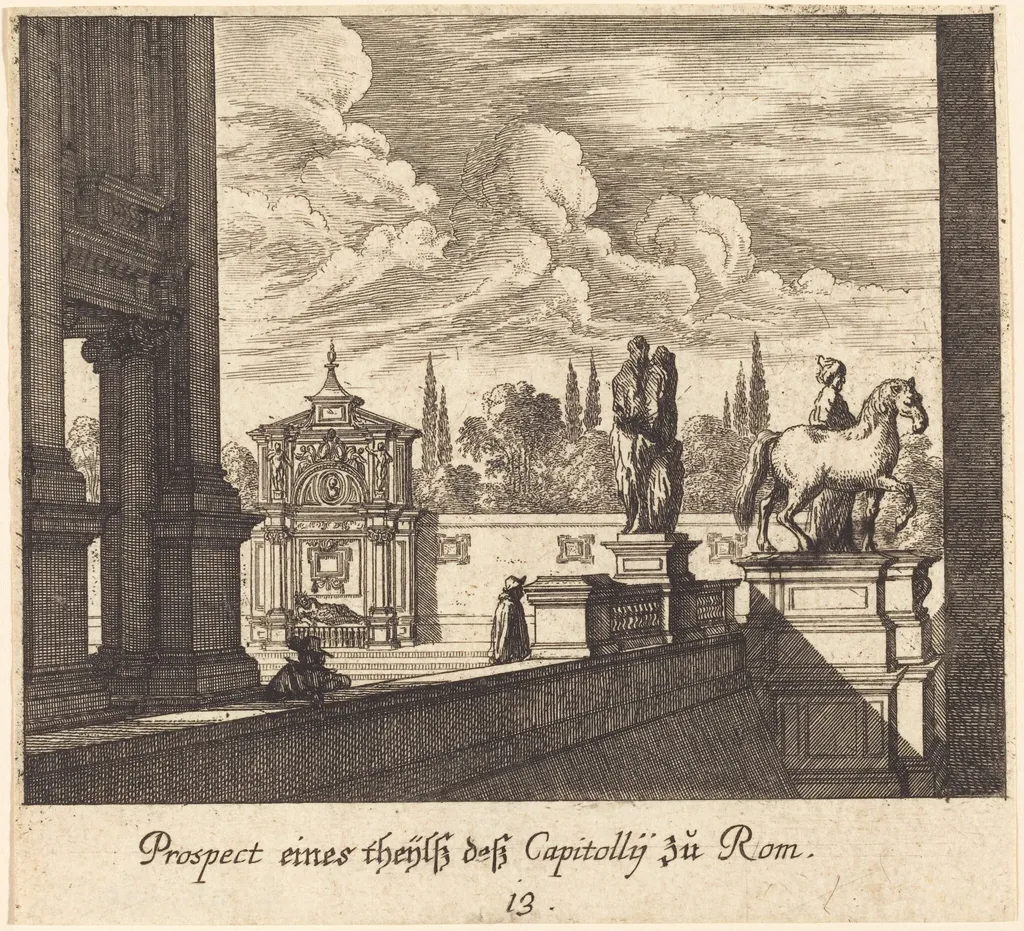
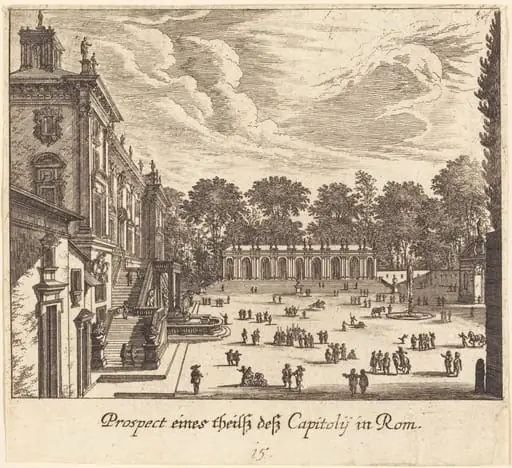
Capitoline, Rome is an ink print by the Baroque artist Melchior Küsel. It dates from 1681 and is held in the collection of the National Gallery of Art.
About this work
Overview
Melchior Küsel's 1681 etching, Capitoline, Rome, is a black-and-white print depicting a monumental architectural scene set against a sky with trees and clouds. The composition includes figures and a horse in the foreground, evoking a sense of depth.
Subject & Meaning
The print illustrates the Capitoline Hill in Rome, a historically and politically significant location, featuring a grand building adorned with columns and statues. The inclusion of everyday figures (a seated person and two standing near a horse) juxtaposes the mundane with the monumental.
Technique & Style
Küsel employed etching techniques to achieve a three-dimensional effect, utilizing lines to create depth. The overall aesthetic resembles a staged setting, characteristic of Baroque-era printmaking.
History & Provenance
Created in 1681 by Melchior Küsel, specific provenance details are not provided in the available information.
Context
This etching reflects the Baroque interest in capturing Rome's architectural grandeur and daily life. It aligns with the period's printmaking practices, which often featured famous landmarks.
Legacy
While specific legacy details of Capitoline, Rome are not provided, etchings like Küsel's contributed to the dissemination of images of Rome's landmarks across Europe during the Baroque period.
Artist & collection


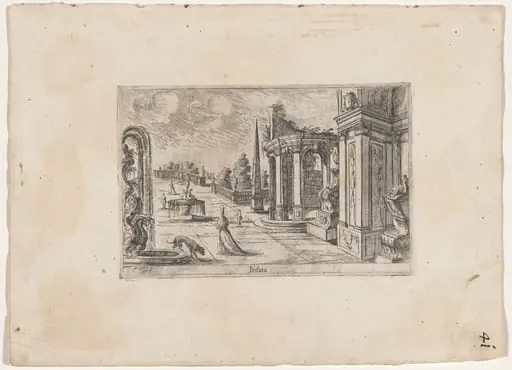 Design for a Garden Court
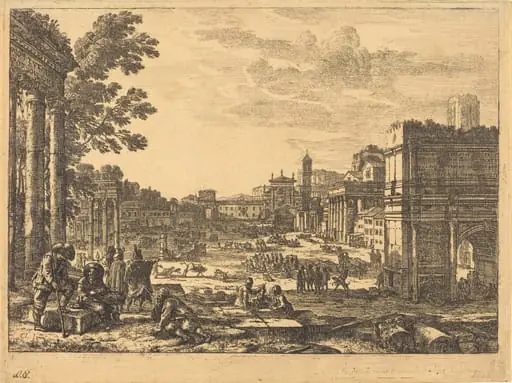 The Roman Forum (Le Campo Vaccino)
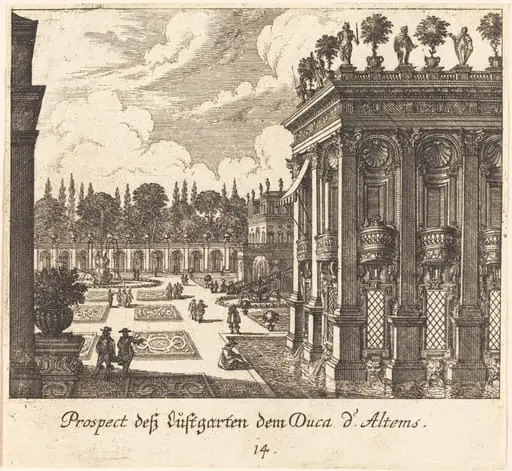 Gardens, Duke d'Altems
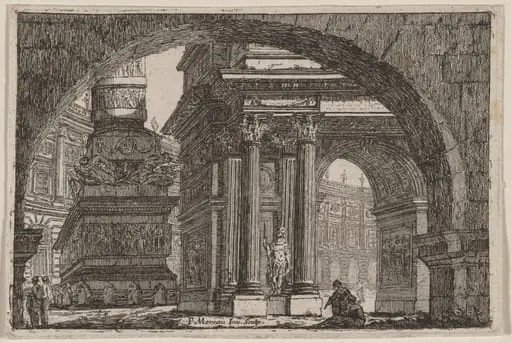 Ancient Forum Seen Beneath an Arch
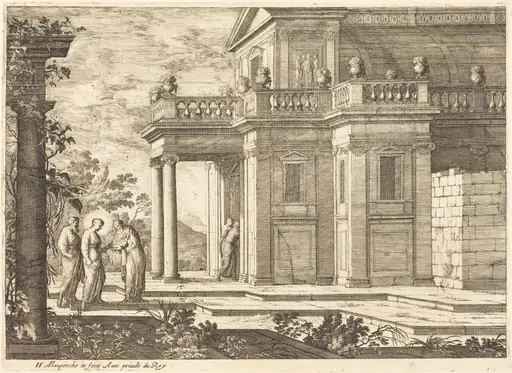 Presentation in the Temple
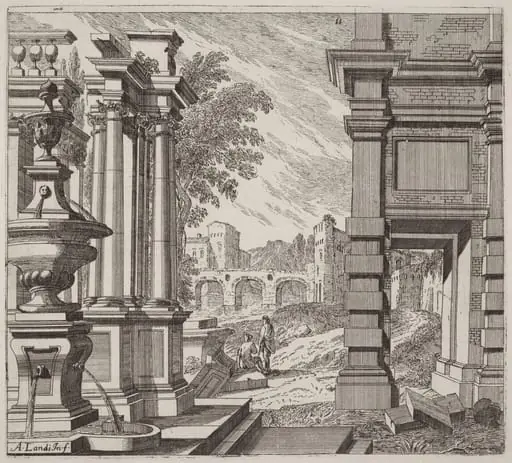 Architectural Fantasy with a Fountain, Classical Ruins, and a Bridge
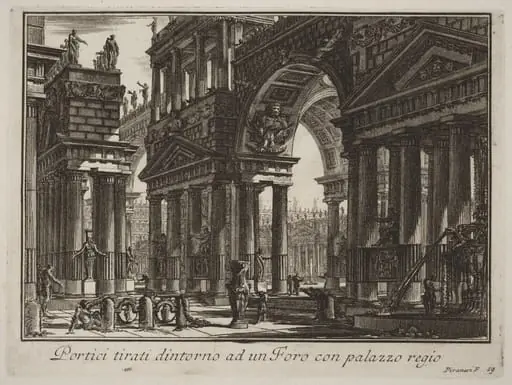 Portici tirati dintorno ad un Foro con palazzo regio
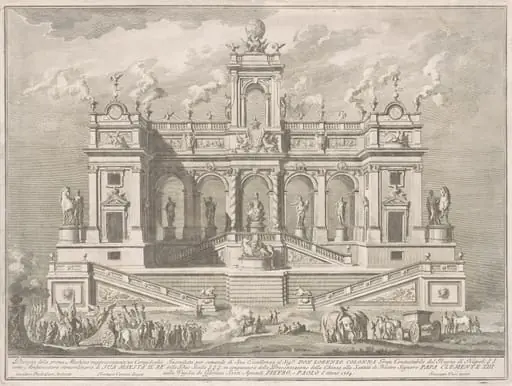 The Prima Macchina for the Chinea of 1764: A Capitol Building
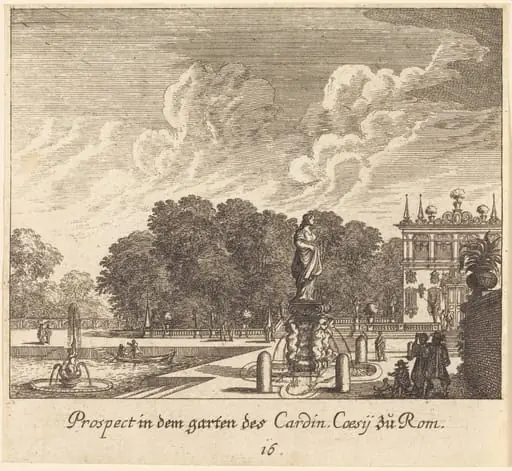 Gardens of Cardinal Coessi, Rome
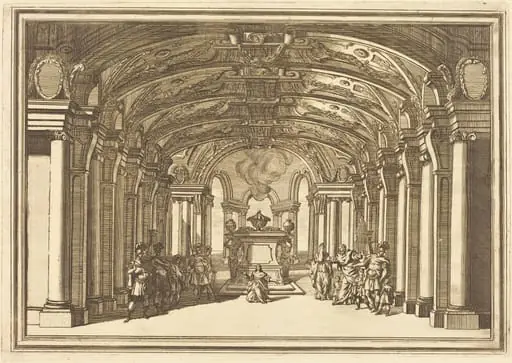 Il Greco in Troia: Plate 8
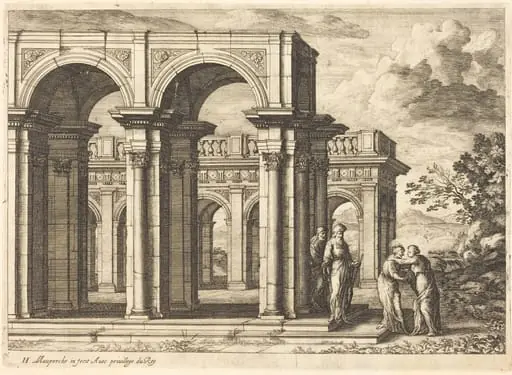 Meeting of Mary and Elizabeth