Artwork
The Prima Macchina for the Chinea of 1769: A "Deliziosa"
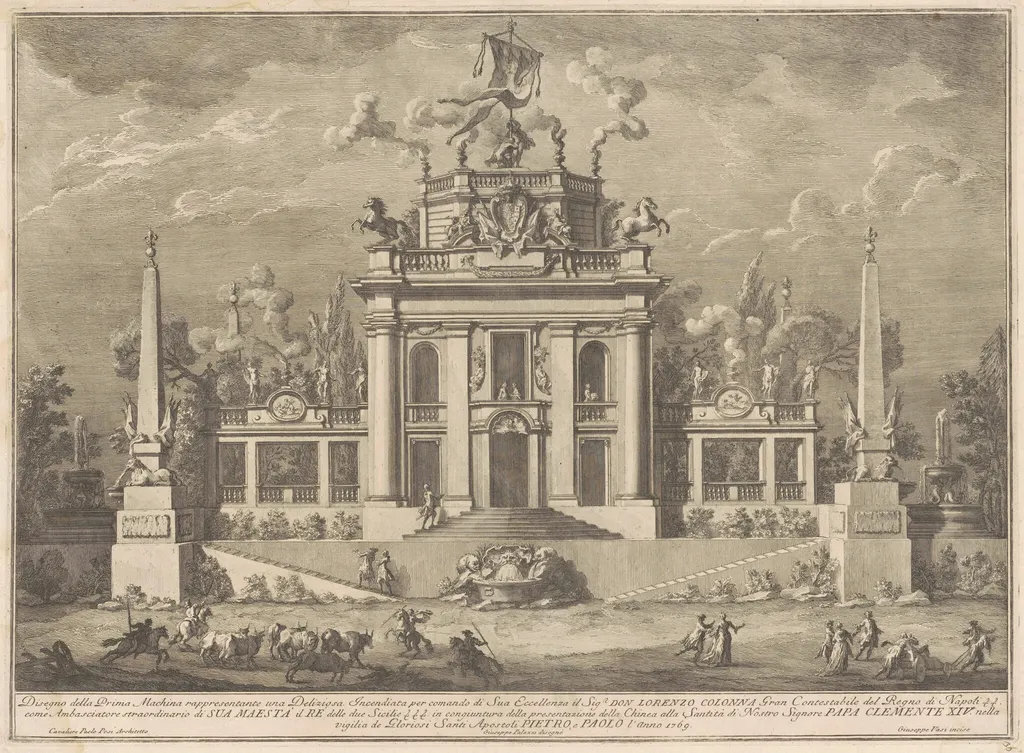
The Prima Macchina for the Chinea of 1769: A "Deliziosa" is an ink print by the Romanticist artist Giuseppe Vasi. It dates from 1769 and is held in the collection of the National Gallery of Art.
About this work
Below, a crowd of figures in old-fashioned clothes watches a parade of horses and riders.
This drawing shows a grand, fancy stage set designed to look like a palace. The building has tall columns, statues, and a big balcony with people standing on it. Below, a crowd of figures in old-fashioned clothes watches a parade of horses and riders. Trees and clouds frame the scene, making it feel like a special outdoor event.
The text at the bottom says this was built for a big celebration in 1769. It looks temporary, like a giant prop for a show.
Next, look up the technique: etching.
Overview
Created in 1769 by Giuseppe Vasi, this etching documents a temporary architectural spectacle constructed for the annual Chinea ceremony in Rome. Rendered in fine linear detail, the print captures a grand, illusionistic stage set resembling a palatial facade, designed to impress spectators during a ceremonial procession. Its ephemeral nature is evident in its theatrical composition and lack of structural permanence.
Subject & Meaning
The scene depicts a ceremonial parade of horses and riders beneath an ornate, faux-palace structure adorned with columns, statues, and a crowded balcony. The assembled crowd in period dress underscores the event’s public and ritual significance. The setting, though monumental, is clearly a constructed backdrop—emphasizing the performative character of papal celebrations and the use of spectacle to reinforce authority.
Technique & Style
Executed in etching, the work employs precise, delicate lines to render architectural detail and atmospheric depth. Vasi’s use of cross-hatching defines shadow and texture, while the composition’s perspective draws the eye toward the central procession. The framing of trees and clouds enhances the illusion of an open-air setting, blending topographical accuracy with theatrical staging.
History & Provenance
Commissioned as a record of the 1769 Chinea, an annual tribute to the Pope involving a ceremonial gift of a white horse, the print was part of Vasi’s broader project documenting Roman festivities and architecture. It circulated among collectors and foreign visitors, serving both as documentation and souvenir. No known original stage survives; the etching is now a primary visual source for the event.
Context
The Chinea ceremony, rooted in medieval tradition, was a public display of loyalty to the papacy, often marked by elaborate temporary structures. Vasi’s work reflects 18th-century Rome’s culture of spectacle, where architecture served civic and religious pageantry. His prints contributed to a growing market for topographical imagery among European travelers during the Grand Tour.
Legacy
Vasi’s etching remains a key reference for historians studying Roman ceremonial culture and ephemeral architecture. Its precision and detail have informed reconstructions of 18th-century festivals, while its aesthetic bridges documentary record and artistic interpretation. The work exemplifies how printmaking preserved transient events otherwise lost to time.
Artist & collection

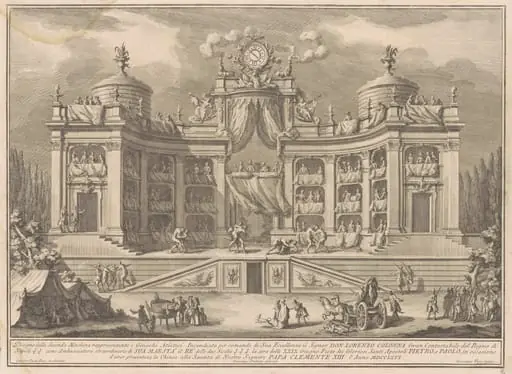 The Seconda Macchina for the Chinea of 1766: A Theater for Athletic Games
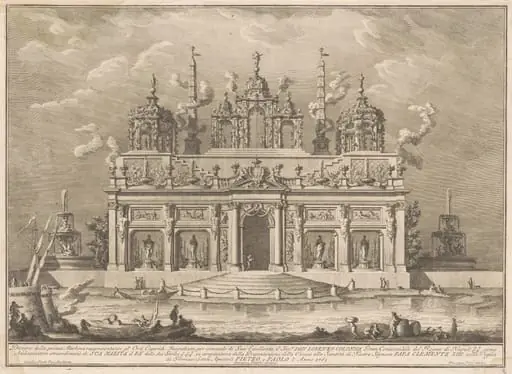 The Prima Macchina for the Chinea of 1765: The Garden of the Hesperides
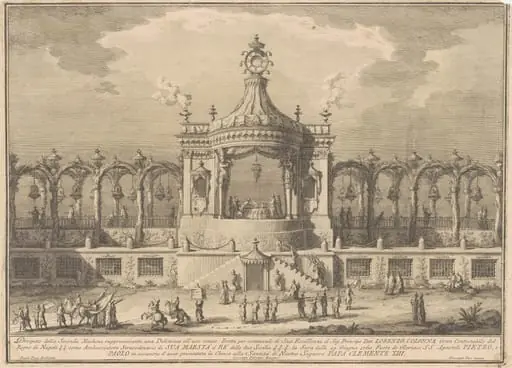 The Seconda Macchina for the Chinea of 1760: A Chinoiserie Pavilion
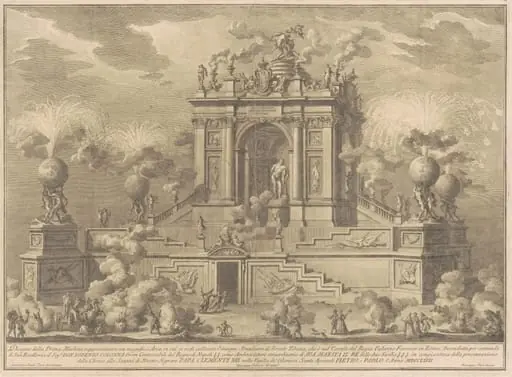 The Prima Macchina for the Chinea of 1767: A Triumphal Arch with the Farnese Hercules
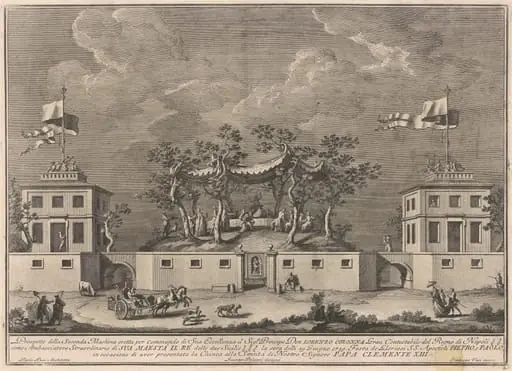 The Seconda Macchina for the Chinea of 1759: A "Deliziosa" with a Bacchanal
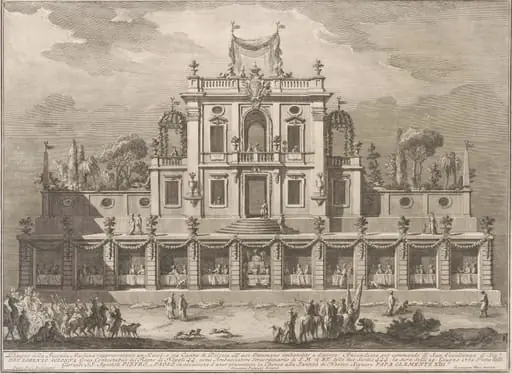 The Seconda Macchina for the Chinea of 1762: A Kiosk, or Pleasure-House in Ottoman Style
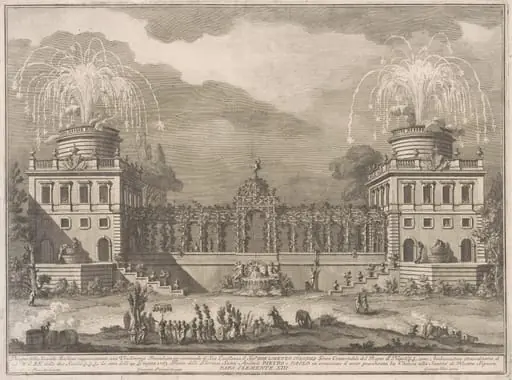 The Seconda Macchina for the Chinea of 1763: The Grape Harvest
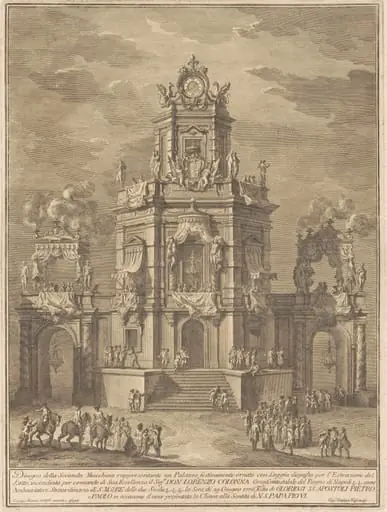 The Seconda Macchina for the Chinea of 1776: A Palace with a Loggia for the Lottery Draw
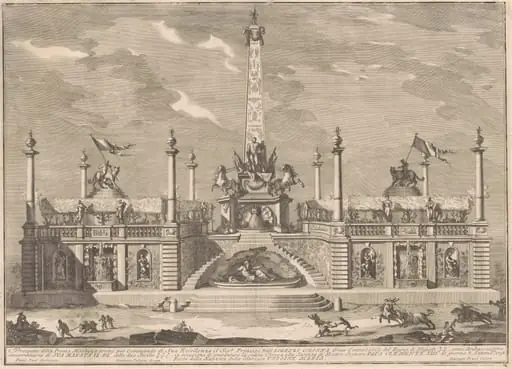 The Prima Macchina for the Chinea of 1758: A "Deliziosa" with Hanging Gardens
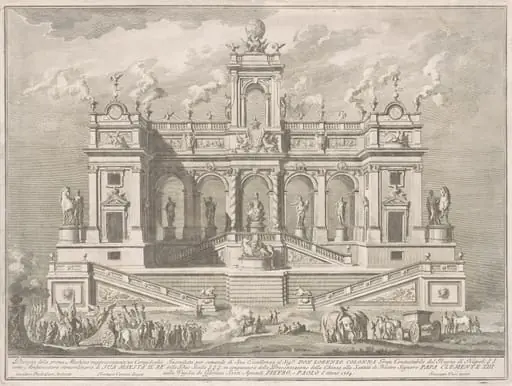 The Prima Macchina for the Chinea of 1764: A Capitol Building
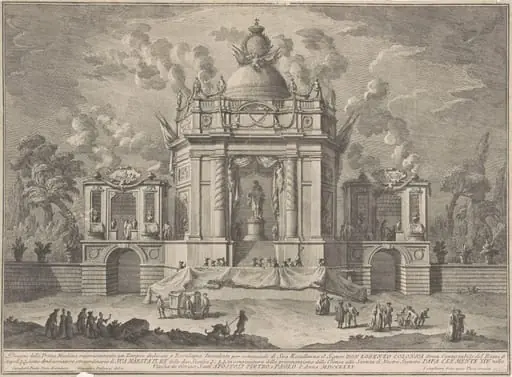 The Prima Macchina for the Chinea of 1771: The Temple of Asclepius
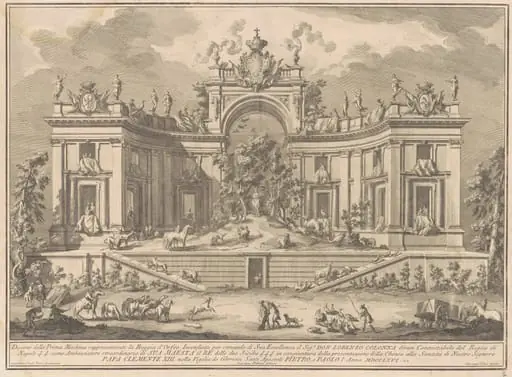 The Prima Macchina for the Chinea of 1766: The Palace of Orpheus
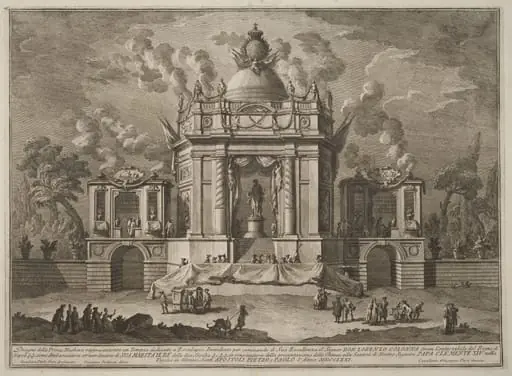 The Prima Macchina for the Chinea of 1771: The Temple of Asclepius
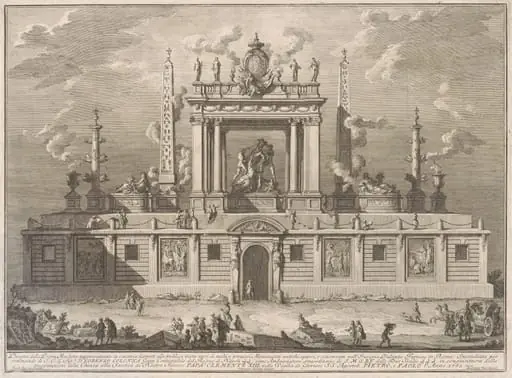 The Prima Macchina for the Chinea of 1762: The Farnese Bull and Other Antiquities from Palazzo Farnese
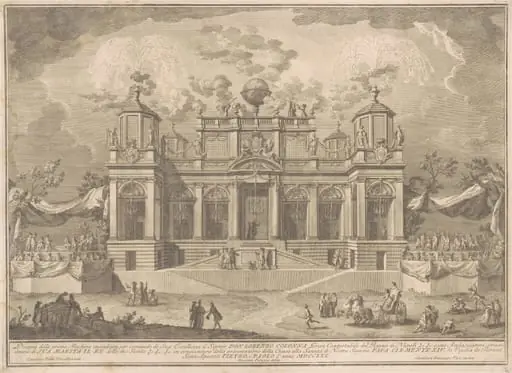 The Prima Macchina for the Chinea of 1770: An Roman Building for Commerce
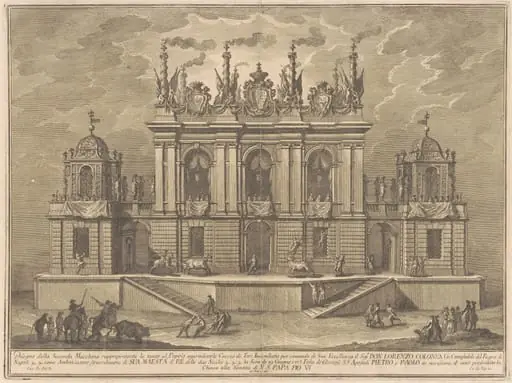 The Seconda Macchina for the Chinea of 1775: A Bull-fight
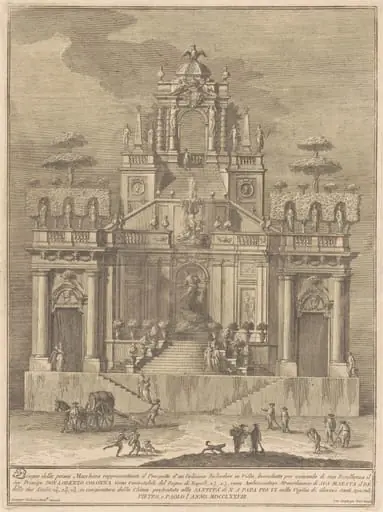 The Prima Macchina for the Chinea of 1778: A Countryside Belevedere with Hercules and Antaeus
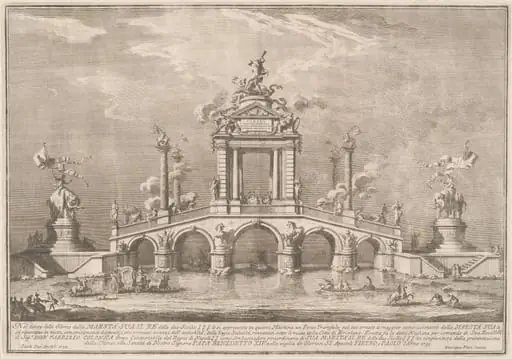 The Prima Macchina for the Chinea of 1755: A Triumphal Bridge with Antiquities from Herculaneum
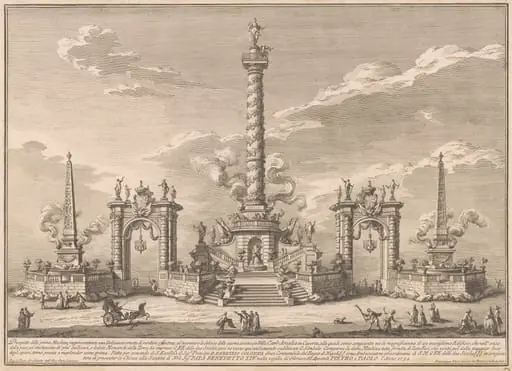 The Prima Macchina for the Chinea of 1752: A "Deliziosa" Alluding to Villa Carl'Amalia in Caserta