Artwork
The Seconda Macchina for the Chinea of 1761: A Magnificent Theater
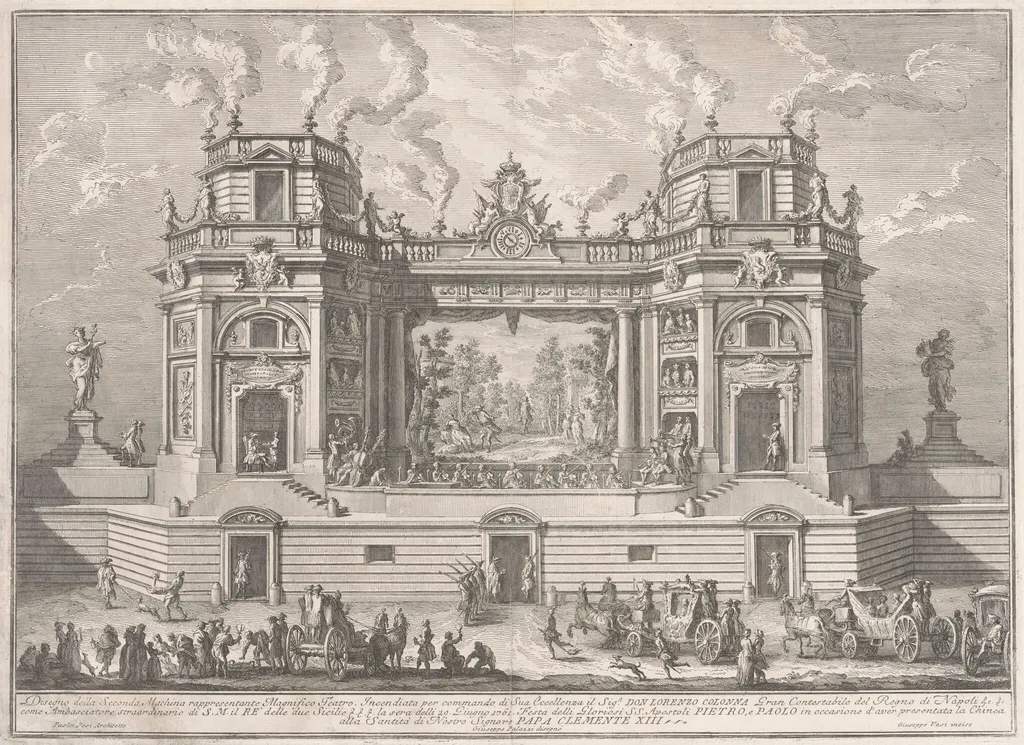
The Seconda Macchina for the Chinea of 1761: A Magnificent Theater is an ink print by the Romanticist artist Giuseppe Vasi. It dates from 1761 and is held in the collection of the National Gallery of Art.
About this work
Below, carriages and more people crowd the street, while a large painted backdrop depicts a lush landscape.
This image is a detailed drawing of a grand stage set, packed with tiny figures and ornate decorations. The scene shows a fake palace with columns, statues, and a balcony filled with people. Below, carriages and more people crowd the street, while a large painted backdrop depicts a lush landscape. The whole thing looks like a temporary theater set, full of tiny but busy details.
The text at the bottom calls it a "magnificent theater" built for a special event in 1761. It’s drawn using a technique that lets the artist add shading and texture.
Want to know more? Check out how etching works.
Overview
The Seconda Macchina for the Chinea of 1761: A Magnificent Theater is a print by Giuseppe Vasi, created in 1761 using the etching technique.
Subject & Meaning
The print depicts a grand, temporary stage set, likely built for a special event. The scene is crowded with tiny figures, ornate decorations, and a large painted backdrop, suggesting a festive atmosphere.
Technique & Style
The etching technique allowed Vasi to achieve detailed shading and texture, bringing the elaborate stage set to life. The level of detail is high, with intricate elements such as columns, statues, and carriages.
Context
The print is related to the Chinea, a special event held in 1761, for which the depicted theater was constructed.
Artist & collection

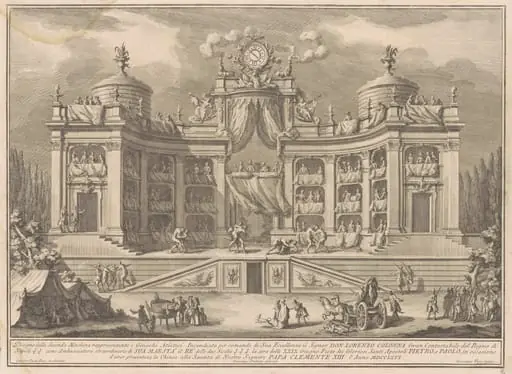 The Seconda Macchina for the Chinea of 1766: A Theater for Athletic Games
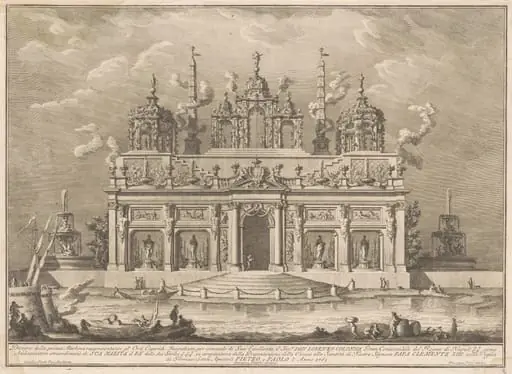 The Prima Macchina for the Chinea of 1765: The Garden of the Hesperides
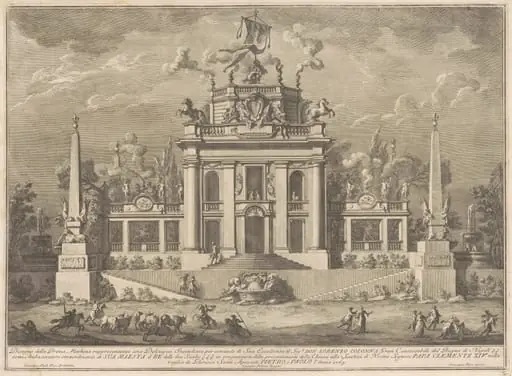 The Prima Macchina for the Chinea of 1769: A "Deliziosa"
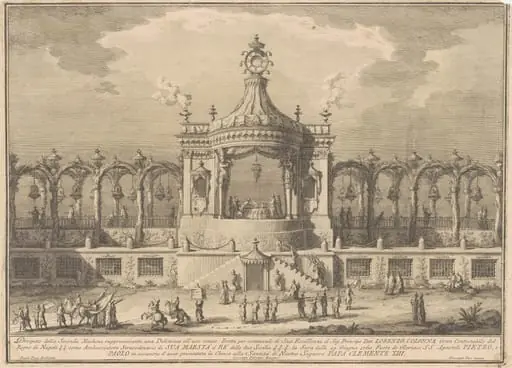 The Seconda Macchina for the Chinea of 1760: A Chinoiserie Pavilion
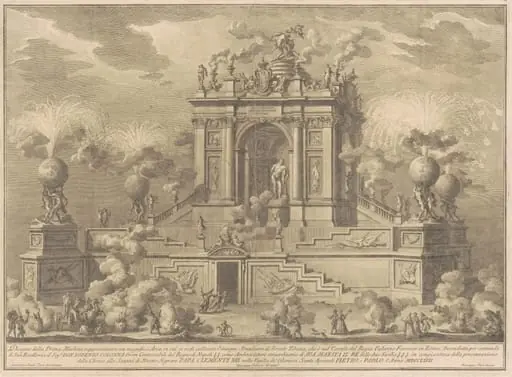 The Prima Macchina for the Chinea of 1767: A Triumphal Arch with the Farnese Hercules
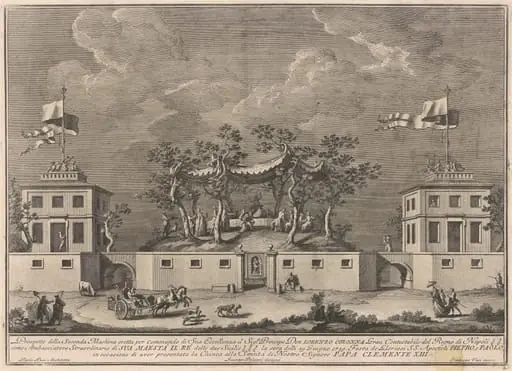 The Seconda Macchina for the Chinea of 1759: A "Deliziosa" with a Bacchanal
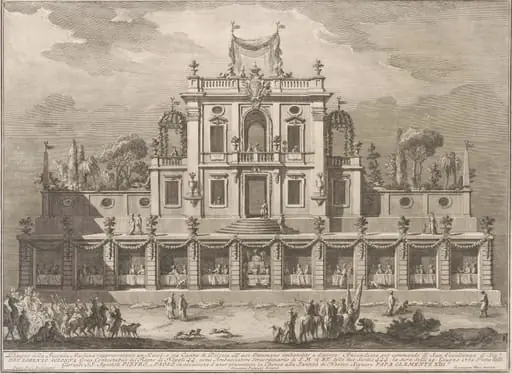 The Seconda Macchina for the Chinea of 1762: A Kiosk, or Pleasure-House in Ottoman Style
 The Seconda Macchina for the Chinea of 1763: The Grape Harvest
 The Seconda Macchina for the Chinea of 1765: A Decorated Building with Cockaigne Poles
 The Seconda Macchina for the Chinea of 1764: A Magnificent Gallery Illuminated at Night
 The Prima Macchina for the Chinea of 1764: A Capitol Building
 The Seconda Macchina for the Chinea of 1771: A Pleasure Palace Dedicated to Bacchus
 The Seconda Macchina for the Chinea of 1775: A Bull-fight
 The Prima Macchina for the Chinea of 1771: The Temple of Asclepius
 The Prima Macchina for the Chinea of 1761: The Salubrious Baths
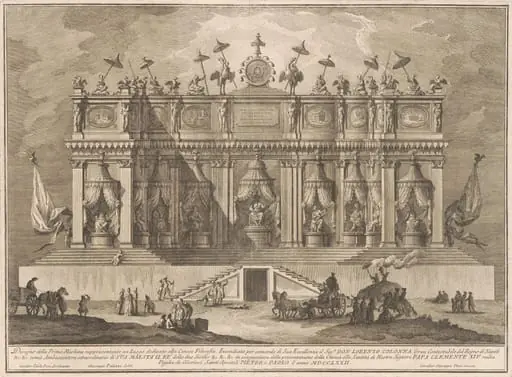 The Prima Macchina for the Chinea of 1772: A Building Dedicated to Chinese Philosophy
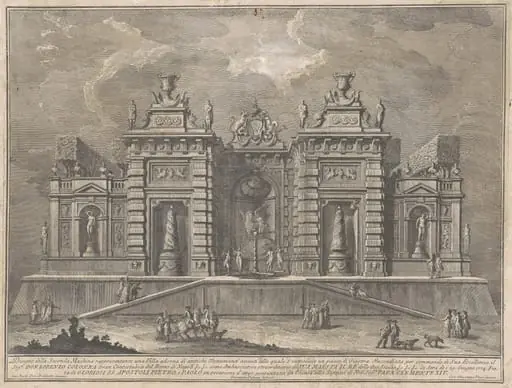 The Seconda Macchina for the Chinea of 1774: A Villa with Ancient Monuments and a Game of "Giostra"
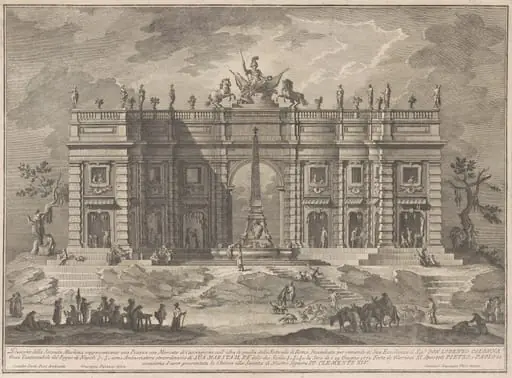 The Seconda Macchina for the Chinea of 1772: A Square with a Game Market and the Pantheon Fountain