Artwork
Sneaking into the mirror
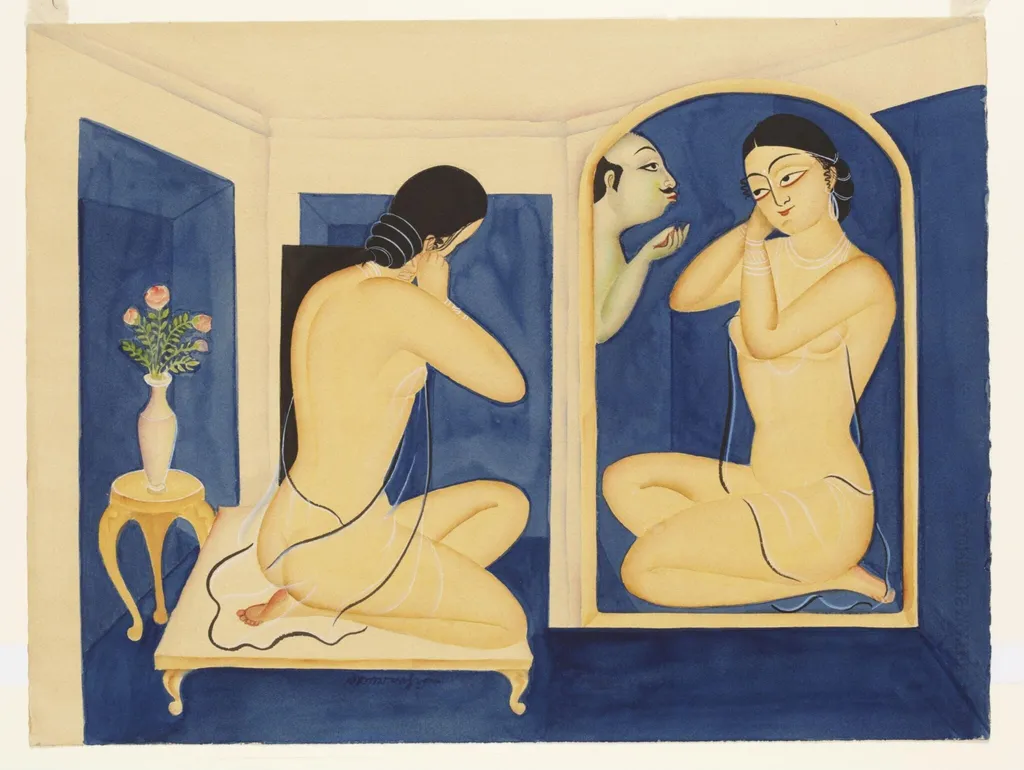
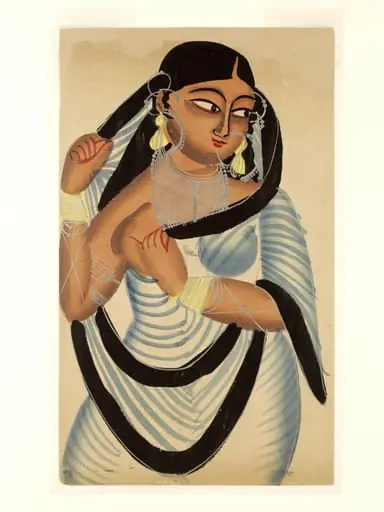
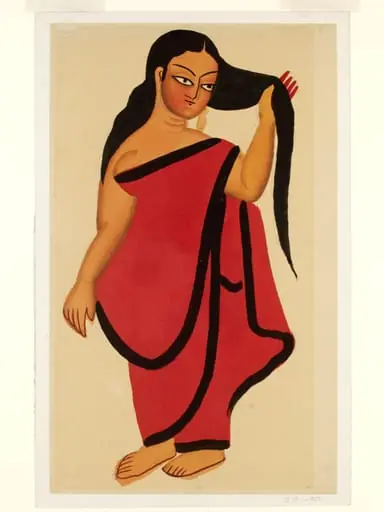
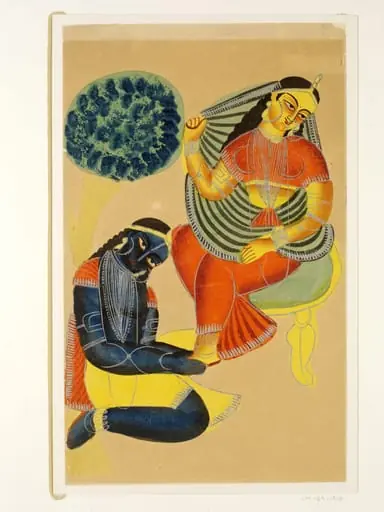
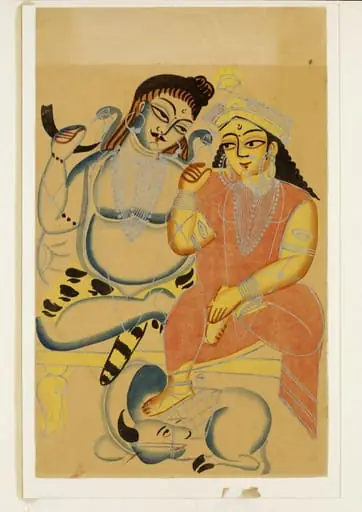
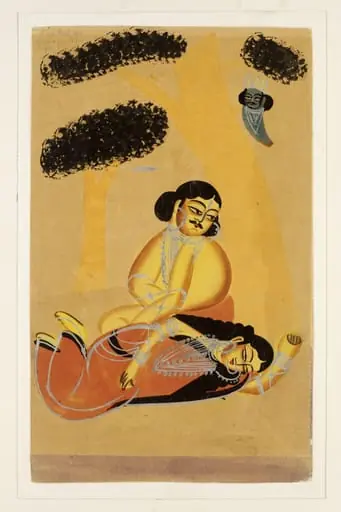
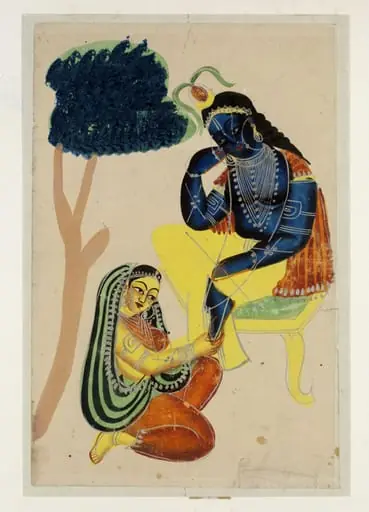
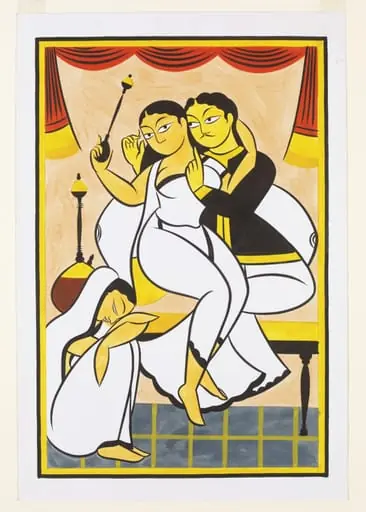
Sneaking into the mirror is a paint painting by Kalam Patua. It dates from 2009 and is held in the collection of the Victoria and Albert Museum. This Kalighat painting depicts a woman in a private interior setting, engaged with her own reflection.
About this work
Overview
Rendered in the distinctive folk style of 19th-century Bengal, the work captures a moment of introspection and imagined connection.
This Kalighat painting depicts a woman in a private interior setting, engaged with her own reflection. Rendered in the distinctive folk style of 19th-century Bengal, the work captures a moment of introspection and imagined connection. The figure’s pose and the use of bold, flat color align with the commercial art traditions of Kalighat, where everyday scenes were rendered with expressive simplicity.
Subject & Meaning
The woman, alone in her chamber, gazes toward her mirrored image as if addressing an absent lover. This visual device suggests longing or fantasy, blurring the boundary between solitude and imagined intimacy. Her posture, reminiscent of courtesan figures in contemporary art, invites interpretation of desire and social role, without overt moral judgment.
Technique & Style
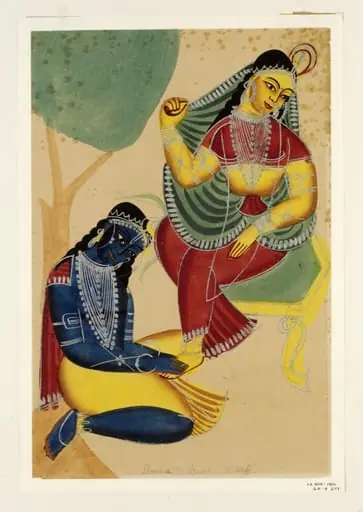
The painting employs the characteristic Kalighat approach: fluid ink outlines, minimal shading, and areas of unmodulated color. The vivid blue of her garment matches hues found in other regional depictions of divine figures, suggesting shared pigment sources or stylistic conventions. The background is left bare, focusing attention entirely on the figure and her reflection.
History & Provenance
Created in the mid-19th century near the Kalighat temple in Kolkata, this work was likely produced for sale to urban patrons. Such paintings often depicted contemporary social types and private moments, reflecting the changing cultural landscape of colonial Bengal. Its survival offers insight into the domestic lives and visual tastes of the period’s middle class.
Context
Kalighat paintings emerged as affordable art for pilgrims and city dwellers, blending religious iconography with secular themes. This piece reflects a shift toward portraying personal, psychological moments rather than mythological narratives. The inclusion of a mirror—a symbol of self-awareness and illusion—hints at broader concerns with identity and perception in a rapidly modernizing society.
Legacy
As one of many Kalighat works documenting private female experience, this painting contributes to a visual record of women’s inner lives during colonial India. It influenced later Indian modernists who revisited folk idioms for expressive purposes. Today, it stands as a quiet testament to the complexity of everyday emotion captured in popular art.
Artist & collection
Artist
Kalam Patua worked on Calcutta’s streets for years, painting tiny Kalighat scrolls that fit in your palm—like pocket-sized stories.