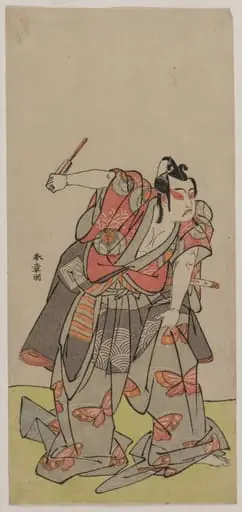
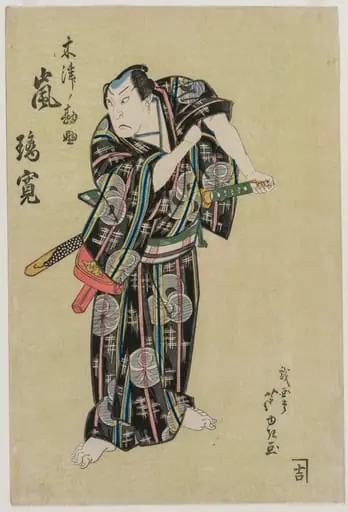
Artwork
Untitled
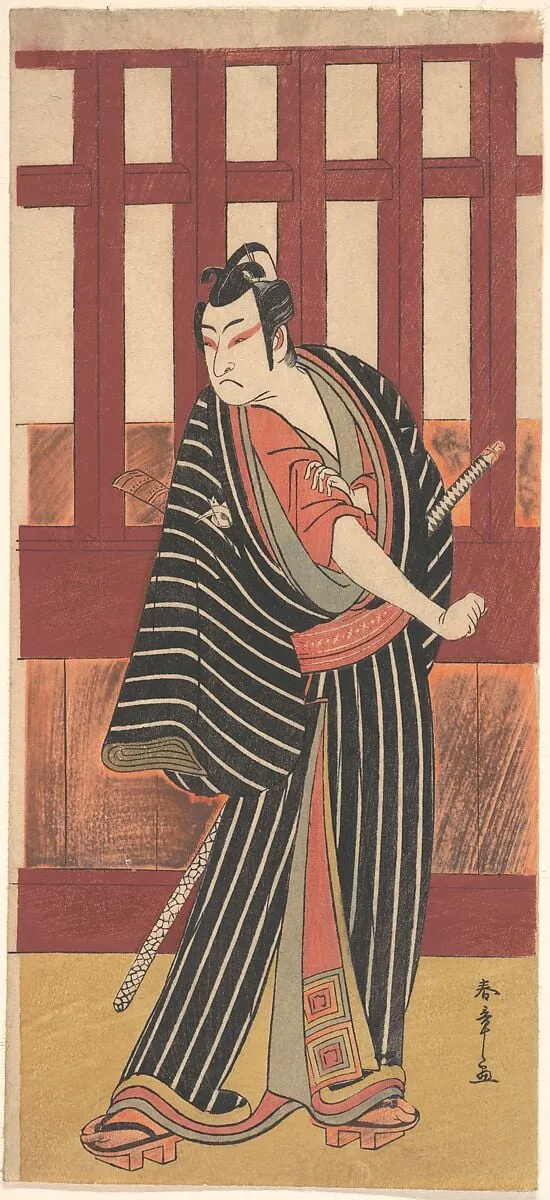
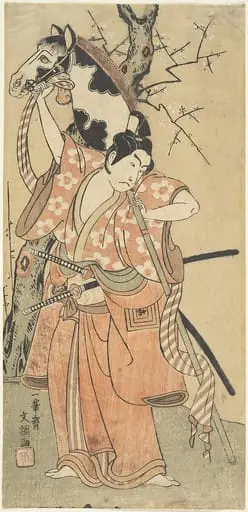
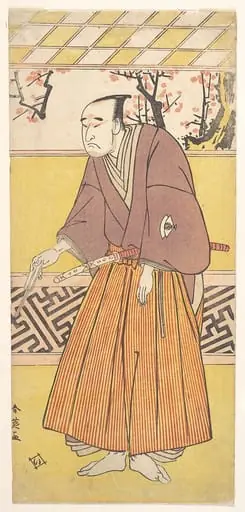
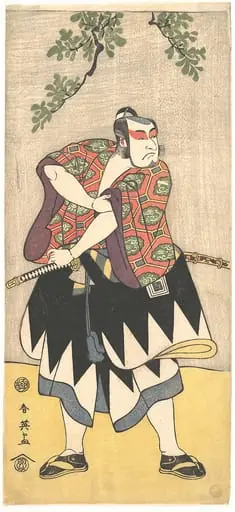
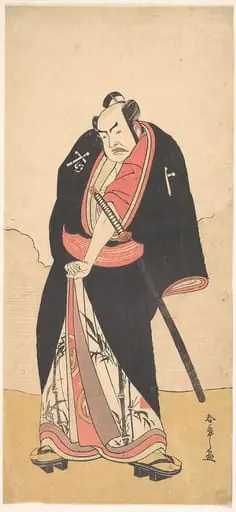
Untitled is an ink print by the Romanticist artist Katsukawa Shunshō. It dates from 1782 and is held in the collection of the Metropolitan Museum of Art.
About this work
Overview
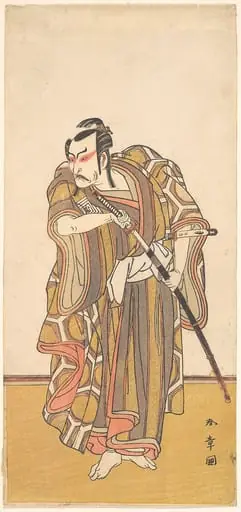
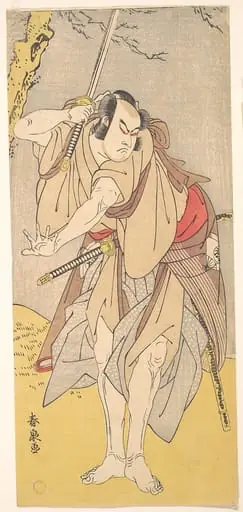
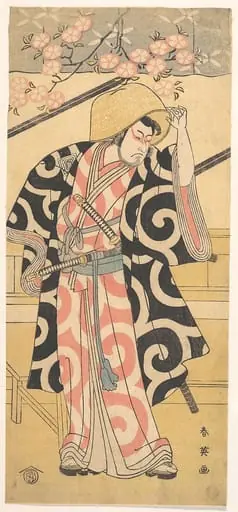
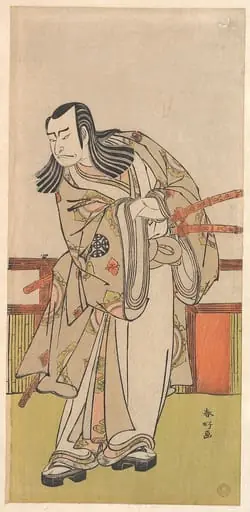
This woodblock print, dated 1782, is attributed to Katsukawa Shunshō and executed in the nishiki-e technique using ink and color on paper. It resides in the collection of The Metropolitan Museum of Art. The composition presents a single figure in theatrical attire, rendered with precise linework and vivid contrasts, characteristic of late 18th-century Japanese printmaking.
Subject & Meaning
Bare feet and red socks suggest a stylized realism common in theatrical representation, emphasizing the performer’s physical presence over naturalism.
The figure is depicted as a stage performer, likely portraying a samurai or warrior role in kabuki theater. His white-painted face, marked with bold red and black facial lines, along with the striped robe, sword, and fan, aligns with conventional stage costumes of the period. Bare feet and red socks suggest a stylized realism common in theatrical representation, emphasizing the performer’s physical presence over naturalism.
Technique & Style
The print employs the nishiki-e method, utilizing multiple carved woodblocks to layer colors with clarity. Strong outlines define the figure’s form, while flat planes of color—particularly the red borders of the background panels—create rhythmic structure. The use of limited but saturated hues and sharp contrasts reflects the aesthetic priorities of ukiyo-e production at the time, prioritizing visual impact over subtle gradation.
History & Provenance
Created in 1782 during the height of Shunshō’s career, the print was likely produced for a broad urban audience interested in kabuki culture. It entered the Metropolitan Museum of Art’s collection through established acquisition channels, though its specific provenance prior to museum ownership remains undocumented in public records.
Context
In late 18th-century Edo, woodblock prints of kabuki actors were widely circulated as popular entertainment. Shunshō, a leading artist of the Katsukawa school, specialized in actor portraits that captured distinctive stage personas. This print reflects the close relationship between theater and print culture, where visual representations reinforced the fame of performers and their roles.
Legacy
Though unsigned and untitled, the work exemplifies the Katsukawa school’s influence on actor portraiture in ukiyo-e. Its formal clarity and theatrical emphasis contributed to the standardization of visual codes for kabuki imagery, influencing later artists and preserving a record of performance conventions now lost to time.
Artist & collection
Artist
Katsukawa Shunshō spent his life in Edo (now Tokyo), where the city’s teahouses and theaters buzzed with energy.