Artwork
A Thousand Autumns, Ten Thousand Years on Tokiwa Bridge
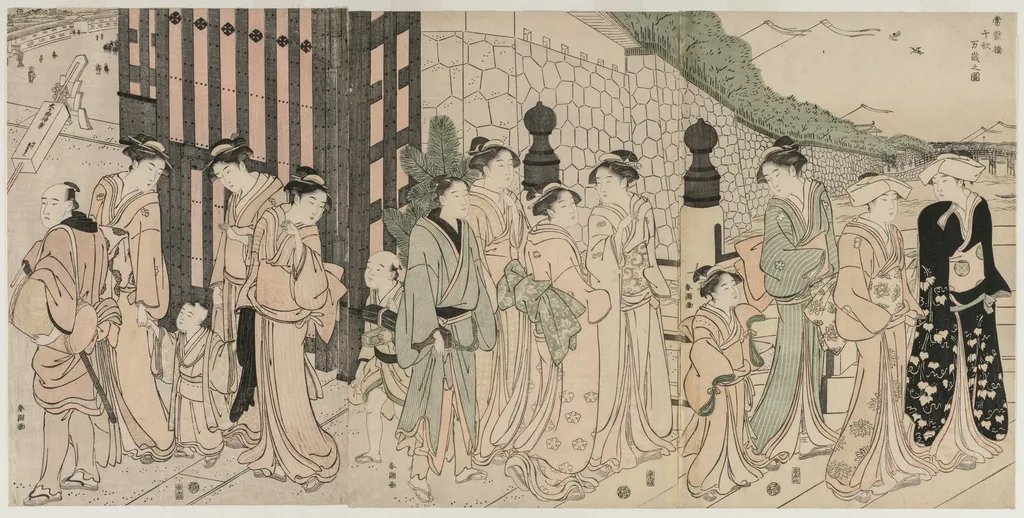
A Thousand Autumns, Ten Thousand Years on Tokiwa Bridge is a print by the Romanticist artist Katsukawa Shunchō. It dates from 1794 and is held in the collection of the Cleveland Museum of Art.
About this work
Overview
Created around 1794 by the Edo‑period artist Katsukawa Shunchō, this woodblock print depicts a bustling scene on Tokiwa Bridge. The work is part of the Cleveland Museum of Art’s collection. It presents a lively crowd crossing the bridge, set against a softly rendered landscape of tiled roofs, a low fence, and distant hills.
Subject & Meaning
The composition captures a moment of everyday activity: men, women, and children in brightly coloured garments traverse the bridge, some shielding themselves with fans or parasols, others holding hands. The inclusion of a solitary, tall black hat in the centre adds a whimsical focal point, inviting viewers to consider the interplay between order and eccentricity in public spaces.
Technique & Style
Executed as a multicolour woodblock print, the image relies on delicate pink, green and blue washes outlined in bold black lines, a hallmark of ukiyo‑e aesthetics. The flat areas of colour and stylised forms convey movement while preserving a sense of depth through the receding hills and architectural elements in the background.
History & Provenance
The print entered the Cleveland Museum of Art’s holdings through acquisition in the twentieth century, though specific details of its earlier ownership remain undocumented. Its attribution to Shunchō, a noted member of the Katsukawa school, aligns it with the prolific output of prints that documented urban life in late‑eighteenth‑century Japan.
Context
Tokiwa Bridge was a well‑known crossing in Edo, frequently depicted by artists interested in the city’s social fabric. Shunchō’s work reflects the period’s fascination with scenes of leisure and commerce, offering a snapshot of the diverse attire and customs of the time while situating the viewer within the broader visual culture of ukiyo‑e.
Artist & collection
Artist
Katsukawa Shunchō lived in Edo (now Tokyo) during the late 1700s, a time when floating-world prints—colorful scenes of theater, courtesans, and everyday life—were all the rage.

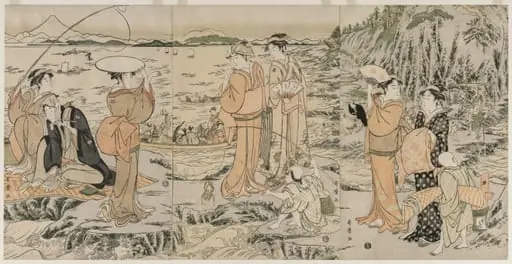 Fishing at Iwaya on Enoshima
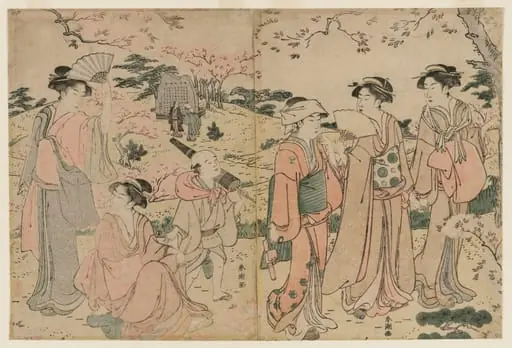 Women Viewing Cherry Blossoms at Asukayama
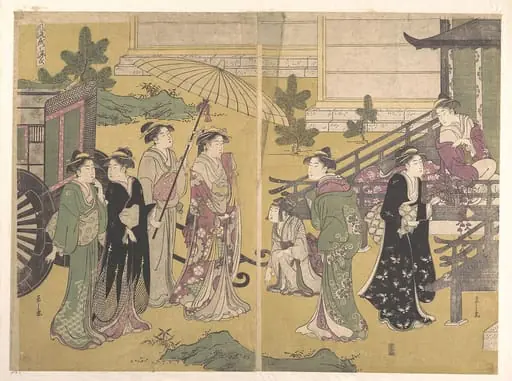 Untitled
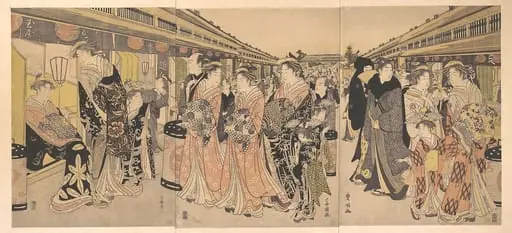 吉原仲の町花魁道中|Courtesans Promenading on the Nakanochō in Yoshiwara
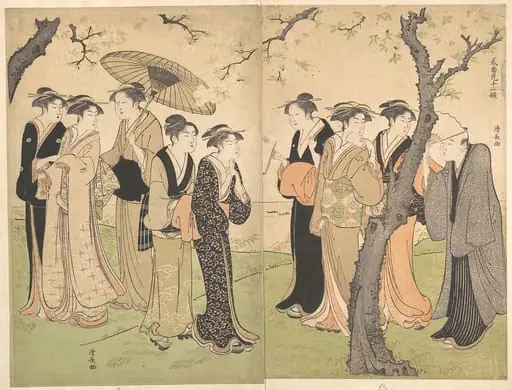 Untitled
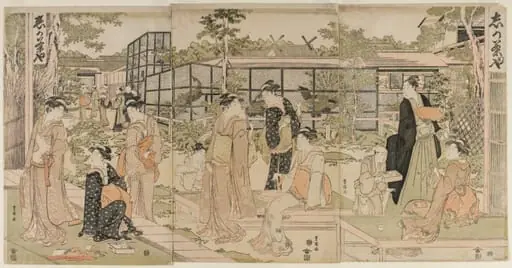 The Shika Teahouse
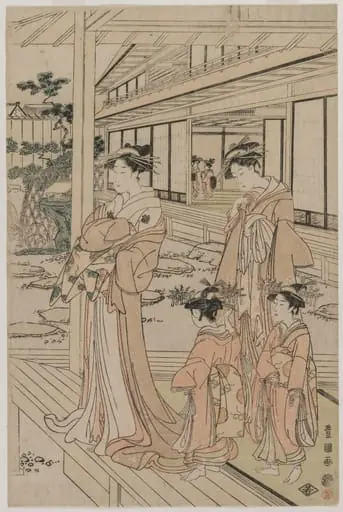 Courtesan Standing on a Veranda
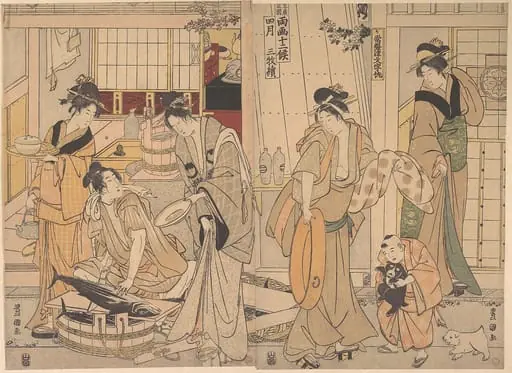 Untitled
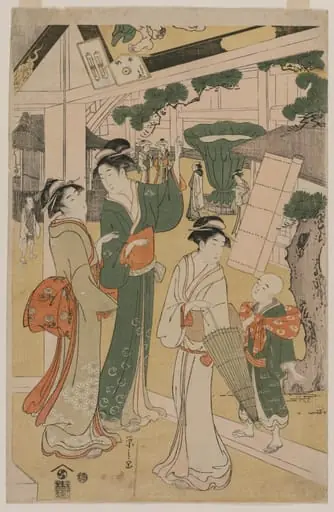 Print from Women Resting in the Votive Picture Hall at Asakusa
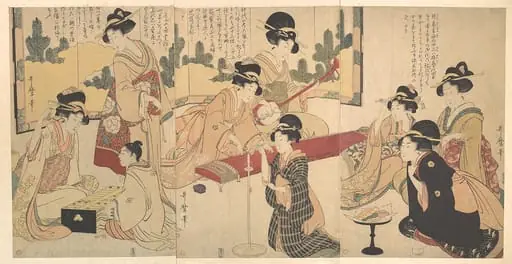 Untitled
![南四季 夏景|The Four Seasons in Southern Edo: A Summer Scene (Minami shiki; Natsu [no] kei), by Utagawa Toyokuni I](https://artifactworldgallery.com/img/utagawa-toyokuni-i--the-four-seasons-in-southern-edo-a-summer-scene-minami-shiki--de8110e8ab2ddcb5-w320.webp) 南四季 夏景|The Four Seasons in Southern Edo: A Summer Scene (Minami shiki; Natsu [no] kei)
南四季 夏景|The Four Seasons in Southern Edo: A Summer Scene (Minami shiki; Natsu [no] kei)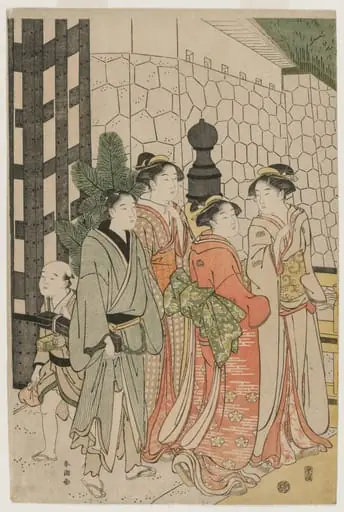 Young Man and Women on Tokiwa Bridge