Artwork
The Shika Teahouse
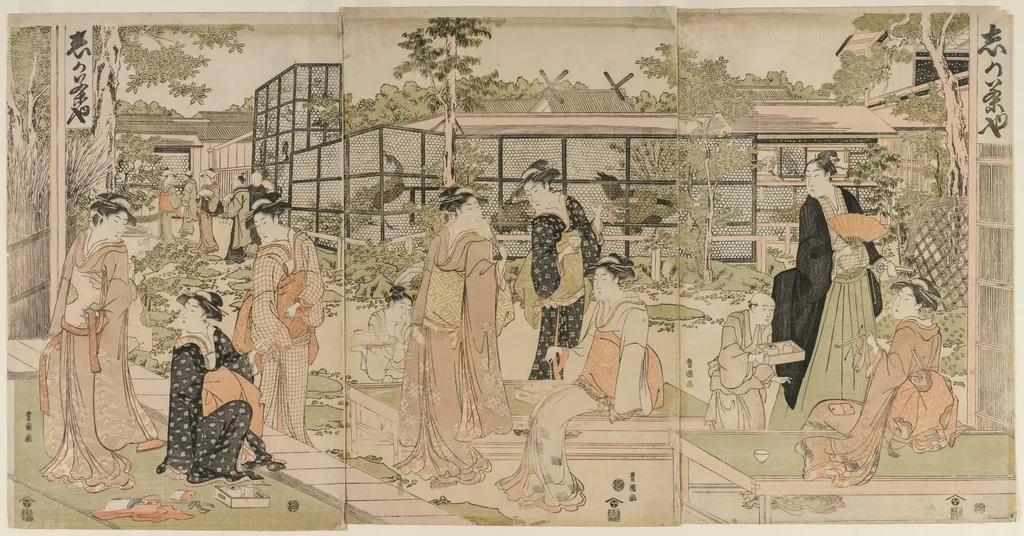
The Shika Teahouse is a print by the Romanticist artist Utagawa Toyokuni I. It dates from 1794 and is held in the collection of the Cleveland Museum of Art. This woodblock print depicts a teahouse in Edo-period Japan where patrons gather to view exotic birds recently introduced from abroad.
About this work
You can learn more about Japanese art from the same time period by looking at the work of artist Utagawa Toyokuni (Japanese, 1769–1825).
This painting shows people at a teahouse, looking at exotic birds.
The teahouse is a special place where people can see foreign birds. These birds were brought to Japan by Dutch traders, which is interesting because it shows how different cultures were interacting.
You can learn more about Japanese art from the same time period by looking at the work of artist Utagawa Toyokuni (Japanese, 1769–1825).
Overview
This woodblock print depicts a teahouse in Edo-period Japan where patrons gather to view exotic birds recently introduced from abroad. The scene captures a moment of cultural curiosity, blending leisure with the novelty of foreign wildlife. The teahouse functions not merely as a place for tea but as a venue for observing and discussing imported specimens, reflecting broader societal interest in global exchange.
Subject & Meaning
The composition centers on peacocks and parrots, animals unknown in Japan before Dutch traders brought them in the 18th century. Their presence draws a diverse crowd—courtesans, merchants, samurai, and a monk—each reacting with quiet fascination. The birds symbolize distant lands and the quiet penetration of foreign goods into everyday Japanese life, subtly challenging cultural boundaries without overt confrontation.
Technique & Style
Rendered in the ukiyo-e tradition, the print employs fine linework and muted color palettes to distinguish figures from the birds. Details in clothing and posture convey social status, while the birds are rendered with careful attention to plumage, suggesting observation from life. The spatial arrangement guides the viewer’s eye across the teahouse interior, balancing human activity with the central focus on the avian exhibits.
History & Provenance
The teahouse depicted likely operated in Edo during the late 1700s or early 1800s, a time when Dutch traders at Dejima were the primary conduit for Western goods into Japan. Such establishments, though rare, catered to elite curiosity about foreign curiosities. The print itself may have been produced as a commercial image, documenting a transient cultural phenomenon rather than a permanent institution.
Context
During this period, Japan maintained limited foreign contact under sakoku policies, making Dutch imports especially prized. The display of exotic birds in teahouses mirrored broader trends in natural history fascination, akin to European cabinets of curiosity. These displays were not scientific but social, offering a controlled space to experience the exotic without leaving domestic boundaries.
Legacy
The print stands as a quiet record of early globalization in Japan, illustrating how even restricted trade could influence daily life and visual culture. It contributes to the ukiyo-e genre’s role in documenting social change, alongside works by contemporaries like Utagawa Toyokuni, who similarly captured urban life’s evolving textures during the Edo era.
Artist & collection

Artist
Toyokuni was a born showman who made sure the energy of Edo’s kabuki stage never faded on paper.

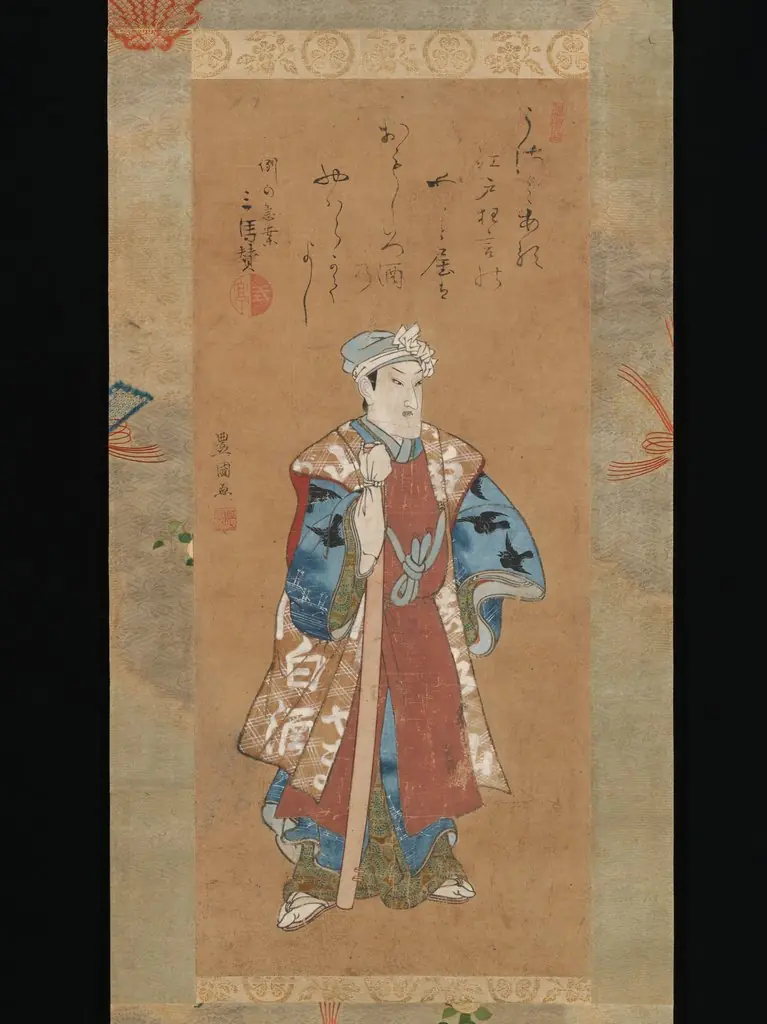 Bandō Mitsugorō II as Shinbei in the Kabuki Play "Sukeroku"
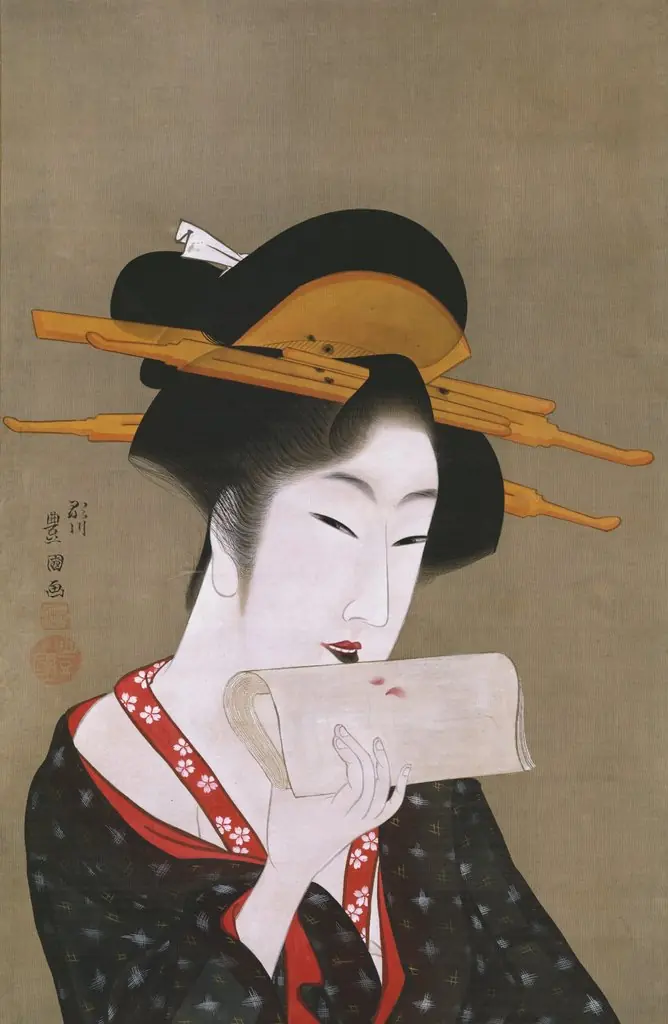 Beauty Blotting Her Lip Rouge
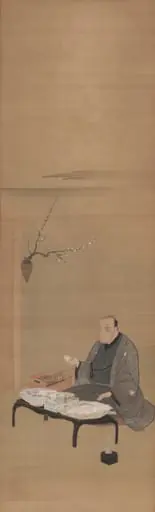 Portrait of Kinokuniya Bunzaemon
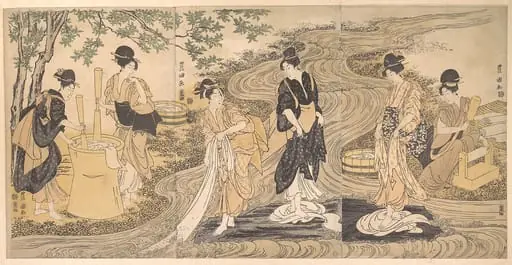 Untitled
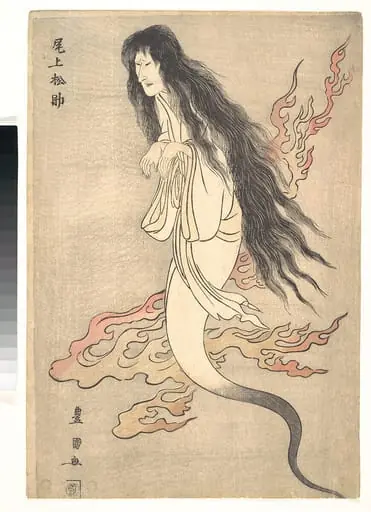 Tokaido Yotsuya Kaidan|Onoe Matsusuke as the Ghost of the Murdered Wife Oiwa, in "A Tale of Horror from the Yotsuya Station on the Tokaido Road"
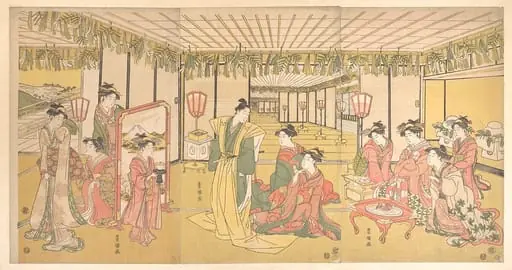 Untitled
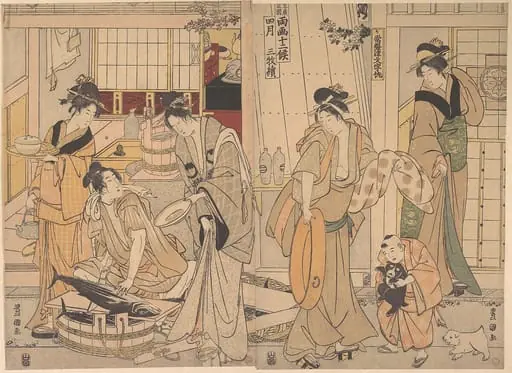 Untitled
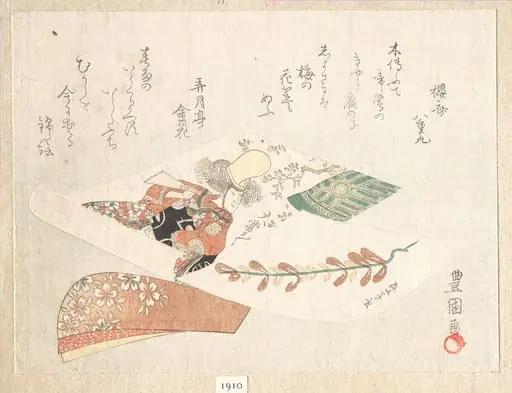 娘道成寺図の錦絵|Print of a Kabuki Dancer from the Maiden of the Dōjōji Temple (Musume Dōjōji)
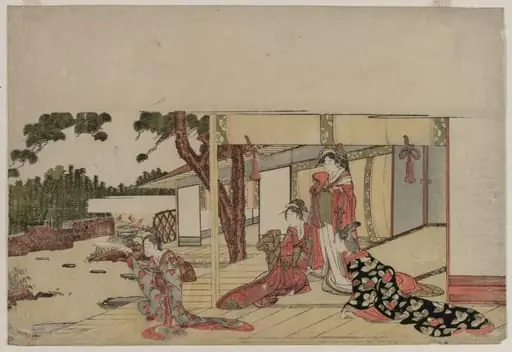 Women on a Veranda
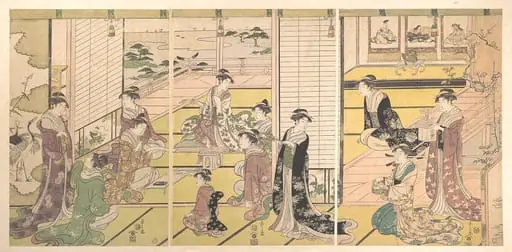 鳥文斎栄之画 和歌三神図|Honoring the Three Gods of Poetry: Women Composing Poems
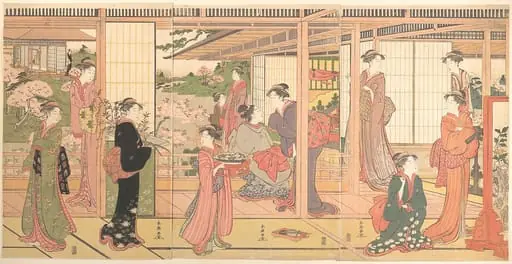 Untitled
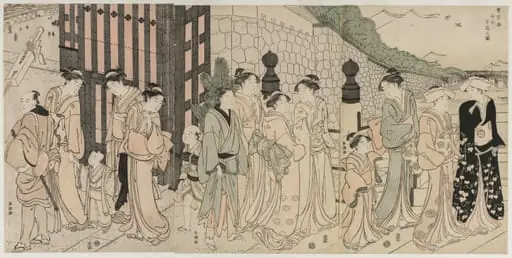 A Thousand Autumns, Ten Thousand Years on Tokiwa Bridge
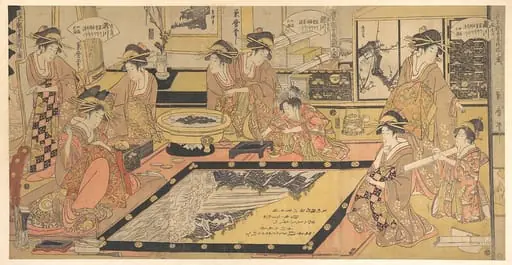 『浅草観音奉掛額之 図』 「扇屋内滝川 富川、粂川、玉川、津川、歌川、清川 め浪、お浪」|A Votive Picture to Be Donated to the Kannon of Asakusa (Asakusa Kannon hō kakegaku no zu), by Takigawa of the Ōgiya, Kamuro Menami and Onami, with Tomikawa, Kumegawa, Tamagawa, Tsugawa, Utagawa, and Kiyokawa
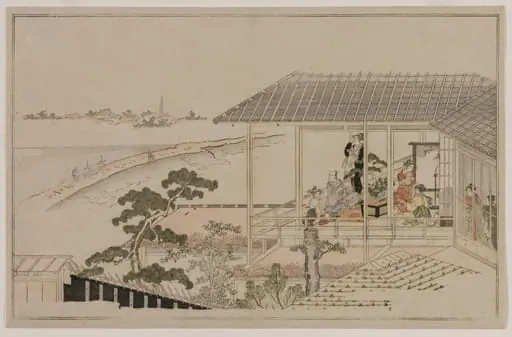 Moonrise Over the Nihon Embankment and the Yoshiwara
![南四季 夏景|The Four Seasons in Southern Edo: A Summer Scene (Minami shiki; Natsu [no] kei), by Utagawa Toyokuni I](https://artifactworldgallery.com/img/utagawa-toyokuni-i--the-four-seasons-in-southern-edo-a-summer-scene-minami-shiki--de8110e8ab2ddcb5-w320.webp) 南四季 夏景|The Four Seasons in Southern Edo: A Summer Scene (Minami shiki; Natsu [no] kei)
南四季 夏景|The Four Seasons in Southern Edo: A Summer Scene (Minami shiki; Natsu [no] kei)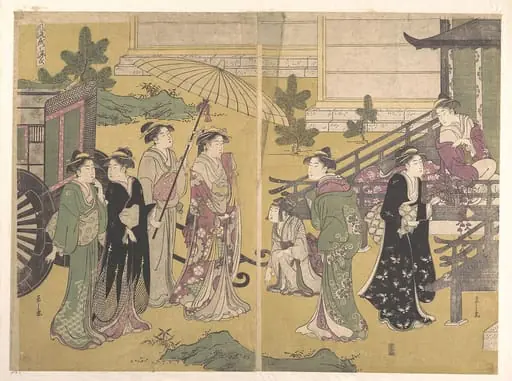 Untitled
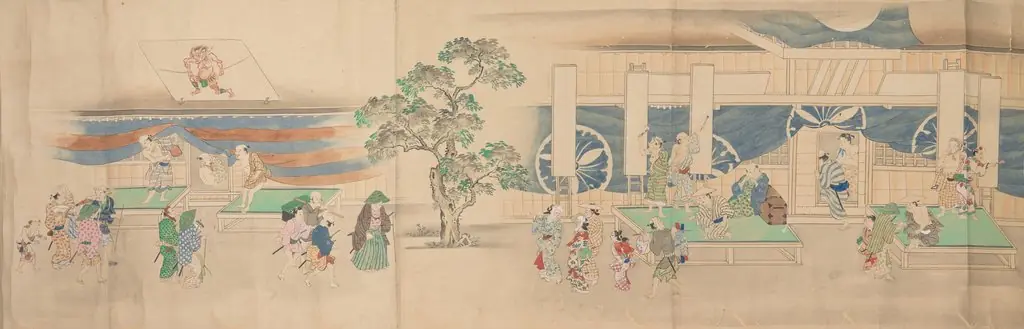 Kabuki Theater
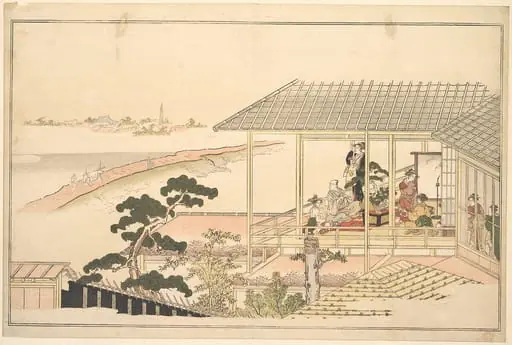 狂月坊|A Party of Merrymakers in a House in the Yoshiwara on a Moonlight Night
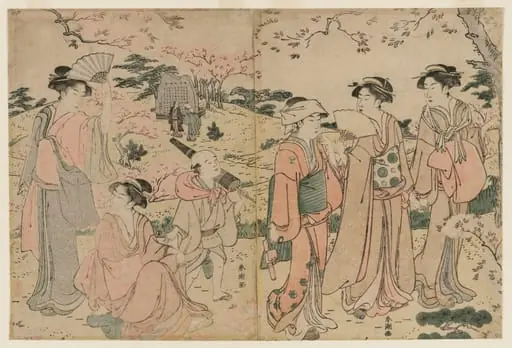 Women Viewing Cherry Blossoms at Asukayama