Artwork
Fishing at Iwaya on Enoshima
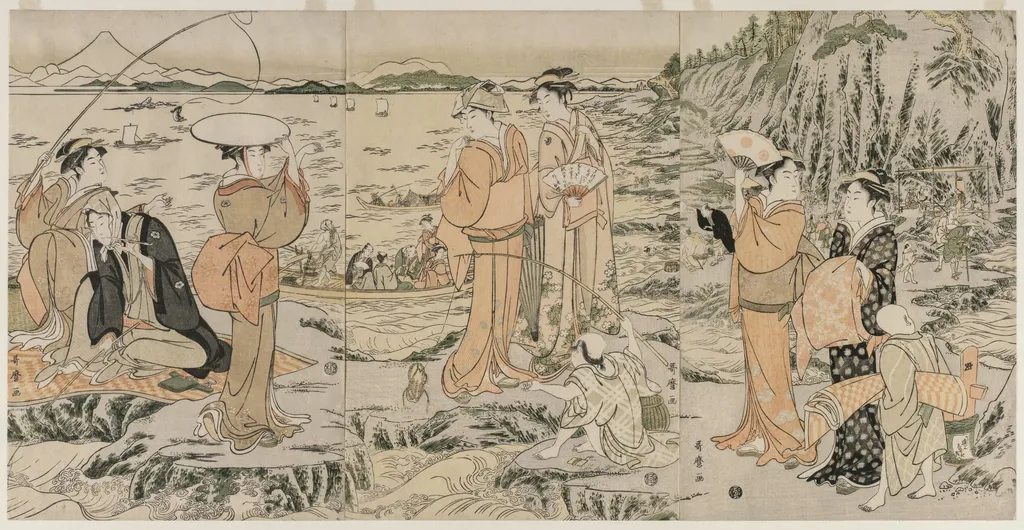
Fishing at Iwaya on Enoshima is a print by the Romanticist artist Kitagawa Utamaro. It dates from 1790 and is held in the collection of the Cleveland Museum of Art. This woodblock print depicts daily activity along the rocky shore of Enoshima, a small island off the coast of Kanagawa Prefecture.
About this work
You see women and children near a rocky shoreline, carrying baskets and bundles.
You see women and children near a rocky shoreline, carrying baskets and bundles. A few small boats float in the water. The print shows everyday life on Enoshima island in the late 1700s.
Tourists then mixed religious trips with fun outings. Benzaiten, the water goddess, lived on Enoshima. The caves nearby were once quiet retreat spots.
Next time you visit, look up Kitagawa Utamaro (Japanese, c. 1754–1806).
Overview
This woodblock print depicts daily activity along the rocky shore of Enoshima, a small island off the coast of Kanagawa Prefecture. It captures a moment in the late 18th century when the site was frequented by visitors blending spiritual pilgrimage with leisure. Figures carry baskets and move along the shoreline, while small boats dot the water, reflecting the island’s dual role as a sacred and social space.
Subject & Meaning
The scene centers on ordinary people engaged in fishing and travel near the Iwaya caves, long associated with the goddess Benzaiten, who presides over water, music, and fortune. While the divine presence is not visually rendered, its influence permeates the setting. The presence of women and children suggests family participation in rituals that had evolved into communal outings, merging devotion with seasonal recreation.
Technique & Style
Executed in the ukiyo-e tradition, the print employs delicate linework and muted color gradients to render the natural contours of rock and sea. Figures are rendered with subtle individuality, their postures and gestures conveying quiet motion rather than theatrical drama. The composition balances horizontal bands of land, water, and sky, grounding the scene in observed reality rather than idealized myth.
History & Provenance
Created around the 1790s by Kitagawa Utamaro, the print emerged during a period of growing urban tourism in the Edo period. Enoshima, accessible from Edo (modern Tokyo), became a favored destination for middle-class travelers. The print likely served as both artistic record and commercial souvenir, reflecting the island’s transition from secluded shrine to accessible cultural site.
Context
By the late 18th century, pilgrimage routes to Enoshima had become intertwined with pleasure excursions, a trend supported by improved transportation and printed guidebooks. The Iwaya caves, once reserved for ascetic meditation, now welcomed lay visitors seeking blessings and scenic views. This shift mirrored broader societal changes in Edo-period Japan, where religious sites increasingly accommodated secular interests.
Legacy
Utamaro’s depiction of Enoshima endures as a quiet testament to the evolving relationship between sacred geography and everyday life. The print preserves a moment when spiritual tradition and popular tourism coexisted without conflict, offering insight into how communities sustained cultural continuity through routine practice rather than grand ceremony.
Artist & collection


 Untitled
 Untitled
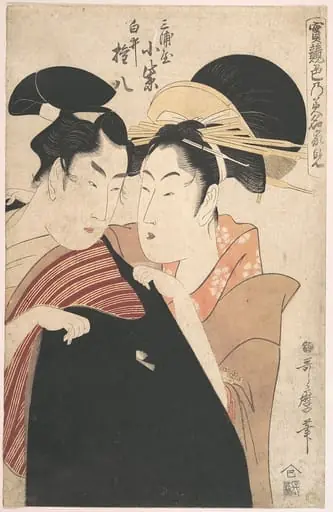 実競色乃美名家見 三浦屋小紫 白井権八|The Lovers Miura-ya Komurasaki and Shirai Gonpachi.
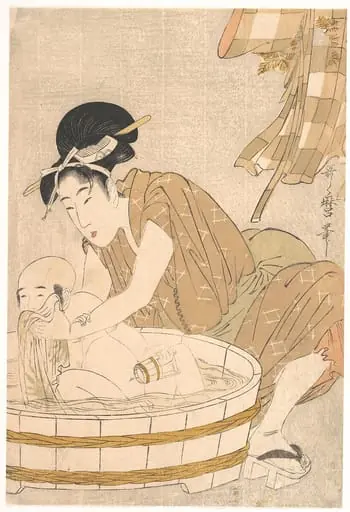 行水|Bathtime (Gyōzui)
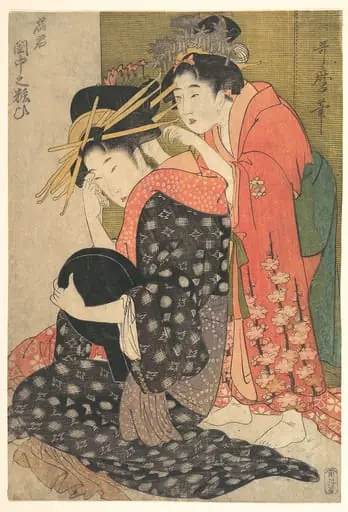 名君 閨中の粧ひ|The Oiran Yoso-oi Seated at Her Toilet
 Untitled
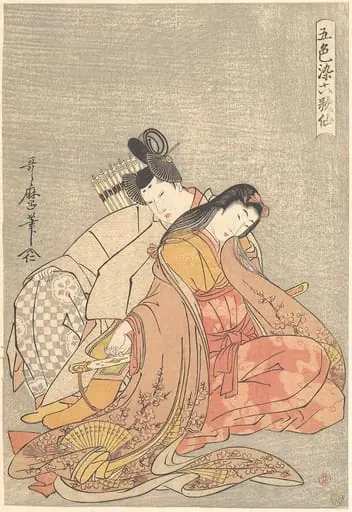 『五色染六歌仙』 在原業平と小野小町|“The Poet Ariwara no Narihira (825–880) and Ono no Komachi,” from the series Five Colors of Love for the Six Poetic Immortals (Goshiki-zome rokkasen)
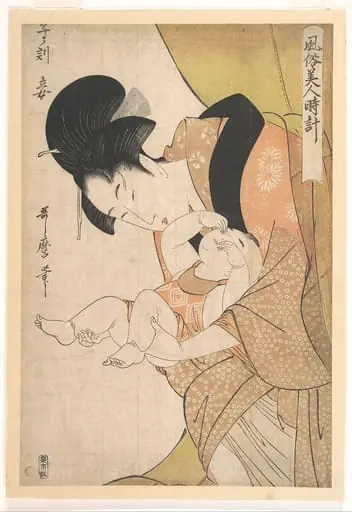 風俗美人時計 子ノ刻 妾|Midnight: Mother and Sleepy Child
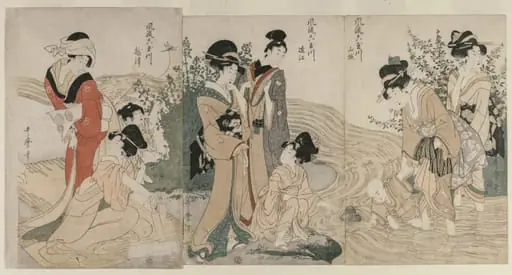 Musashi, Omi, Yamashiro, and Settsu Provinces from the series Fashionable Six Jewel Rivers (Furyu Mu Tamagawa)
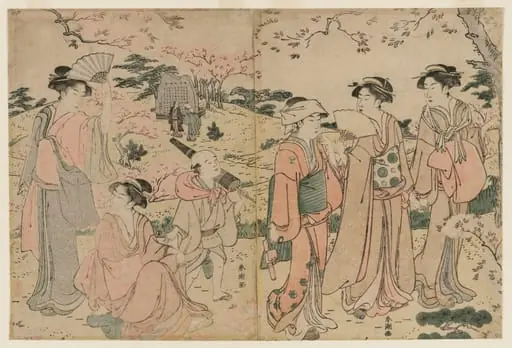 Women Viewing Cherry Blossoms at Asukayama
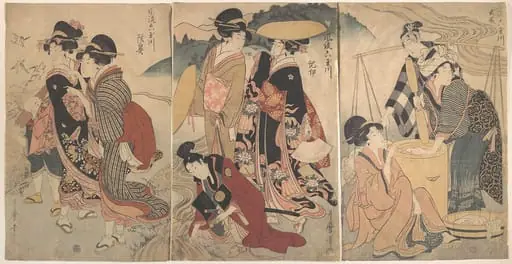 風流六玉川 武蔵 紀伊 陸奥|Women and a Man in the Country; Some pageant(?)
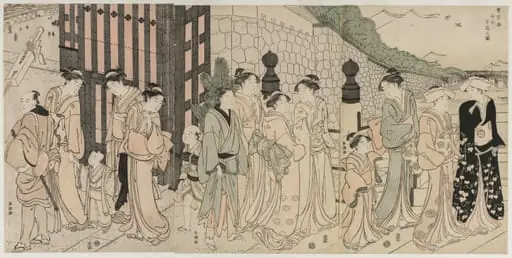 A Thousand Autumns, Ten Thousand Years on Tokiwa Bridge
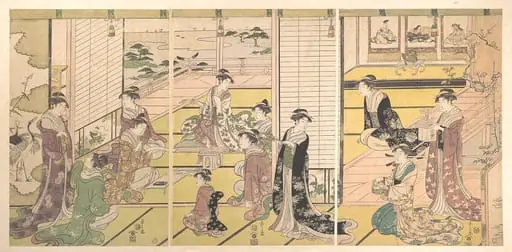 鳥文斎栄之画 和歌三神図|Honoring the Three Gods of Poetry: Women Composing Poems
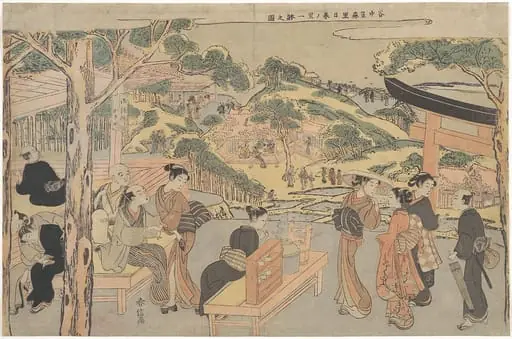 Untitled
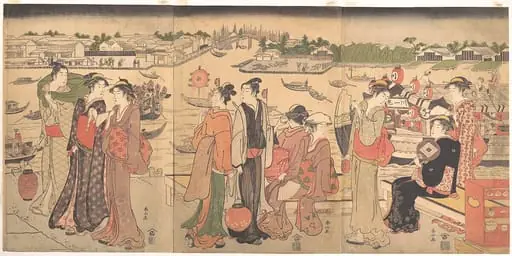 Untitled
 Untitled
 Two Women and a Child Beside a Goldfish Tank
 Passengers in a Ferry Boat on the Sumida River