Artwork
Women with Salt Pails; The Noda Tama River in Mutsu Province, from an untitled series of the Six Tama Rivers
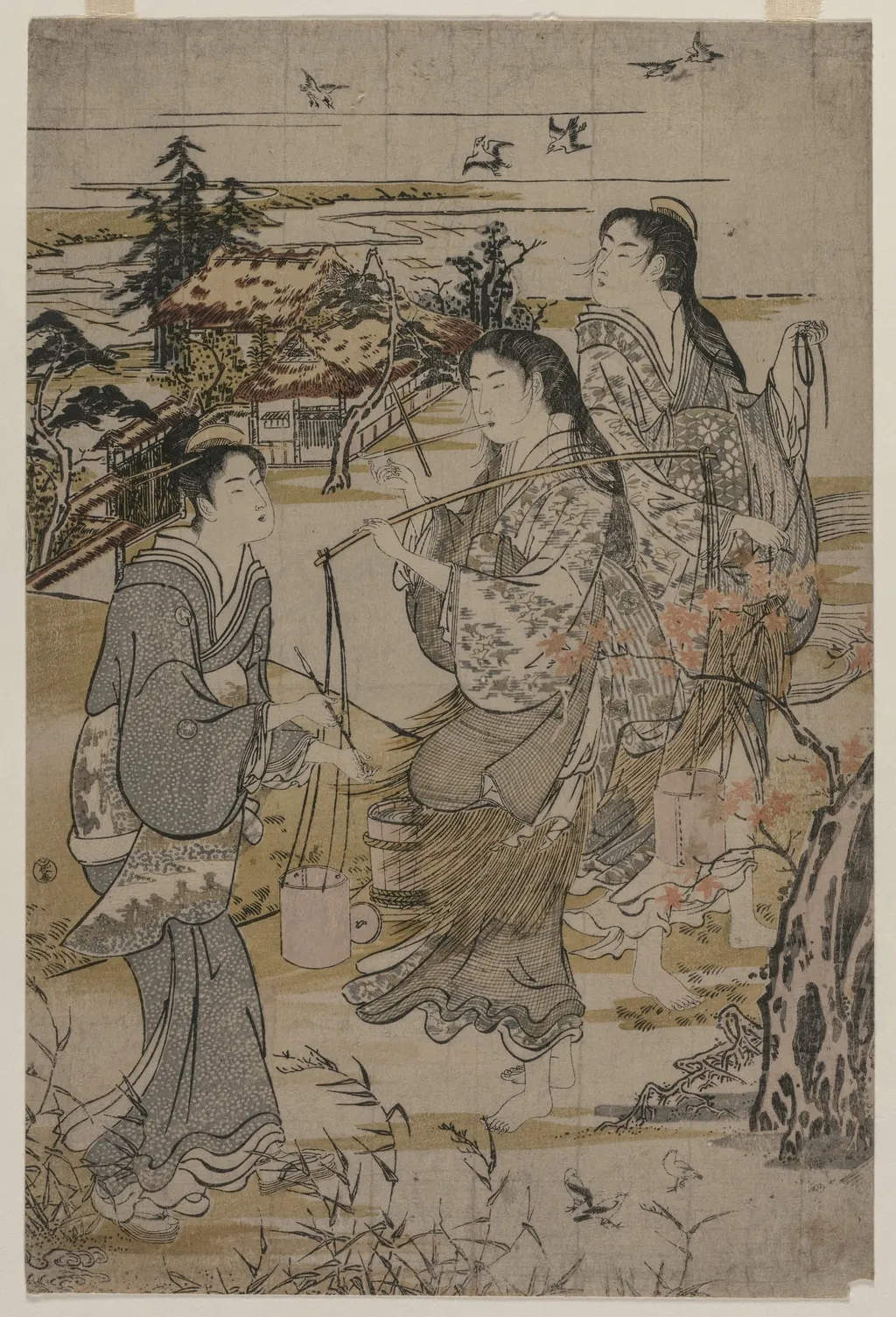
Women with Salt Pails; The Noda Tama River in Mutsu Province, from an untitled series of the Six Tama Rivers is a print by the Romanticist artist Kubo Shunman. It dates from 1784 and is held in the collection of the Cleveland Museum of Art.
About this work
Overview
Created around 1784 by Kubo Shunman, this woodblock print is part of an unnamed series depicting the Six Tama Rivers.
Created around 1784 by Kubo Shunman, this woodblock print is part of an unnamed series depicting the Six Tama Rivers. It portrays a quiet scene of labor along the Noda Tama River in Mutsu Province. The work is held in the collection of The Cleveland Museum of Art and exemplifies the Edo-period tradition of landscape and everyday life prints, blending natural observation with subtle human activity.
Subject & Meaning
Three women stand on the riverbank, each carrying salt pails and staffs, engaged in the daily task of collecting or transporting salt. Their coordinated posture suggests communal labor, common in rural river communities. The scene avoids drama, instead emphasizing routine and harmony with the environment. The presence of a thatched-roof dwelling implies a settled, modest existence tied to the river’s resources.
Technique & Style
Rendered in muted earth tones—browns, tans, and soft grays—the print uses delicate linework and restrained color to evoke tranquility. Shunman employs subtle gradations and minimal detail, allowing the landscape to dominate. The composition is balanced, with figures placed low to emphasize the river and distant trees, reflecting the influence of literati aesthetics on Edo-period printmaking.
History & Provenance
The print originates from a small, now-lost series documenting rivers in the Tama region, likely commissioned for local patrons or circulated as affordable art. It entered the Cleveland Museum of Art’s collection through documented acquisitions in the 20th century. Its survival is notable, as many such prints were ephemeral, used or discarded after brief display.
Context
During the late 18th century, Japanese artists increasingly turned to regional landscapes and ordinary labor as subjects, moving beyond urban pleasure quarters. This print reflects a broader trend of nature-focused imagery tied to local identity and seasonal work. Salt collection along rivers was a practical, widespread activity, especially in areas where sea salt was scarce.
Legacy
Shunman’s work contributes to the understated tradition of Edo-period nature prints that valued quiet observation over spectacle. While not widely known outside specialist circles, this print exemplifies how everyday life was elevated through restrained composition and tonal harmony. It remains a quiet testament to the dignity of rural labor in pre-modern Japan.
Own this work as a print
Artist & collection


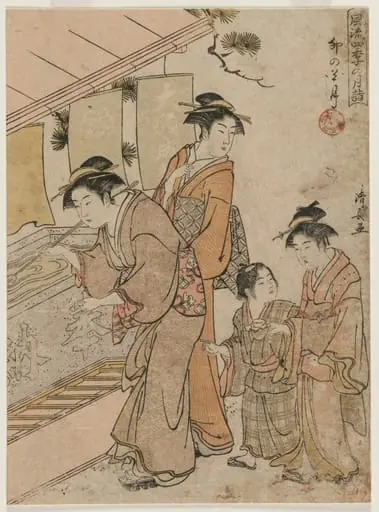 The Fourth Month (from the series Fashionable Monthly Visits to Temples in the Four Seasons)
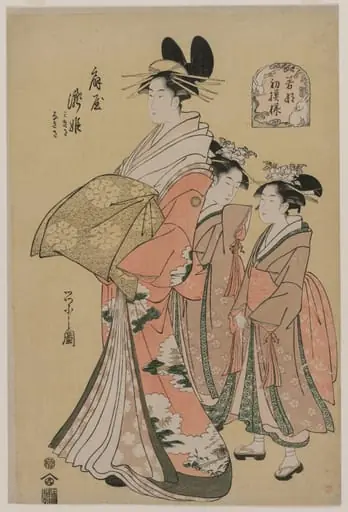 The Courtesan Takihime and Attendants (from the series New Patterns of Young Greens)
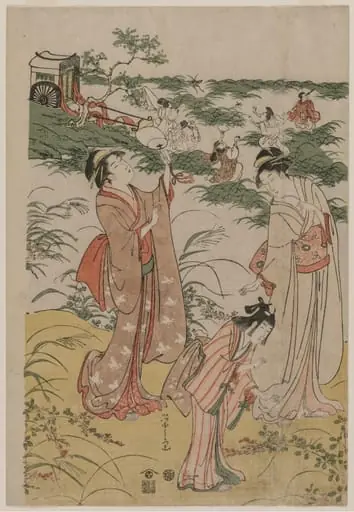 Women Chasing Crickets on an Autumn Moor
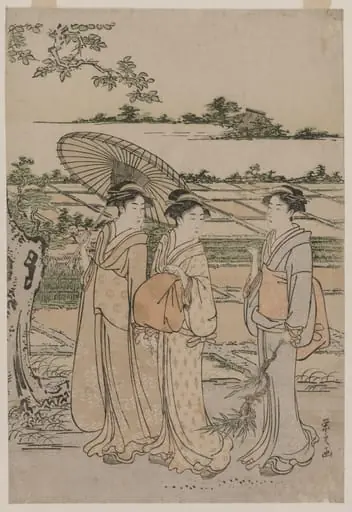 Three Women Strolling in the Countryside
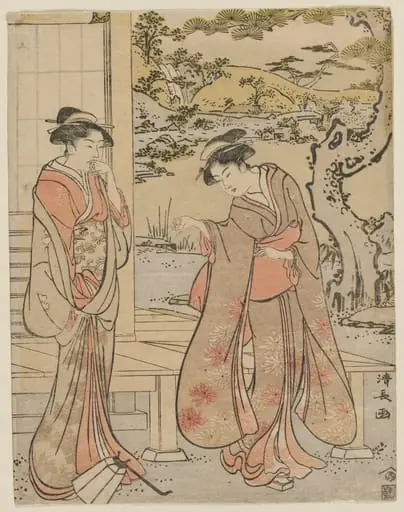 Woman Dropping a Lantern by a Porch
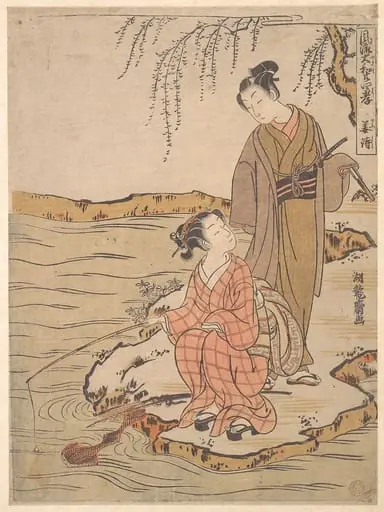 Untitled
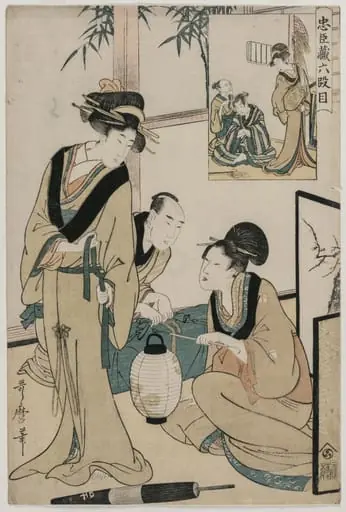 Chushingura: Act VI of The Storehouse of Loyalty
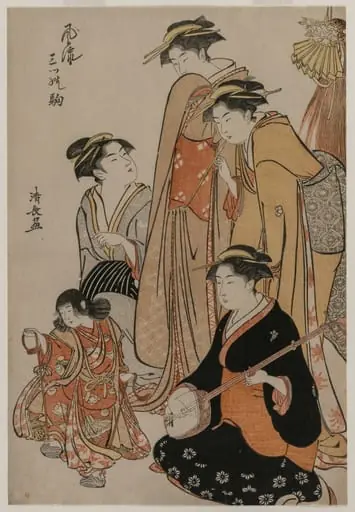 Women Watching a Girl Dance on Shells (From the series Fashionable Presentations of Three Horses)
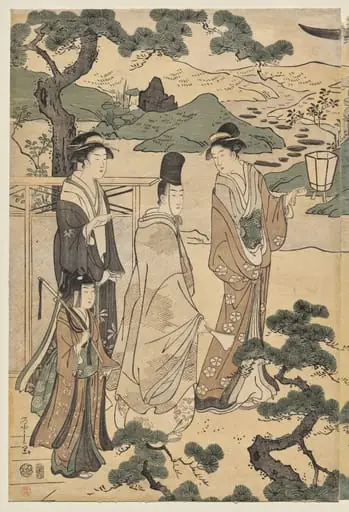 The Matsukaze Chapter of the Tale of Genji (from the series The Tale of Genji in Elegant Modern Dress)