Artwork
楊洲周延画 「千代田之大奥 おたち退」|“Evacuation of the Ladies,” from the series The Inner Precincts of Chiyoda Castle (Chiyoda no Ōoku, Otachinoki)
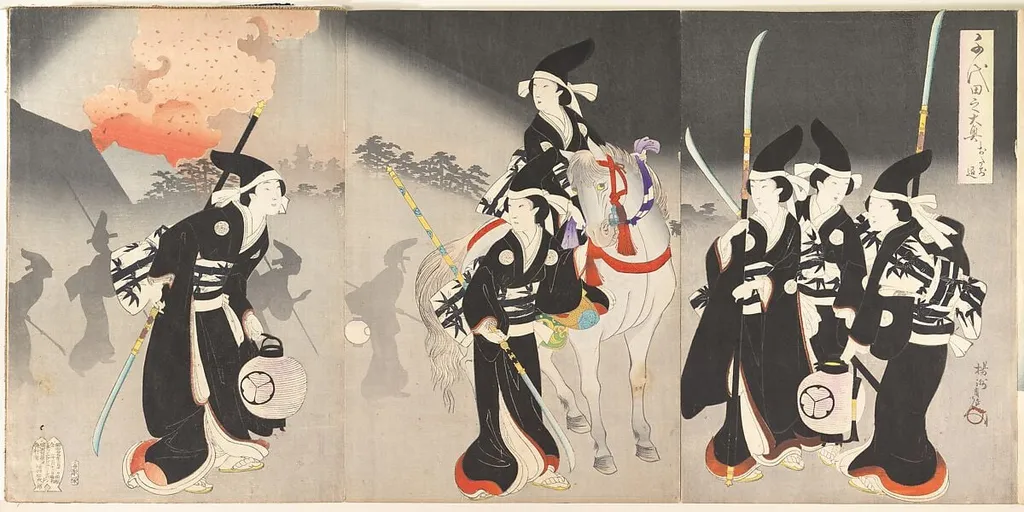
楊洲周延画 「千代田之大奥 おたち退」|“Evacuation of the Ladies,” from the series The Inner Precincts of Chiyoda Castle (Chiyoda no Ōoku, Otachinoki) is an ink print by the Impressionist artist Yōshū (Hashimoto) Chikanobu. It dates from 1896 and is held in the collection of the Metropolitan Museum of Art.
About this work
Overview
The piece is presently in the collection of the Metropolitan Museum of Art.
Created in 1896 by the Japanese printmaker Yōshū Chikanobu, this triptych forms part of a larger album illustrating scenes from the inner precincts of Chiyoda Castle. Executed as a nishiki-e woodblock print, the work measures several sheets joined to depict a moment of organized departure involving court ladies and attendants. The piece is presently in the collection of the Metropolitan Museum of Art.
Subject & Meaning
The image portrays a procession of cloistered women and their retainers, poised to leave the palace grounds. Central to the composition is a horse, while the figures—clad in monochrome garments accented with red—hold swords, fans, and other personal effects, suggesting a formal evacuation. The gestures and glances convey a sense of coordinated movement and quiet urgency within the secluded royal environment.
Technique & Style
Rendered in multicolored woodblock technique, the print employs a restrained palette of black, white, and red against a muted gray backdrop. Varying tones of gray are layered to suggest depth, while fine line work defines the folds of kimono and the texture of the horse’s mane. The composition balances decorative detail with a realistic handling of space, characteristic of late‑Meiji nishiki-e.
History & Provenance
The triptych was produced as part of an album containing over thirty leaves that documented episodes from Chiyoda’s inner chambers. After circulating among private collectors in Japan, the work entered the holdings of the Metropolitan Museum of Art, where it is catalogued as an example of Meiji‑period printmaking.
Context
Chikanobu’s series reflects a broader Meiji interest in documenting traditional court life amid rapid modernization. By focusing on the secluded world of the Ōoku—the women’s quarters of the shogunal palace—the artist captured a facet of Japanese heritage that was increasingly romanticized as the nation embraced Western influences.
Artist & collection


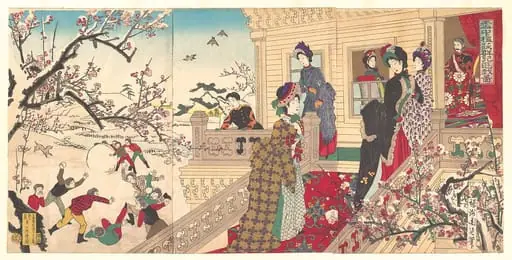 『雪中梅荘群児遊戯 図』|Children Playing in the Snow under Plum Trees in Bloom (Secchū baisō gunji yūgi zu)
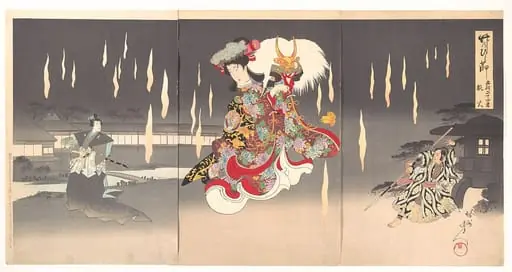 Untitled
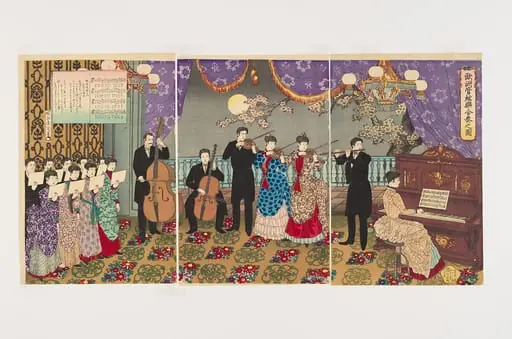 『欧州管絃楽合奏之図』|Concert of European Music (Ōshū kangengaku gassō no zu)
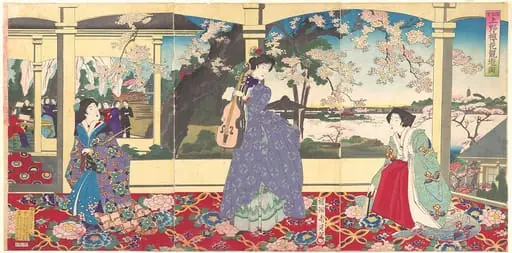 『踏舞会 上野桜花観 遊ノ図』|A Dance Party: Enjoying Cherry Blossom Viewing at Ueno (Tōbukai Ueno ōka yūran no zu)
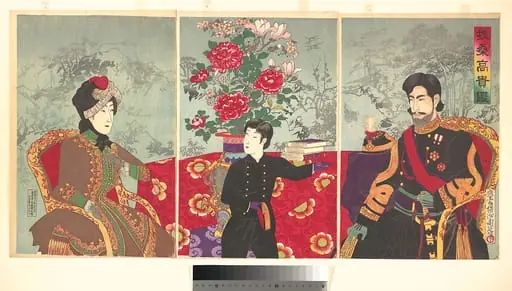 『扶桑高貴鑑』|A Mirror of Japan’s Nobility: The Emperor Meiji, His Wife, and Prince Haru (Fūsō kōki kagami)
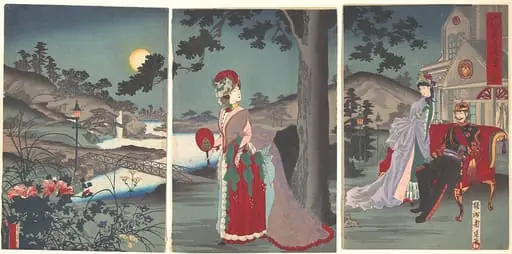 『高貴納涼ノ図』|Nobility in the Evening Cool (Koki nōryō no zu)
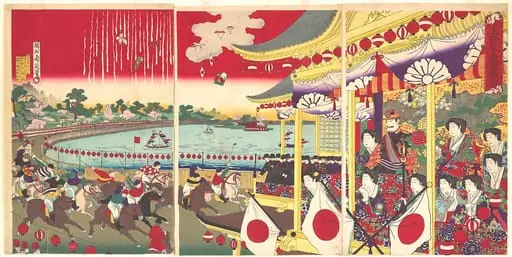 『上野不忍競馬図』|View of the Horse Track at Shinobazu in Ueno Park (Ueno shinobazu keiba zu)
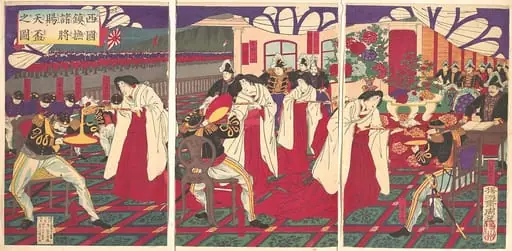 西国鎮静撫諸将天杯賜之図|Illustration of the Commanders who Pacified Western Japan, Receiving the Emperor's Gift Cups (Saigoku chinbu shoshō tenpai o tamau no zu)
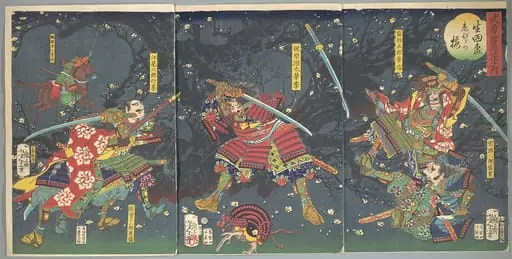 武勇雪月花之内 ゑびらの梅|Plum Blossoms in the Forrest of Ikuta, from the series Bravery-Beauty of the four seasons (Buyū setsugekka no uchi-Ikuta no mori, Ebira no ume)
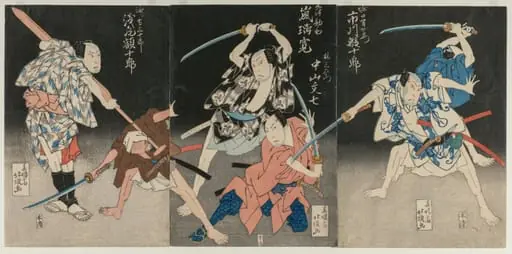 Ichikawa Ebijūrō II as Horiguchi Manzaemon (right), Arashi Rikan II as Kizu Kansuke, Nakayama Bunshichi III as Hayashi Sanzemon (center), and Asao Gakujurō as the Ferryman Sanjūrō (left) from the Kabuki Play "Eight Views of the Kizu River by Boating Song"
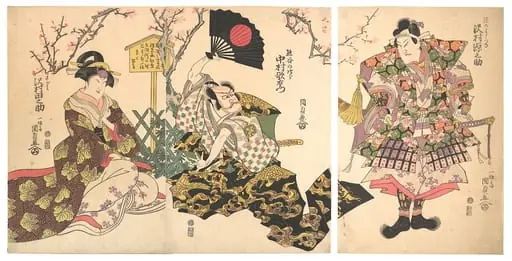 Untitled
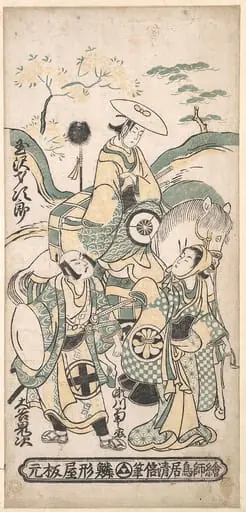 Untitled
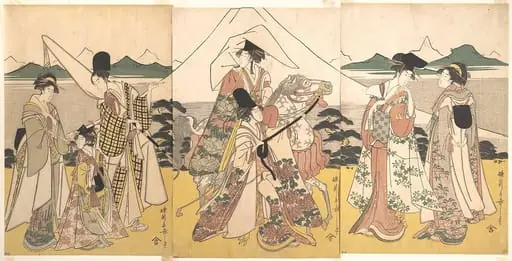 Untitled
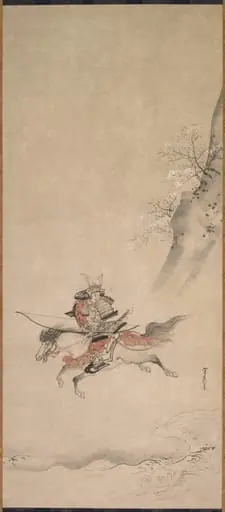 A Samurai on Horseback
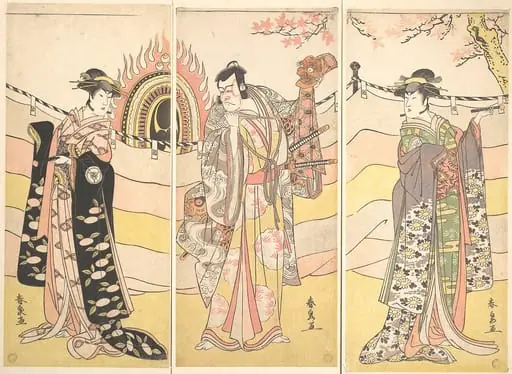 Untitled
 Untitled
 Untitled
 Untitled
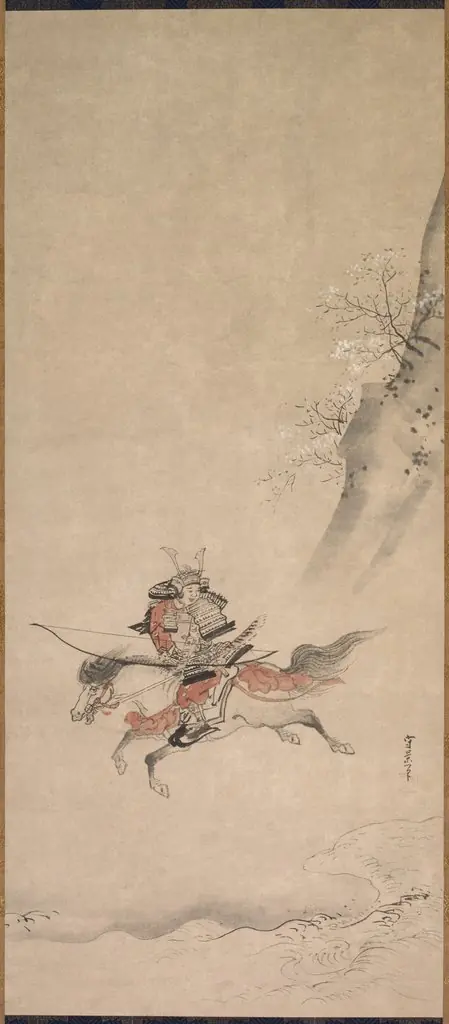 A Samurai on Horseback
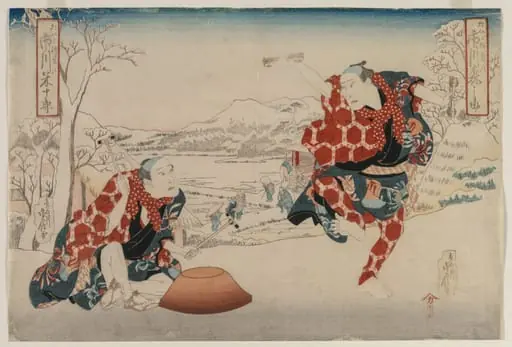 Ichikawa Norinosuke and Ichikawa Yonejuro as Morihachi and Yonehachi, Two Comedians