Artwork
Junigatsu|The Twelfth Month: December
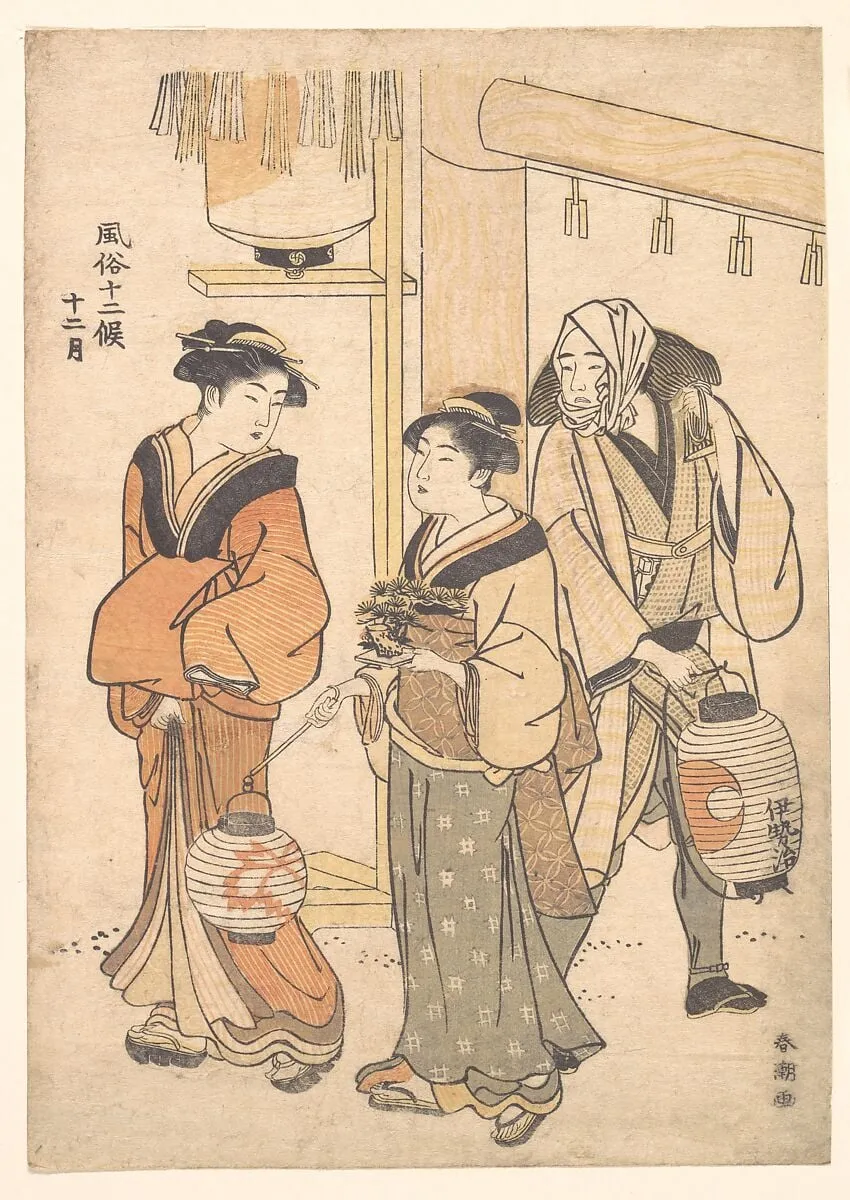
Junigatsu|The Twelfth Month: December is an ink print by the Romanticist artist Katsukawa Shunchō. It dates from 1788 and is held in the collection of the Metropolitan Museum of Art.
About this work
Overview
Created in 1788 by Katsukawa Shunchō, this woodblock print is part of a series depicting the months of the year. Rendered in ink and color on paper, it captures a quiet winter moment in a domestic setting. The composition balances figures and architectural elements, emphasizing seasonal atmosphere over narrative action. The print is now in the collection of The Metropolitan Museum of Art.
Subject & Meaning
The presence of brushes on a shelf implies a scholarly or artistic environment, possibly hinting at the quiet contemplation associated with the year’s end.
Three figures are arranged in a quiet, intimate scene: two women in heavy robes, one holding a bundle and the other a small plant, suggest preparation for winter or a ritual offering. A man carries a large paper lantern, a common tool for nighttime illumination in cold months. The presence of brushes on a shelf implies a scholarly or artistic environment, possibly hinting at the quiet contemplation associated with the year’s end.
Technique & Style
The print employs fine linework and subtle color gradations typical of late 18th-century ukiyo-e. The robes and lantern are detailed with delicate patterns, while the background elements—brushes, a half-open door—are rendered with restraint, creating depth without clutter. The use of muted tones and soft contrasts reinforces the chill of December, aligning with the series’ seasonal themes.
History & Provenance
Produced during the late Edo period, the print belongs to a known series of monthly scenes by Shunchō, though few examples survive. It entered The Metropolitan Museum of Art’s collection through established acquisition channels in the 20th century. Its preservation reflects its status as a representative work of genre-focused woodblock printing from the period.
Context
In Edo-period Japan, monthly series were popular in print culture, often tied to seasonal customs and aesthetic ideals. The inclusion of everyday objects like paper lanterns and brushes reflects a growing interest in domestic life among urban audiences. This print aligns with broader trends that elevated ordinary moments into subjects worthy of artistic attention.
Legacy
Though less widely known than contemporaries like Hiroshige or Hokusai, Shunchō’s monthly prints contribute to the understanding of how Edo artists captured time and routine. This work exemplifies the quiet dignity assigned to winter’s end in Japanese visual culture, influencing later depictions of seasonal life in print and painting.
Artist & collection
Artist
Katsukawa Shunchō lived in Edo (now Tokyo) during the late 1700s, a time when floating-world prints—colorful scenes of theater, courtesans, and everyday life—were all the rage.

 四代目松本幸四郎とその家庭|The Kabuki Actor Matsumoto Kōshirō IV
 Untitled
 Untitled
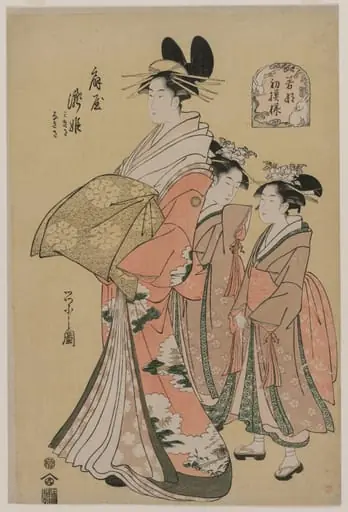 The Courtesan Takihime and Attendants (from the series New Patterns of Young Greens)
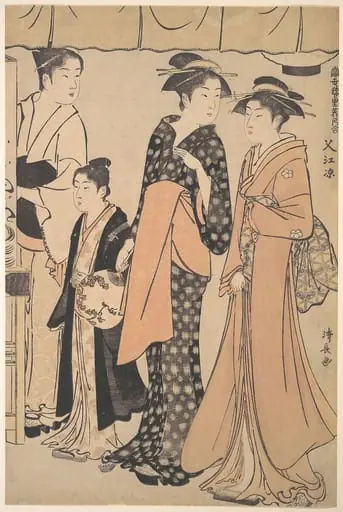 Sako no Suzumi|Cooling Off at Nakazu
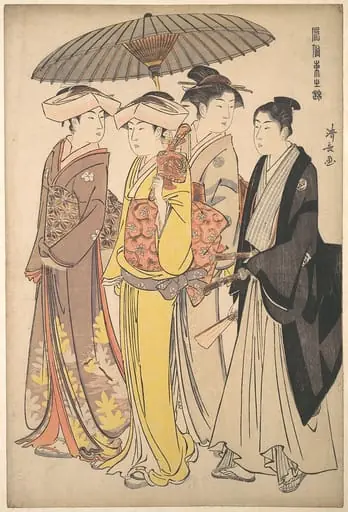 「風俗東之錦」 武家の息女と侍女と若党 |A Lady from a Samurai Household with Three Attendants, from the series A Brocade of Eastern Manners (Fūzoku Azuma no nishiki)
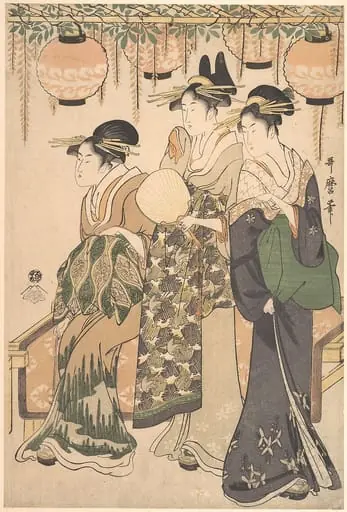 藤棚下の遊女たち|Courtesans Beneath a Wisteria Arbor (Fuji dana shita no yūjo tachi)
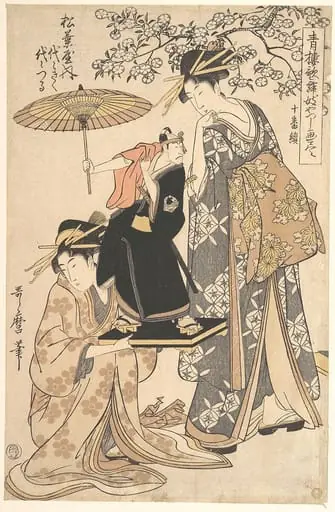 青楼歌舞妓やつし画尽 十番続|The Oiran Yoyogiku of Matsubaya Standing under a Cherry Tree
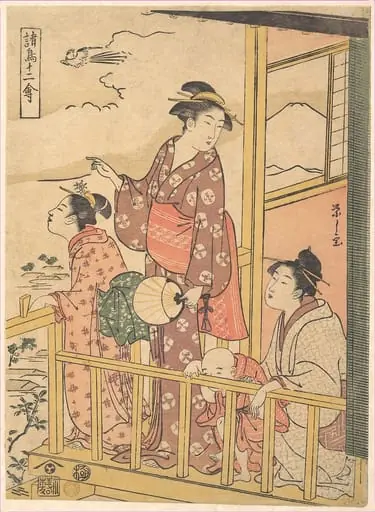 鳥文斎栄之画 「諸鳥十二禽」 尾長鳥|A Long-Tailed Fowl (Onagadori), from the series Twelve Assorted Birds (Shochō jūnikin)
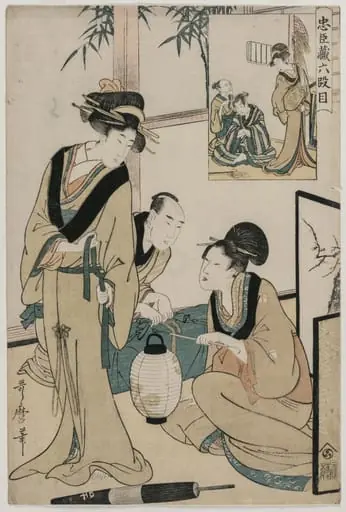 Chushingura: Act VI of The Storehouse of Loyalty