Artwork
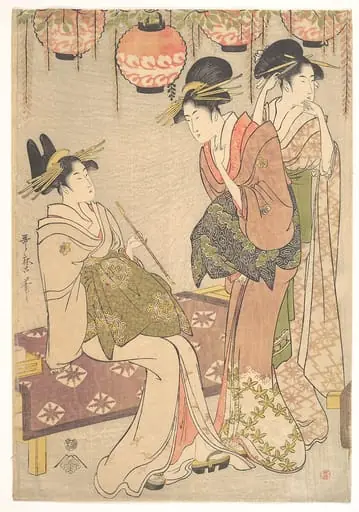
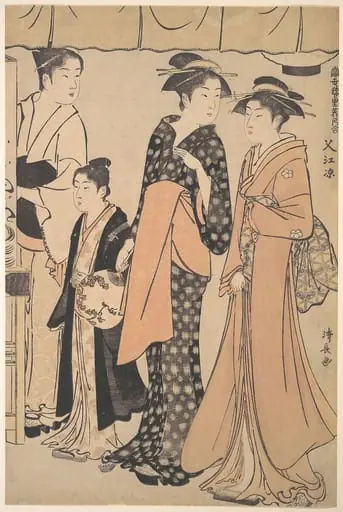
藤棚下の遊女たち|Courtesans Beneath a Wisteria Arbor (Fuji dana shita no yūjo tachi)
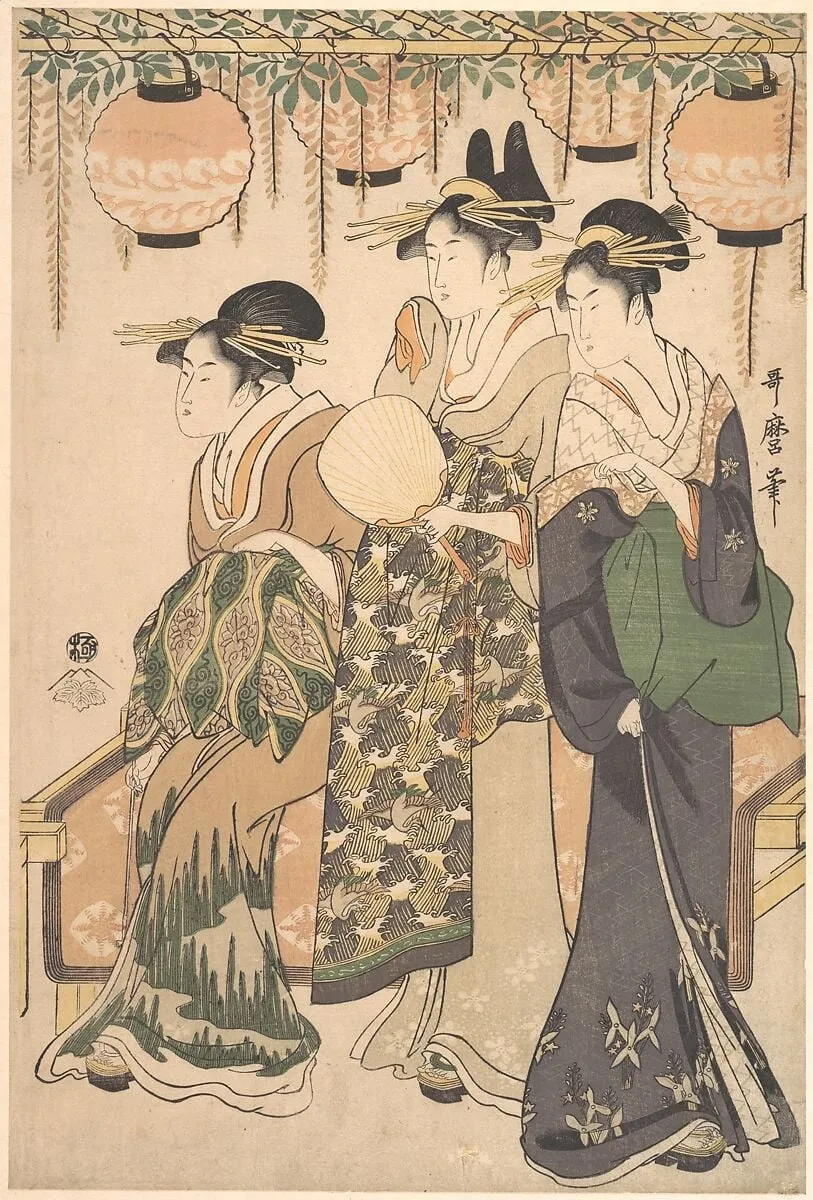
藤棚下の遊女たち|Courtesans Beneath a Wisteria Arbor (Fuji dana shita no yūjo tachi) is an ink print by the Romanticist artist Kitagawa Utamaro. It dates from 1795 and is held in the collection of the Metropolitan Museum of Art.
About this work
Overview
Courtesans Beneath a Wisteria Arbor is a woodblock print by Kitagawa Utamaro, dating to circa 1795. Executed in ink and color on paper, it is a representative example of Japanese genre scene prints from its era.
Subject & Meaning
The print depicts three courtesans standing under a decorated arbor, adorned with hanging lanterns and leafy branches. Their attire and hairstyles reflect the fashion of the time, with high-styled hair, combs, fans, and intricately patterned robes.
Technique & Style
Utamaro employed flat colors with sharp outlines, characteristic of contemporary Japanese woodblock prints. The detailed patterns on the women’s robes and the arbor’s decorations showcase the artist’s attention to visual detail.
History & Provenance
The work is part of The Metropolitan Museum of Art’s collection, though specific details of its provenance before acquisition are not provided here.
Context
Created in the late 18th century, this print reflects the aesthetic and social interests of Edo-period Japan, particularly in its portrayal of courtesans, a popular subject in ukiyo-e art.
Legacy
As a work by Kitagawa Utamaro, it contributes to the artist’s notable output in the ukiyo-e genre, influencing later depictions of everyday and elite life in Japanese art.
Artist & collection


 Untitled
 Untitled
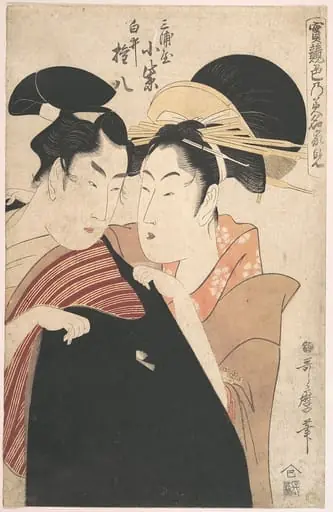 実競色乃美名家見 三浦屋小紫 白井権八|The Lovers Miura-ya Komurasaki and Shirai Gonpachi.
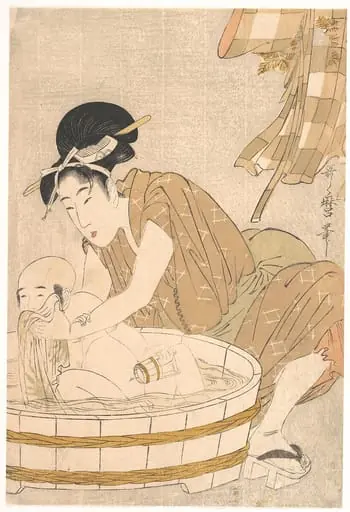 行水|Bathtime (Gyōzui)
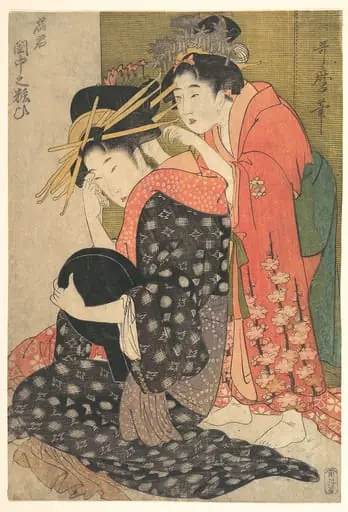 名君 閨中の粧ひ|The Oiran Yoso-oi Seated at Her Toilet
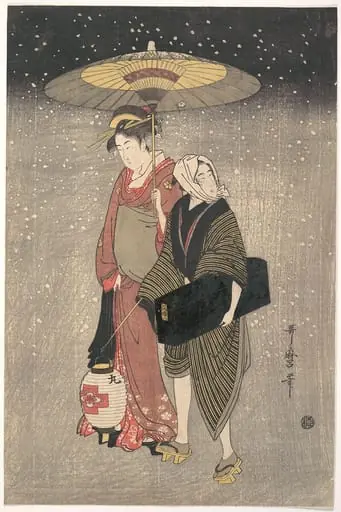 Untitled
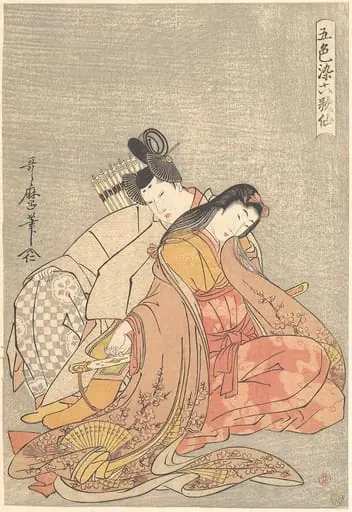 『五色染六歌仙』 在原業平と小野小町|“The Poet Ariwara no Narihira (825–880) and Ono no Komachi,” from the series Five Colors of Love for the Six Poetic Immortals (Goshiki-zome rokkasen)
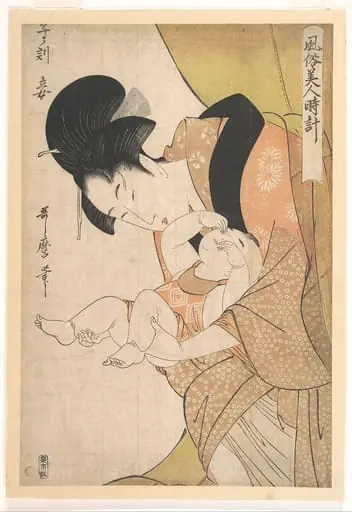 風俗美人時計 子ノ刻 妾|Midnight: Mother and Sleepy Child
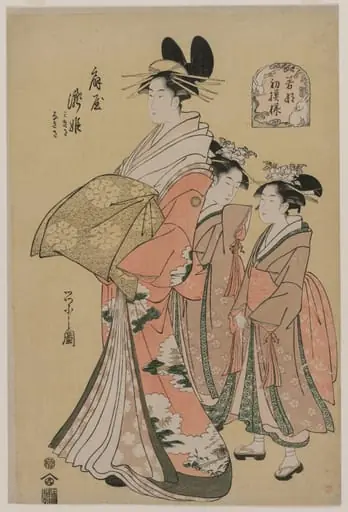 The Courtesan Takihime and Attendants (from the series New Patterns of Young Greens)
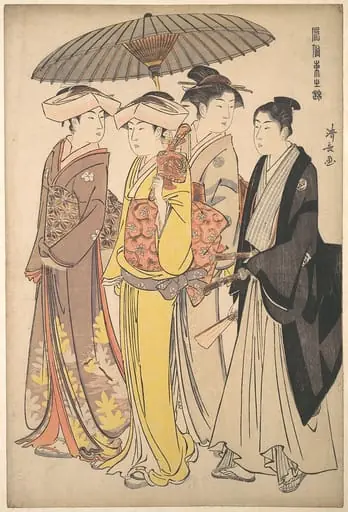 「風俗東之錦」 武家の息女と侍女と若党 |A Lady from a Samurai Household with Three Attendants, from the series A Brocade of Eastern Manners (Fūzoku Azuma no nishiki)
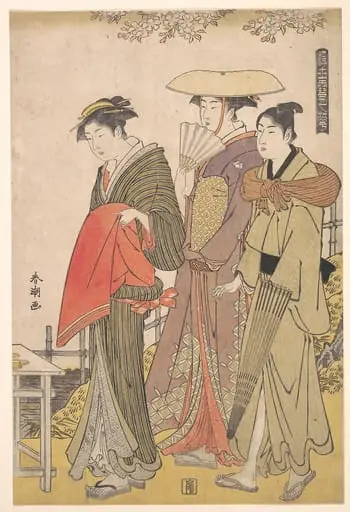 Ukiyoe Ga|The Beauty of the Floating World
 Untitled
 Untitled
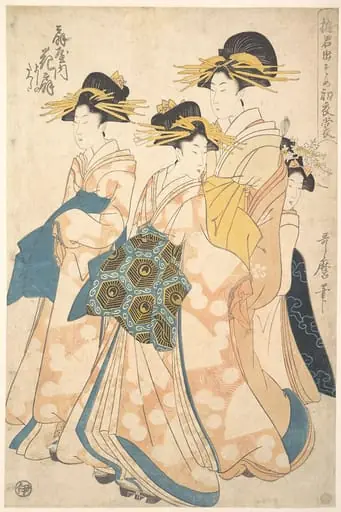 遊君出そめ初衣裳 扇屋内花扇|The Oiran Hanaogi of Ogiya attended by Two Shinzo and Her Kamuro Yoshino
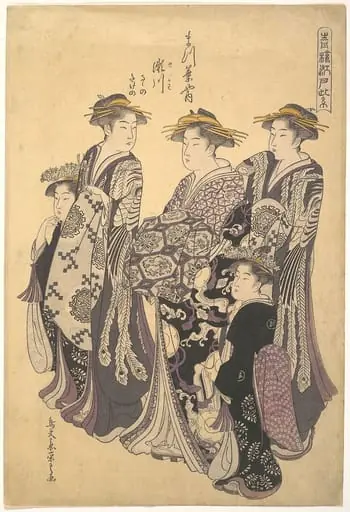 Seiryu Edo|Courtesan District of Edo
 Untitled
 Kitchugi|Geisha of the Tachibana Street
 鳥居清長画 「雛形若菜の初模様 丁子屋の若草・ あさの・みどり」|The Courtesan Wakakusa of the Chōjiya Brothel, and Attendants Asano and Midori, from the series “A Pattern Book of the Year’s First Designs, Fresh as Spring Herbs” (Hinagata wakana no hatsumoyō)
 Untitled
 Sako no Suzumi|Cooling Off at Nakazu