Artwork
Iwai Hanshirō IV as a Woman with a Sword
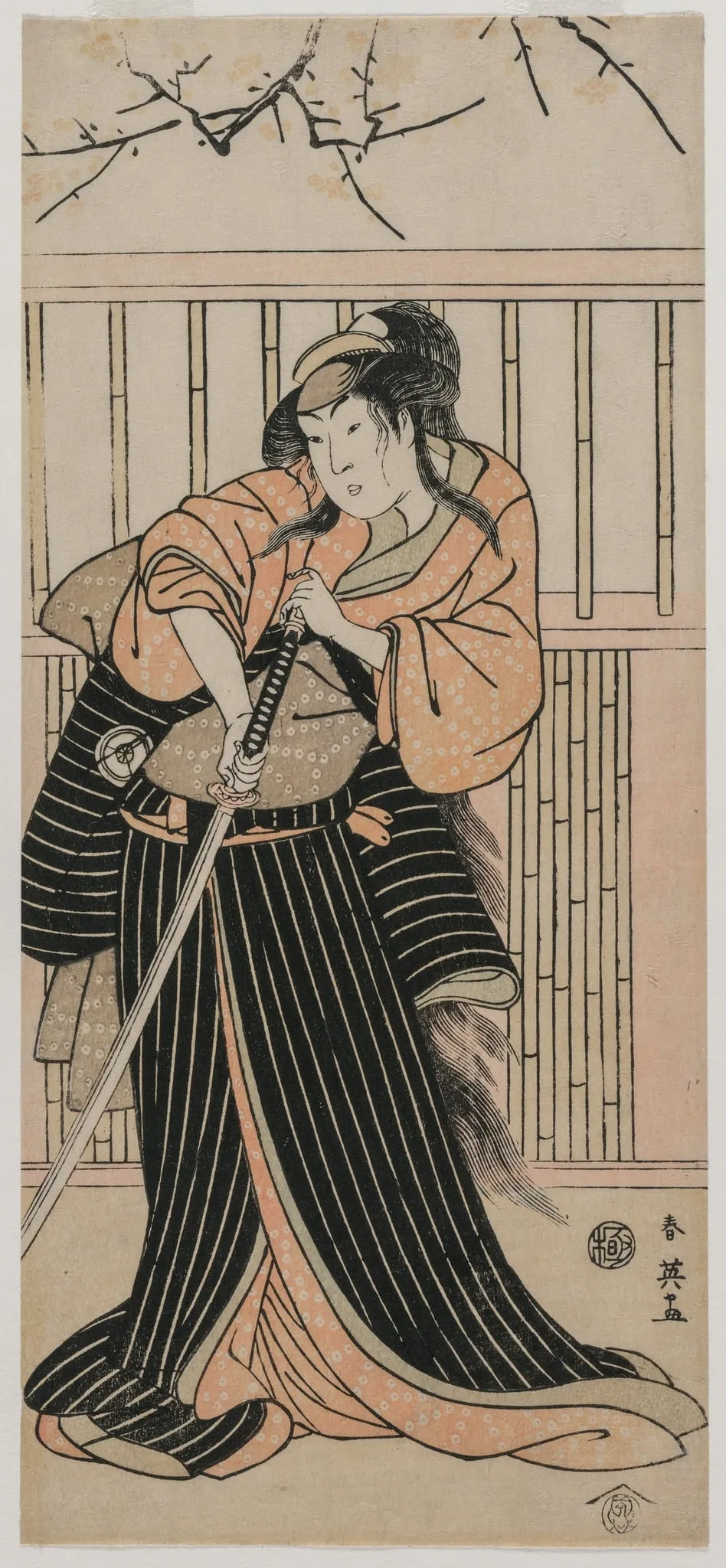
Iwai Hanshirō IV as a Woman with a Sword is a print by the Romanticist artist Katsukawa Shun'ei 勝川春英. It dates from 1791 and is held in the collection of the Cleveland Museum of Art. This ukiyo-e print depicts Iwai Hanshirō IV, a renowned Kabuki actor, portraying a female character armed with a sword.
About this work
Overview
This ukiyo-e print depicts Iwai Hanshirō IV, a renowned Kabuki actor, portraying a female character armed with a sword. The image captures a moment of theatrical tension, blending feminine grace with martial presence. The actor’s costume and accessories reflect the conventions of female-role performance in Edo-period theater, where visual cues replaced biological realism to convey character.
Subject & Meaning
The figure represents a woman of elevated status, possibly a warrior or noblewoman, wielding a sword to suggest agency or vengeance. The juxtaposition of delicate attire and lethal weapon subverts gendered expectations, a common trope in Kabuki drama. The role likely draws from historical or legendary female warriors, reinforcing themes of duty and sacrifice within the narrative tradition.
Technique & Style
The print employs fine linework and layered color to render intricate textile patterns and the texture of the wig. The purple headband, or murasaki no bōshi, is rendered with subtle tonal variation, distinguishing it from the surrounding hair. Background elements are minimal, focusing attention on the figure’s posture and costume, typical of actor portraits in the kabuki-e genre.
History & Provenance
The Cleveland Museum of Art acquired it as part of its broader collection of Japanese woodblock prints, preserving its cultural context.
Iwai Hanshirō IV was a leading onnagata—male actor specializing in female roles—in the early 19th century. The print likely dates to the 1820s or 1830s, during his peak popularity. It was produced as a commercial print for theatergoers, circulated to commemorate performances. The Cleveland Museum of Art acquired it as part of its broader collection of Japanese woodblock prints, preserving its cultural context.
Context
Kabuki actors portraying women continued to wear the purple headband even after ceasing the practice of shaving their foreheads, maintaining a visual link to earlier conventions. This detail signaled authenticity to audiences familiar with theatrical codes. The headband’s color, murasaki, carried associations with nobility, reinforcing the character’s elevated status within the drama’s social hierarchy.
Legacy
This print exemplifies the sophisticated visual language of Kabuki theater, where costume and gesture conveyed narrative beyond spoken text. It remains a key reference for understanding how gender, identity, and performance were negotiated in Edo-period Japan. Such images influenced later artistic representations of Japanese theater and continue to inform scholarly study of performance history.
Artist & collection

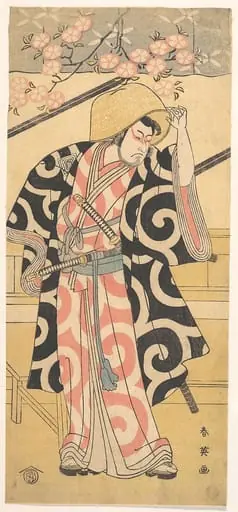
 Actor Ichikawa Yaozō II as Sakuramaru
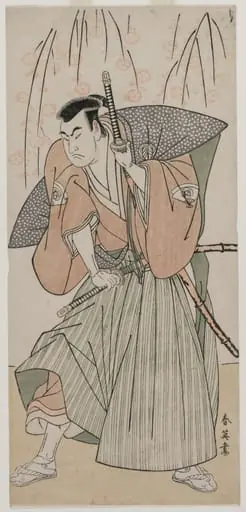 Onoe Matsusuke I as a Samurai Standing Beneath a Cherry Tree
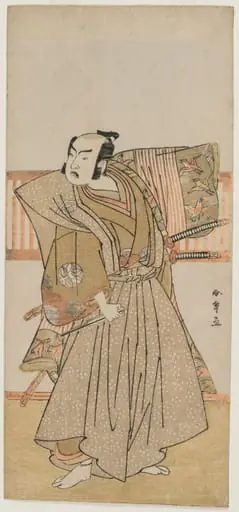 Ichimura Uzaemon IX as Soga no Juro
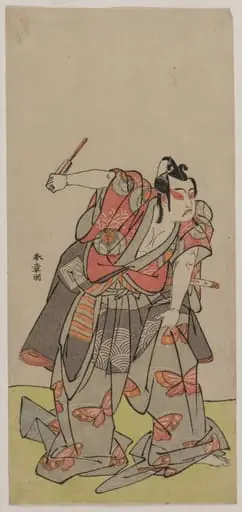 Ichikawa Yaozo II as Soga no Goro
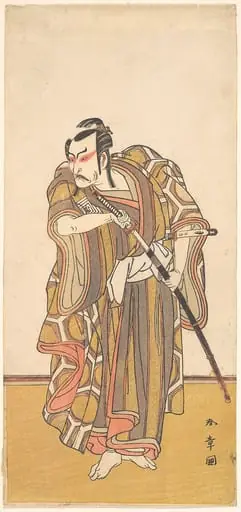 四代目市川團蔵|Kabuki Actor Ichikawa Danzō IV
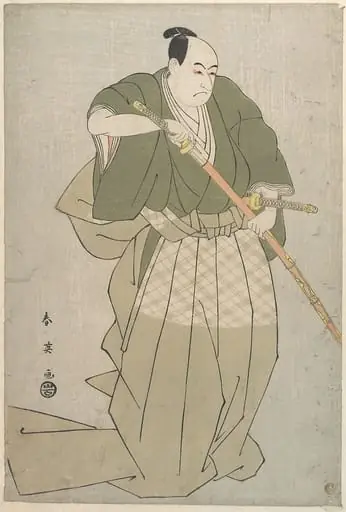 初代市川 男女蔵の桃井若狭之助|The Actor Ichikawa Omezō I as the Young Daimyo Momonoi Wakasanosuke
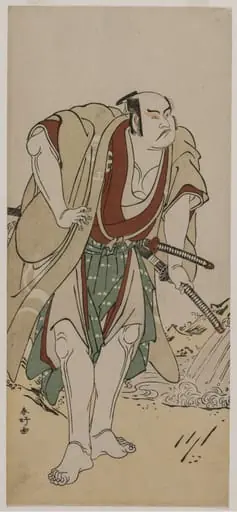 Otani Hiroji III as a Samurai Standing Beside a Stream
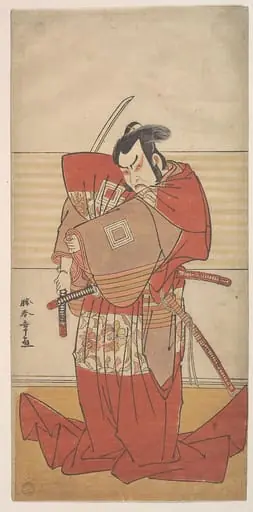 Untitled
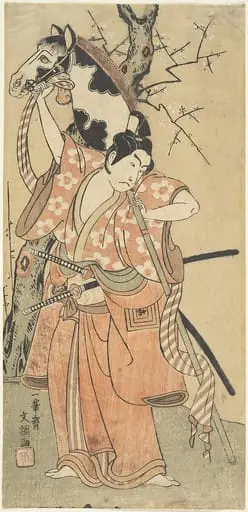 Untitled
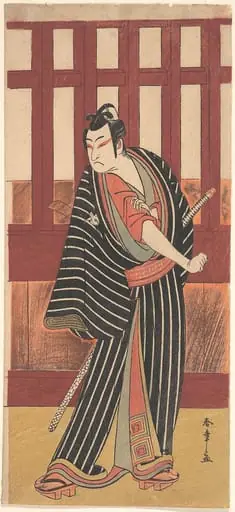 Untitled