Artwork
Untitled
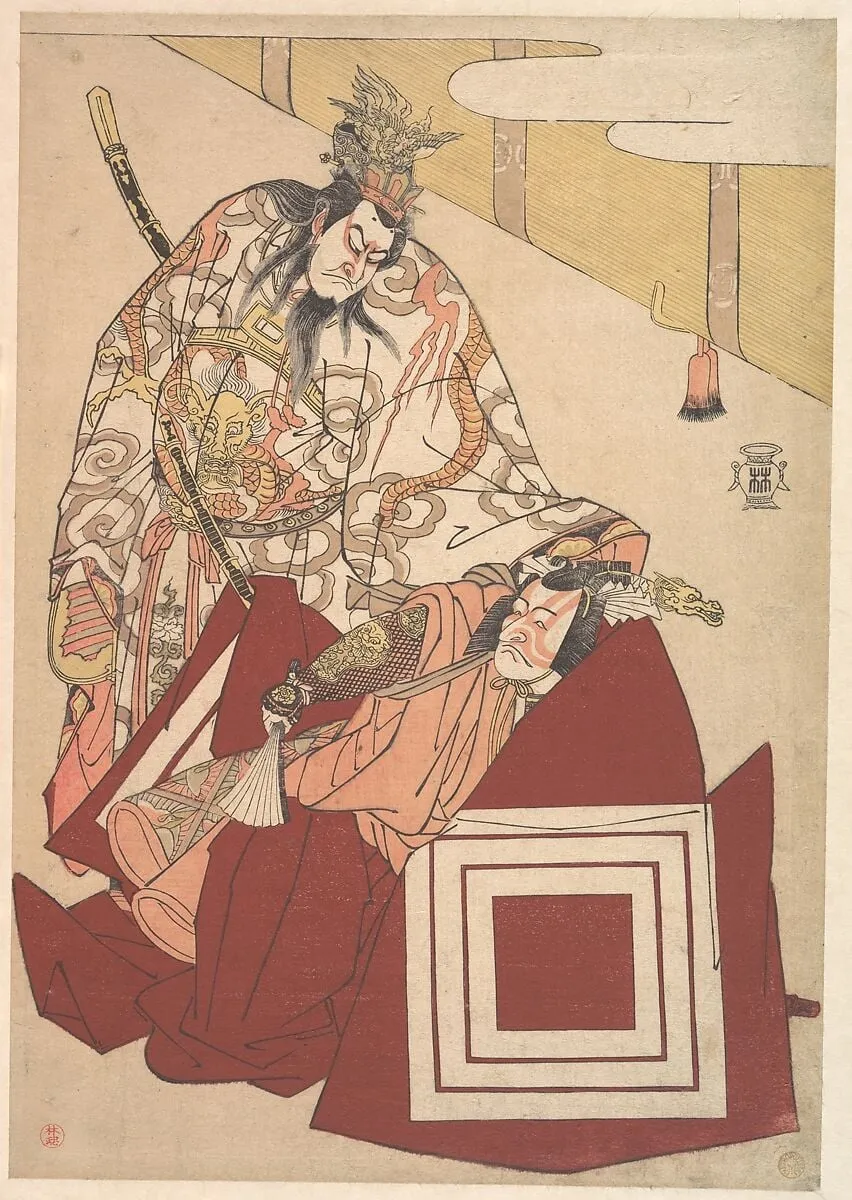
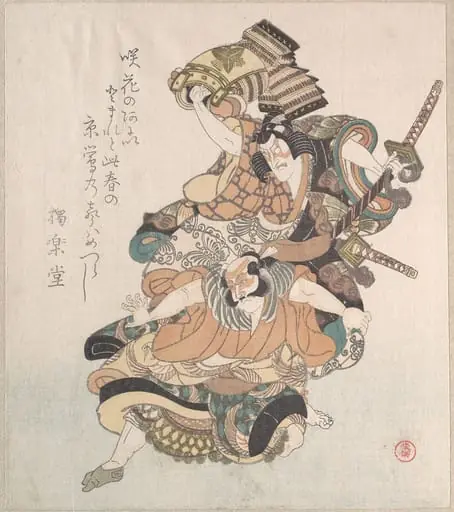
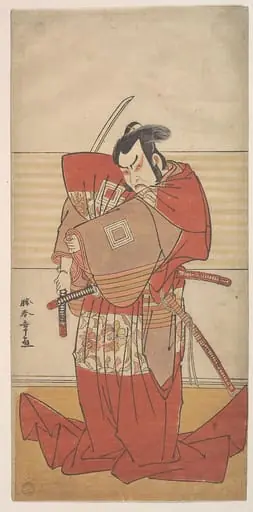
Untitled is an ink print by the Romanticist artist Katsukawa Shunkō. It dates from 1786 and is held in the collection of the Metropolitan Museum of Art.
About this work
Overview
The work exemplifies the ukiyo-e tradition, capturing figures in theatrical attire with bold outlines and flat, saturated hues.
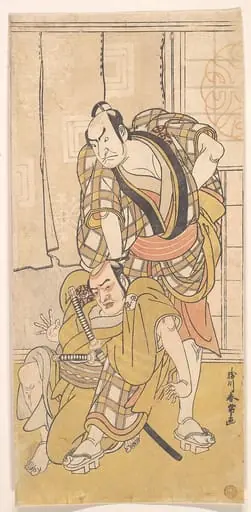
Created around 1786, this woodblock print by Katsukawa Shunkō is rendered in ink and color on paper. It resides in The Metropolitan Museum of Art’s collection as part of its Japanese prints holdings. The work exemplifies the ukiyo-e tradition, capturing figures in theatrical attire with bold outlines and flat, saturated hues. Its composition emphasizes stylized form over naturalism, aligning with contemporary printmaking practices in Edo-period Japan.
Subject & Meaning
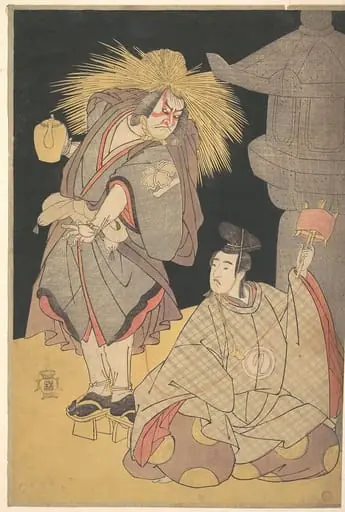
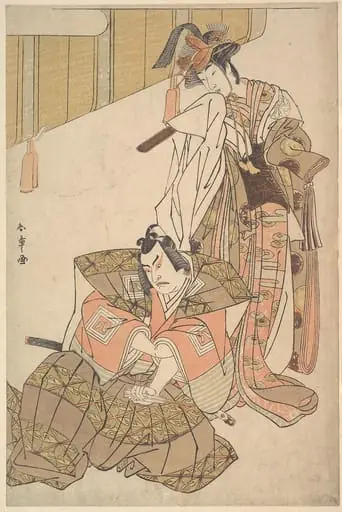
The print depicts two men in elaborate costumes, likely portraying kabuki actors in character. The standing figure, adorned with a feathered crown, holds a sword and fan—attributes suggesting a warrior or noble role. The seated figure, wearing a red hat and also holding a fan, appears as a companion or subordinate. Their postures and attire imply a dramatic moment from a staged narrative, possibly drawn from historical or legendary kabuki repertoire.
Technique & Style
Shunkō employed sharp, clean lines and areas of unmodulated color to define form, typical of ukiyo-e woodblock printing. The use of red, gold, and deep shadow creates contrast without gradient, enhancing the figures’ theatrical presence. The standing actor’s face is partially illuminated, suggesting directional light akin to stage lighting. Simple shapes and minimal detail focus attention on gesture and costume rather than anatomical realism.
History & Provenance
The print was produced during the late 18th century, a period when actor portraits were widely circulated among urban audiences in Edo. As a student of Katsukawa Shunshō, Shunkō contributed to a lineage of printmakers specializing in kabuki imagery. The work entered The Metropolitan Museum of Art’s collection through documented acquisitions of Japanese prints, preserving its place in the historical record of Edo visual culture.
Context
This print reflects the popularity of kabuki theater in Edo, where actor prints served as both artistic expression and promotional ephemera. Audiences collected such images as souvenirs, identifying with popular performers. Shunkō’s style, rooted in the Katsukawa school, emphasized expressive poses and ornate costumes, aligning with the flamboyant aesthetics of the stage. The print thus functions as a bridge between performance and print culture.
Legacy
Shunkō’s work contributes to the broader legacy of ukiyo-e as a medium that documented and shaped popular culture. While less widely known than contemporaries like Utamaro or Hokusai, his prints exemplify the precision and theatricality central to actor portraiture. This piece remains a reference for understanding how printmakers translated live performance into enduring visual form, influencing later generations of Japanese artists.
Artist & collection

Artist
Katsukawa Shunkō spent his life in Edo, where crowded theaters and teahouses buzzed around him.

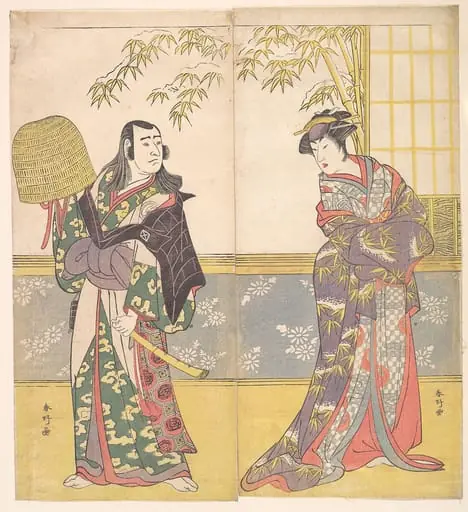 勝川春好画 三代目澤村宗十郎 三代目佐野川市松 |Kabuki Actors Sawamura Sōjūrō III and Sanogawa Ichimatsu III in "A Courtesan’s Mirror for the Eastern Provinces" (Keisei Azuma kagami)
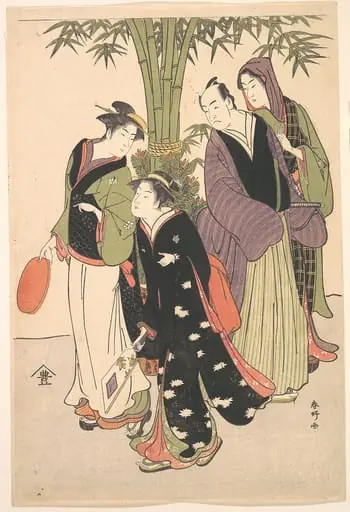 勝川春好画 三代目瀬川菊之丞・二代目市川門之助|Kabuki Actors Segawa Kikunojō III and Ichikawa Monnosuke II and Two Courtesans Celebrating the New Year
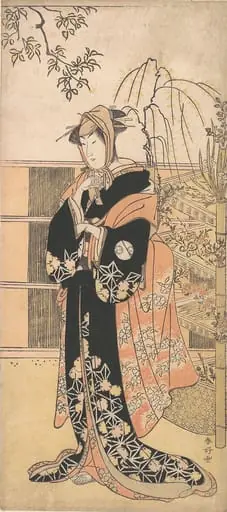 勝川春好画 三代目瀬川菊之丞|Kabuki Actor Segawa Kikunojō III in a Woman’s Role
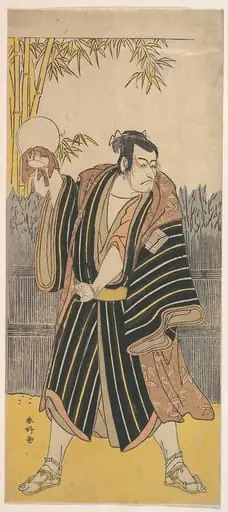 勝川春好画 七代目片岡仁左衛門 五代目市川團十郎|Kabuki Actor Ichikawa Danjūrō V
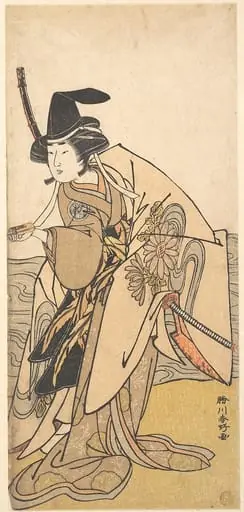 Untitled
 Untitled
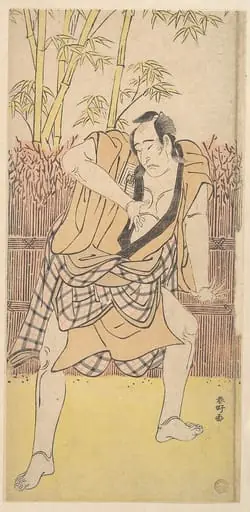 Untitled
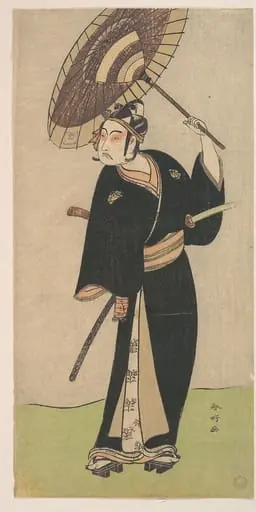 Untitled
 Untitled
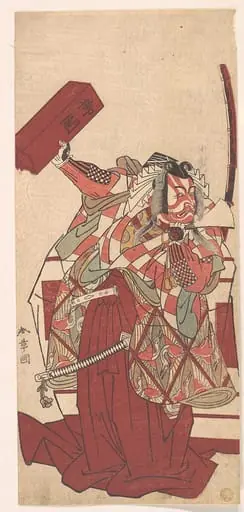 三代目市川海老蔵の篠塚伊賀守定綱|The Actor Ichikawa Ebizō III as Shinozuka Iga no kami Sadatsuna in a Shibaraku Scene
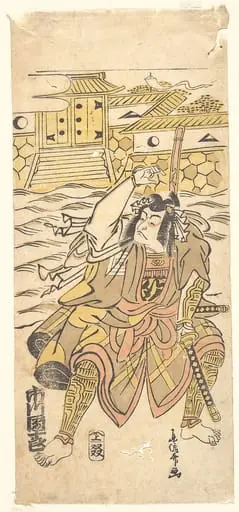 Untitled
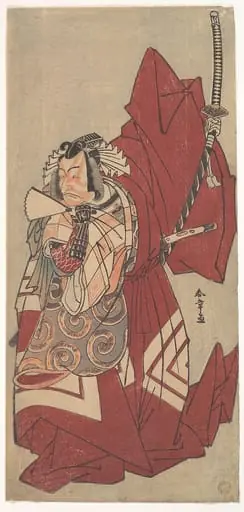 五代目市川団十郎|Kabuki Actor Ichikawa Danjūrō V in a Shibaraku (Stop Right There!) Role as Hannya no Gorō
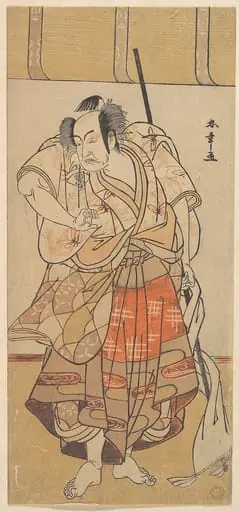 Untitled
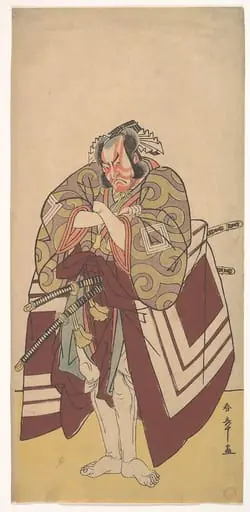 五代目市川団十郎|Kabuki Actor Ichikawa Danjūrō V in a Shibaraku (Stop Right There!) Role
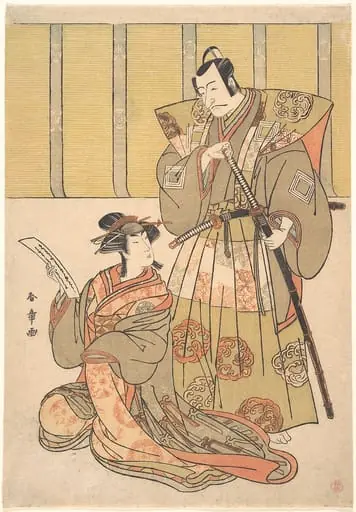 Untitled
 Untitled
 Untitled
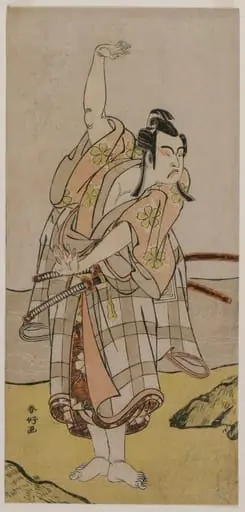 Actor Ichikawa Yaozō II as Sakuramaru
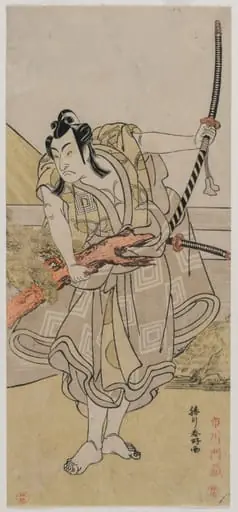 Ichikawa Monnosuke II as Soga no Gorō
 Untitled