Artwork
Untitled
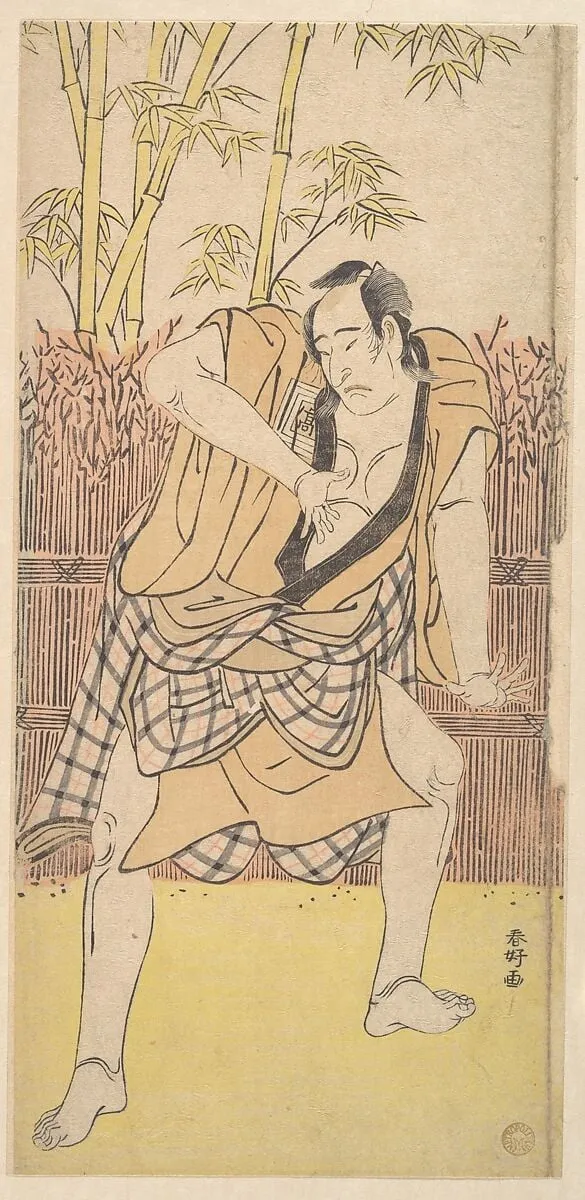
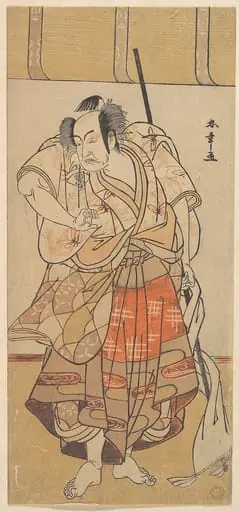
Untitled is an ink print by the Romanticist artist Katsukawa Shunkō. It dates from 1790 and is held in the collection of the Metropolitan Museum of Art.
About this work
Overview
This woodblock print, dated around 1790, is attributed to Katsukawa Shunkō and resides in The Metropolitan Museum of Art’s collection.
This woodblock print, dated around 1790, is attributed to Katsukawa Shunkō and resides in The Metropolitan Museum of Art’s collection. Executed in ink and color on paper, it exemplifies the ukiyo-e tradition of depicting figures in dynamic, everyday moments. The composition centers on a solitary male figure, rendered with restrained elegance and minimal background elements, emphasizing posture and gesture over narrative detail.
Subject & Meaning
The figure, barefoot and clad in a loose robe with a checkered sash, assumes a forward-leaning stance with one arm raised, suggesting motion or emotional intensity. Though the scene lacks explicit context, the posture evokes a moment of tension or transition—perhaps a performer, a traveler, or a figure in ritual. The absence of identifiable symbols invites interpretation grounded in physical expression rather than textual story.
Technique & Style
Shunkō employs clean, flowing lines and soft color gradients to convey movement and form. Subtle shading defines the musculature without heavy modeling, while the bamboo behind is rendered with rapid, curved strokes that suggest wind or growth. The fence or wall in the background uses minimal linear detail, allowing the figure to dominate. Cross-hatching is used sparingly, contributing to depth without overwhelming the flatness characteristic of woodblock aesthetics.
History & Provenance
Created during the late Edo period, the print reflects the flourishing of actor and genre prints in Osaka and Edo. While many works by Shunkō are documented in collections of kabuki-related imagery, this piece lacks a clear theatrical reference, suggesting it may belong to a lesser-known series or personal study. It entered The Met’s collection through established acquisition channels in the 20th century.
Context
In the 1790s, ukiyo-e artists increasingly moved beyond kabuki portraits to explore solitary figures in natural or domestic settings. Shunkō’s work aligns with this trend, blending the expressive potential of the human form with elements of nature like bamboo, which carried connotations of resilience and elegance. The print’s quiet intensity reflects a broader shift toward introspective subjects in late 18th-century Japanese printmaking.
Legacy
Though not among Shunkō’s most widely reproduced works, this print illustrates his sensitivity to gesture and spatial economy. It contributes to the understanding of how ukiyo-e artists conveyed emotion through minimalism, influencing later generations who valued subtlety over spectacle. Its preservation in a major Western institution underscores its role in bridging Japanese print traditions with global art historical discourse.
Artist & collection

Artist
Katsukawa Shunkō spent his life in Edo, where crowded theaters and teahouses buzzed around him.

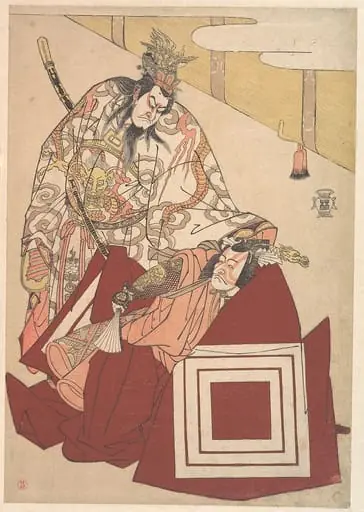 Untitled
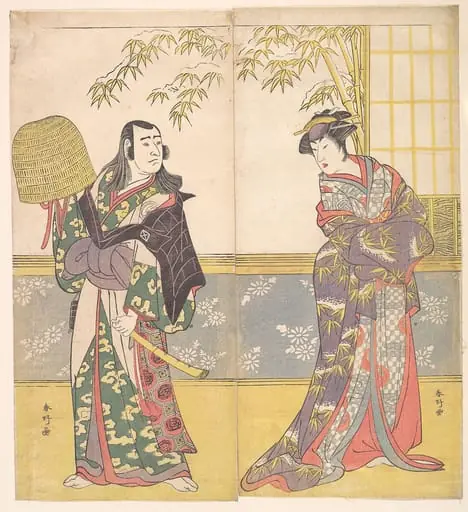 勝川春好画 三代目澤村宗十郎 三代目佐野川市松 |Kabuki Actors Sawamura Sōjūrō III and Sanogawa Ichimatsu III in "A Courtesan’s Mirror for the Eastern Provinces" (Keisei Azuma kagami)
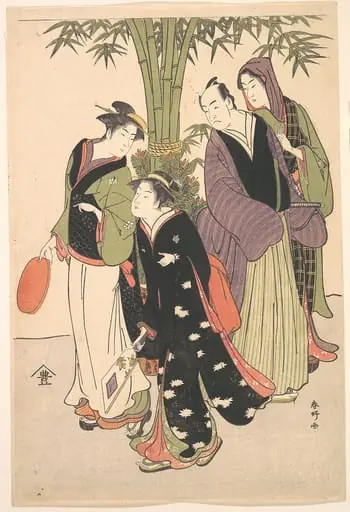 勝川春好画 三代目瀬川菊之丞・二代目市川門之助|Kabuki Actors Segawa Kikunojō III and Ichikawa Monnosuke II and Two Courtesans Celebrating the New Year
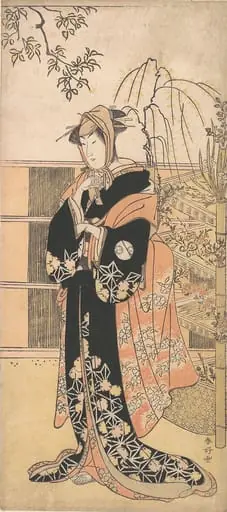 勝川春好画 三代目瀬川菊之丞|Kabuki Actor Segawa Kikunojō III in a Woman’s Role
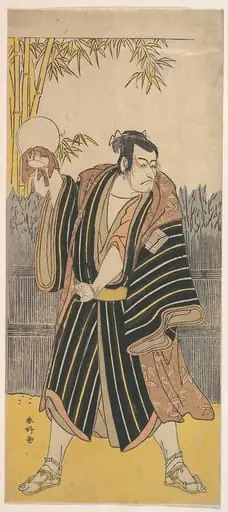 勝川春好画 七代目片岡仁左衛門 五代目市川團十郎|Kabuki Actor Ichikawa Danjūrō V
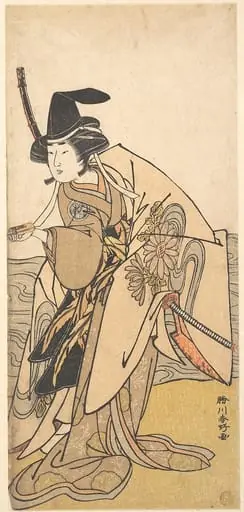 Untitled
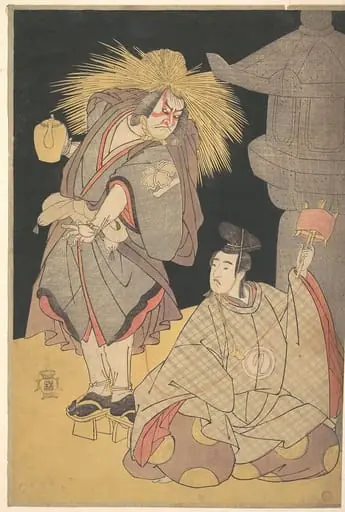 Untitled
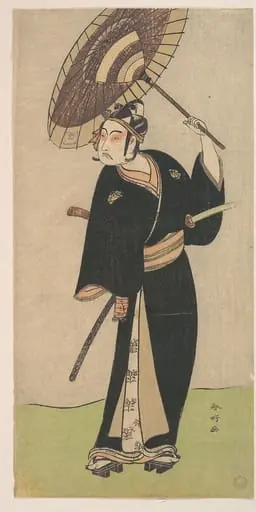 Untitled
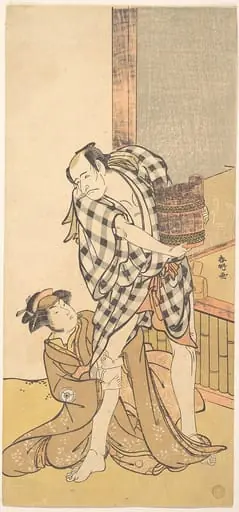 五代目市川団十郎|Scene from the Play Yoshitsune and the Thousand Cherry Trees (Yoshitsune senbon zakura)
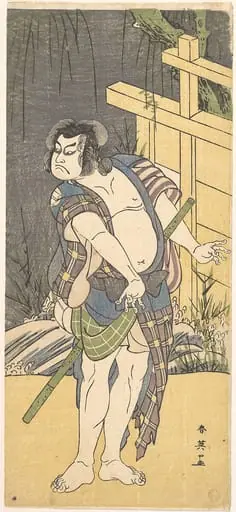 三代目坂田半五郎|Kabuki Actor Sakata Hangorō III as an Outlaw
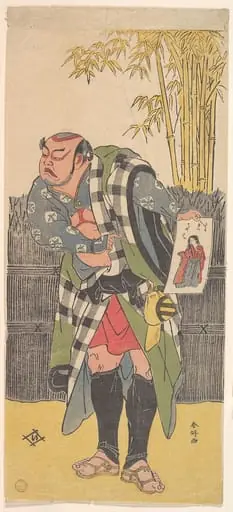 勝川春好画 七代目片岡仁左衛門 五代目市川團十郎|Kabuki Actor Kataoka Nizaemon VII
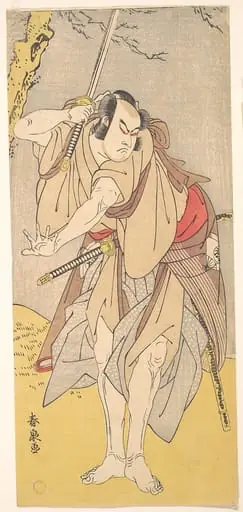 Untitled
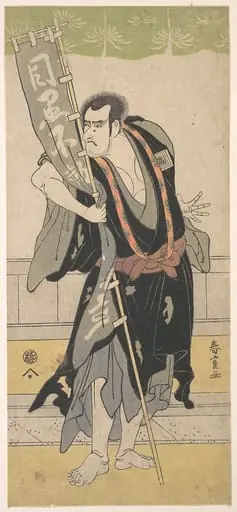 Untitled
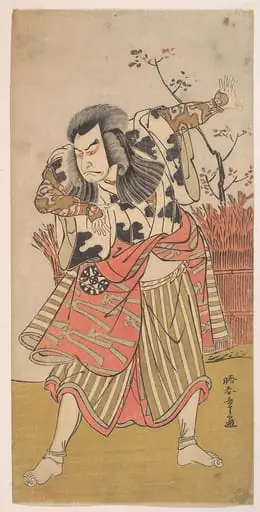 Untitled
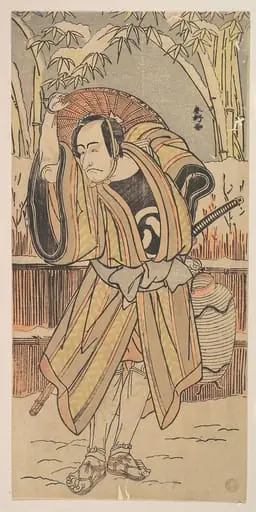 Untitled
 Untitled
 Untitled
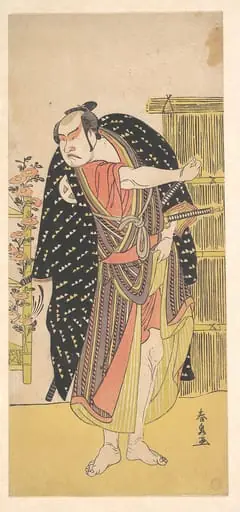 勝川春泉画 三代目大谷廣次|Kabuki Actor Ōtani Hiroji III
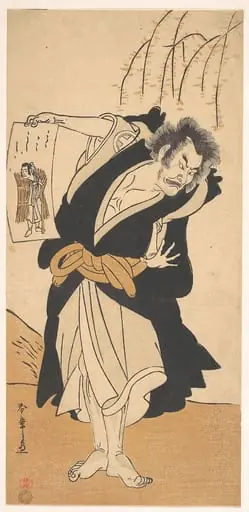 三代目大谷廣右衛門|The Third Otani Hiroemon as an Outlaw Standing Near a Willow Tree