Artwork
初代中村富十郎|Kabuki Actor Nakamura Tomijūrō
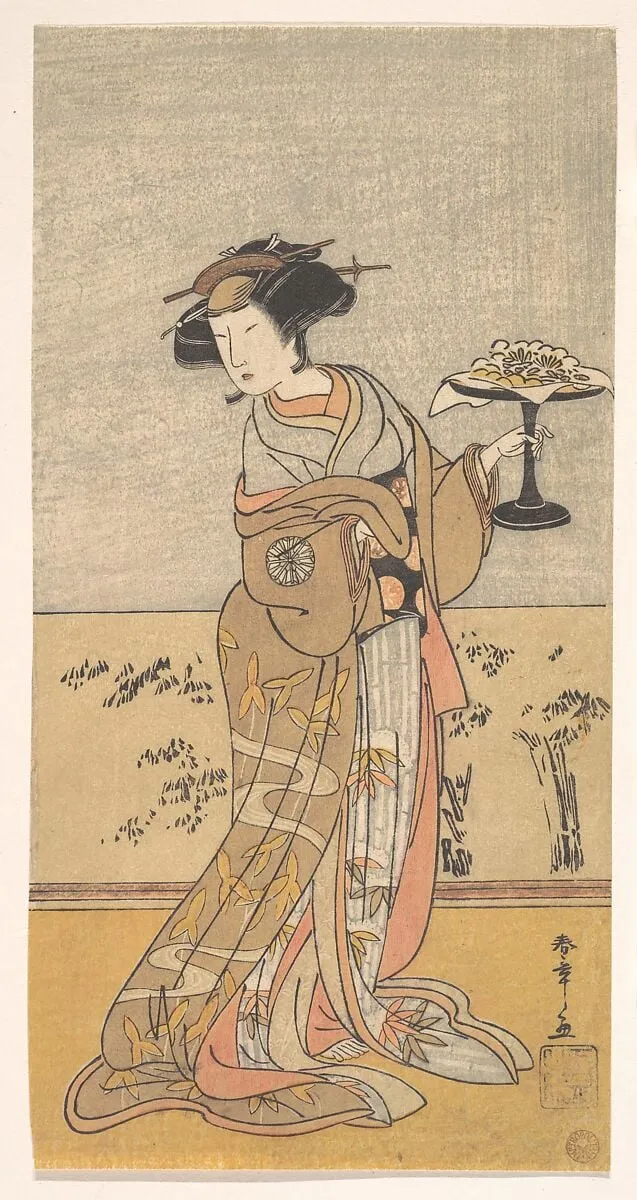
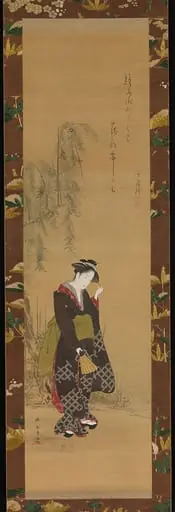
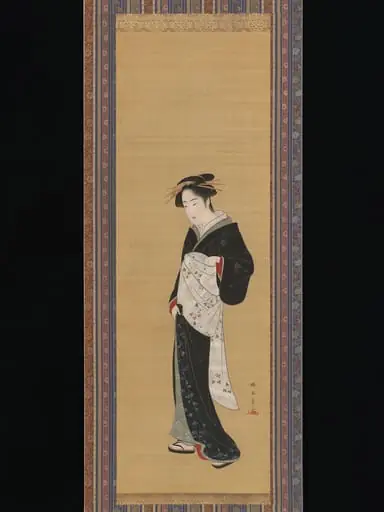
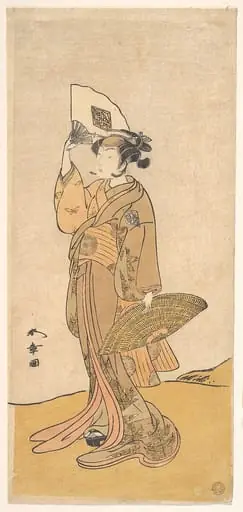
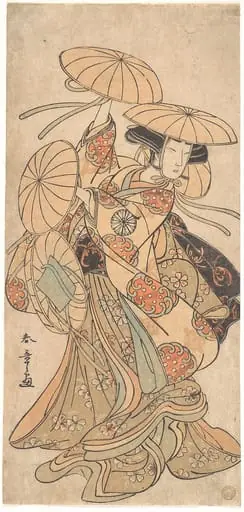
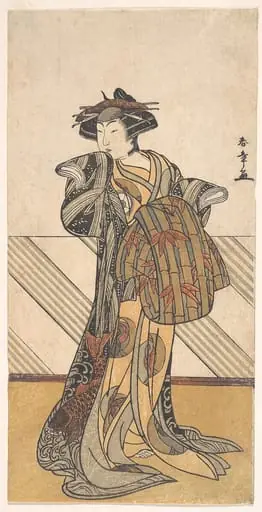
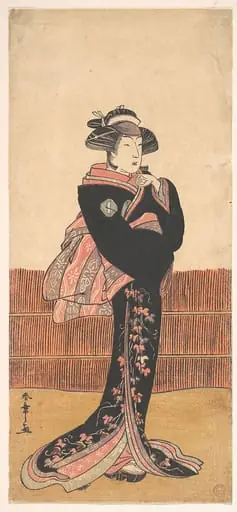
初代中村富十郎|Kabuki Actor Nakamura Tomijūrō is an ink print by the Romanticist artist Katsukawa Shunshō. It dates from 1777 and is held in the collection of the Metropolitan Museum of Art.
About this work
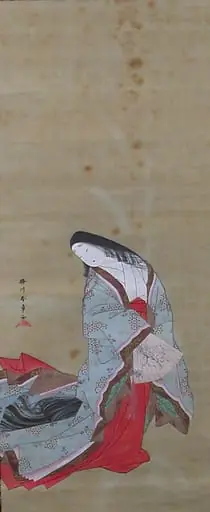
This print shows a woman in a long, flowing robe. She’s holding a tray with a flower arrangement. Her hair is styled neatly under a hat, and her sleeves are wide. The background has simple bamboo and a plain wall.
Notice the way her robe has bold patterns—like swirls and leaves—while her sleeves stay plain. This print was made in Japan in 1777.
Want to see more? Look up Katsukawa Shunshō.
Overview
This 1777 woodblock print by Katsukawa Shunshō depicts the kabuki actor Nakamura Tomijūrō I in a female role, rendered in nishiki-e technique with ink and color on paper. The image is part of a tradition of actor portraiture in Edo-period Japan, where theatrical personas were immortalized for public consumption. It is currently held in the collection of The Metropolitan Museum of Art.
Subject & Meaning
The figure represents Nakamura Tomijūrō I portraying a noblewoman, likely from a kabuki play, dressed in an elaborate robe adorned with swirling botanical motifs. The tray with floral arrangement and restrained headwear suggest refined femininity, a common trope in onnagata performances. The composition emphasizes grace and composure, aligning with the actor’s reputation for nuanced female roles.
Technique & Style
Shunshō employed precise line work and layered color to define the robe’s intricate patterns, contrasting them with the plain sleeves to direct visual focus. The background is minimal—just bamboo and a flat wall—enhancing the figure’s presence. The print’s use of nishiki-e, with multiple carved blocks for color, reflects the height of ukiyo-e craftsmanship in the late 18th century.
History & Provenance
Created in 1777, the print was likely produced as a promotional portrait for the actor’s performances in Edo. It entered The Metropolitan Museum of Art’s collection through documented acquisitions of Japanese prints in the early 20th century, preserving its original condition and provenance within the broader context of Edo-period theater culture.
Context
During the 1770s, actor portraits were mass-produced and widely collected by urban audiences. Shunshō, a leading designer of the Katsukawa school, specialized in capturing the distinctive features and costumes of kabuki performers. This print reflects the intersection of theater, commerce, and print culture in Edo, where celebrity and art converged.
Legacy
Shunshō’s portraits helped define the visual language of kabuki actor prints, influencing generations of ukiyo-e artists. This work remains a key example of onnagata representation, illustrating how theatrical identity was constructed and consumed in Edo society. Its preservation underscores the enduring value of print as historical documentation.
Artist & collection
Artist
Katsukawa Shunshō spent his life in Edo (now Tokyo), where the city’s teahouses and theaters buzzed with energy.