Artwork
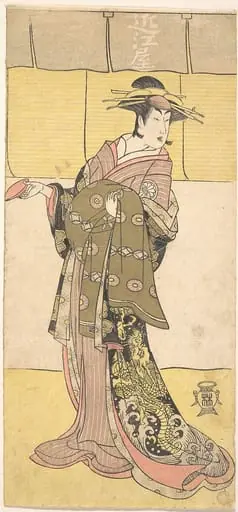
勝川春章画 二代目小佐川常世|Kabuki Actor Osagawa Tsuneyo II
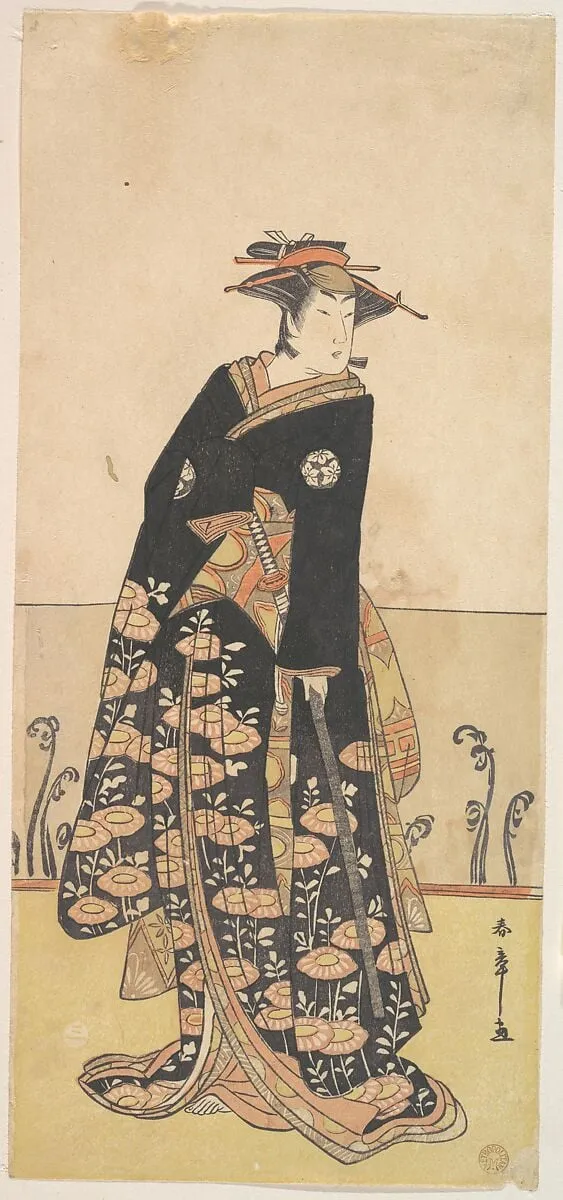
勝川春章画 二代目小佐川常世|Kabuki Actor Osagawa Tsuneyo II is an ink print by the Romanticist artist Katsukawa Shunshō. It dates from 1788 and is held in the collection of the Metropolitan Museum of Art.
About this work
Overview
Katsukawa Shunshō’s 1788 woodblock print depicts the kabuki performer Osagawa Tsuneyo II. Executed in the nishiki-e technique, the image presents the actor in a black kimono patterned with pink blossoms and green foliage, a red‑tied hat, and a sword at his side against a plain beige backdrop. The work is part of the collection of the Metropolitan Museum of Art.
Subject & Meaning
The portrait captures Osagawa Tsuneyo II in a poised, solemn demeanor, emphasizing the actor’s status and the dramatic gravitas associated with his stage roles. The floral motifs on the kimono and the restrained color scheme convey a blend of elegance and martial readiness, reflecting the dual nature of many kabuki characters who combine refinement with combat.
Technique & Style
Created as a nishiki-e, the print employs multiple carved woodblocks to apply distinct colors, allowing for detailed patterns and subtle tonal variation. Shunshō’s line work defines the figure’s features, while the layered inks render the delicate pink flowers and the deep black of the garment, exemplifying the high level of craftsmanship characteristic of late‑eighteenth‑century ukiyo‑e.
History & Provenance
The image was produced during the peak of the Katsukawa school’s focus on actor portraiture, a genre that catered to the growing popularity of kabuki. After its original circulation among theater patrons, the print entered the Metropolitan Museum of Art’s collection, where it remains a documented example of Edo‑period theatrical portraiture.
Artist & collection
Artist
Katsukawa Shunshō spent his life in Edo (now Tokyo), where the city’s teahouses and theaters buzzed with energy.

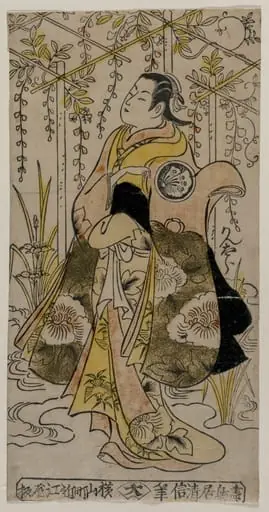 Sanjo Kantaro as a Young Woman Standing in a Wisteria Arbor
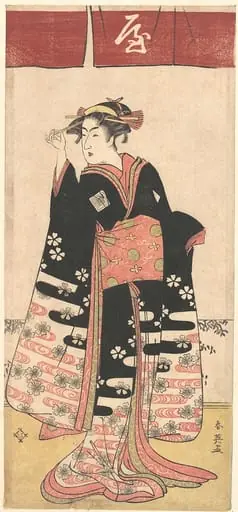 Untitled
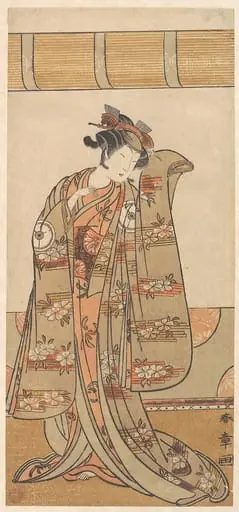 Untitled
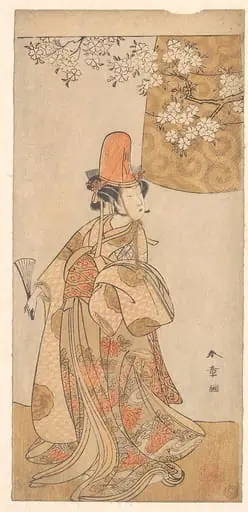 花形見風折烏帽子瀬川富三郎の娘道成寺|Segawa Tomisaburo in the Role of Musume Dojoji in "Hanagatami Kazaori Eboshi"
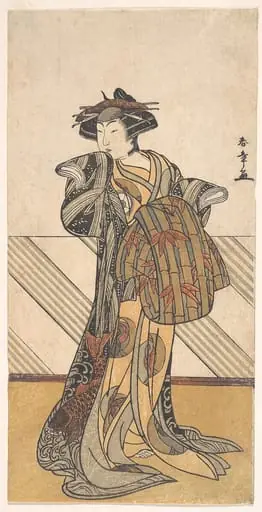 四代目岩井半四郎|Kabuki Actor Iwai Hanshirō IV
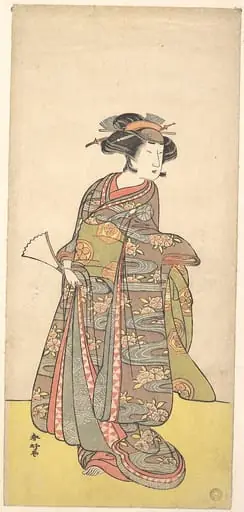 Untitled
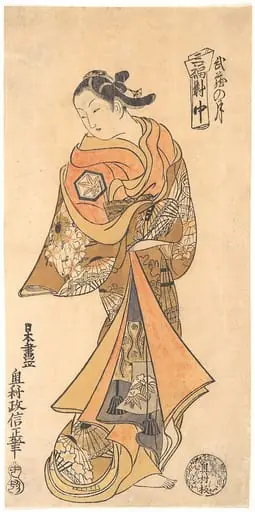 Sanpuku Tsui|Moon in Musashi Province
 三代目瀬川菊之丞の近江屋の遊女|The Actor Segawa Kikunojō as a Courtesan of the Ōmiya Brothel
 Untitled