Artwork
Untitled
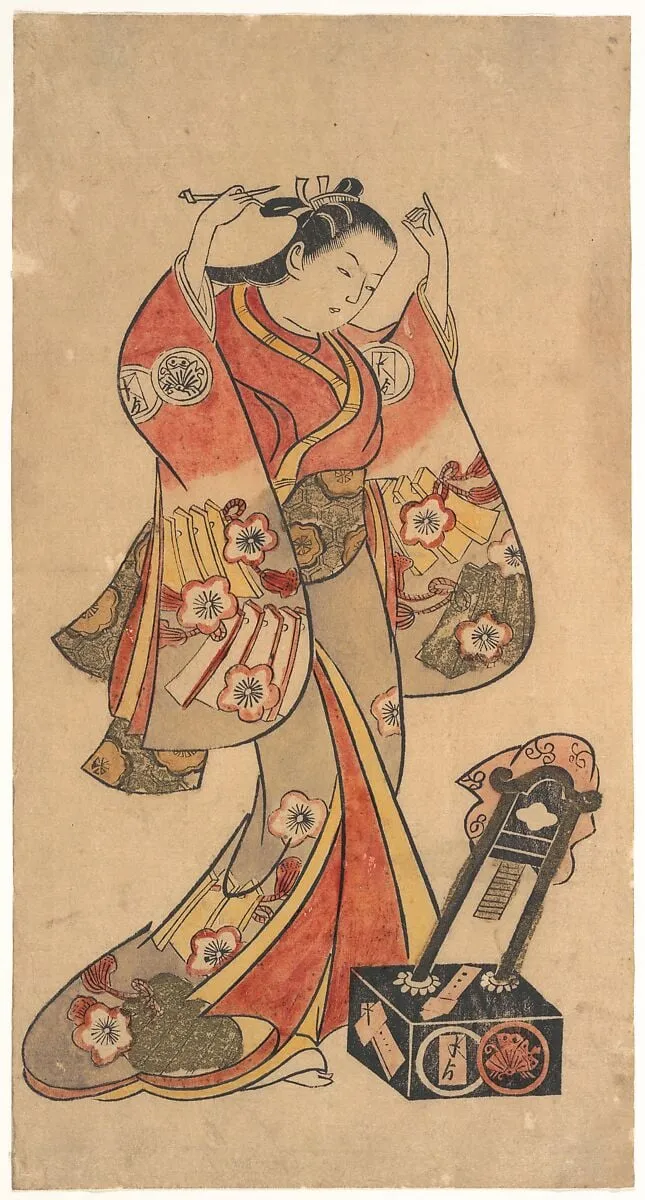
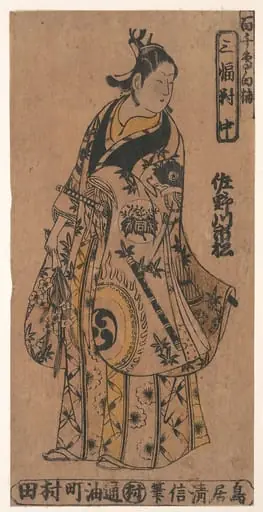
Untitled is an ink print by the Baroque artist Torii Kiyomasu II. It dates from 1735 and is held in the collection of the Metropolitan Museum of Art.
About this work
Overview
Created around 1735, this hand-colored print by Torii Kiyomasu II belongs to the tan-e tradition, using ink and pigments on paper.
Created around 1735, this hand-colored print by Torii Kiyomasu II belongs to the tan-e tradition, using ink and pigments on paper. It is part of The Metropolitan Museum of Art’s collection of Edo-period prints. The work exemplifies the theatrical portraiture favored in early 18th-century Japan, capturing a performer in elaborate costume with minimal background detail to emphasize the figure’s presence and attire.
Subject & Meaning
The figure is likely an actor in performance attire, identified by the ornate robe and props: a fan, a wooden box with strings, and a musical instrument resting nearby. A small animal at the figure’s feet may symbolize a companion or spiritual element common in theatrical narratives. The costume suggests a specific role in kabuki or puppet theater, where visual symbolism conveyed character and narrative without words.
Technique & Style
The print employs tan-e, a technique using hand-applied color over ink outlines, with bold black and gold detailing on the robe. Floral and swirling patterns cover the fabric, suggesting movement and richness. The plain background focuses attention on the costume’s complexity, while the careful rendering of textures—fabric, wood, and fur—demonstrates the artist’s precision in capturing material detail.
History & Provenance
This print originates from the Torii school, known for producing actor portraits during the Edo period. Kiyomasu II, active in the 1730s, contributed to the evolution of ukiyo-e by refining the depiction of theatrical figures. The work entered The Metropolitan Museum of Art’s collection through established acquisitions of Japanese prints in the early 20th century, preserving its place in the study of Edo visual culture.
Context
In early 1700s Edo, actor prints were widely circulated as popular imagery, serving both as advertising and collectible art. Theatrical performance was central to urban culture, and detailed costumes signaled character types to audiences. This print reflects the close relationship between stage and print culture, where visual accuracy and symbolic detail helped define public perceptions of performers and their roles.
Legacy
Works like this helped establish the visual language of ukiyo-e portraiture, influencing later artists in both technique and subject matter. Though Kiyomasu II’s output was relatively limited, his attention to costume and gesture contributed to the genre’s development. Today, such prints remain key sources for understanding Edo-period theater, fashion, and the intersection of art and performance.
Artist & collection

Artist
Torii Kiyomasu II spent his life making bold, eye-catching prints to draw crowds to kabuki shows in Tokyo.

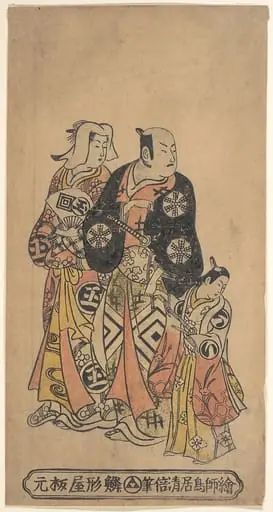
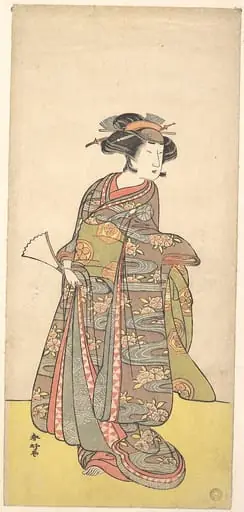 Untitled
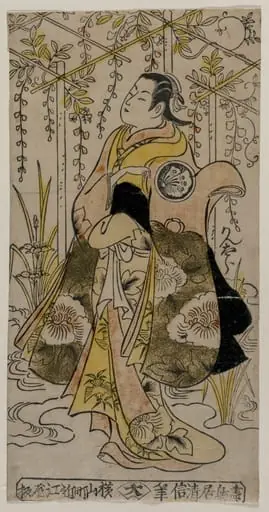 Sanjo Kantaro as a Young Woman Standing in a Wisteria Arbor
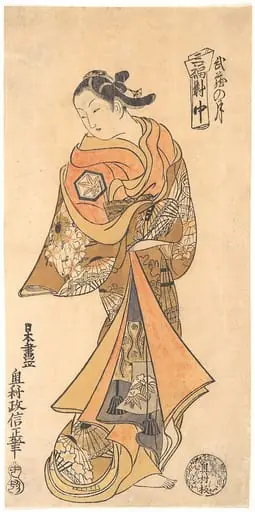 Sanpuku Tsui|Moon in Musashi Province
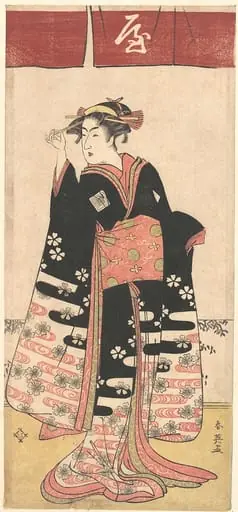 Untitled
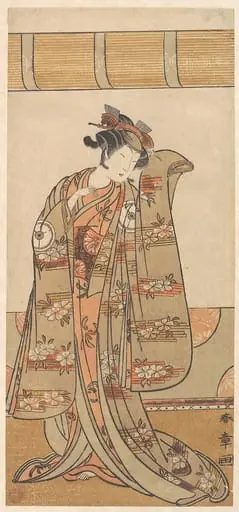 Untitled
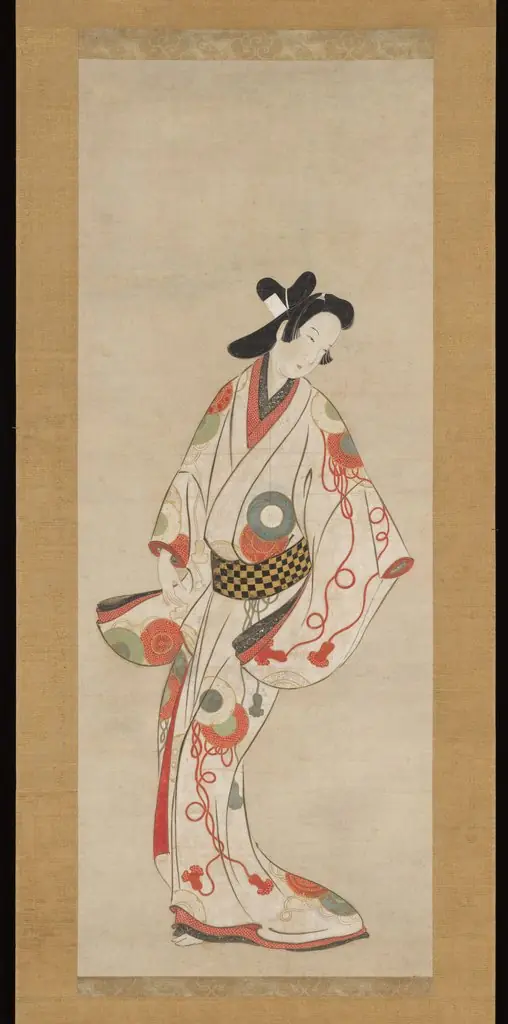 Elegantly Garbed Male Youth
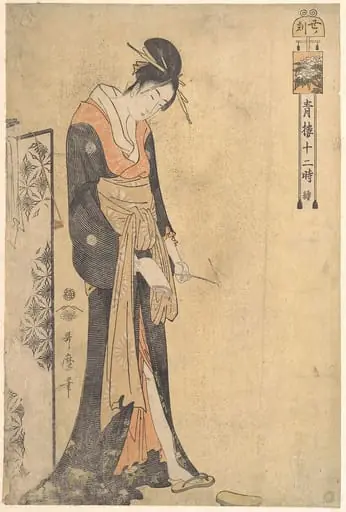 Ushi no Koku|青楼十二時 続 丑の刻|The Hour of the Ox (1 A.M.–3 A.M.)
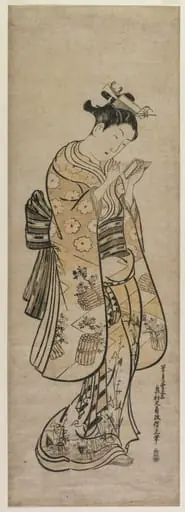 A Beauty with a Mirror
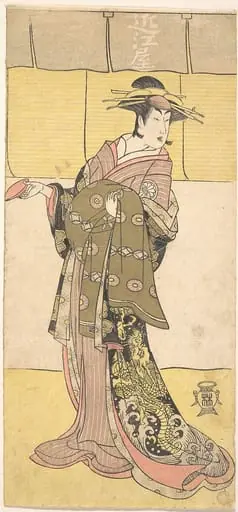 三代目瀬川菊之丞の近江屋の遊女|The Actor Segawa Kikunojō as a Courtesan of the Ōmiya Brothel
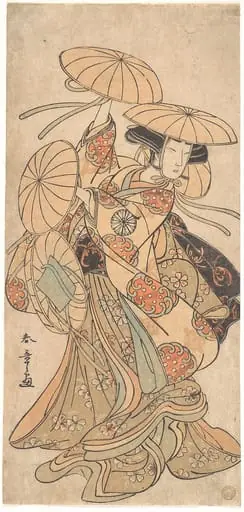 初代中村富十郎|Kabuki Actor Nakamura Tomijūrō I in a Female Dance Role
 Untitled