Artwork
Untitled
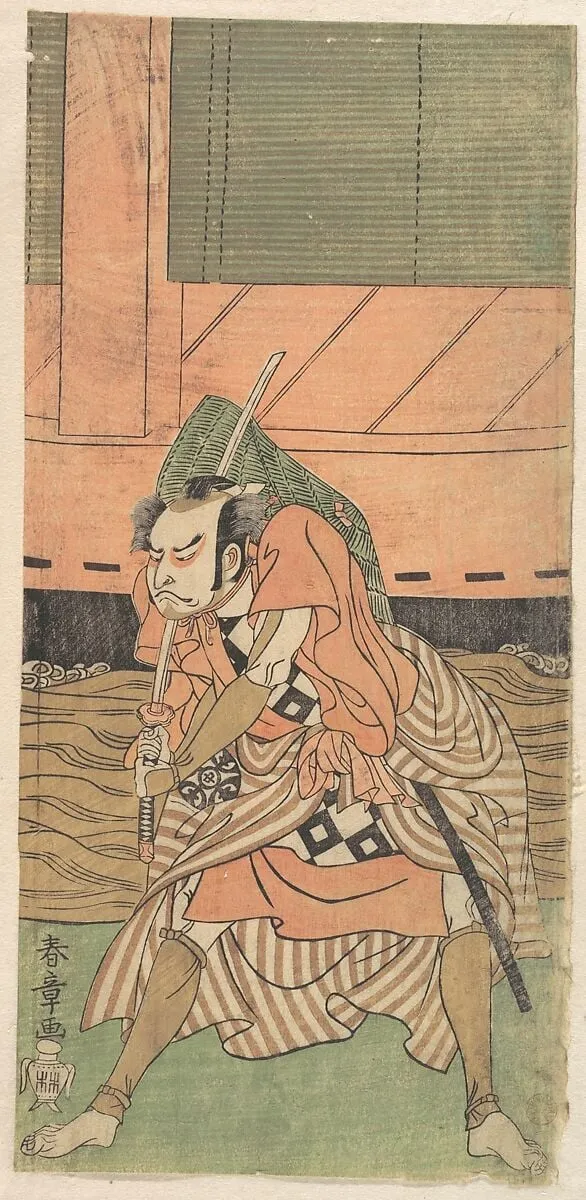
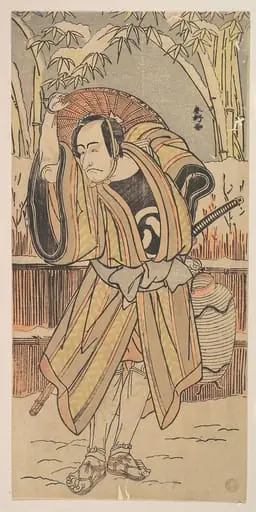
Untitled is an ink print by the Romanticist artist Katsukawa Shunshō. It dates from 1770 and is held in the collection of the Metropolitan Museum of Art.
About this work
Overview
The composition captures a single figure in motion, rendered with bold lines and flat areas of color, reflecting the commercial print culture of the time.
This woodblock print, dated around 1770, is attributed to Katsukawa Shunshō and is part of The Metropolitan Museum of Art’s collection. Executed in nishiki-e technique, it features ink and color on paper, characteristic of Edo-period ukiyo-e production. The composition captures a single figure in motion, rendered with bold lines and flat areas of color, reflecting the commercial print culture of the time.
Subject & Meaning
The figure is a man dressed in a striped kimono, barefoot, carrying a sword and wearing a woven hat, suggesting a samurai or actor portraying one. His dynamic posture—mid-stride with flowing garments—implies urgency or theatrical motion. The absence of a detailed setting focuses attention on the figure’s energy, possibly evoking a scene from kabuki theater or a literary narrative popular in Edo.
Technique & Style
The print employs nishiki-e, a multi-block coloring method that allowed for subtle gradations and layered hues. The background is a soft peach tone, with a flat green rectangle at the top, possibly indicating architectural space. Lines are crisp and economical, emphasizing movement over detail. Color areas are unmodulated, typical of Shunshō’s approach to figure-focused compositions in actor prints.
History & Provenance
Created during the height of Shunshō’s career, this print likely circulated as a single-sheet image among urban audiences in Edo. It entered The Metropolitan Museum of Art’s collection through documented acquisitions of Japanese prints in the early 20th century. Its survival in good condition reflects careful preservation, though its original context as part of a larger series remains uncertain.
Context
In the 1770s, Shunshō was a leading designer of actor portraits, often depicting kabuki performers in dramatic poses. This print aligns with the era’s demand for images of popular stage figures, blending realism with stylized motion. The simplified background and focus on costume and gesture reflect conventions of ukiyo-e designed for mass appeal, not elite patronage.
Legacy
While less widely known than later ukiyo-e artists, Shunshō’s work influenced the development of actor prints and the formal language of Edo-period woodblock design. This print exemplifies his ability to convey vitality through restrained composition. It remains a representative example of pre-Hiroshige ukiyo-e, valued for its historical continuity rather than novelty.
Artist & collection
Artist
Katsukawa Shunshō spent his life in Edo (now Tokyo), where the city’s teahouses and theaters buzzed with energy.

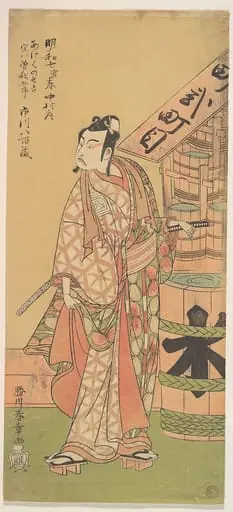 二代目市川八百蔵|Kabuki Actor Ichikawa Yaozō II
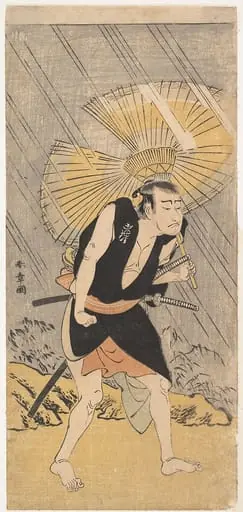 Untitled
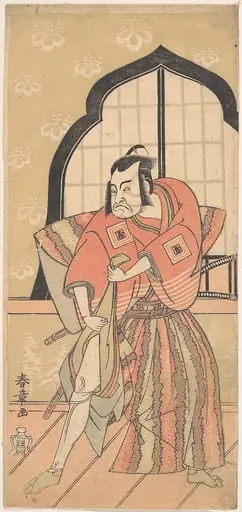 勝川春章画 三代目市川団蔵|Kabuki Actor Ichikawa Danzō III
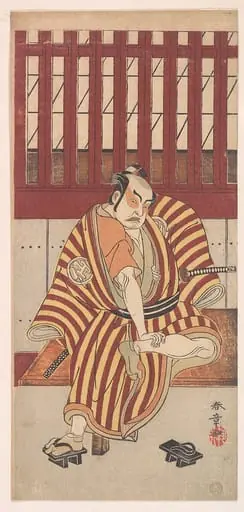 Untitled
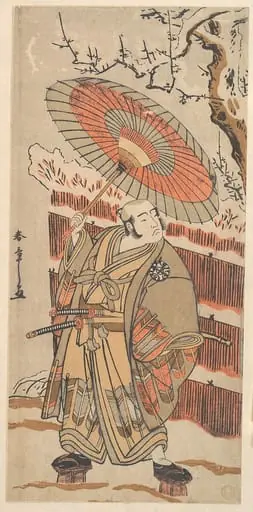 勝川春章画 二代目中村傳九郎|Kabuki Actor Nakamura Denkurō II
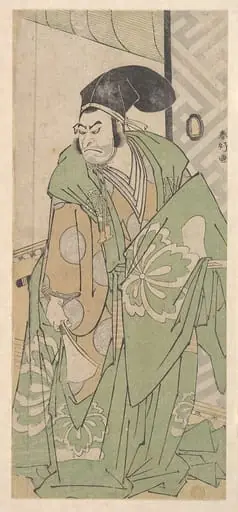 Untitled
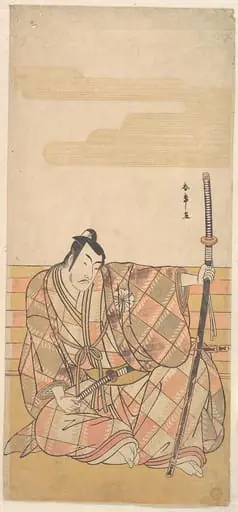 Untitled
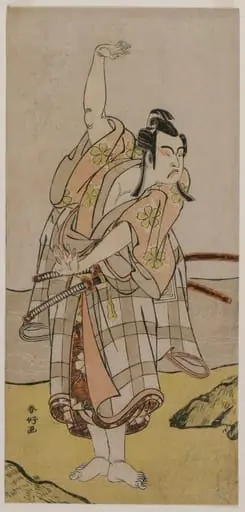 Actor Ichikawa Yaozō II as Sakuramaru
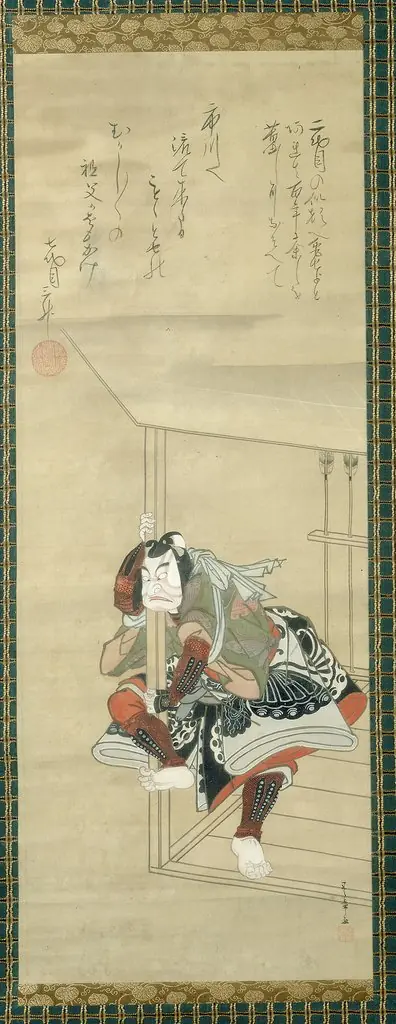 The Kabuki Actor Ichikawa Danjûrô II (1689-1758)
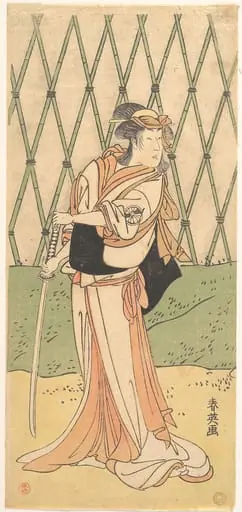 Untitled
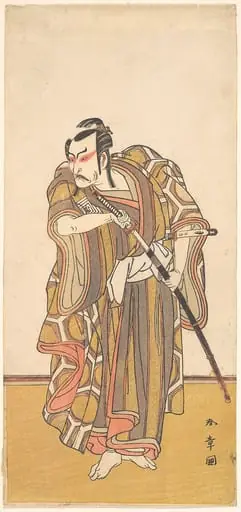 四代目市川團蔵|Kabuki Actor Ichikawa Danzō IV
 Untitled