Artwork
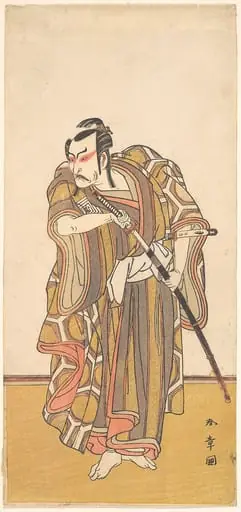
勝川春章画 二代目中村傳九郎|Kabuki Actor Nakamura Denkurō II
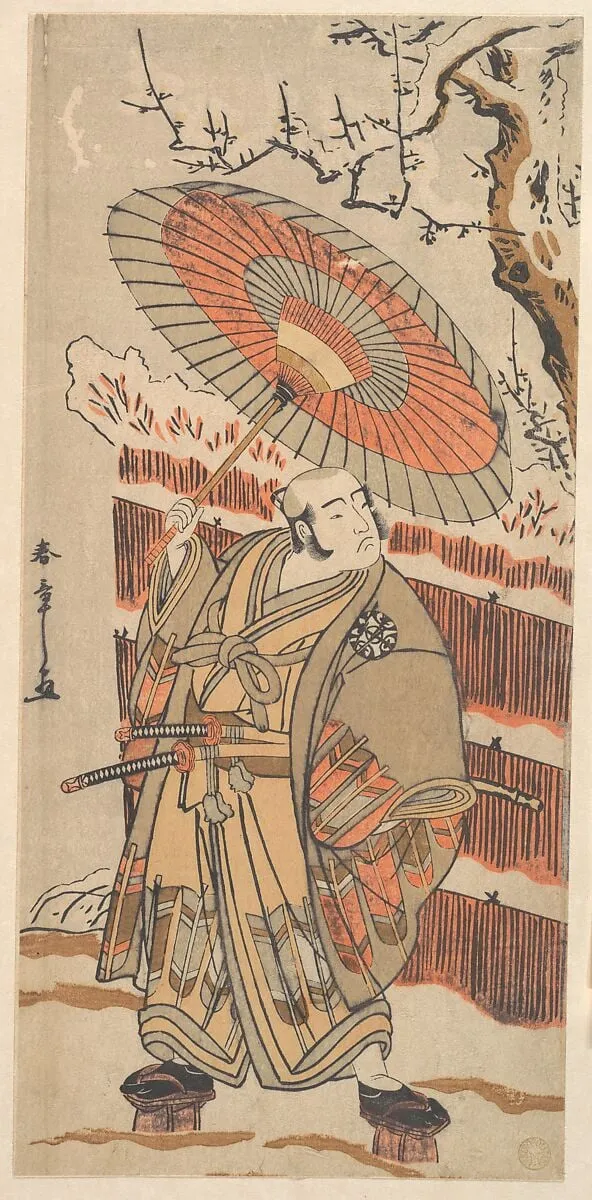
勝川春章画 二代目中村傳九郎|Kabuki Actor Nakamura Denkurō II is an ink print by the Romanticist artist Katsukawa Shunshō. It dates from 1774 and is held in the collection of the Metropolitan Museum of Art.
About this work
The background of the painting is a light beige color, with some darker lines and shapes that suggest a landscape or architecture.
This painting shows a man dressed in traditional Japanese clothing, holding a parasol in his right hand. He is wearing a kimono with a pattern of stripes and a sash around his waist. The background of the painting is a light beige color, with some darker lines and shapes that suggest a landscape or architecture.
The man's facial expression is serious, and he appears to be looking off into the distance. He is standing in front of a low wall or fence, with some trees or branches visible behind him. The overall effect of the painting is one of elegance and refinement.
The artist's use of color and composition creates a sense of depth and dimensionality, drawing the viewer's eye into the scene. The painting is a beautiful example of Japanese art from the 18th century. Check out more works by Katsukawa Shunshō.
Overview
This woodblock print, created around 1774 by Katsukawa Shunshō, depicts the kabuki actor Nakamura Denkurō II in a formal stage pose. Executed in nishiki-e, a multi-color printing technique, the work is rendered on paper with ink and pigments. It is part of the collection at The Metropolitan Museum of Art and exemplifies the ukiyo-e tradition of portraying popular theatrical figures with precision and nuance.
Subject & Meaning
The print captures Nakamura Denkurō II, a celebrated actor of the Edo period, in a moment of quiet intensity. Dressed in an elaborate kimono with striped patterns and a sash, he holds a parasol, suggesting a character in transition between scenes or embodying a noble, contemplative role. His gaze into the distance conveys inner resolve, aligning with kabuki’s emphasis on emotional depth and stylized expression rather than literal realism.
Technique & Style
Shunshō employed fine linework and layered color to define the actor’s garments and the subtle background elements. The striped kimono is rendered with careful registration of multiple blocks, while the pale beige backdrop, marked by faint linear suggestions of architecture and foliage, creates spatial depth without clutter. The restrained palette and balanced composition reflect the refined aesthetic of Katsukawa school portraiture, prioritizing clarity and dignity over theatrical flourish.
History & Provenance
Produced during the height of Edo-period ukiyo-e popularity, the print was likely made for distribution as a theatrical souvenir or collector’s item. It entered the collection of The Metropolitan Museum of Art through documented acquisitions of Japanese prints in the early 20th century. Its preservation reflects the growing international interest in Japanese printmaking as a serious art form beyond its original commercial context.
Context
In the 1770s, Katsukawa Shunshō was a leading figure in actor portraiture, moving away from earlier idealized styles toward more individualized likenesses. This print emerged amid a thriving kabuki culture in Edo, where actors were celebrities and their images circulated widely. Such prints served both as fan memorabilia and as cultural artifacts documenting the performative arts of the time.
Legacy
Shunshō’s portrayal of Nakamura Denkurō II contributed to the evolution of actor prints as a distinct genre within ukiyo-e. His focus on psychological presence and refined detail influenced later artists like Sharaku and Kunisada. The print remains a key example of how Japanese printmakers elevated commercial imagery into enduring visual records of performance and identity.
Artist & collection
Artist
Katsukawa Shunshō spent his life in Edo (now Tokyo), where the city’s teahouses and theaters buzzed with energy.

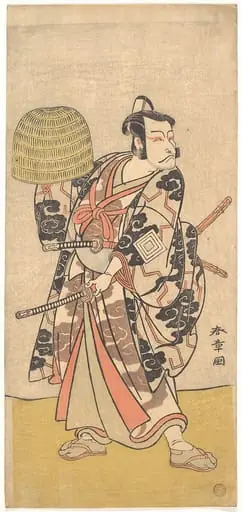 勝川春章画 五代目市川團十郎|Kabuki Actor Ichikawa Danjūrō V
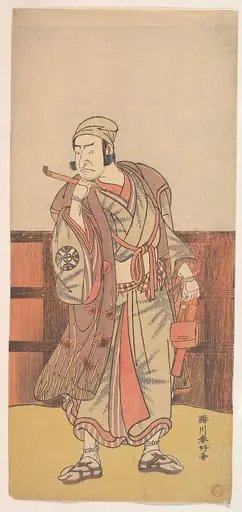 勝川春好画 初代中村仲蔵|Kabuki Actor Nakamura Nakazō I
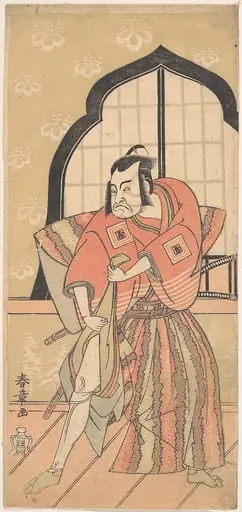 勝川春章画 三代目市川団蔵|Kabuki Actor Ichikawa Danzō III
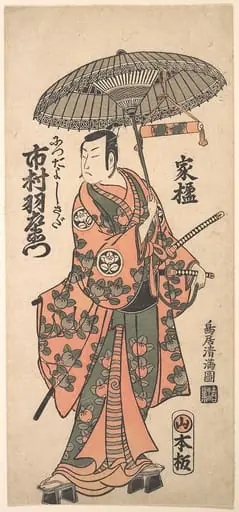 鳥居清満画 九代目市村羽左衛門|Kabuki Actor Ichimura Uzaemon IX
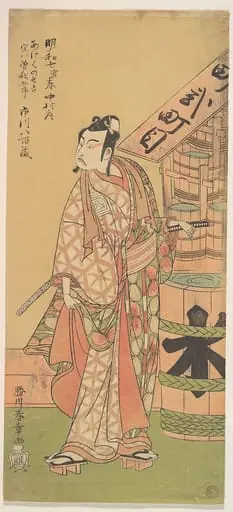 二代目市川八百蔵|Kabuki Actor Ichikawa Yaozō II
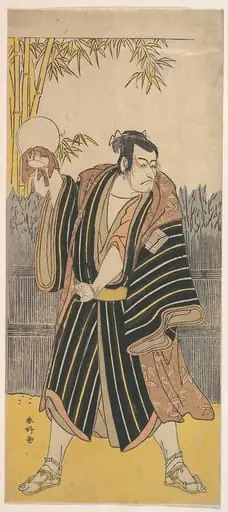 勝川春好画 七代目片岡仁左衛門 五代目市川團十郎|Kabuki Actor Ichikawa Danjūrō V
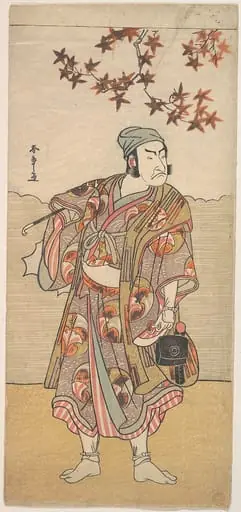 初代中村仲蔵|The First Nakamura Nakazō in the Role of Shimada no Hachizō
 四代目市川團蔵|Kabuki Actor Ichikawa Danzō IV