Artwork
冨嶽三十六景 青山円座松|Cushion Pine at Aoyama (Aoyama enza no matsu), from the series Thirty-six Views of Mount Fuji (Fugaku sanjūrokkei)
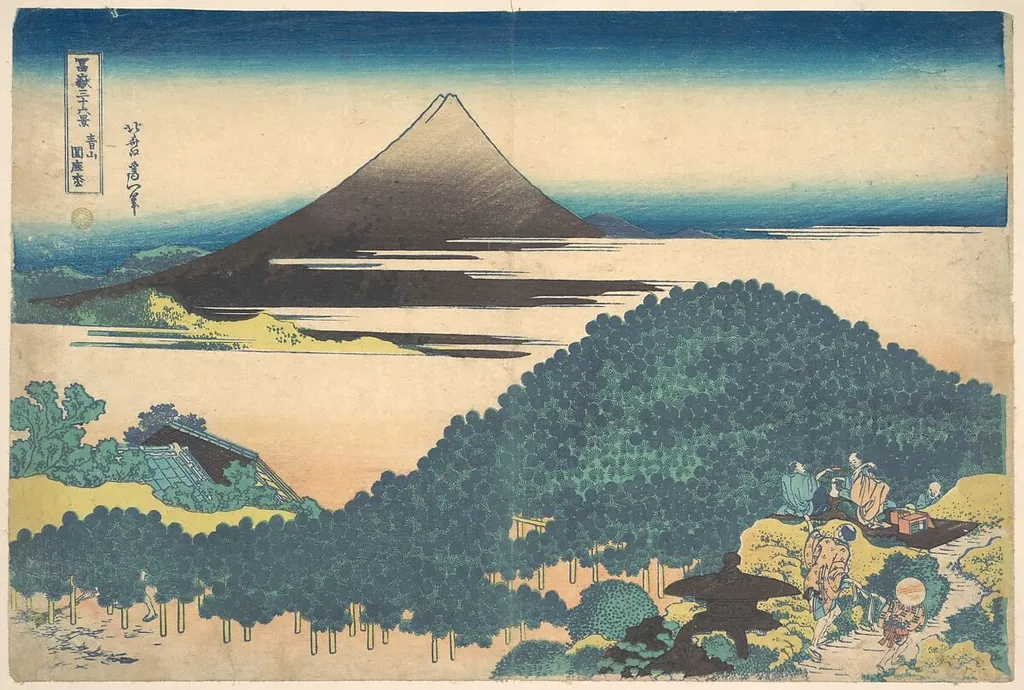
冨嶽三十六景 青山円座松|Cushion Pine at Aoyama (Aoyama enza no matsu), from the series Thirty-six Views of Mount Fuji (Fugaku sanjūrokkei) is an ink print by the Japonisme artist Katsushika Hokusai. It dates from 1831 and is held in the collection of the Metropolitan Museum of Art.
About this work
Overview
Created around 1831, this woodblock print is part of Katsushika Hokusai’s series Thirty-six Views of Mount Fuji. Rendered in ink and color on paper, it presents a tranquil urban-rural interface near Edo. The composition balances natural and human elements with restrained palette and deliberate spacing, reflecting the series’ focus on Mount Fuji as a constant presence amid daily life.
Subject & Meaning
Mount Fuji, rendered with quiet majesty in the distance, anchors the scene not as a distant landmark but as an enduring witness to human routines.
The print centers on a gnarled, symmetrical pine tree—known as a cushion pine—standing beside a modest thatched hut. Small figures, engaged in quiet activities like resting or carrying goods, suggest ordinary life unfolding beneath the mountain’s shadow. Mount Fuji, rendered with quiet majesty in the distance, anchors the scene not as a distant landmark but as an enduring witness to human routines.
Technique & Style
Hokusai employed flat areas of color and precise, clean outlines typical of ukiyo-e woodblock printing. The pine’s dense foliage contrasts with the soft, muted sky, while the mountain’s form is simplified yet authoritative. Depth is suggested through scale and layering rather than perspective, reinforcing the print’s meditative stillness and adherence to traditional Japanese compositional principles.
History & Provenance
This print was produced during the peak of Hokusai’s career, when the Thirty-six Views series gained widespread popularity. It entered The Metropolitan Museum of Art’s collection through established channels of early 20th-century Japanese art acquisition. Its preservation reflects its significance as a representative example of Edo-period printmaking and Hokusai’s mature style.
Context
The series emerged during a period of growing urban leisure and interest in pilgrimage and scenic travel. While Mount Fuji was a spiritual symbol, these prints also catered to a public fascinated by regional landscapes. Aoyama, then a suburban area of Edo, offered a quiet retreat, making this scene both familiar and idealized for contemporary viewers.
Legacy
Hokusai’s approach to integrating nature and human presence influenced later Japanese and Western artists. The quiet dignity of everyday life rendered in precise, harmonious forms helped redefine landscape art beyond mere topography. This print remains a key reference in studies of Edo-period visual culture and the global reception of Japanese prints.
Artist & collection

Artist
Katsushika Hokusai spent his life in Edo, now Tokyo, where he drew and carved prints for a living.

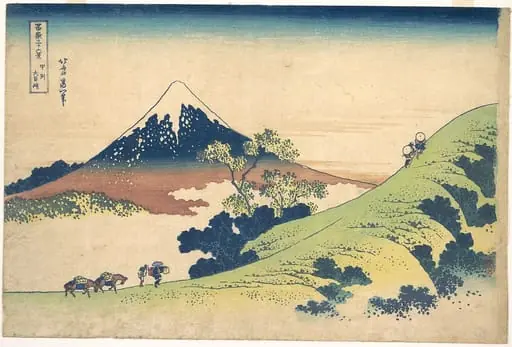 冨嶽三十六景 甲州犬目峠|The Inume Pass in Kai Province (Kōshū Inume tōge), from the series Thirty-six Views of Mount Fuji (Fugaku sanjūrokkei)
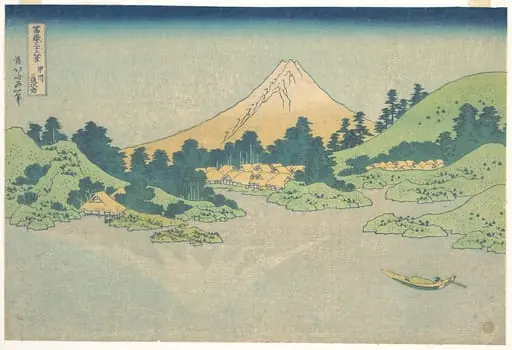 冨嶽三十六景 甲州三坂水面|Reflection in Lake at Misaka in Kai Province (Kōshū Misaka suimen), from the series Thirty-six Views of Mount Fuji (Fugaku sanjūrokkei)
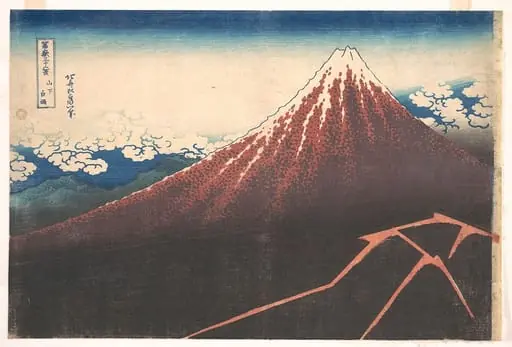 冨嶽三十六景 山下白雨|Storm below Mount Fuji (Sanka no haku u), from the series Thirty-six Views of Mount Fuji (Fugaku sanjūrokkei)
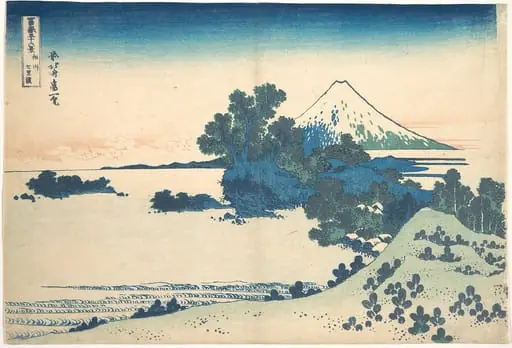 冨嶽三十六景 相州七里浜|Shichirigahama in Sagami Province (Sōshū Shichirigahama), from the series Thirty-six Views of Mount Fuji (Fugaku sanjūrokkei)
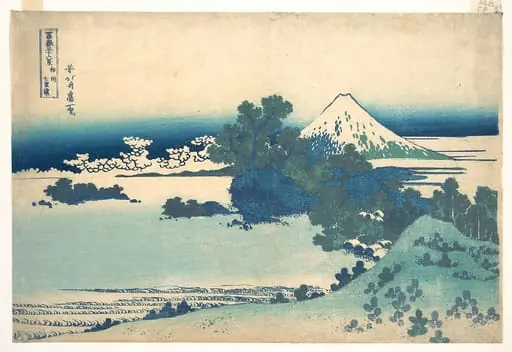 冨嶽三十六景 相州七里浜|Shichirigahama in Sagami Province (Sōshū Shichirigahama), from the series Thirty-six Views of Mount Fuji (Fugaku sanjūrokkei)
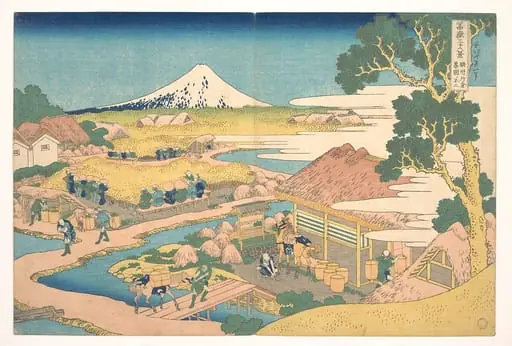 冨嶽三十六景 駿州片倉茶園の不二|Fuji from the Katakura Tea Fields in Suruga (Sunshū Katakura chaen no Fuji), from the series Thirty-six Views of Mount Fuji (Fugaku sanjūrokkei)
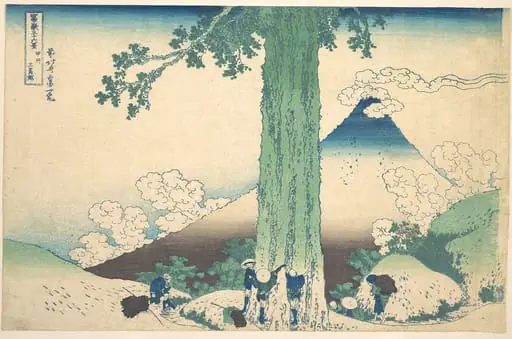 冨嶽三十六景 甲州三島越|Mishima Pass in Kai Province (Kōshū Mishima goe), from the series Thirty-six Views of Mount Fuji (Fugaku sanjūrokkei
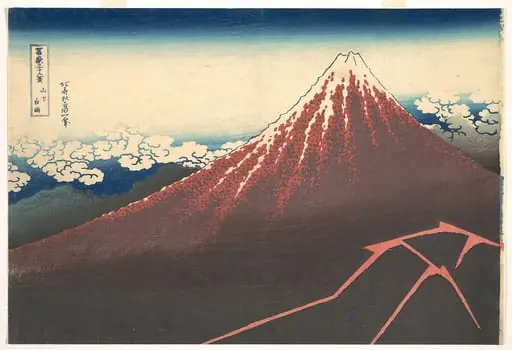 冨嶽三十六景 山下白雨|Storm below Mount Fuji (Sanka no haku u), from the series Thirty-six Views of Mount Fuji (Fugaku sanjūrokkei)
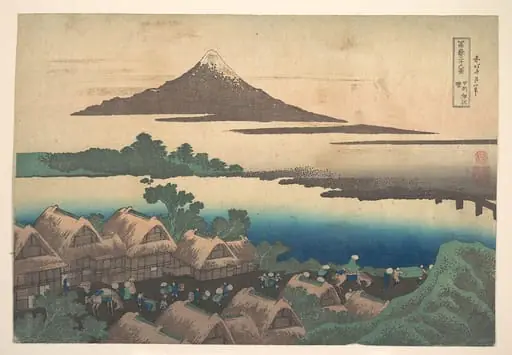 冨嶽三十六景 甲州伊沢暁|Dawn at Isawa in Kai Province (Kōshū Isawa no akatsuki), from the series Thirty-six Views of Mount Fuji (Fugaku sanjūrokkei)
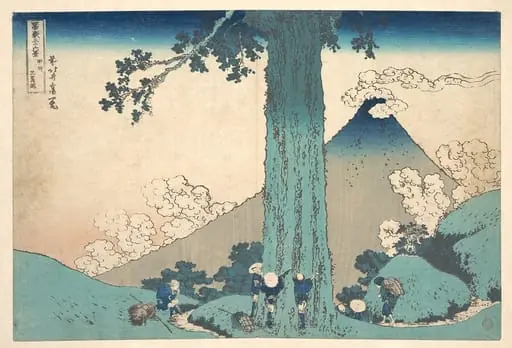 冨嶽三十六景 甲州三島越|Mishima Pass in Kai Province (Kōshū Mishima goe), from the series Thirty-six Views of Mount Fuji (Fugaku sanjūrokkei)