Artwork
Love at the Brothel Gate
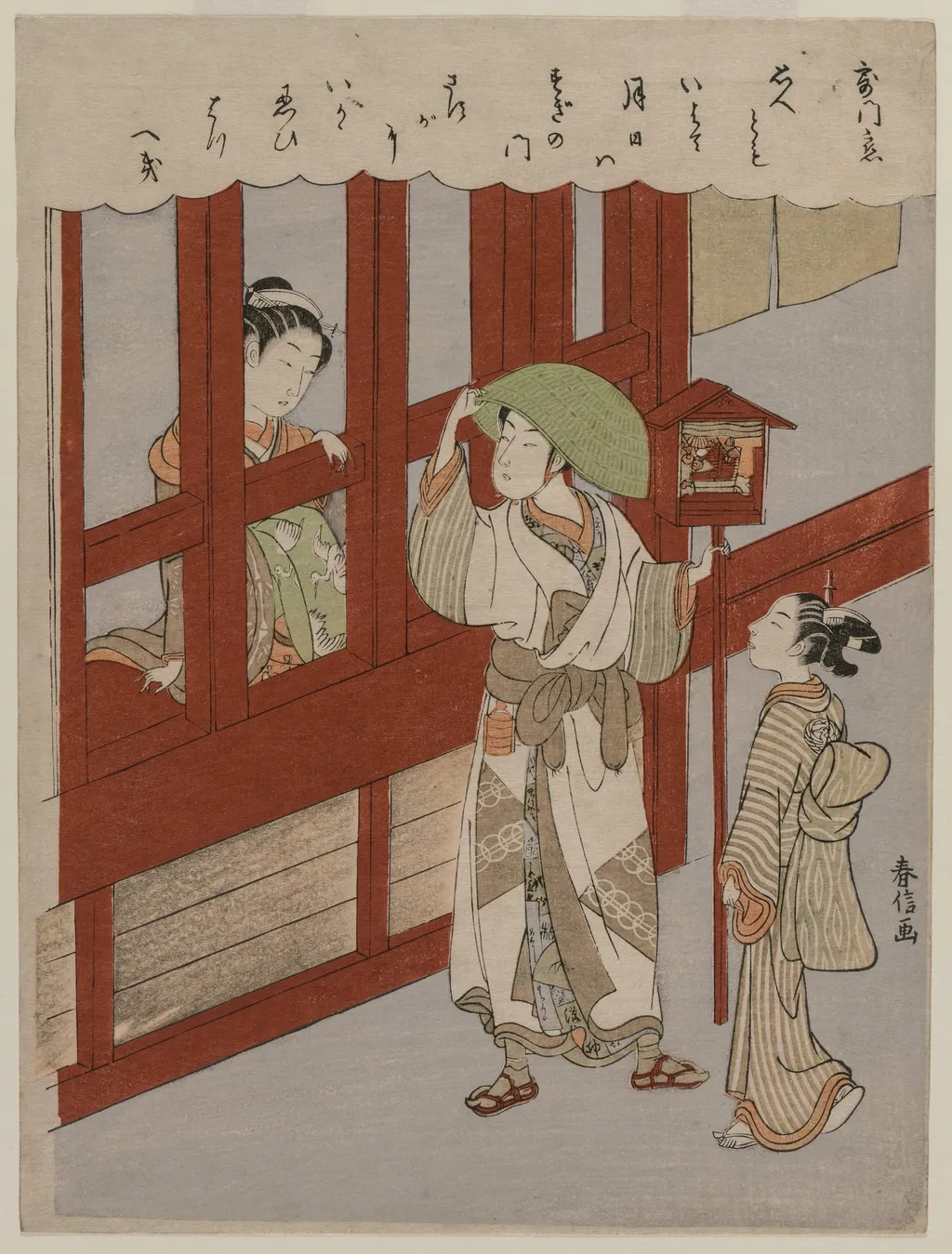
Love at the Brothel Gate is a print by the Romanticist artist Suzuki Harunobu. It dates from 1764 and is held in the collection of the Cleveland Museum of Art.
About this work
Overview
The scene captures a fleeting exchange, framed by the architectural barrier of the brothel gate, which both separates and connects the two figures.
This woodblock print depicts a moment of quiet intimacy between a courtesan and her lover at the entrance of a pleasure district establishment. The scene captures a fleeting exchange, framed by the architectural barrier of the brothel gate, which both separates and connects the two figures. The presence of a miniature theater in the man’s hand and a poetic inscription above them suggests a layered narrative blending personal longing with cultural references.
Subject & Meaning
The courtesan, identified by the crane embroidery on her obi, engages in a restrained conversation with a young man who carries a theater model, hinting at shared cultural interests. The quoted poem from the New Collection of Poems Ancient and Modern expresses suppressed emotion—yearning unspoken, time passing behind a cedar gate. Together, the imagery and text convey the tension between desire and social constraint, common themes in Edo-period urban life.
Technique & Style
Rendered in fine-line woodblock printing, the composition uses delicate contours and muted colors to emphasize subtlety over spectacle. The crane motif is rendered with precision, signaling status and aesthetic refinement. The poetic cloud, a conventional device in ukiyo-e, floats naturally above the figures, integrating literary expression into the visual field without disrupting the scene’s quiet realism.
History & Provenance
The print originates from the early 19th century, likely produced in Edo during the peak of ukiyo-e popularity. It entered the collection of the Cleveland Museum of Art through documented acquisitions of Japanese prints in the early 20th century. Its preservation reflects broader Western interest in Edo-period genre scenes, particularly those capturing the nuanced social dynamics of the pleasure quarters.
Context
In Edo’s licensed entertainment districts, courtesans were both commodified and culturally elevated. Their interactions with clients occurred under strict social codes, often mediated by architecture and ritual. The brothel gate served as a threshold for controlled encounters, allowing for poetic, disguised communication. This print reflects how art of the period documented the emotional undercurrents of these regulated spaces.
Legacy
The print endures as a quiet testament to the complexity of human connection within rigid social structures. It contributes to the understanding of ukiyo-e not merely as decorative art, but as a medium for exploring private emotion and cultural literacy. Its inclusion in major Western collections underscores its role in shaping global perceptions of Edo-era urban life.
Artist & collection

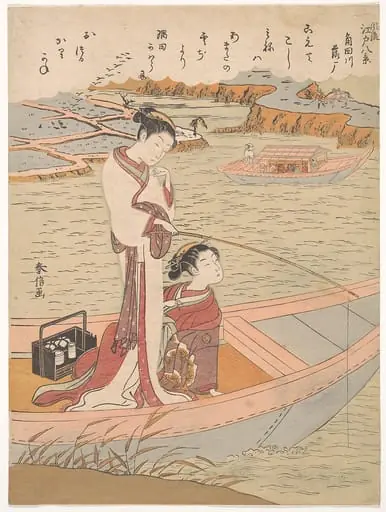
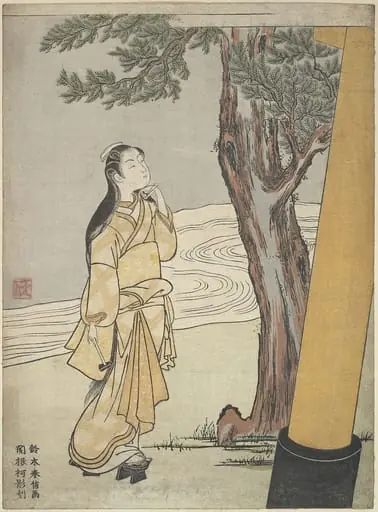
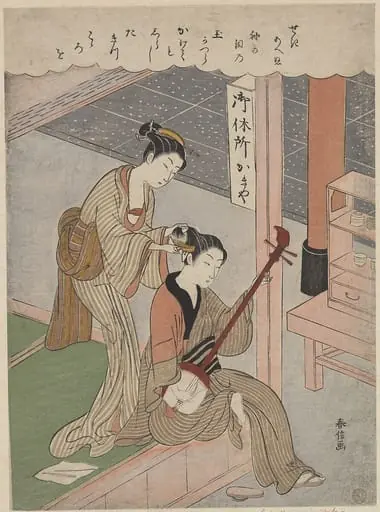
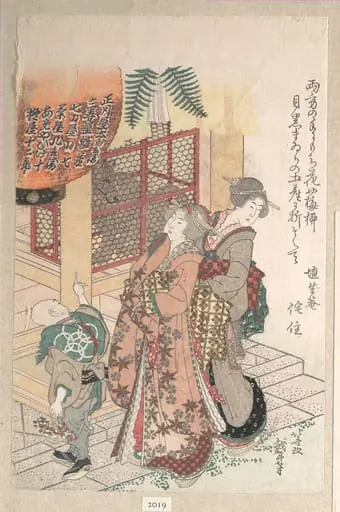 初詣|Young Women Visiting a Shinto Shrine
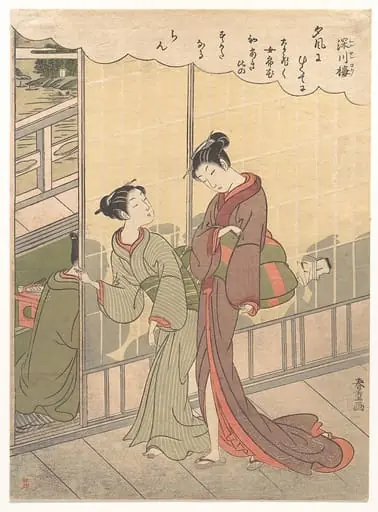 Untitled
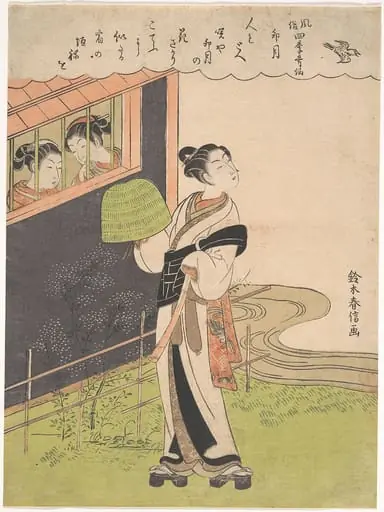 鈴木春信画 虚無僧・「風俗四季歌仙 卯月」|A Flute-Playing Monk (Komusō); The Fourth Month (Uzuki), from the series Fashionable Poetic Immortals of the Four Seasons (Fūzoku shiki kasen)
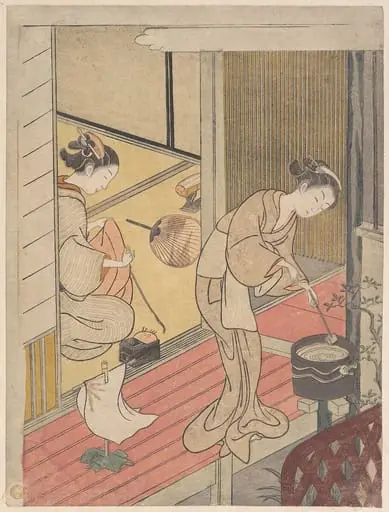
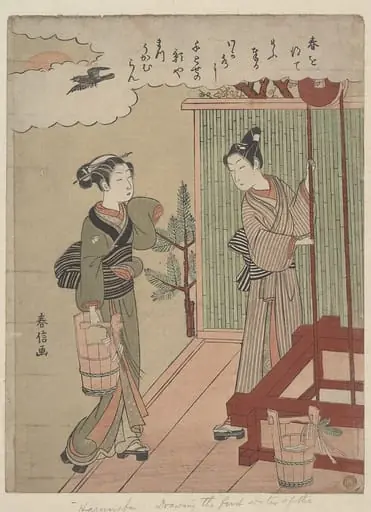 鈴木春信画 若水を汲む男女|Drawing the First Water of the New Year
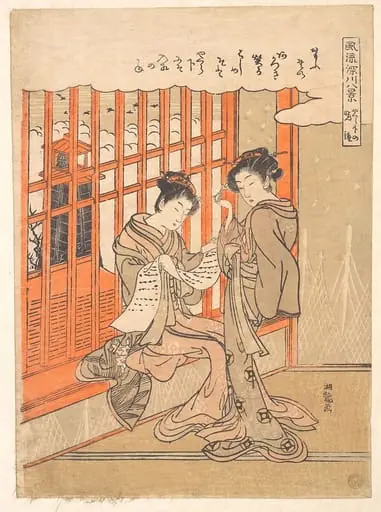 Untitled
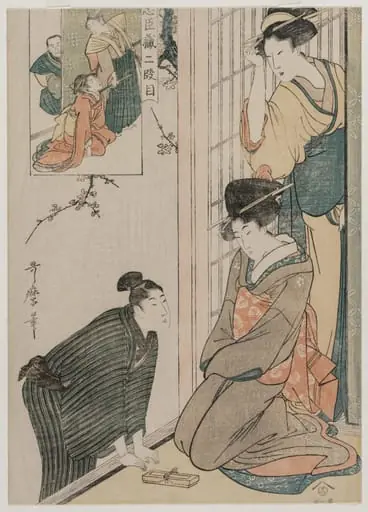 Chushingura: Act II of The Storehouse of Loyalty
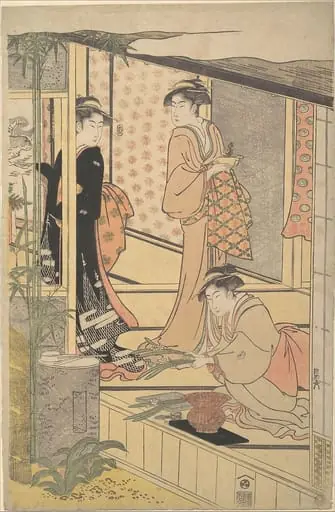 細田栄之画 正月準備|Preparing New Year Decorations
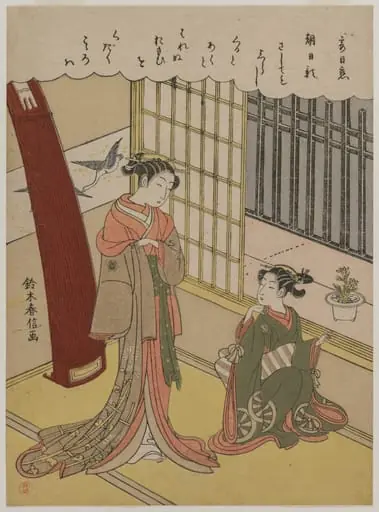 Woman and Maid Servant
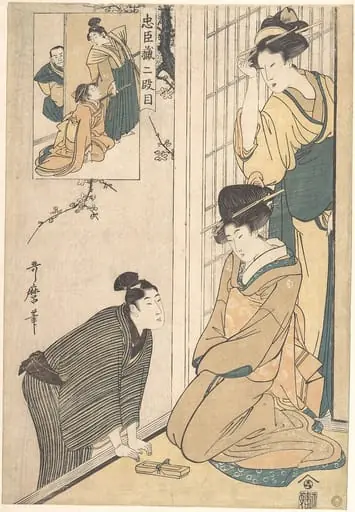 忠臣蔵二段目|A Young Man at the Side of a House
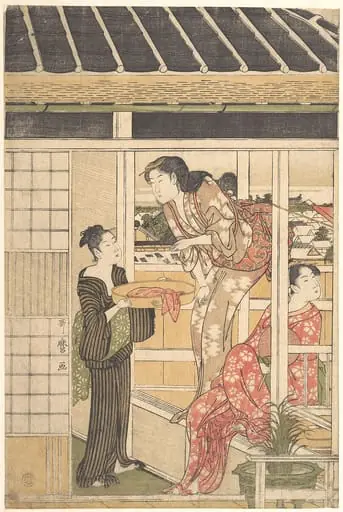 Untitled
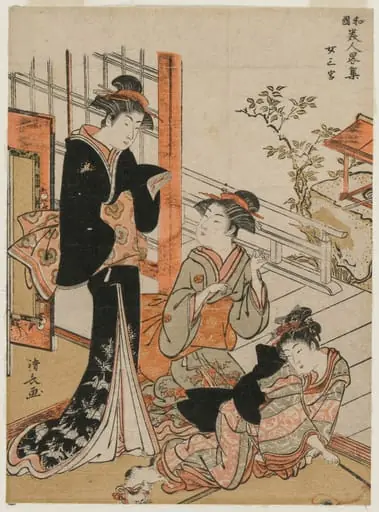 Three Women (from the series A Brief Collection of Japanese Beauties)
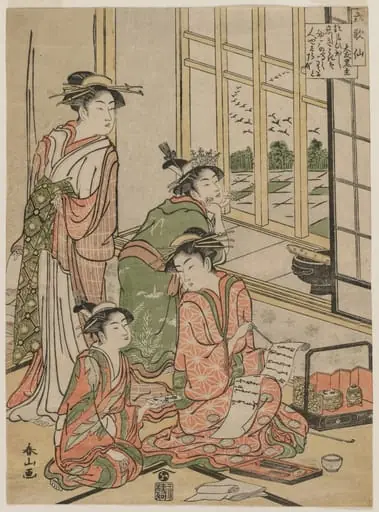 Courtesans at Leisure from the series The Six Immortal Poets