Artwork
葛飾北秀画 月下の兎|Rabbit in the Snow beneath the Moon 月下の兎
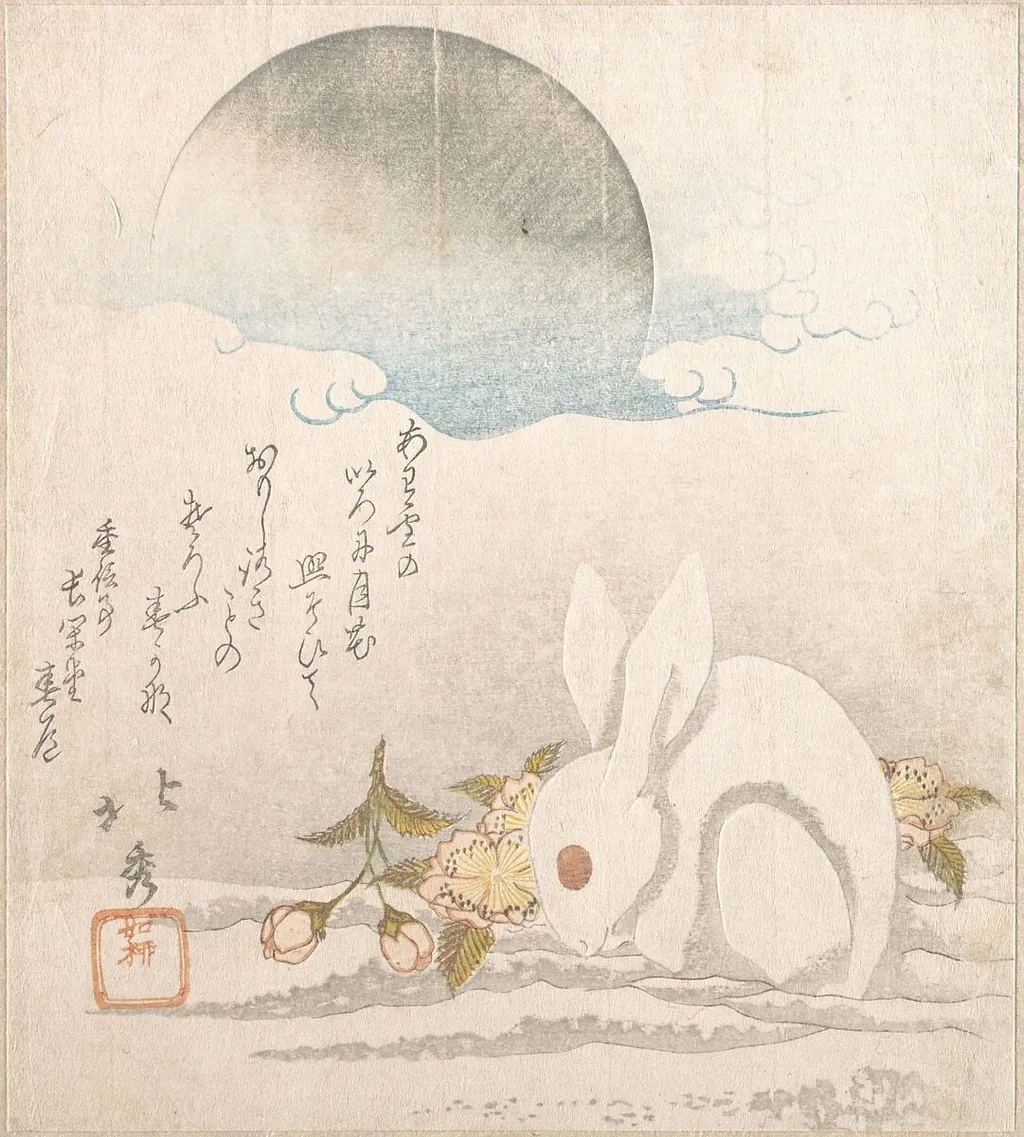
葛飾北秀画 月下の兎|Rabbit in the Snow beneath the Moon 月下の兎 is an ink print by the Romanticist artist Katsushika Hokushū 葛飾北秀. It dates from 1819 and is held in the collection of the Metropolitan Museum of Art. Created in 1819 by Katsushika Hokushū, this surimono woodblock print depicts a tranquil winter night.
About this work
Overview
Rendered in ink, color, and metallic pigments on paper, it combines subtle tonal gradations with delicate metallic accents.
Created in 1819 by Katsushika Hokushū, this surimono woodblock print depicts a tranquil winter night. Rendered in ink, color, and metallic pigments on paper, it combines subtle tonal gradations with delicate metallic accents. The composition centers on a rabbit beneath a full moon, framed by sparse natural elements. Its small scale and refined execution suggest it was produced for private, literary circles rather than mass distribution.
Subject & Meaning
The rabbit, traditionally associated with the moon in East Asian folklore, is shown alert and still, as if listening to the quiet night. A single blooming flower and a budding branch suggest the quiet persistence of life amid winter’s stillness. The scene evokes contemplation, aligning with poetic traditions that link lunar imagery with themes of transience and quiet resilience.
Technique & Style
Hokushū employed fine line work and layered washes to render the moonlit sky in pale blues and whites, while metallic gold and soft reds highlight the rabbit and flowers. The use of metallic pigments, typical of surimono, adds luminosity without overt brilliance. The print’s restrained palette and precise detail reflect the refined aesthetic of private, literary commissions, emphasizing subtlety over spectacle.
History & Provenance
This print was produced as a surimono, a luxury woodblock print often commissioned by poetry societies or patrons for special occasions. It entered the collection of The Metropolitan Museum of Art through documented acquisition, though its early ownership history remains partially undocumented. Its preservation in good condition reflects careful handling by collectors who valued its poetic and artistic qualities.
Context
In early 19th-century Japan, surimono were exchanged among literati as seasonal greetings or poetic tributes. Hokushū, a student of Katsushika Hokusai, worked within this intimate artistic tradition, blending natural observation with literary allusion. This print reflects the era’s appreciation for understated beauty and the fusion of visual art with classical verse, often inscribed along the margins.
Legacy
Though less widely known than his teacher Hokusai, Hokushū’s work contributed to the evolution of surimono as a vehicle for poetic expression. This print exemplifies how woodblock printing could convey quiet, introspective moments with technical precision. Its presence in major collections underscores its role in preserving the refined aesthetics of Edo-period private art culture.
Artist & collection

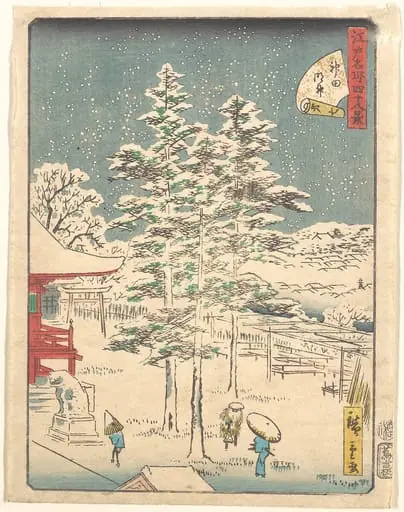 江戸名所四十八景 神田明神|Kanda Temple Snow
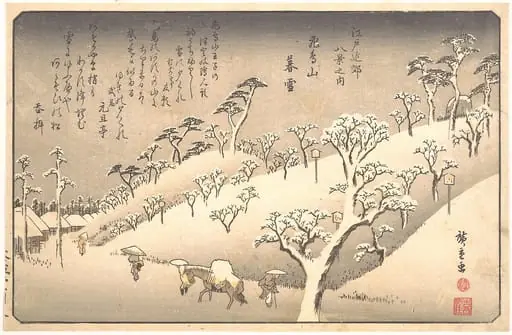 Asukayama Bosetsu|江戸近郊八景之内 飛鳥山暮雪|Asukayama in the Snow at Evening
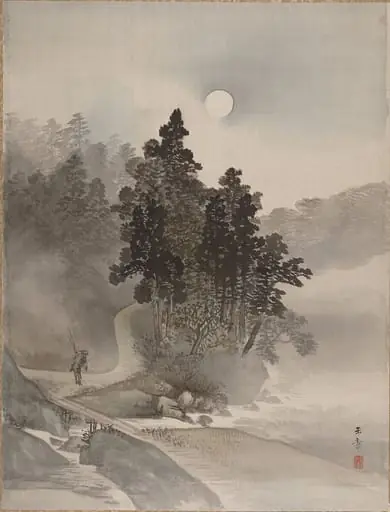 Untitled
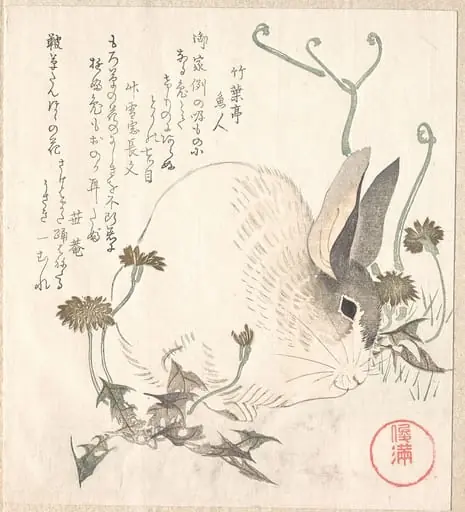 Untitled
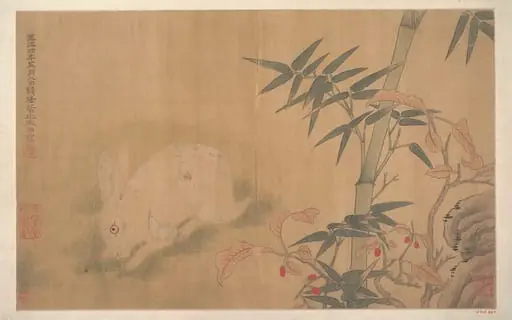 Untitled
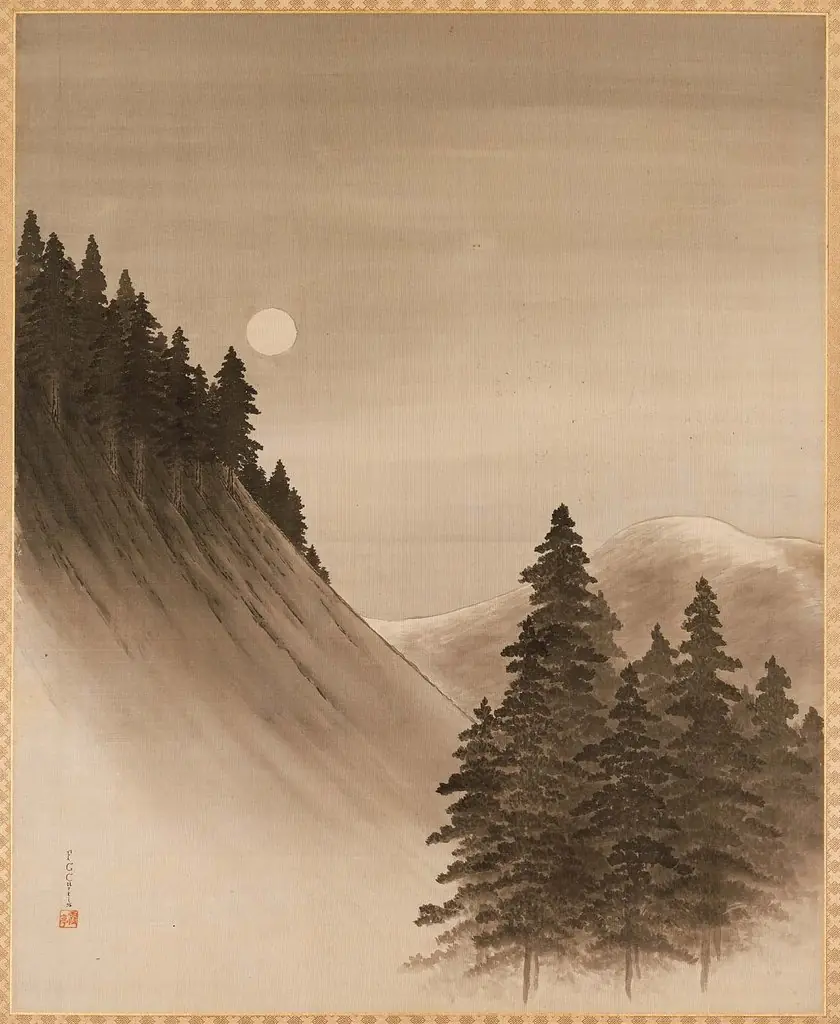 Landscape with Pines and Moon
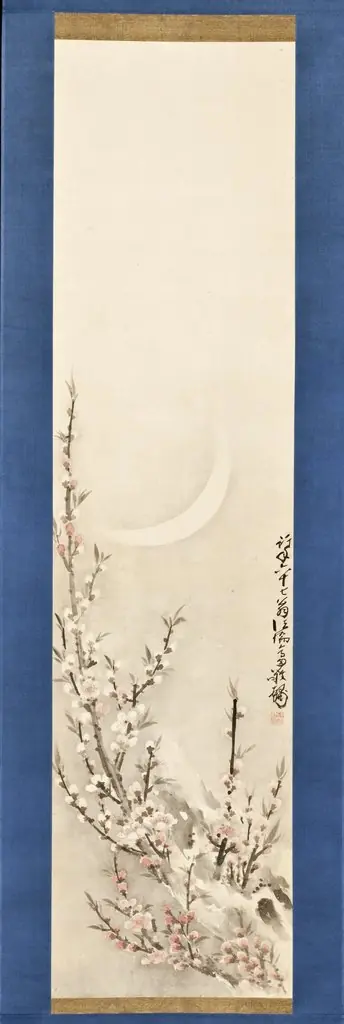 Plum Blossoms under a Crescent Moon
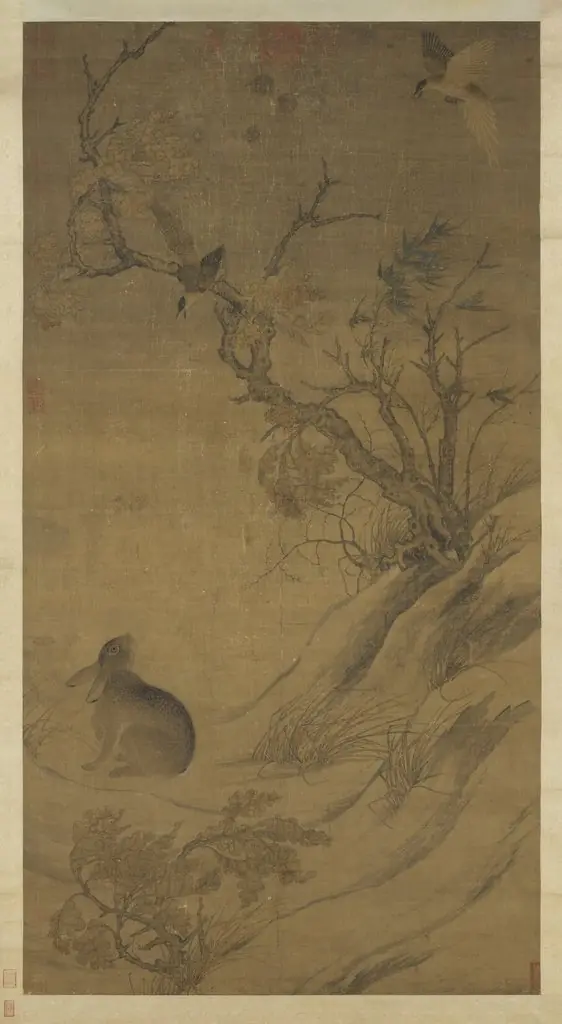 宋崔白雙喜圖 軸
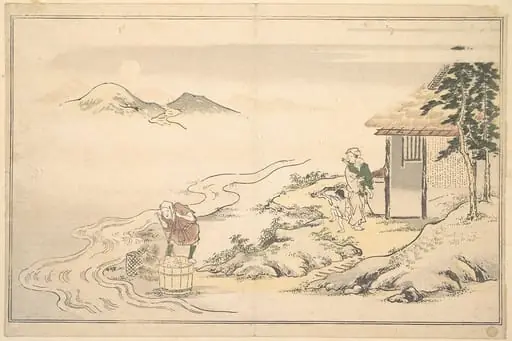 狂月坊|The Full Moon at the Time of the Imo Harvest
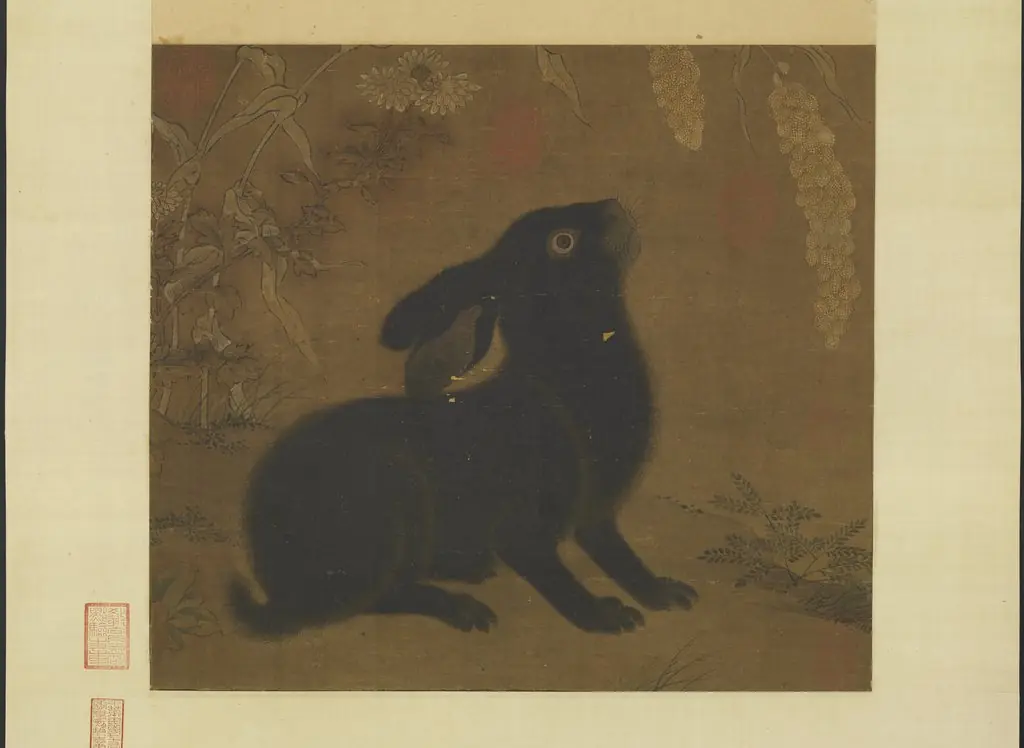 Wild Flowers and Black Hare
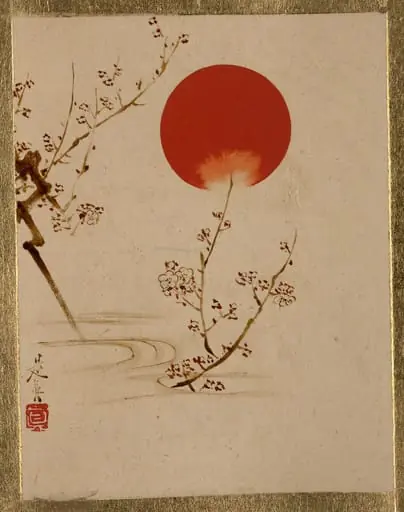 Untitled
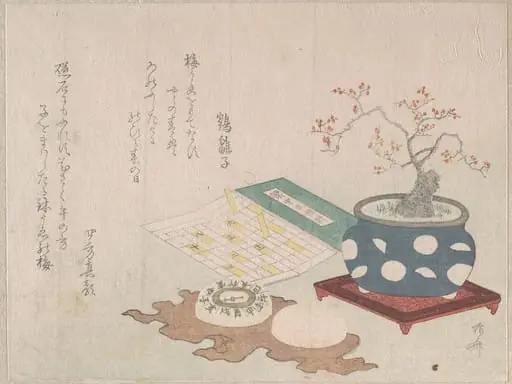 鉢梅、懐中日時計、羅針盤|Bonsai Plum, Compass, and Pocket Sundial with Design of Calendar, from Spring Rain Surimono Album (Harusame surimono-jō, vol. 3)