Artwork
Untitled
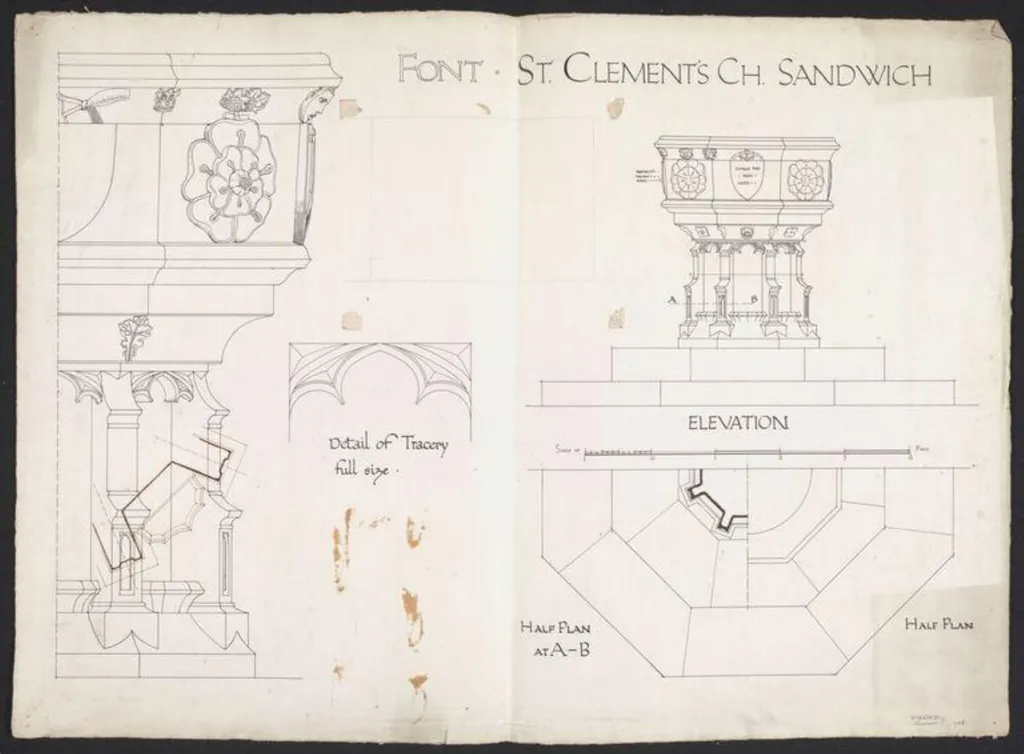
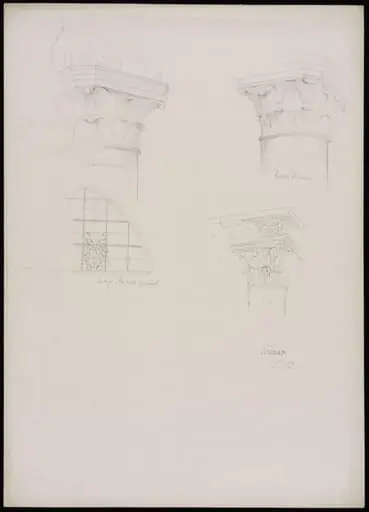
Untitled is a drawing by Walter Monckton Keesey. It dates from 1908 and is held in the collection of the Victoria and Albert Museum.
About this work
Overview
The work serves as a precise record of ecclesiastical stonework, emphasizing measurement and structural clarity over aesthetic expression.
This 1908 pencil drawing by Walter Monckton Keesey documents the architectural details of a baptismal font in St. Clement’s Church, Sandwich, Kent. It presents multiple views—front elevation, side profile, and a floor plan—along with a magnified section of the tracery. The work serves as a precise record of ecclesiastical stonework, emphasizing measurement and structural clarity over aesthetic expression.
Subject & Meaning
The subject is a medieval stone font, a liturgical vessel used in Christian baptismal rites. Keesey’s focus on its carved tracery—leaf motifs and a heraldic shield—highlights the craftsmanship of the original maker. The drawing’s purpose is archival: to preserve the form and ornamentation of a devotional object at risk of deterioration or alteration over time.
Technique & Style
Executed entirely in pencil, the drawing employs fine, controlled lines to render every contour and joint of the stonework. Multiple scaled views are arranged with technical precision, annotated with labels such as 'Elevation' and 'Half Plan at A-B.' The inclusion of a magnified detail box demonstrates a methodical approach, typical of architectural survey work of the period.
History & Provenance
Created in 1908, the drawing was likely part of a broader survey of Kent’s ecclesiastical architecture, undertaken during a period of renewed interest in medieval heritage. Keesey, known for his architectural illustrations, produced such works for scholarly or conservation purposes. Its origin in St. Clement’s Church suggests local documentation efforts, possibly linked to antiquarian societies or church restoration committees.
Context
In early 20th-century Britain, systematic recording of historic church furnishings gained momentum amid concerns over industrialization and neglect. Keesey’s drawing aligns with this movement, reflecting a scholarly ethos that valued accuracy over artistic interpretation. Similar surveys were conducted by institutions like the Society for the Protection of Ancient Buildings, of which Keesey was likely aware.
Legacy
The drawing endures as a reference for architectural historians and conservators studying medieval ecclesiastical design. Its meticulous detail provides a baseline for assessing changes to the font over time. While not widely exhibited, it contributes to the broader archive of British architectural documentation, preserving the material culture of a specific time and place.
Artist & collection

Artist
Walter Monckton Keesey OBE (1887–1970), was an English architect, artist and etcher. Accomplished in architectural drawing, he exhibited etchings, drawings and watercolours at the Royal Academy for over 50 years.

 Untitled
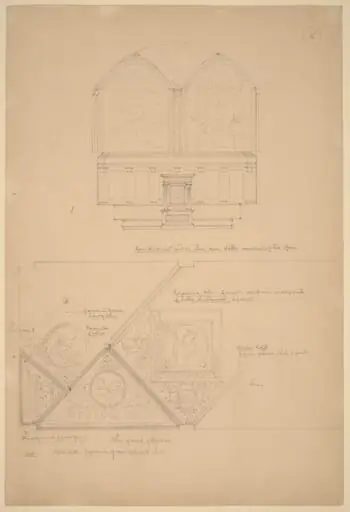 Study of an Altarpiece and Ceiling Panels
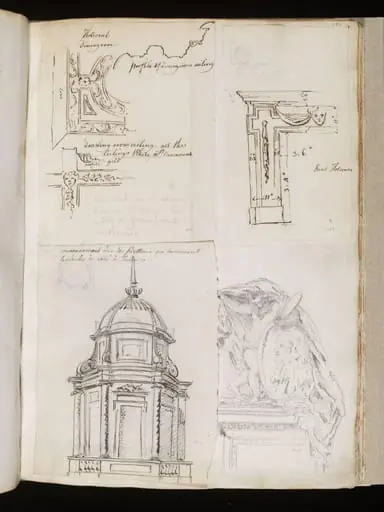 The Franco-Italian Album
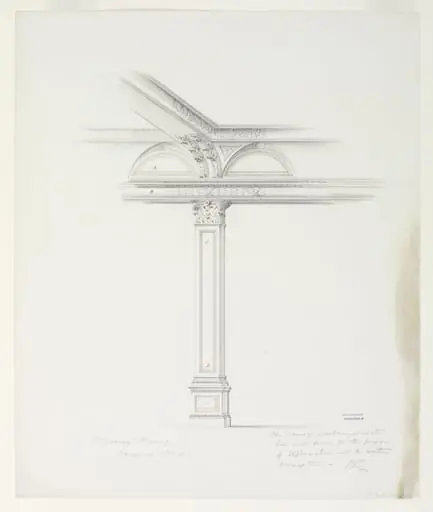 Drawing rooms at Drapers' Hall, London
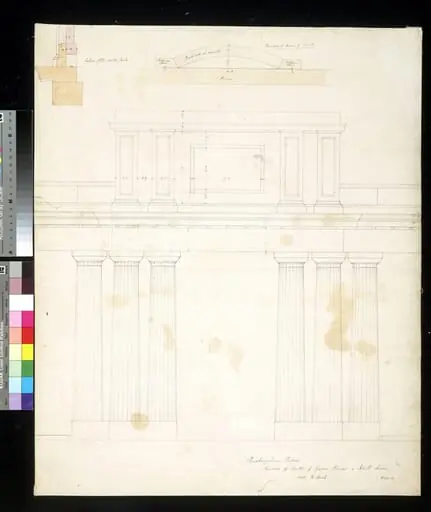 Elevation of Center of the Guard House and North Screen, Buckingham Palace
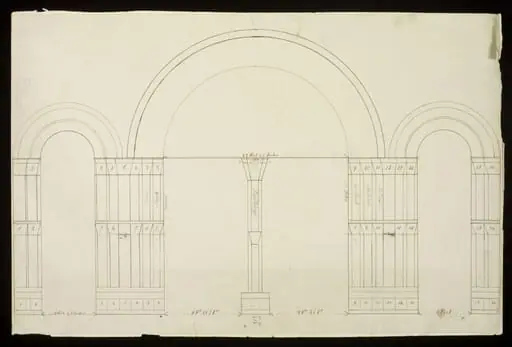 Untitled
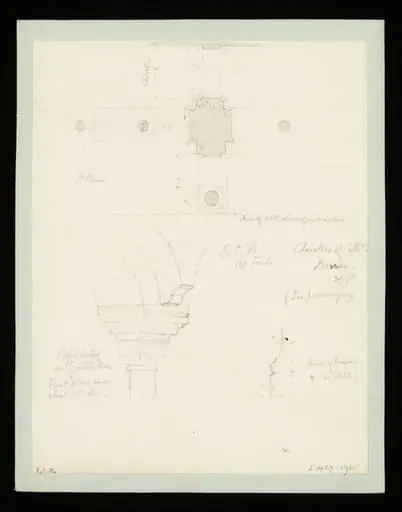 One of 235 drawings of architectural subjects in France, Germany, and Italy
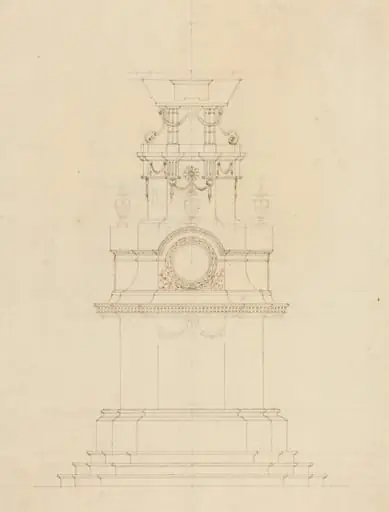 Design for a Catafalque
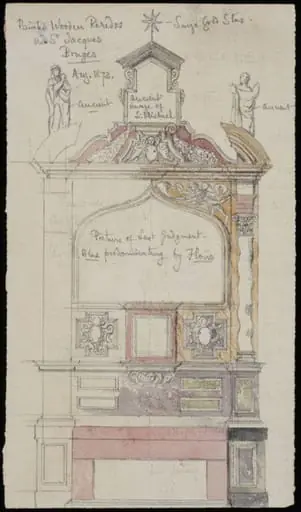 Reredos, fonts, a pulpit and monuments
 Untitled
 Study of frescos by Raphael on the ceiling of the Stanze della Segnatura in the Vatican Palace